The AI Hardware Shift: Beyond GPUs

For years, the narrative surrounding the artificial intelligence revolution has been defined almost exclusively by compute power. Investors and tech enthusiasts alike have fixated on the raw processing capabilities of GPUs, treating them as the singular engines driving the generative AI boom. However, as developers move from experimentation to training massive, trillion-parameter models, the industry is hitting a harsh physical reality: a processor is only as fast as the data it can ingest. We are currently witnessing a profound architectural shift where the focus is moving away from pure floating-point operations per second (FLOPS) and toward the critical infrastructure that feeds the silicon.
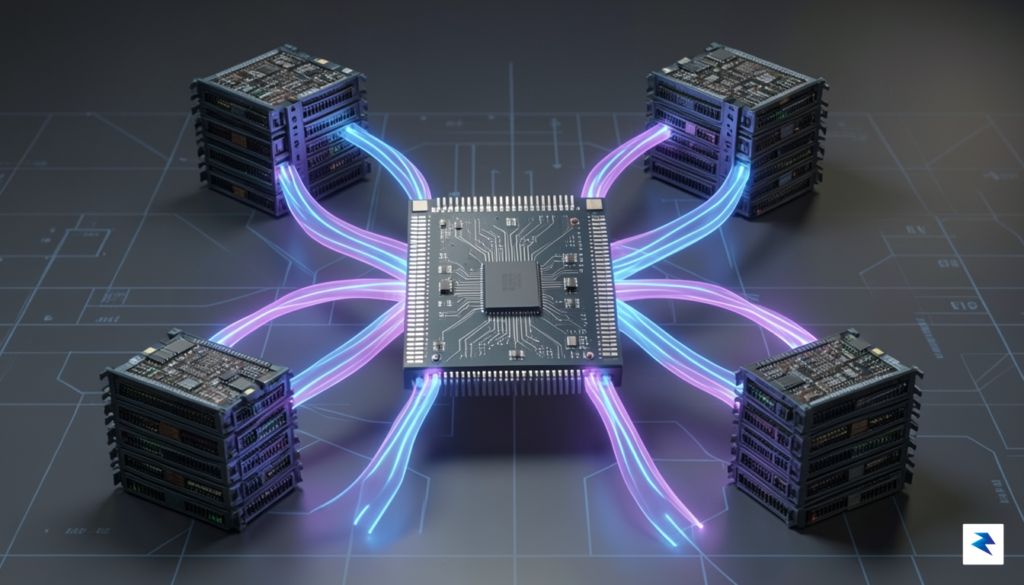
This problem is rooted in a fundamental constraint of computer science known as the Von Neumann bottleneck. In traditional computing architectures, the processor and the memory are physically separated, requiring data to travel back and forth across a bus. While processors have seen exponential speed improvements over the last decade, memory speed has failed to keep pace, creating a massive disparity. When training an AI model, the GPU is frequently forced to sit idle, waiting for the next batch of data to arrive from the memory chips. This state of “memory starvation” renders even the most powerful processor inefficient, as the time spent waiting for information far outweighs the time spent performing actual calculations.
To overcome this, the industry is pivoting toward what experts call “Memory-First” AI infrastructure. This approach prioritizes high-bandwidth memory (HBM)—a sophisticated, vertically stacked memory architecture that sits in close physical proximity to the GPU. By drastically increasing the speed at which data can be transferred, HBM allows processors to operate at their full potential without interruption.
The true bottleneck of modern AI is no longer the speed of the chip, but the velocity of the data pipeline. As models grow, memory bandwidth has effectively become the new currency of the AI economy.
This shift explains why companies like Micron are suddenly taking center stage. If Nvidia provides the engine, memory makers are now providing the high-octane fuel delivery system. Without breakthroughs in memory density and speed, the next generation of AI development will simply stall. Consequently, the hardware race has evolved from a simple quest for more transistors to a complex engineering challenge of optimization and architecture, placing memory manufacturers at the very heart of the AI value chain.
Micron’s Strategic Pivot: High Bandwidth Memory
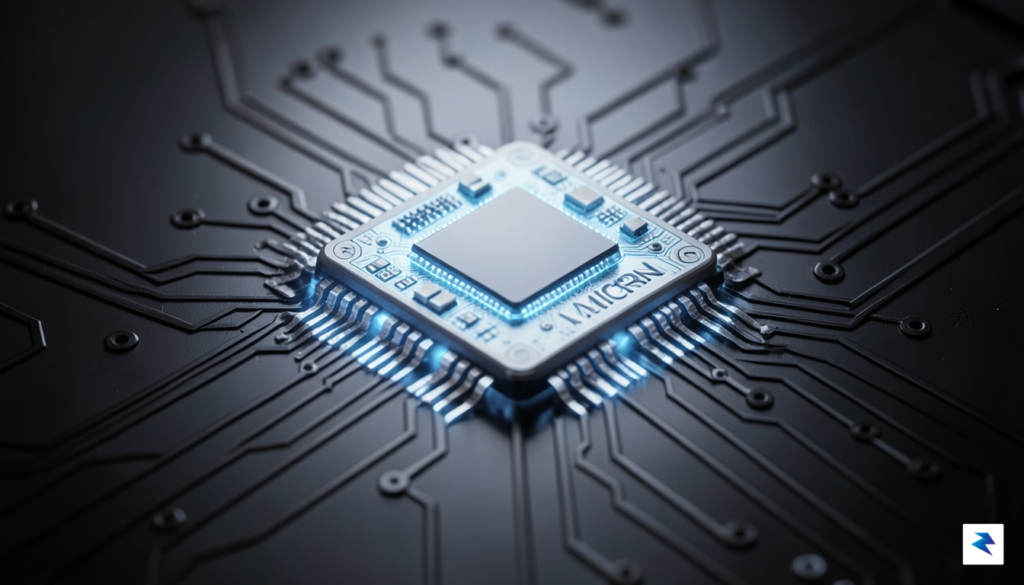
At the heart of the current artificial intelligence revolution lies a fundamental hardware bottleneck: the “memory wall.” While processors have become exponentially faster, the speed at which they can access data often lags behind, creating a performance ceiling. Micron is aggressively dismantling this barrier through its strategic pivot toward High Bandwidth Memory, specifically its cutting-edge HBM3E product line. Unlike legacy DDR5 memory, which functions much like a standard library where information is retrieved sequentially, HBM3E utilizes a sophisticated 3D-stacking architecture. By vertically integrating multiple DRAM dies and connecting them via ultra-fast “through-silicon vias,” Micron creates a dense, high-speed pipe that allows data to flow directly into AI accelerators with unprecedented efficiency.
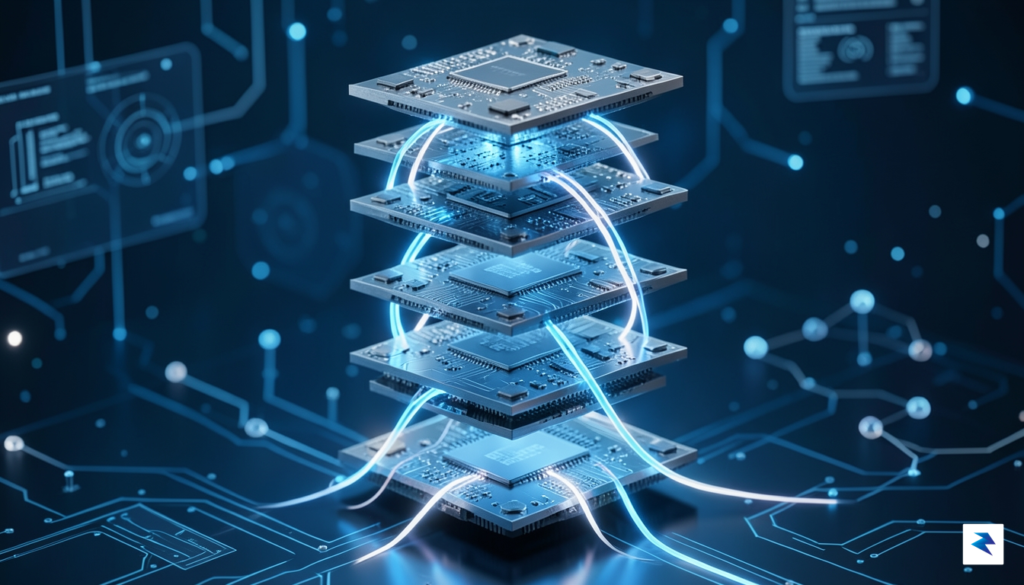
The technical advantages of HBM3E over traditional memory modules are stark. In conventional computing, data travels across a relatively long, narrow bus, which can lead to significant latency issues when handling the massive, real-time datasets required by Large Language Models (LLMs). Micron’s HBM3E solves this by physically placing the memory closer to the GPU and widening the data path, effectively allowing the processor to “breathe.” This architectural shift is not merely an incremental improvement; it is a prerequisite for the next generation of generative AI, where speed is the primary driver of capability. For cloud providers and data center operators, adopting this technology is essentially the difference between a system that stalls under heavy workloads and one that functions with fluid, near-instantaneous responsiveness.
“Micron is not just selling chips; they are providing the essential connective tissue that allows modern AI engines to operate at peak capacity.”
Manufacturing this technology, however, is a monumental feat of engineering that separates the industry leaders from the laggards. Producing HBM3E requires extreme precision in wafer thinning and thermal management, as stacking chips on top of one another creates significant heat that must be dissipated to maintain structural integrity. Micron has invested heavily in proprietary packaging techniques to ensure that their HBM3E modules remain reliable under the blistering temperatures generated by continuous AI training sessions. As the company ramps up its production capacity, they are strategically positioning themselves to be a primary supplier for the world’s largest tech conglomerates. By betting the farm on this specialized form of memory, Micron is successfully transitioning from a commodity-driven manufacturer of standard RAM into a specialized, high-value architect of the AI infrastructure stack.
Why Wall Street Sees the Next Nvidia Potential
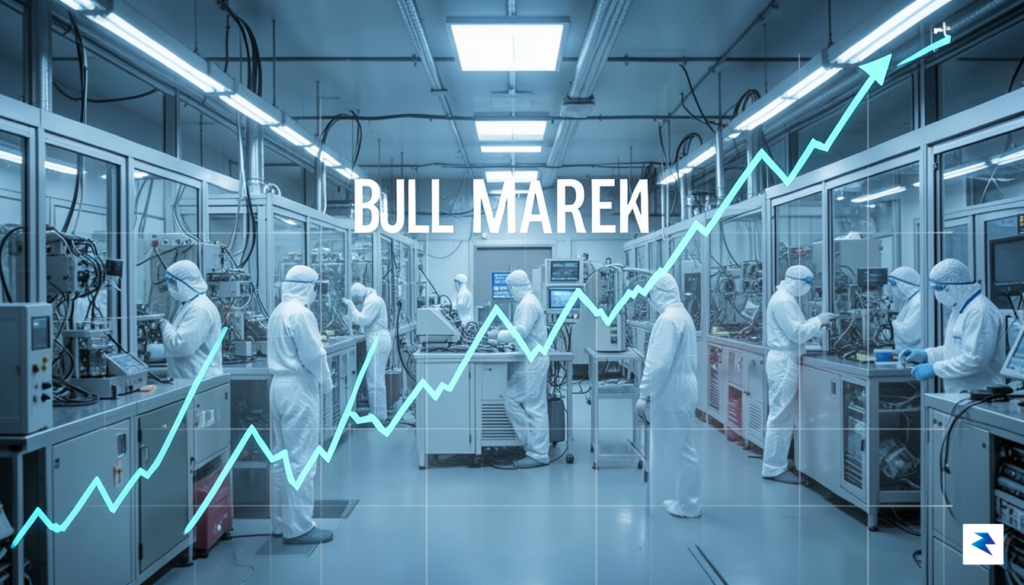
The financial markets are currently witnessing a seismic shift in how institutional investors perceive Micron Technology. For decades, the company was largely viewed through the lens of a “boom-and-bust” commodity cycle, where profitability was inextricably linked to the volatile pricing of standard DRAM and NAND flash memory. However, a newfound bullish sentiment has taken hold on Wall Street, with many analysts recalibrating their models to account for Micron’s evolution into a critical pillar of the artificial intelligence infrastructure stack. This transition is not merely a change in market perception; it is a fundamental reconfiguration of the company’s business model, moving away from cyclical sensitivity and toward a high-margin, growth-oriented trajectory that mirrors the early trajectory of industry leaders like Nvidia.
At the heart of this sentiment shift is the realization that AI workloads are fundamentally different from traditional computing tasks. While standard memory chips are treated as interchangeable goods, the high-bandwidth memory (HBM) required to power generative AI models is a highly specialized, sophisticated product. By pivoting its production capacity toward these advanced, AI-optimized memory solutions, Micron has effectively decoupled its revenue stream from the traditional memory cycle. Investors are increasingly recognizing that the demand for high-performance memory is no longer just a trend, but a permanent structural requirement for hyperscale data centers that must feed massive amounts of data to power-hungry GPUs.
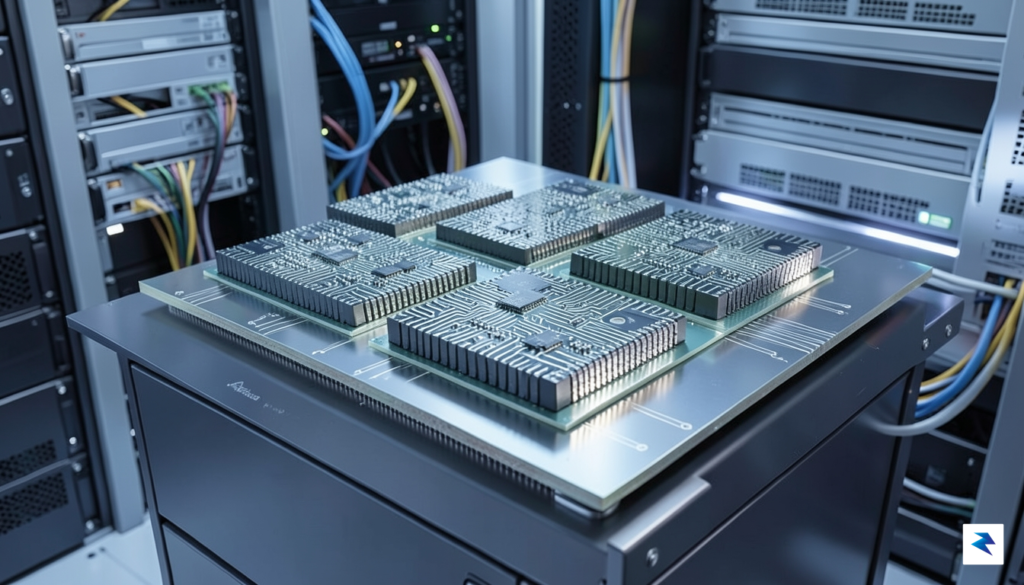
The transformation from a commoditized memory manufacturer to a strategic AI infrastructure partner represents the most significant valuation expansion catalyst for Micron in the last twenty years.
Furthermore, Micron’s strategic shift is heavily supported by the formation of deep, long-term partnerships with the industry’s most prominent cloud hyperscalers. Rather than relying on open market fluctuations, the company has secured multi-year agreements that provide both price stability and predictable volume commitments. These partnerships act as a defensive moat, insulating the company from the historical pricing volatility that once defined the semiconductor memory sector. As these cloud giants compete to build the most efficient AI clusters, they are finding that Micron’s specialized memory modules are essential components, essentially making Micron an indispensable co-architect in the AI revolution.
Ultimately, the comparison to Nvidia is rooted in the “pick-and-shovel” analogy of the modern technological gold rush. Just as Nvidia dominates the processing side of the AI equation, Micron is positioning itself to dominate the memory throughput capacity necessary to prevent data bottlenecks. When institutional investors look at the company today, they see a firm that is no longer at the mercy of market cycles, but one that is actively driving the requirements for future computing. This fundamental change in narrative is why Wall Street is increasingly betting that the company is poised for a significant, multi-year growth phase that parallels the meteoric rise of the semiconductor industry’s recent leaders.
Data Center Bottlenecks and the Micron Solution

The relentless pursuit of artificial intelligence breakthroughs, particularly in the realm of large language models and other foundational AI, is fundamentally constrained not just by raw processing power, but by a more insidious bottleneck: the speed at which data can be retrieved from memory. While powerful Graphics Processing Units (GPUs) are the celebrated workhorses of AI training, their immense computational capabilities are often left underutilized if they cannot be fed data quickly enough. Imagine a high-performance sports car stuck in rush-hour traffic; its engine capacity is irrelevant if it can’t move. Similarly, expensive GPUs can sit idling, waiting for the necessary datasets to be ferried from memory, turning what should be a sprint into a frustrating crawl.
This critical dependency on memory speed has a profound impact on the Total Cost of Ownership (TCO) for AI data centers. Modern data centers represent colossal investments, with millions poured into state-of-the-art GPUs, CPUs, networking infrastructure, and the ongoing operational costs of power and cooling. If these highly expensive computational resources are spending a significant portion of their time waiting for data, their effective utilization plummets. Consequently, the actual cost per computation, or per trained model, skyrockets, negating much of the efficiency gains expected from advanced processing units. Maximizing the uptime and operational efficiency of every GPU becomes paramount, transforming memory into a strategic asset that directly influences the economic viability and speed of AI development.
This is precisely where Micron’s cutting-edge memory solutions, particularly their High Bandwidth Memory (HBM) and advanced DRAM technologies, offer a transformative advantage. Micron designs its hardware to directly address these data transfer bottlenecks, ensuring that costly GPUs are not left idling. By providing memory with significantly higher bandwidth and lower latency, Micron’s products enable data to stream to the GPUs at an unprecedented rate, keeping the processing units consistently engaged. This direct, rapid data flow allows AI models to ingest and process information much faster, dramatically reducing the overall training time for complex foundational models. Ultimately, by optimizing the interplay between memory and processing power, Micron helps data centers extract maximum value from their infrastructure investments, accelerating the pace of AI innovation and bringing sophisticated AI capabilities to market with greater efficiency.
Risks and Reality: Navigating the Semiconductor Cycle

While the enthusiasm surrounding Micron’s role in the artificial intelligence revolution is palpable, it is imperative to ground these expectations in the historically volatile reality of the semiconductor industry. Memory chips, by their very nature, are commodities subject to the notorious “boom-and-bust” cycle, where periods of explosive demand are frequently followed by sudden gluts in supply. Unlike the specialized processors that drive Nvidia’s market dominance, DRAM and NAND flash memory are highly sensitive to macroeconomic shifts and inventory levels across the broader consumer electronics and enterprise hardware sectors. Investors must therefore look past the current AI hype to determine whether Micron can sustain its margins when the initial surge of data center infrastructure build-outs eventually begins to stabilize.

The competitive landscape remains another significant headwind that could temper Micron’s trajectory. The company is locked in a fierce, high-stakes battle with industry titans like South Korea’s Samsung and SK Hynix, both of which possess formidable research and development budgets and massive manufacturing scale. These incumbents are not merely standing by; they are aggressively pivoting their own production capabilities to meet the high-bandwidth memory (HBM) requirements of modern AI systems. Should these competitors succeed in achieving greater manufacturing yields or price efficiencies, Micron’s current technological lead could narrow, forcing a return to the price-sensitive competition that has historically compressed profit margins across the memory sector.
Success in the memory market is rarely a permanent state; it is a continuous race to balance innovation with the brutal realities of global supply chain economics.
Furthermore, geopolitical tensions continue to introduce layers of complexity that are largely outside of Micron’s direct control. As semiconductor manufacturing becomes increasingly viewed as a pillar of national security, trade restrictions, export controls, and regional manufacturing incentives have transformed the supply chain into a geopolitical chessboard. Micron’s reliance on global facilities means it is uniquely exposed to shifting trade policies between the U.S. and China, as well as the inherent risks of maintaining a multi-national footprint in an era of deglobalization. For the long-term investor, the ultimate test will be Micron’s ability to forecast demand cycles accurately while navigating these fragmented regulatory environments. While the promise of AI-driven growth is undoubtedly real, the path forward requires a disciplined acknowledgment that in the world of semiconductors, today’s high-growth tailwinds can quickly shift into tomorrow’s systemic challenges.