
The Shift Toward 24/7 Global Finance

For decades, the global financial engine has been tethered to the rhythmic, yet restrictive, limitations of traditional business hours and geographic boundaries. The prevailing standard for many cross-border transactions—often referred to as ‘T+2’—dictates that settlements occur two business days after the initial trade date. This inherent latency is not merely a minor inconvenience; it is a structural byproduct of a fragmented correspondent banking system. In this outdated model, funds must traverse a labyrinth of intermediary institutions, each adding its own layer of verification, currency conversion, and processing time. Consequently, capital remains trapped in transit, creating significant liquidity friction that hinders the agility required in today’s hyper-connected, round-the-clock global economy.

The inefficiencies of this legacy architecture become particularly acute when considering the modern demand for instant value transfer. When institutions are forced to wait days for finality, they incur substantial opportunity costs and face increased exposure to market volatility. As the appetite for immediate liquidity grows among global enterprises, the reliance on manual reconciliation and siloed ledger systems has become a critical bottleneck. The financial sector is now at a pivotal inflection point, where the slow pace of clearinghouses no longer aligns with the digital-first expectations of international commerce. This mismatch between legacy technology and contemporary needs has created an urgent mandate for a more resilient, transparent, and always-on financial infrastructure.
The transition from batch-processed settlements to 24/7 blockchain-enabled rails marks the most significant architectural overhaul in the history of institutional banking.
In response to these systemic challenges, J.P. Morgan has positioned its Kinexys platform as a strategic answer to the demand for near-instantaneous global movement of capital. By leveraging blockchain technology, the platform bypasses the traditional intermediary hurdles, allowing for programmable, tokenized settlements that execute in real-time regardless of the day or time. This represents a fundamental shift from reactive, staggered processing to proactive, continuous liquidity management. By embedding security and compliance directly into the blockchain protocol, Kinexys effectively mitigates the risks associated with cross-border movement while significantly reducing the overhead costs that have long plagued institutional payments. As this technology scales, it promises to dismantle the friction of the T+2 era, ultimately replacing it with a fluid, high-velocity financial ecosystem that operates at the speed of the internet.
How Kinexys Reimagines Cross-Border Payments

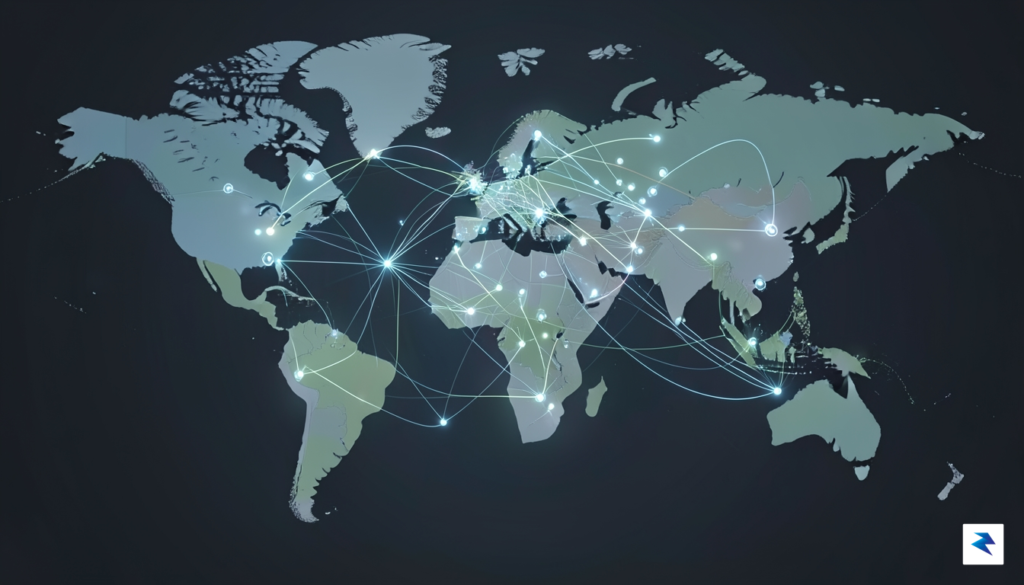
At its core, the Kinexys architecture signifies a departure from the fragmented, legacy infrastructure that has governed international finance for decades. By transitioning from traditional, message-based systems to a robust distributed ledger technology (DLT) framework, J.P. Morgan is essentially replacing a series of sequential “confirmations” with a single, immutable source of truth. In the current global banking environment, a cross-border payment often traverses multiple correspondent banks, each adding time, complexity, and layers of fees to the transaction. Kinexys streamlines this entire lifecycle by enabling direct, peer-to-peer settlement, which effectively removes the friction caused by these intermediary hurdles.
Tokenization: The Engine of Instant Settlement
The true power of this platform lies in its sophisticated application of tokenization. By converting fiat currencies and high-quality liquid assets into digital tokens, Kinexys allows for the simultaneous exchange of value—a process known as Delivery versus Payment (DvP). In the conventional SWIFT-based model, messaging and settlement are decoupled; a bank sends a message to notify another of an incoming payment, but the actual clearing of funds often occurs hours or even days later. Kinexys collapses this window by ensuring that the movement of the tokenized asset and the finality of the settlement happen concurrently on the blockchain. This shift not only eradicates settlement risk but also provides institutional clients with real-time visibility into their liquidity positions.
“The shift to blockchain-enabled infrastructure moves the industry from a world of ‘netting and waiting’ to one of ‘instantaneous finality,’ fundamentally changing how capital is managed on a global scale.”
Efficiency Gains Over Legacy Messaging
When comparing this blockchain architecture to the traditional correspondent banking model, the differences in cost and velocity are stark. Traditional systems are frequently constrained by the operating hours of local central banks and the manual reconciliation processes required when payments get stuck in the “middle.” Conversely, Kinexys operates 24/7, allowing for continuous transaction flows that are not hindered by weekends or public holidays. Furthermore, the operational overhead associated with investigating failed or delayed payments is drastically reduced through the use of smart contracts. These self-executing protocols automate compliance checks and transaction validation, ensuring that only verified payments proceed, which significantly lowers the administrative burden for global treasury departments. As institutions begin to adopt this technology, the cost of moving capital across borders stands to decrease substantially, freeing up trapped liquidity that was previously tied up in the slow-moving pipes of the old financial order.
Expanding the Reach: New Currencies and Asia-Pacific Integration
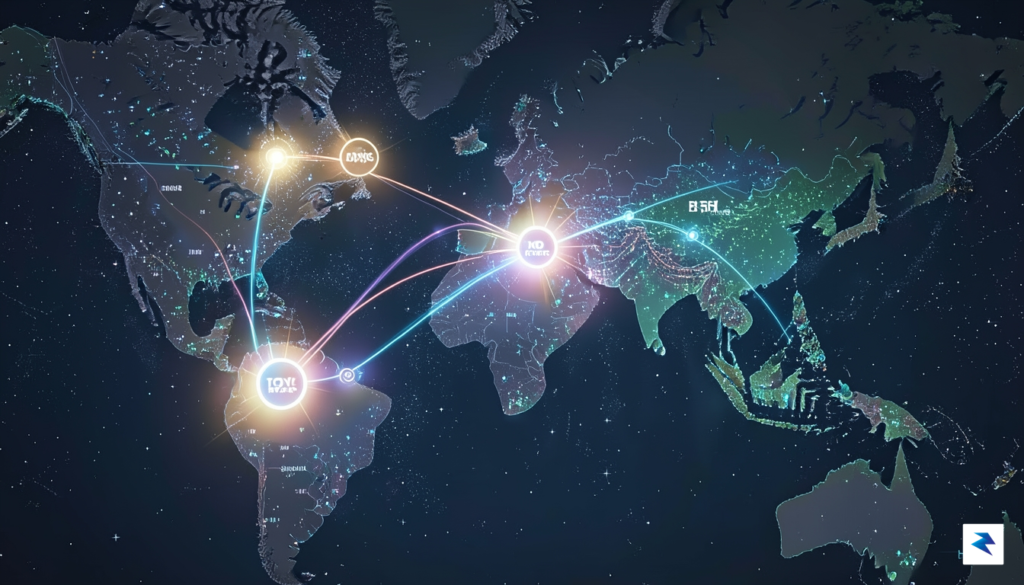
The strategic incorporation of five additional Asia-Pacific currencies into the Kinexys platform represents more than just a routine update; it is a calculated effort to capture the immense liquidity flowing through one of the world’s most dynamic economic corridors. As global trade continues to pivot toward Eastern markets, the demand for high-speed, reliable settlement infrastructure has surged. By integrating these specific regional currencies, J.P. Morgan is effectively bridging the gap between legacy banking systems and the next generation of digital finance, providing institutional clients with a seamless way to navigate the complexities of cross-border commerce. The Asia-Pacific region stands as a cornerstone of global trade volume, and by establishing a more robust presence here, the bank is ensuring that its clients can move capital with the speed and precision required in today’s volatile market environment.

Technically speaking, integrating multiple fiat currencies into a unified blockchain ledger is a formidable challenge that requires rigorous engineering. Each currency operates under distinct regulatory frameworks, disparate central bank reporting requirements, and unique liquidity profiles that must be harmonized within the distributed ledger environment. To achieve this, J.P. Morgan has had to develop sophisticated smart contract layers capable of ensuring finality and compliance across these varied jurisdictions. This technical architecture must not only guarantee security and transparency but also maintain high throughput to accommodate institutional-grade volume. By successfully managing these complexities, the platform transforms what were once siloed, fragmented processes into a cohesive, interoperable digital ecosystem that can handle high-frequency transactions without the traditional friction associated with cross-border banking.
The transition to 24/7 settlement capabilities effectively eliminates the “weekend gap,” allowing institutional FX traders to manage liquidity and hedge risks in real-time, regardless of banking holidays or time zone disparities.
The impact of 24/7 availability on institutional FX trading cannot be overstated, as it fundamentally alters the risk management strategies available to global firms. Previously, the reliance on traditional correspondent banking networks meant that capital could be “trapped” during non-business hours, creating unnecessary exposure to market volatility. With the Kinexys network, clients now possess the flexibility to optimize their liquidity across the Asia-Pacific theater continuously. This shift towards a round-the-clock operational model empowers treasurers to react instantly to macroeconomic shifts, ensuring that FX exposure is minimized and capital efficiency is maximized. As these digital corridors continue to expand, they are setting a new standard for how financial institutions interact, clearing the path for a future where global payments are as fluid and instantaneous as information itself.
Overcoming the Friction of Traditional Banking Systems

The global financial system has long operated on a model of correspondent banking—a complex, multi-layered web of intermediaries that act as bridges between disparate national currencies and domestic payment infrastructures. While this system has served the world for decades, it is fundamentally hindered by the “hop-by-hop” nature of moving money. In this traditional framework, a single international transfer must pass through several different institutions, each of which must verify the transaction, perform its own compliance checks, and deduct its own service fees. This fragmented process results in significant latency, often leaving capital in a state of limbo for days, while simultaneously eroding the value of the principal amount through opaque overhead costs.
By leveraging blockchain technology, J.P. Morgan is effectively collapsing this inefficient chain, transforming the movement of value from a sequential, multi-party relay into a streamlined, peer-to-peer event. When value is tokenized and settled on a shared, immutable ledger, the need for multiple intermediaries to “hold” or “verify” the funds in transit evaporates. Instead, the network provides a single, unified source of truth that is accessible to all authorized participants. This transition is not merely a technical upgrade; it is a fundamental shift that replaces the slow, manual reconciliation processes of the past with a digitized, automated architecture designed for the 24/7 realities of the modern global economy.

The primary friction in modern finance is not the speed of data, but the delay in finality. By moving from a model of delayed reconciliation to one of real-time settlement, we eliminate the systemic uncertainty that has plagued cross-border payments for generations.
Beyond speed, the blockchain approach addresses the pervasive issue of counterparty risk. In the legacy system, the gap between a payment being initiated and its final settlement creates a window of vulnerability where a party might default or liquidity might be trapped due to unforeseen operational failures. Real-time settlement on a distributed ledger mitigates this risk by ensuring that the transfer of assets is virtually instantaneous and irreversible once validated. This creates a high degree of certainty that is inherently absent in legacy systems, where the “settled” status of a transaction is often a matter of days rather than seconds.
Furthermore, the transparency inherent in this blockchain-based model provides institutional participants with a level of auditability that was previously impossible to achieve. Every move of value is recorded as a permanent, immutable entry on the ledger, allowing for real-time tracking and simplified regulatory reporting. By replacing manual, error-prone back-office reconciliation with automated, transparent ledger entries, financial institutions can reduce their operational overhead while simultaneously increasing the security of the entire network. This creates a more resilient infrastructure that supports the high-velocity requirements of today’s international markets, ensuring that liquidity can move where it is needed most, without the friction of legacy gatekeepers.
The Institutional Adoption of Blockchain Technology

The recent expansion of blockchain-based settlement networks represents far more than a single bank’s technological upgrade; it signals a definitive maturation of distributed ledger technology (DLT) within the global financial ecosystem. For years, the narrative surrounding blockchain was dominated by speculative retail assets and experimental “sandbox” environments that rarely saw the light of day. Today, that narrative has shifted toward the deployment of production-grade infrastructure, where financial giants are no longer asking if blockchain is viable, but rather how quickly they can integrate it into their core operations to replace antiquated, inefficient payment rails.
From Experimental Pilots to Foundational Infrastructure
As major financial institutions transition away from isolated proof-of-concept projects, they are building permissioned networks that prioritize stability, speed, and regulatory compliance. This shift is critical because it addresses the historical skepticism regarding the enterprise utility of decentralized systems. By moving toward private, permissioned ledgers, institutions can leverage the transparency and immutability of DLT while maintaining the high-speed throughput required for multi-billion-dollar daily transaction volumes. This evolution confirms that blockchain is rapidly becoming a foundational pillar of modern finance, providing a reliable alternative to the fragmented legacy systems that have long hindered the velocity of capital.

Furthermore, the regulatory environment has evolved in lockstep with technological capabilities. Where regulators once viewed DLT with caution or outright apprehension, there is now a growing recognition that these networks can actually improve transparency and auditability. By embedding compliance logic directly into the protocol layers of these settlement networks, institutions can satisfy anti-money laundering (AML) and know-your-customer (KYC) requirements with greater accuracy and less manual intervention. This alignment between technology and policy is the catalyst that allows firms to scale their operations globally without fear of regulatory friction.
The integration of blockchain into institutional finance is no longer a fringe experiment; it is a strategic imperative for any firm aiming to maintain a competitive advantage in an era of 24/7, high-frequency digital commerce.
Ultimately, the question of scalability and security has moved from a theoretical hurdle to a solved engineering challenge. Modern enterprise-grade networks utilize advanced cryptographic proofs and consensus mechanisms designed specifically to handle the demands of global banking without compromising on safety. As these systems become more robust, they effectively eliminate the settlement delays that have plagued international commerce for decades, proving that the future of global finance lies in the seamless, instantaneous movement of value across a secure, decentralized architecture.
What This Means for the Future of Global Trade

The expansion of the Kinexys network signals a monumental shift toward an “always-on” global economy, where the traditional constraints of banking hours and multi-day settlement cycles are rapidly becoming relics of the past. By facilitating near-instantaneous cross-border payments, this infrastructure effectively dismantles the friction that has historically hindered smaller enterprises from engaging in international trade. As these technological barriers dissolve, we can expect to see a surge in global commerce, as companies of all sizes gain the ability to manage cash flows with unprecedented precision. This transition toward 24/7 liquidity is not merely a technical upgrade; it represents a fundamental democratization of market access, allowing businesses to operate with the agility required to compete in a hyper-connected digital age.
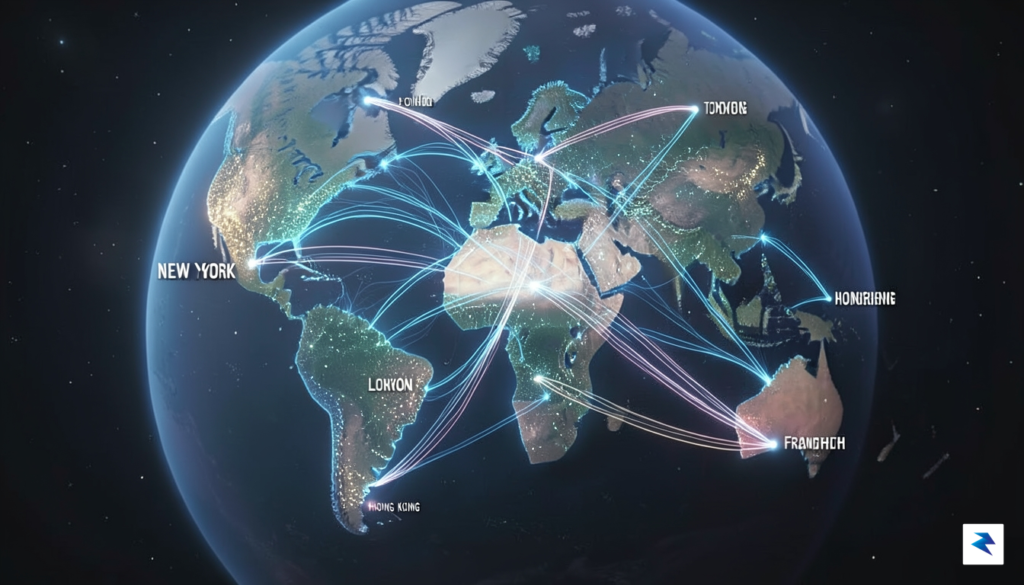
Looking ahead, the long-term impact on global liquidity management will be profound, as institutions move away from the capital-intensive practice of pre-funding accounts in various currencies. Currently, trillions of dollars are locked in dormant accounts worldwide simply to ensure liquidity for pending transactions. The adoption of blockchain-based settlement allows for real-time movement of capital, enabling treasury departments to optimize their resources far more efficiently. This shift promises to unlock significant amounts of trapped capital, which could be redeployed into more productive investments, ultimately fueling economic growth and lowering the overall cost of doing business across borders.
The true value of this evolution lies in the transition from fragmented, opaque legacy systems to a unified, transparent ledger that provides a single source of truth for global financial participants.
However, the full potential of this shift will only be realized if we prioritize the interoperability of various blockchain networks. As more financial institutions and central banks explore their own distributed ledger technology (DLT) solutions, the ability for these disparate systems to “speak” to one another will become the defining challenge of the next decade. Without a commitment to open standards and cross-chain compatibility, we risk creating new digital silos that mirror the fragmentation of the current system. Therefore, the future of the global economy depends on the industry’s capacity to build a cohesive, interconnected ecosystem where value can move seamlessly across different networks, ensuring that the modernization of payments truly bridges markets rather than creating new barriers.