
Matic Robot Vacuum Price Increase: Is It Still Worth the Investment?
The Matic Price Hike: What You Need to Know The landscape of premium home automation is constantly shifting, and recent developments from…
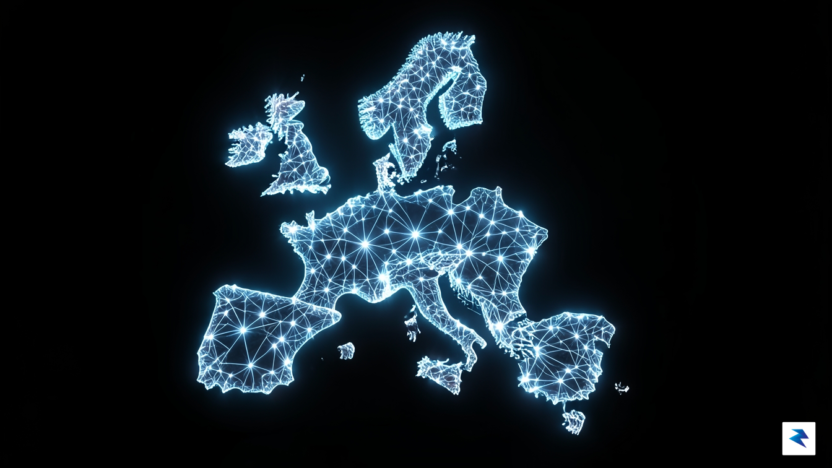

For years, the narrative of artificial intelligence development has been dominated by a handful of Silicon Valley monoliths, characterized by secretive, closed-source models that treat their proprietary algorithms as vault-locked treasures. Into this landscape stepped Mistral AI, a Paris-based startup that has swiftly evolved from an ambitious newcomer into a formidable European powerhouse. Founded in early 2023 by a team of elite researchers hailing from Meta and Google DeepMind, the company was built on a foundation of deep technical expertise and a clear-eyed critique of the status quo. By leveraging their extensive experience in large-scale model training, the founders set out to prove that state-of-the-art performance does not necessarily require the astronomical costs or the opaque “black box” methodologies that have become standard in the industry.
The company’s mission is centered on the democratization of frontier-level artificial intelligence. While competitors often wall off their most capable engines behind restrictive APIs and prohibitive licensing agreements, Mistral AI has championed an “open-weight” philosophy. This strategy serves as a direct, disruptive counter-move to the proprietary gatekeeping practiced by legacy giants. By making their model weights accessible, they are empowering developers, researchers, and enterprises to deploy, inspect, and fine-tune powerful AI systems locally. This shift toward accessibility has resonated deeply with a community weary of being tethered to a single provider’s cloud infrastructure, effectively turning transparency into a competitive advantage.

Mistral AI’s rapid ascent demonstrates that the future of artificial intelligence may not reside solely in the hands of a few massive, closed-source incumbents, but in a more collaborative, efficient ecosystem.
The speed of Mistral AI’s trajectory is nothing short of historic. Within months of its inception, the company secured massive venture funding, propelling it to a multi-billion dollar valuation at a pace rarely seen in the tech sector. This financial confidence underscores a broader market shift: investors and stakeholders are increasingly betting on companies that offer efficiency and versatility. Instead of attempting to brute-force intelligence through endless compute, Mistral focuses on architectural elegance and optimization, proving that a smaller, more efficient model can often outperform bloated, resource-heavy competitors. As the industry continues to mature, Mistral AI’s role as the primary challenger to the established order is no longer just a trend—it is a fundamental restructuring of how frontier AI is developed, distributed, and integrated into the global digital economy.

At the heart of Mistral AI’s rapid ascent is a fundamental departure from the “bigger is always better” philosophy that dominates much of the artificial intelligence industry. While many competitors focus on training increasingly massive, dense models that require supercomputer-level infrastructure to run, Mistral has prioritized architectural elegance and efficiency. By focusing on performance-per-parameter, the team has engineered models that punch significantly above their weight class, proving that sophisticated reasoning capabilities can be achieved without the prohibitive hardware costs typically associated with state-of-the-art large language models.
The secret sauce driving this efficiency is the Mixture of Experts (MoE) architecture. In a traditional dense model, every single parameter is activated for every incoming query, which results in massive computational overhead even for simple tasks. In contrast, Mistral’s MoE approach utilizes a sparse activation mechanism. This means that for any given prompt, the model selectively routes the input through only a small, relevant subset of its “expert” neural networks. By activating only a fraction of the total parameters during inference, Mistral achieves the complex reasoning of a much larger model while maintaining the speed and resource requirements of a smaller one.
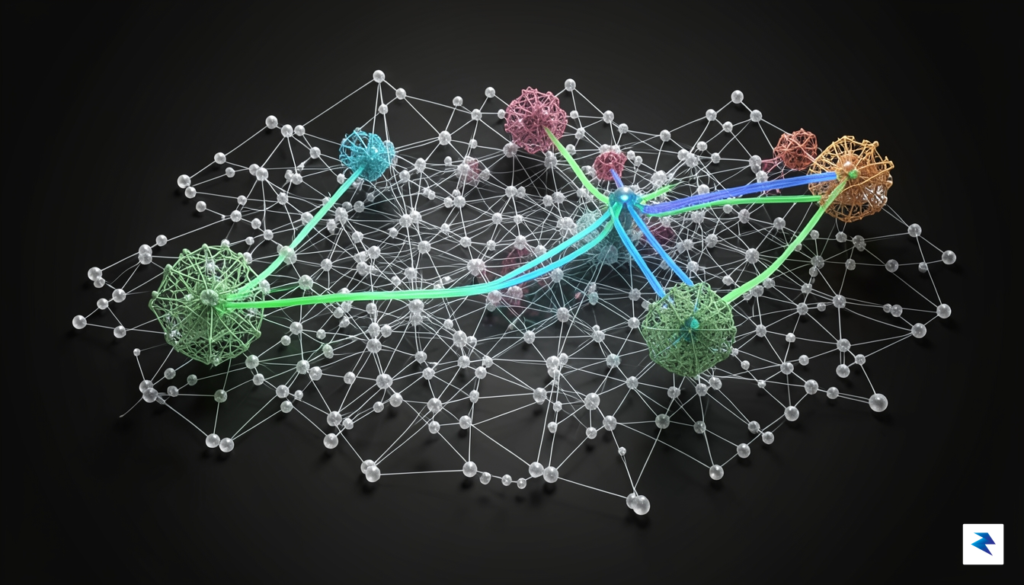
This sparse architecture fundamentally changes the economics of running AI. Because the model requires less active compute power, it can be deployed on more accessible hardware, such as consumer-grade GPUs or smaller cloud instances, without sacrificing accuracy. This democratization of high-performance AI is a cornerstone of Mistral’s technical philosophy, enabling developers and researchers to build powerful applications without needing an enterprise-scale budget to support the underlying model inference.
“True progress in artificial intelligence is measured not just by the size of the model, but by the clarity of its benchmarks and the openness of its methodology.”
Beyond the technical mechanics of MoE, Mistral AI distinguishes itself through a commitment to transparent evaluation benchmarks. In an ecosystem often clouded by proprietary “black box” models, Mistral’s decision to release open weights allows the broader research community to rigorously test, verify, and build upon their work. This transparency is vital; it invites peer review and collaborative improvement, which accelerates innovation across the entire field. By providing clear, reproducible data on how their models perform, Mistral has established a new standard for accountability, ensuring that the progress they claim is backed by empirical, observable reality rather than marketing hype.
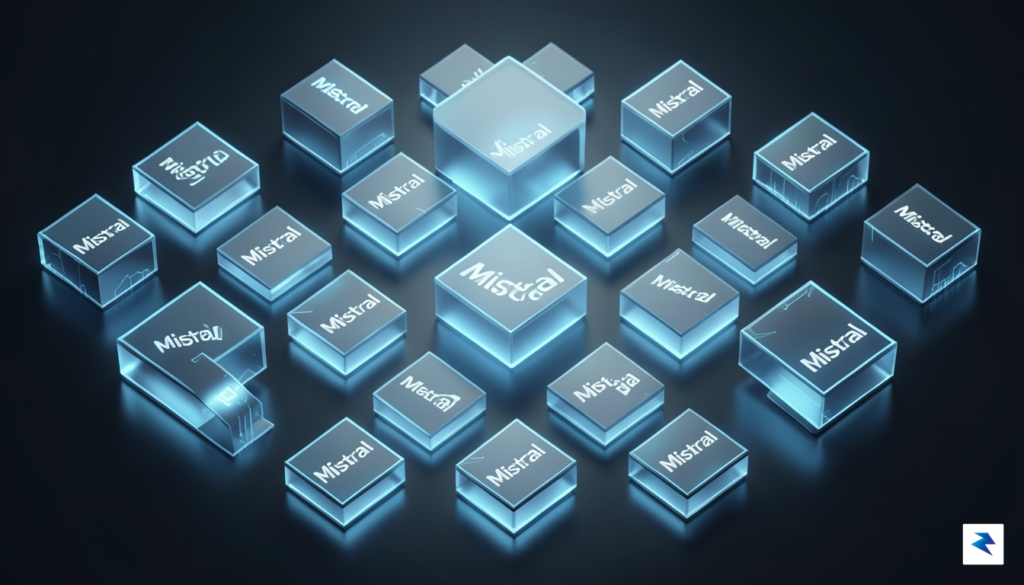
Mistral AI’s rapid ascent in the generative artificial intelligence sector is largely attributed to its strategic commitment to modular, high-performance architecture. By prioritizing efficiency alongside raw power, the company has successfully created a tiered ecosystem of models that cater to both hobbyists running local servers and enterprises demanding complex reasoning. This versatility begins with their foundational 7B parameter model, which fundamentally challenged the industry narrative that massive parameter counts are the only path to intelligence. Because of its compact size, Mistral 7B can be deployed on consumer-grade hardware, making it a favorite for edge computing, personal privacy-focused applications, and developers who need to fine-tune models without access to expensive data centers.

The true turning point for the startup, however, arrived with the introduction of Mixtral 8x7B. This model utilizes a sophisticated “Mixture of Experts” (MoE) architecture, which allows the system to activate only a subset of its parameters for any given query. By effectively routing tasks to the most relevant sub-networks, Mixtral 8x7B achieves the reasoning capabilities of much larger, denser models while maintaining significantly faster inference speeds. This makes it an ideal candidate for complex, multi-step tasks, such as high-level coding assistance, nuanced creative writing, and intricate data analysis, where accuracy and speed must coexist.
The core philosophy behind Mistral’s model lineup is the democratization of high-end AI, ensuring that advanced performance is not restricted to those with the largest compute budgets.
A critical component of Mistral’s strategy is their “open-weights” release model, which has been a cornerstone of their growth on platforms like Hugging Face. By providing developers with the weights of their models, Mistral invites a global community of researchers to inspect, benchmark, and improve upon their work, creating a transparent ecosystem that proprietary competitors often lack. This approach not only builds immense trust within the developer community but also accelerates the rate of innovation, as third-party contributors frequently identify creative optimization techniques that the original team might have missed. Whether you are looking for a lightweight solution for a local chatbot or a robust engine for enterprise-grade applications, Mistral’s evolution from the agile 7B to the powerful 8x7B demonstrates a clear intent to remain the leader in accessible, high-performance machine learning.

For enterprise developers and corporate architects, the appeal of Mistral AI extends far beyond raw benchmark performance; it represents a fundamental shift toward operational autonomy. While proprietary platforms like OpenAI offer convenience, they often force organizations into a “black box” ecosystem where data privacy and long-term cost predictability remain significant concerns. Mistral differentiates itself by championing an open-weight philosophy, enabling companies to host sophisticated models within their own secure infrastructure. By bringing the AI to the data, rather than the data to the AI, Mistral effectively dismantles the most formidable barrier to enterprise adoption: the fear of sensitive intellectual property being leaked or utilized for third-party model training.

The economic argument for this transition is equally compelling. Relying exclusively on proprietary API consumption can lead to volatile operational costs that scale linearly with user traffic, often creating unpredictable budget spikes. Conversely, self-hosting Mistral models allows businesses to optimize their hardware utilization, amortizing infrastructure costs over time rather than paying a premium for every individual token generated. This model provides a predictable financial structure, which is essential for scaling AI-driven products in a way that protects long-term profit margins. Furthermore, the ability to fine-tune these models on proprietary datasets allows companies to build highly specialized tools that outperform generalized, off-the-shelf alternatives.
The true value proposition of Mistral lies in its architectural flexibility—it empowers organizations to retain full control over their AI lifecycle without sacrificing the power of large-scale language processing.
From a developer experience (DX) perspective, Mistral has meticulously lowered the barrier to entry for teams already embedded in the current AI landscape. By ensuring their API endpoints remain largely compatible with industry-standard conventions, Mistral allows engineering teams to migrate existing workflows with minimal code refactoring. This “drop-in” capability means that developers can transition from closed-source providers to an internal Mistral deployment without losing time to steep learning curves or incompatible SDKs. Coupled with documentation that emphasizes clarity and implementation speed, Mistral is positioning itself as the pragmatic choice for developers who demand both the security of local hosting and the modern interface standards they have come to expect from the industry leaders.

The landscape of artificial intelligence is currently dominated by a fascinating rivalry, pitting two distinct philosophies against each other: the established might of OpenAI versus the rapidly ascending, developer-centric approach of Mistral AI. While OpenAI has undeniably captured the public imagination and integrated its models into a vast array of consumer applications, solidifying its position as the industry leader in brand recognition, Mistral AI is strategically carving out its niche by appealing directly to the developer community, offering a compelling alternative that prioritizes flexibility and transparency. This isn’t merely a contest of technical specifications or benchmark scores; it’s a fundamental debate about the future direction of AI itself—should it be open or closed?
At the heart of this competitive dynamic lies a significant divergence in business models and strategic priorities. OpenAI, with its flagship products like ChatGPT and DALL-E, largely operates on an API-first commercial strategy. Developers and businesses access their powerful, proprietary models through cloud-based APIs, meaning they do not directly control the underlying model weights. This approach allows OpenAI to maintain tight control over model deployment, updates, and safety guardrails. In stark contrast, Mistral AI has embraced an open-weights paradigm. They release the actual model parameters, or “weights,” to the public, empowering developers to download, run, modify, and even fine-tune these models on their own infrastructure. This fundamental difference unlocks unprecedented levels of customization and control, appealing to those who require greater autonomy and wish to avoid vendor lock-in or the costs associated with continuous API calls.
When evaluating the raw reasoning capabilities of these models, standardized benchmarks like the Massive Multitask Language Understanding (MMLU) and Grade School Math (GSM8K) tests offer valuable insights. OpenAI’s largest models, such as GPT-4, generally demonstrate state-of-the-art performance across a broad spectrum of these academic and reasoning challenges, showcasing exceptional general intelligence and problem-solving abilities. However, Mistral’s models, particularly those in its Mixtral series, have consistently punched above their weight. Despite often having fewer parameters, they achieve remarkably competitive, and sometimes even superior, results on specific benchmarks, especially for their size. This efficiency makes them particularly attractive for scenarios where computational resources are limited or where local deployment is a priority, proving that smaller, well-designed models can deliver impressive intelligence.
The ecosystem support surrounding these platforms further highlights their differing target audiences. OpenAI’s models are deeply integrated into various enterprise solutions and consumer-facing applications, often requiring developers to build atop their existing APIs and frameworks. Mistral, on the other hand, thrives within the open-source community, fostering robust support for tools like LangChain, which facilitates the creation of complex LLM applications, and local execution environments such as Ollama. Ollama allows developers to run large language models, including Mistral’s offerings, directly on their personal computers, enabling offline usage, enhanced privacy, and experimentation without cloud dependencies. This vibrant, community-driven ecosystem is a significant draw for developers who value flexibility, transparency, and the ability to audit and modify the underlying code.
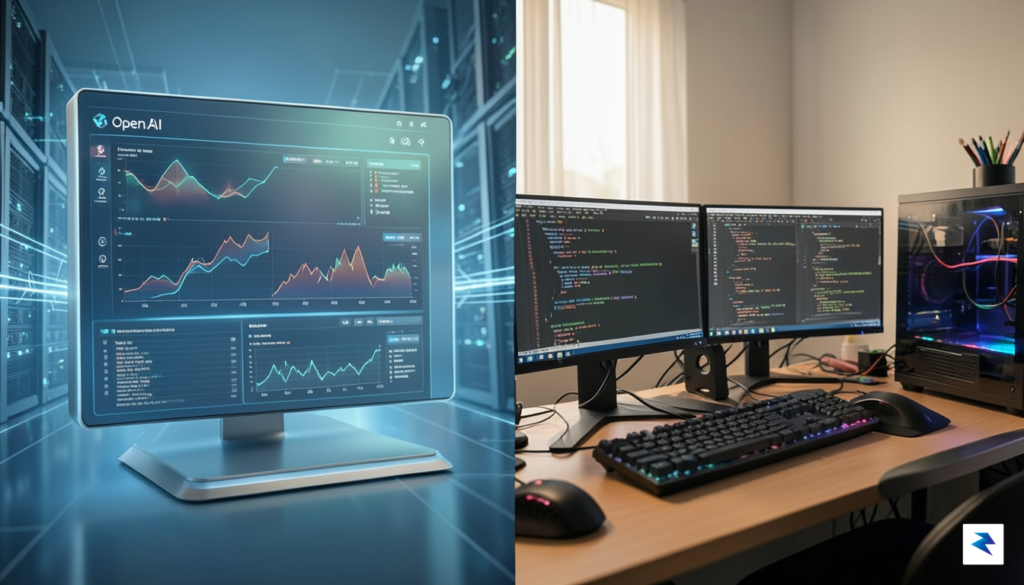
Ultimately, the competition between these two AI titans boils down to a philosophical debate framed around “Safety versus Transparency.” OpenAI often emphasizes a safety-first approach, implementing extensive guardrails and content moderation to prevent misuse and ensure responsible AI deployment. This often translates to a more curated and controlled experience, where the internal workings of their models remain proprietary. Mistral AI, conversely, champions transparency. By releasing open weights, they empower the community to scrutinize, identify, and address potential biases or safety concerns directly. While this open model inherently carries a greater onus on the user for responsible deployment, it also fosters innovation and allows for custom safety implementations tailored to specific use cases. For businesses and developers weighing their options, the choice hinges on whether they prioritize a highly controlled, centrally managed AI experience or the unparalleled freedom and customizability offered by an open-source alternative.

Beyond its technical achievements, Mistral AI represents a critical pivot point in the quest for European digital autonomy. For years, the global artificial intelligence narrative has been dominated by a handful of American corporations, leaving European nations dependent on foreign infrastructure for their technological development. Mistral AI changes this dynamic by providing a robust, home-grown foundation that not only rivals Silicon Valley’s finest models but also operates under the strict regulatory framework of the European Union. By aligning its development cycles with the EU AI Act, the company demonstrates that cutting-edge innovation does not have to come at the expense of transparency, ethics, or user privacy.

Looking ahead, the long-term impact of Mistral AI hinges on its ability to transcend traditional text-based large language models and move toward more sophisticated, autonomous systems. The next frontier for the company involves seamless multi-modal integration—enabling AI to process video, audio, and complex sensor data in real-time—and the development of “agentic” AI that can execute multi-step workflows without constant human intervention. As Mistral advances these capabilities, it is positioning itself to be the primary engine for European industry, from healthcare diagnostics to automated manufacturing. This growth trajectory is essential for ensuring that Europe remains a creator of foundational intelligence rather than merely a consumer of imported software.
A truly global AI landscape cannot be monopolized by a single region or culture; it requires a multi-polar ecosystem where diverse approaches to safety and development can flourish side-by-side.
Ultimately, the importance of Mistral AI lies in the promotion of a diverse, multi-polar technological landscape. When powerful AI tools are developed across different jurisdictions, it prevents the homogenization of thought and ensures that the cultural nuances and linguistic diversity of Europe are preserved within the digital fabric of the future. By fostering a competitive environment where openness and sovereignty go hand-in-hand, Mistral AI is not just challenging the status quo; it is securing a place for European values in the next great era of human-machine collaboration. As the company scales its operations, it serves as a beacon for what is possible when strategic policy meets high-level technical ambition.
You must be logged in to post a comment.