
The EV Retreat: Is the American Auto Industry Racing Toward Irrelevance?
The Strategic Pivot: Why American Automakers Are Retreating from EVs The electric vehicle revolution, which seemed like an inevitable,…


The closed-door congressional hearing served as a high-stakes arena where the veil of secrecy surrounding Jeffrey Epstein’s influence on the financial elite was once again pulled back. As former general counsel for Goldman Sachs, Kathryn Ruemmler occupies a position of significant professional stature, making her appearance before lawmakers a moment of intense scrutiny. The inquiry was not merely a procedural formality; it represented a concerted effort by investigators to dismantle the web of associations that allowed the late financier to maintain a veneer of legitimacy for years. By compelling testimony from someone of Ruemmler’s caliber, Congress sought to understand the mechanisms by which Epstein maneuvered through the upper echelons of global finance, often leveraging his connections to gain proximity to influential figures.
Central to these proceedings was Ruemmler’s candid assessment of her own professional interactions with the convicted sex offender. Rather than offering a defense of those past associations, she delivered a pointed and unflinching characterization of the man, labeling him a “masterful liar.” This description is far from trivial; it speaks to a calculated strategy of deception that Epstein reportedly employed to exploit the trust and professional curiosity of those within his orbit. Ruemmler’s testimony suggests that his ability to manipulate high-ranking individuals was not merely a result of his wealth, but rather a deliberate, psychological game designed to obscure his true nature behind a facade of intellectual sophistication and elite social capital.
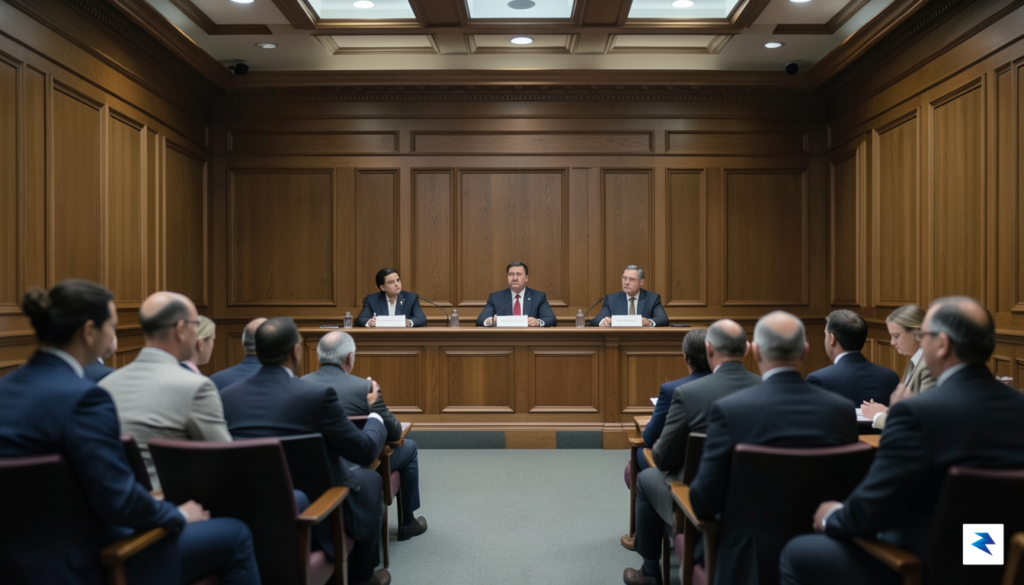
“He was a masterful liar,” Ruemmler stated, highlighting the deliberate deception that characterized Epstein’s professional engagements with high-profile figures.
The gravity of this testimony cannot be overstated, particularly given Ruemmler’s background as a seasoned legal professional who has navigated some of the most complex regulatory environments in the world. When a legal expert of her standing asserts that they were misled by Epstein, it fundamentally shifts the narrative from one of complicity to one of calculated entrapment. Her statements provide a window into the reality that even the most astute observers—individuals trained to perform rigorous due diligence—found themselves subject to his manipulative tactics. As the investigation continues, Ruemmler’s insights remain a critical piece of the puzzle, illustrating how Epstein’s influence was sustained not only by his resources but by his profound talent for distorting the truth to suit his agenda.
Ultimately, this congressional inquiry serves as a necessary reckoning for the financial institutions and individuals who once crossed paths with Epstein. By forcing these interactions into the light, lawmakers are demanding transparency regarding how such a figure could operate with relative impunity for so long. Ruemmler’s testimony acts as a catalyst for a broader discussion about the responsibilities of the elite to exercise extreme vetting and moral judgment when dealing with individuals whose reputations, however curated, mask deeper, more sinister realities. Her words stand as a warning and a testament to the enduring, toxic legacy of a man who masterfully deceived those who should have known better.

To grasp the complexities of the testimony provided by Kathryn Ruemmler, one must first look at the professional landscape that existed nearly a decade ago. During that era, Jeffrey Epstein occupied a curated position within the upper echelons of the financial and philanthropic worlds, positioning himself as a sophisticated advisor to high-net-worth individuals and major institutions. For legal counsel and corporate executives, interactions with Epstein were often framed within the context of his purported expertise in wealth management and his expansive network of global connections. At the time, these engagements were viewed through a lens of professional standard operating procedure, as Epstein maintained an elaborate facade of legitimacy that successfully shielded his illicit activities from public scrutiny.

The timeline of Ruemmler’s acquaintance with Epstein emerged during a period when his reputation was still carefully manicured to appeal to the elite. As a prominent attorney, Ruemmler’s interactions were centered on the due diligence and administrative tasks typical of institutional oversight. It is vital to acknowledge the inherent challenge of hindsight when dissecting these associations; what appears as a clear red flag today was, in the context of the mid-2010s, often perceived as a routine engagement with a financier who had not yet been exposed as a prolific criminal. Many professionals of the period operated under the assumption that Epstein’s vetted status within powerful circles was a testament to his credibility.
“The difficulty in analyzing these past interactions lies in the stark contrast between the Epstein who presented himself as a sophisticated financial consultant and the reality that was systematically hidden behind layers of deception.”
This professional bridge was built on a foundation of calculated manipulation, designed to exploit the trust inherent in high-level business relationships. Epstein did not merely interact with the legal and financial elite; he actively cultivated an environment where his presence was normalized and his counsel was sought after. By integrating himself into the periphery of major institutions, he created a veneer of respectability that made it difficult for even the most experienced professionals to discern the truth. Consequently, the testimony provided today serves not only as a record of those past events but also as a case study in how a masterful liar can effectively weaponize the protocols of the professional world to maintain an aura of untouchable legitimacy.

Epstein’s ability to infiltrate the highest echelons of global power was not an accident; it was a carefully calibrated exercise in social engineering. Rather than presenting himself as a traditional financier, he cultivated an aura of intellectual mystery that served as a smokescreen for his true activities. By positioning himself as a patron of science, a philanthropist, and a bridge between disparate worlds, he made himself seem like an essential node in a global network. This manufactured persona exploited a fundamental human bias: the assumption that individuals with access to elite circles must have been properly vetted by those already within them. Consequently, the social proof provided by one connection became a golden ticket to the next, creating a self-reinforcing loop of legitimacy that bypassed standard institutional scrutiny.

Central to his success was the sophisticated practice of compartmentalization. Epstein was a master of presenting a curated version of himself tailored specifically to his audience; to scientists, he was a curious benefactor funding cutting-edge research, while to corporate leaders, he was a savvy financial advisor with unique insights into global markets. By keeping these worlds strictly separated, he ensured that no single group possessed a complete view of his behavior or his history. This fragmentation allowed him to maintain a veneer of respectability even when individual acquaintances harbored private doubts. It created a psychological buffer where people could rationalize his presence as “eccentricity” rather than criminality, effectively blinding them to the warning signs that might have been obvious in a less fragmented context.
“The most dangerous liars are those who anchor their fabrications in the intellectual desires of their targets, making the victim feel that their curiosity is being nurtured rather than exploited.”
Furthermore, the systemic failure of due diligence in these elite circles acted as a catalyst for his longevity. In the world of high finance and academia, reputation often functions as a currency of its own, and the social cost of questioning a well-connected individual can be high. Epstein understood this power dynamic intimately, leveraging his proximity to power to silence potential skeptics. When experts who should have been the most vigilant chose to overlook his inconsistencies, they were often motivated by a desire to remain part of the inner circle or a misplaced trust in the social capital of their peers. Ultimately, his “masterful” deception succeeded because it was designed not just to hide his actions, but to make the very act of questioning him seem like a lapse in social etiquette.

The fallout from the revelations surrounding Jeffrey Epstein’s interactions with high-profile institutions has triggered a fundamental reevaluation of what “due diligence” truly entails in the upper echelons of finance and law. For decades, many firms operated under a model where reputational risk was secondary to the immediate financial or professional utility provided by a client or associate. However, the post-Epstein landscape has rendered that approach obsolete, forcing a pivot toward more rigorous and skeptical “Know Your Client” (KYC) standards. It is no longer sufficient for legal departments to merely verify the technical legality of a transaction; today, boards of directors and general counsels are expected to investigate the underlying character and broader associations of the individuals they engage with, recognizing that a client’s moral baggage can quickly become a firm’s existential threat.
This shift has placed an immense burden on general counsels, who are increasingly being tasked with acting as moral gatekeepers rather than simple technical consultants. Historically, the legal profession prioritized professional discretion and the duty to zealously represent a client’s interests, often creating a firewall between a client’s personal conduct and their business dealings. That wall has effectively crumbled. Modern legal departments are now pressured to weigh the ethical implications of their associations, understanding that in an era of extreme transparency, the public and regulatory bodies will not distinguish between legal work and moral complicity. This evolution demands that legal leaders possess not only a deep understanding of the law but also the courage to challenge internal stakeholders when a relationship—no matter how lucrative—poses an unacceptable risk to the firm’s integrity.

True institutional resilience requires moving beyond box-ticking compliance and toward a culture of radical inquiry where the reputation of the firm is treated as a core asset, not an afterthought.
The tension between traditional professional discretion and modern ethical accountability remains a significant challenge for global firms. While the principle of confidentiality is a cornerstone of the legal profession, it is frequently misused as a shield to avoid asking the difficult questions that might expose uncomfortable truths. To mitigate these risks, many corporations are now implementing multi-layered vetting processes that involve third-party intelligence, independent background checks, and internal committees dedicated solely to assessing reputational exposure. By formalizing these procedures, firms are attempting to strip away the “masterful” manipulation tactics used by individuals like Epstein, who thrived in the gaps left by institutional complacency. Ultimately, the lesson is clear: if an association feels as though it requires the suspension of one’s ethical judgment to maintain, it is likely a liability that no amount of profit can justify.

The ongoing congressional inquiries into the network surrounding Jeffrey Epstein have evolved into far more than a post-mortem of a single criminal enterprise; they represent a rigorous stress test for the integrity of modern institutional leadership. When high-ranking professionals like Kathryn Ruemmler provide testimony, they are not merely recounting past interactions, but are actively exposing the vulnerabilities inherent in elite circles where proximity to power often outpaces due diligence. These hearings have become a necessary, albeit painful, mechanism for transparency, forcing a reckoning within the legal and financial sectors. By bringing these private connections into the harsh light of public record, lawmakers are dismantling the “culture of silence” that allowed predatory behavior to flourish under the guise of prestige and sophisticated networking.

Ultimately, the long-term impact of these investigations hinges on a fundamental shift in how the legal profession views its own gatekeeping responsibilities. For too long, the assumption was that professional association served as a reliable proxy for character, a dangerous fallacy that Epstein exploited with calculated precision. The testimony provided during these hearings underscores the urgent need for a more proactive approach to institutional risk management, one that prioritizes skepticism over status. As these inquiries draw broader conclusions, they serve as a stark reminder that the duty of counsel is not just to represent a client, but to uphold a standard of conduct that prevents the weaponization of influence.
“The systemic failure to vet the moral character of powerful associates is not merely an oversight; it is an institutional collapse that demands a total reform of vetting protocols.”
Moving forward, the challenge for major institutions lies in balancing the maintenance of essential professional networks with the necessity of robust protective boundaries. Organizations must now ask themselves whether their internal safeguards are sufficient to withstand a master manipulator who leverages social capital to bypass ethical scrutiny. To rebuild public trust, these institutions must move beyond reactive damage control and embrace a culture of radical transparency. By institutionalizing skepticism, firms can ensure that no individual—regardless of their social standing or financial reach—possesses the leverage to compromise the integrity of the organization. The legacy of these hearings will not be found in the headlines of the day, but in the permanent implementation of stricter, more vigilant standards that protect the public interest from those who operate in the shadows of elite access.
You must be logged in to post a comment.