
Vint Cerf’s New Mission: Bringing Order to the Wild West of AI Agents
The Architect of the Internet Meets the Age of AI For decades, Vint Cerf has been synonymous with the very architecture of our digital lives.…

For decades, the Depository Trust & Clearing Corporation (DTCC) has served as the silent, indispensable heartbeat of the American financial system, acting as the primary hub for clearing and settling the vast majority of U.S. securities transactions. While the promise of blockchain technology has long been touted in theoretical whitepapers and isolated sandbox experiments, it remained sequestered from the core plumbing of Wall Street. By finally transitioning tokenized securities into a live, production environment, the DTCC has effectively closed the book on the era of speculative blockchain pilots. This move signals a profound departure from the traditional, siloed infrastructure that has defined institutional asset management for generations, signaling that the future of market operations is no longer a “what if” scenario, but a tangible, operational reality.

The traditional settlement cycle—even after the recent industry-wide transition to T+1—still relies on a complex web of intermediaries, reconciliations, and time-lagged processes that are inherently prone to friction. Tokenization offers a radical departure from this model by creating digital representations of real-world assets that live directly on a distributed ledger. This shift allows for atomic settlement, where the transfer of ownership and the exchange of payment happen nearly simultaneously. By streamlining these workflows, the DTCC is not merely adopting a new piece of software; it is fundamentally rewriting the operational standards that govern liquidity, collateral management, and risk mitigation across global markets.
The move toward tokenization represents a fundamental transition from “record-keeping” as an administrative burden to “record-keeping” as a programmable, automated function of the asset itself.
This development is widely considered a watershed moment for institutional adoption because it provides the regulatory certainty and infrastructure reliability that major financial players have long demanded. When a central utility like the DTCC embraces blockchain for live trades, it legitimizes the underlying technology in the eyes of risk-averse institutions, effectively clearing the path for broader market integration. As these digital assets become more prevalent, we can expect to see a ripple effect across the financial ecosystem, where increased transparency and the elimination of manual reconciliation pave the way for a more efficient, 24/7 global marketplace. The transition is not just about moving assets onto a new digital rail; it is about reclaiming efficiency in a world where speed and precision are the ultimate currencies.
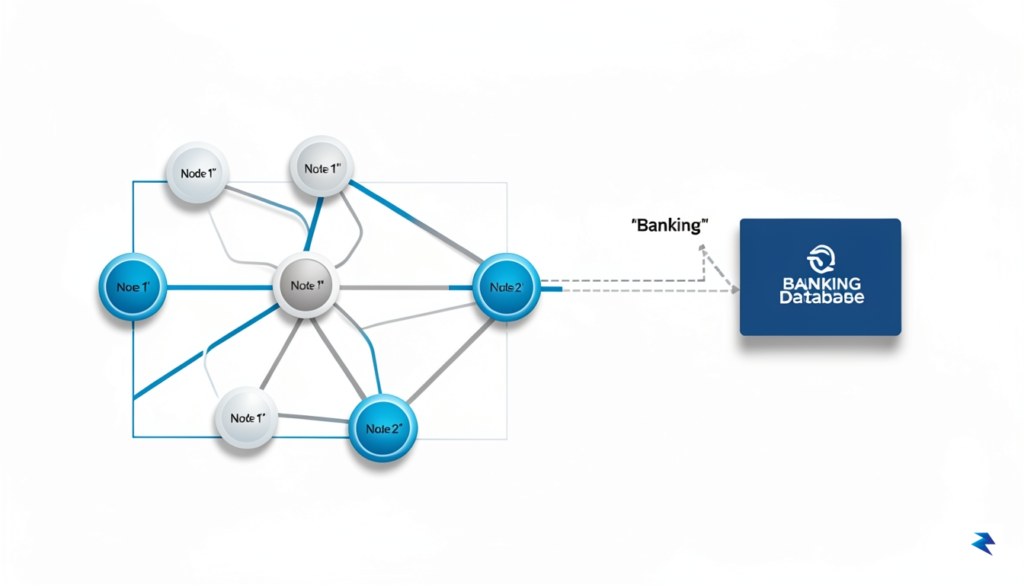
At its core, the transition toward tokenized securities represents a fundamental modernization of the “plumbing” that keeps the global economy functioning. Rather than simply replacing existing systems, the DTCC is building a bridge between traditional financial infrastructure and the high-speed, transparent world of distributed ledger technology (DLT). By migrating the ownership records of securities onto a blockchain, the firm is effectively creating a digital twin of traditional assets. This allows for the simultaneous movement of ownership and payment, a process that historically required days of reconciliation across various disparate banking systems.

The technical architecture relies heavily on smart contracts—self-executing code that resides directly on the ledger. These contracts act as the automated custodians of the trade, programmed to enforce specific business logic that governs every transaction. When a trade occurs, the smart contract verifies the availability of assets and the validity of the participants in real-time, effectively automating the post-trade processing phase. By shifting these complex clearing and settlement tasks from manual, back-office human intervention to algorithmic certainty, the system drastically reduces the potential for human error and minimizes the “settlement risk” that has plagued financial markets for decades.
The integration of smart contracts transforms post-trade processing from a reactive, multi-day manual reconciliation into a proactive, instantaneous event that provides continuous visibility for all stakeholders.
Maintaining rigorous security and compliance standards remains the bedrock of this new model. The DTCC’s platform does not operate in a “wild west” environment; instead, it utilizes permissioned blockchain protocols where every node is vetted and authenticated. This ensures that while the ledger gains the transparency of decentralized technology, it remains shielded by the strict regulatory frameworks required by global financial authorities. Consequently, regulators can access a real-time, immutable audit trail of every transaction, which simplifies oversight without compromising the privacy of individual investors. This hybrid approach allows the DTCC to achieve the efficiency gains of decentralization while upholding the institutional-grade security that Wall Street demands. By carefully layering these protocols over existing market structures, the DTCC is proving that blockchain is not merely a tool for disruption, but a sophisticated instrument for evolution in the financial sector.

The traditional financial landscape is built upon a complex, fragmented architecture that has remained largely unchanged for decades. Currently, the “T+1” settlement cycle—while an improvement over older standards—still relies on a labyrinthine network of intermediaries, ledgers, and manual reconciliation processes. By transitioning to tokenized securities, the industry can move beyond these legacy bottlenecks. The shift toward a blockchain-based infrastructure is not merely a technological upgrade; it is a fundamental re-engineering of how assets change hands, replacing disparate, siloed databases with a single, immutable source of truth that is accessible to all verified participants in real-time.
One of the most significant advantages of this transition is the advent of atomic settlement, which effectively eliminates the temporal gap between the delivery of an asset and the payment for it. In current systems, counterparty risk persists because there is a window of time during which one party has fulfilled their obligation but has not yet received the corresponding asset. Atomic settlement, facilitated by smart contracts, ensures that the exchange occurs instantaneously and simultaneously. By removing this latency, the industry drastically reduces the need for expensive collateral buffers that broker-dealers must hold to mitigate the risk of a trade failing during the settlement window.

Furthermore, the reliance on legacy infrastructure forces custodians and broker-dealers to dedicate massive resources to the redundant reconciliation of accounts. Every intermediary in the current chain maintains its own ledger, and the labor required to ensure these records align at the end of the day represents a staggering operational cost. Blockchain technology simplifies this by providing a unified record, allowing for:
The ultimate promise of tokenized settlement lies in the shift from ‘probabilistic’ settlement—where we hope the transaction finishes as expected—to ‘deterministic’ settlement, where the code itself guarantees the outcome.
When these efficiencies are aggregated, the cost-saving potential for the global financial system becomes immense. By removing the friction inherent in the manual clearing and settlement process, the industry can redirect billions of dollars currently spent on back-office operations toward innovation and client service. Ultimately, the move toward blockchain-integrated settlement is about creating a more resilient, transparent, and responsive financial ecosystem that can operate with the speed and reliability demanded by a modern, digital-first global economy.

While the transition to tokenized securities represents a monumental shift for Wall Street, the road toward widespread, market-wide adoption remains fraught with technical and administrative complexities. Moving from a controlled pilot environment to a truly global, interconnected financial network requires more than just innovative software; it demands a fundamental re-engineering of how risk is managed across decentralized ledgers. As institutions integrate these digital assets into their core operations, the industry must address the inherent tension between the transparency of blockchain and the strict privacy requirements mandated by financial regulators.

Cyber-resilience remains a primary concern for market participants operating in a distributed environment. Unlike legacy systems that rely on centralized security perimeters, blockchain architecture introduces a different attack surface, where the immutability of the ledger can become a liability if private keys or smart contract code are compromised. Ensuring that these systems can withstand sophisticated cyberattacks while maintaining the integrity of transaction finality is a tall order. The industry must establish rigorous, standardized security protocols to ensure that tokenized assets are as protected as the traditional electronic entries they are designed to replace.
Furthermore, the path forward is heavily dependent on the development of a clear, consistent regulatory framework. Agencies such as the SEC are currently tasked with navigating the nuances of digital assets that do not always fit neatly into existing legal definitions. Without comprehensive guidance regarding cross-border compliance, reporting obligations, and investor protections, firms may remain hesitant to commit significant capital to these new platforms. The uncertainty surrounding how tokenized securities will be treated during market volatility or insolvency events creates a barrier that only sustained, collaborative dialogue between regulators and financial innovators can dismantle.
The true test of blockchain’s success in finance will not be the initial deployment, but the ability to create a seamless, cohesive ecosystem that avoids the fragmentation of the past.
Perhaps the most significant long-term challenge is avoiding what analysts call the “interoperability trap.” As various financial institutions launch their own proprietary blockchain solutions, there is a genuine risk of creating new, expensive silos that cannot communicate with one another. To achieve the efficiency gains promised by tokenization—such as near-instant settlement and reduced reconciliation costs—these diverse networks must be able to interact flawlessly. If the industry fails to adopt universal standards for data exchange and asset transfer, the promise of a unified digital marketplace could be replaced by a disjointed collection of incompatible ledgers, ultimately undermining the very liquidity that these systems were intended to foster.

The transition of tokenized securities into live trading environments signals a definitive shift in the mandate of Wall Street: the industry has moved past the speculative phase of debating whether blockchain technology belongs in finance and has entered a rigorous era of operational implementation. By integrating distributed ledger technology into the core infrastructure of the Depository Trust & Clearing Corporation (DTCC), the financial sector is laying the groundwork for a transition from legacy settlement cycles to a model defined by near-instantaneous liquidity. This evolution promises to dismantle the friction that has historically plagued secondary markets, where delayed settlement times often necessitated significant collateral requirements and introduced unnecessary counterparty risk.
For institutional asset managers and retail investors alike, the long-term implications are profound. As tokenization becomes a standard practice, we are likely to witness a dramatic democratization of institutional-grade financial products that were previously restricted by high minimum investments or complex administrative requirements. Fractionalized ownership, enabled by smart contracts, will allow for the granular distribution of high-value assets, effectively lowering the barriers to entry for a broader spectrum of participants. Furthermore, the inherent transparency of blockchain-based ledgers provides an immutable audit trail, which not only enhances regulatory oversight but also drastically reduces the reconciliation costs that currently burden global financial institutions.

Beyond simple efficiency gains, this shift points toward the emergence of a fully programmable financial system. In this future-ready landscape, securities will behave less like static entries in a ledger and more like dynamic software programs capable of executing complex instructions automatically. Dividend distributions, compliance checks, and voting rights can be hard-coded into the asset itself, ensuring that corporate actions are executed with programmatic precision rather than manual intervention. The ripple effect of this capability will touch every corner of the investment lifecycle:
The migration to tokenized infrastructure is not merely a technological upgrade; it is the fundamental re-architecting of the plumbing that underpins the global economy, turning static assets into active, self-governing participants in the financial ecosystem.
Ultimately, we are witnessing the first, critical steps toward a financial market that operates 24/7 with unprecedented transparency and reduced reliance on traditional intermediaries. As these digital assets gain wider acceptance, the distinction between “crypto” and “traditional” finance will continue to blur until both are subsumed into a single, cohesive, and resilient digital architecture. Investors who adapt to this programmable paradigm will find themselves at the forefront of a more accessible, efficient, and sophisticated era of global capital management.
You must be logged in to post a comment.