Goodbye Bikeshedding: How to Stop Arguing About Trivial Tech Decisions
The Psychology of Trivial Disagreements Have you ever been in a meeting where a simple decision, like the color of a button or the naming…
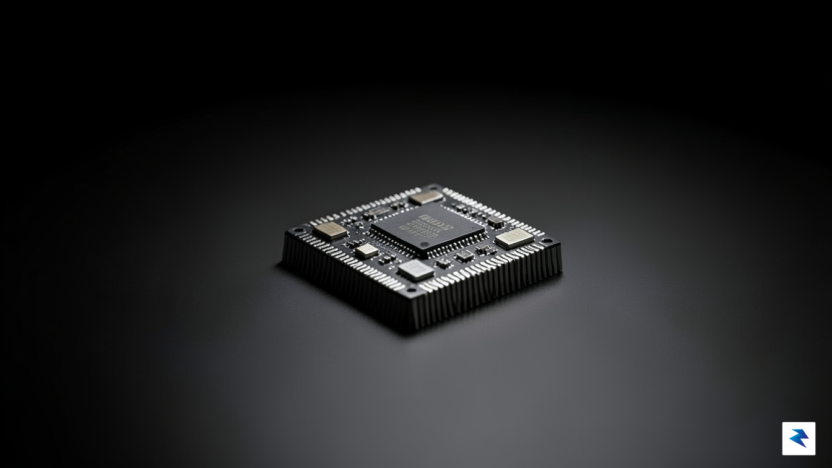

The reported delay of the internal project known as “Baltra” represents more than just a scheduling hiccup; it highlights the immense complexity involved in Apple’s transition from a consumer-focused silicon giant to a serious contender in the high-stakes world of enterprise AI infrastructure. For years, Apple has mastered the art of vertical integration by designing A-series and M-series chips that power iPhones, iPads, and Mac computers with unparalleled efficiency. However, scaling this expertise to the data center—where the demands for thermal management, high-bandwidth memory, and constant uptime are exponentially higher—is a different beast entirely. By attempting to develop proprietary server-grade silicon, Apple is effectively trying to replicate the performance of established industry titans, a move that requires navigating a delicate balance between ambitious design goals and the harsh realities of supply chain and fabrication logistics.
In the current landscape, where the “AI boom” is driving unprecedented demand for compute power, any delay in the development cycle can have cascading effects on a company’s strategic roadmap. While hardware delays are a common occurrence in the tech industry—often resulting from unforeseen engineering challenges or the need for more rigorous testing—the significance here lies in the timing. Apple’s “Apple Intelligence” initiative relies heavily on a robust cloud-based backend to handle complex tasks that go beyond local device processing. If the Baltra chip is intended to serve as the backbone for this private cloud infrastructure, a delay forces the company to rely longer on external partners or general-purpose hardware that may not offer the same level of optimization as custom-built silicon.
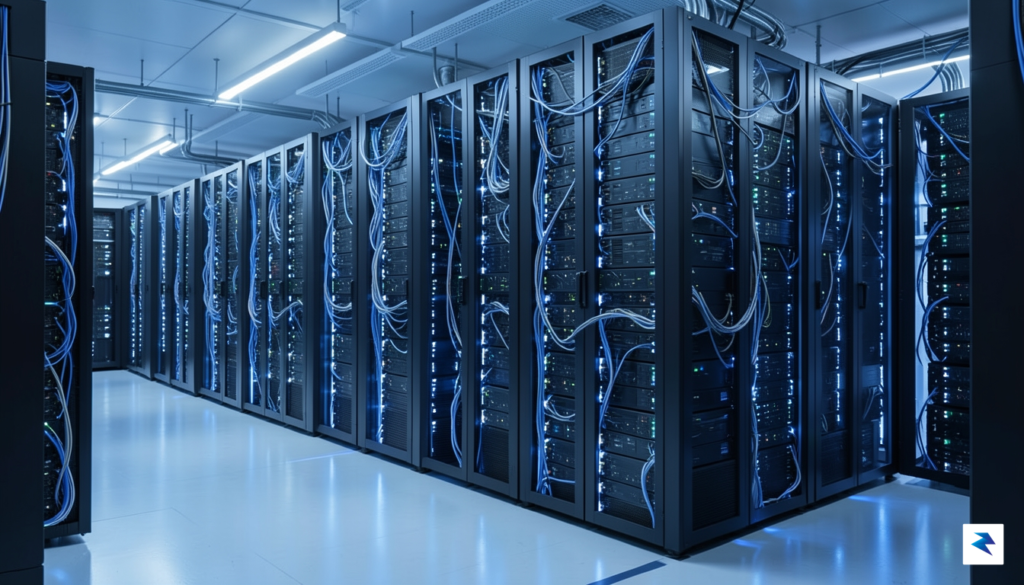
The transition from consumer-facing silicon to enterprise-grade server hardware is perhaps the most significant structural shift Apple has attempted since the introduction of the M-series transition in 2020.
Ultimately, the Baltra project is a litmus test for Apple’s long-term autonomy. If the company can successfully bring its own server chips to market, it will gain the ability to tailor its AI performance specifically to its software ecosystem, potentially achieving a level of efficiency that competitors using off-the-shelf components cannot match. Conversely, these reported hurdles underscore that even a company with Apple’s vast capital and talent pool is not immune to the fundamental difficulties of server-side hardware development. The coming months will likely reveal whether these delays are merely minor adjustments in a long-term research effort or indicative of more profound hurdles in scaling Apple’s silicon prowess to the massive, power-hungry requirements of the modern cloud.
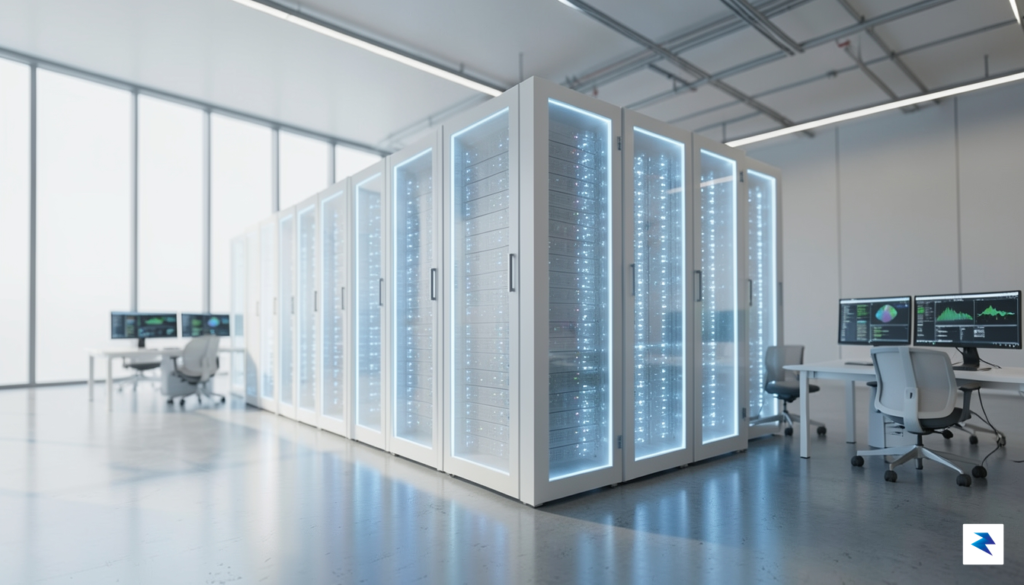
The modern landscape of artificial intelligence is frequently misunderstood as a purely software-driven revolution, yet the reality is anchored in the grueling physical constraints of silicon and power. While much of the conversation focuses on the capabilities of Large Language Models (LLMs), the true battleground has shifted to the underlying infrastructure required to sustain them. On-device AI, which Apple has championed for its immediate responsiveness and privacy, relies on the efficient Neural Engine architecture within its consumer hardware. However, the most sophisticated tasks—those requiring massive data synthesis and complex reasoning—demand a cloud-based backbone that is far more taxing than what a smartphone can provide. This transition toward a hybrid model necessitates a robust server-side foundation capable of handling immense computational loads without compromising the privacy guarantees that define the Apple brand.
Training and running state-of-the-art AI models require sustained, high-bandwidth communication and massive parallel processing power that goes well beyond the thermal limits of a pocket-sized device. This is where the industry faces a significant infrastructure bottleneck: the reliance on third-party cloud providers often introduces latency, security vulnerabilities, and a lack of control over the hardware stack. By pivoting toward custom server chipsets, Apple is signaling that it no longer views third-party reliance as a sustainable strategy for its intelligence ambitions. The goal is not merely to increase raw speed, but to create a vertically integrated ecosystem where the hardware in the data center is as purpose-built as the silicon in an iPhone, ensuring that private data remains within a proprietary, secure, and highly efficient environment.
The true competitive advantage in the AI era is no longer just the model itself; it is the seamless, private, and high-performance integration between the local device and the custom-built infrastructure that supports it.
This strategic shift highlights a critical realization: true privacy-preserving AI cannot exist in a vacuum. If Apple intends to deploy advanced machine learning features that require intensive computation, it must architect the server-side hardware to match the efficiency of its custom-designed M-series chips. Relying on off-the-shelf components from third-party data centers often forces compromises in power consumption, thermal management, and data throughput. By developing its own server-class silicon, Apple ensures it has complete control over the entire pipeline—from the initial training phase to the final inference request—thereby minimizing the potential for data leakage and maximizing the performance-per-watt ratio that has become a hallmark of their engineering philosophy.
Ultimately, the infrastructure challenges currently faced by tech giants demonstrate that the physical hardware is the primary limiting factor for scalable AI. For Apple, the development of custom chips is an investment in long-term independence. By internalizing these hardware requirements, the company is effectively building a “private cloud” that mirrors the security architecture of its user devices. This meticulous approach to infrastructure is what will differentiate their intelligence platform from competitors who remain tethered to generic, centralized hardware solutions that struggle to balance the conflicting demands of high-speed processing and rigorous user privacy.

Faced with the mounting pressure of the Baltra development delays, Apple is increasingly leaning into a historical playbook that has defined its most successful technological leaps: the aggressive acquisition of specialized startups. Rather than relying solely on the slow, methodical pace of internal research and development, the company is pivoting toward a “buy-instead-of-build” strategy to secure the hardware expertise necessary to power Apple Intelligence at scale. This maneuver is not merely about purchasing patents or physical assets; it is a calculated effort to absorb elite engineering teams who possess the niche experience required to solve the complex thermal, architectural, and data-throughput challenges inherent in high-end AI silicon. By integrating these teams directly into its Cupertino-based labs, Apple aims to bypass the steep learning curves that have hindered the current Baltra timeline.
The specific types of startups currently on Apple’s radar are those specializing in advanced interconnect technology, high-bandwidth memory (HBM) optimization, and power-efficient neural processing units. These small, agile firms often hold the key to overcoming the physical bottlenecks that occur when AI workloads scale beyond the capacity of traditional consumer-grade chips. By folding these companies into its ecosystem, Apple gains immediate access to proprietary IP that would take years to develop from scratch. This talent-heavy approach is critical because, in the world of high-performance computing, the bottleneck is rarely just the raw power of the processor; it is the efficiency of the entire data pipeline. Acquiring specialized talent allows Apple to re-engineer its infrastructure to handle the massive compute loads required by Large Language Models (LLMs) without compromising the battery life or thermal efficiency that its hardware is known for.
The integration of outside expertise is not a sign of failure for Apple, but rather a strategic acceleration mechanism designed to close the gap between internal prototypes and the urgent, market-driven demand for robust AI infrastructure.
Moving forward, this acquisition-led strategy serves as a vital insurance policy against further infrastructure setbacks. When internal development hits a snag—as seen with the current reports regarding Baltra—the infusion of external talent provides the necessary intellectual capital to pivot quickly and refine the design without starting from square one. Ultimately, the success of Apple’s AI ambitions will likely depend on its ability to synthesize these disparate technical acquisitions into a cohesive, proprietary hardware architecture that is uniquely “Apple.” This move suggests that while the Baltra project has hit a speed bump, the company is doubling down on its commitment to controlling every layer of the hardware stack, ensuring that its future AI capabilities are built on a foundation of both homegrown innovation and hand-picked technological excellence.

The global semiconductor landscape is currently defined by a fragile equilibrium, where even the most dominant tech giants are subject to the volatile realities of international supply chains. Apple’s ambitious server-side projects, such as the rumored ‘Baltra’ chip, do not materialize in a vacuum; they depend on a highly specialized ecosystem of manufacturing partners, most notably TSMC. As Apple pushes the boundaries of performance for its AI infrastructure, it must contend with the fact that high-end node production—the process of etching transistors at the smallest possible nanometer scales—is increasingly strained. Capacity at these cutting-edge facilities is fought over by every major player in the industry, meaning that even a company with Apple’s massive purchasing power can face unforeseen bottlenecks when attempting to scale production for new, custom silicon.
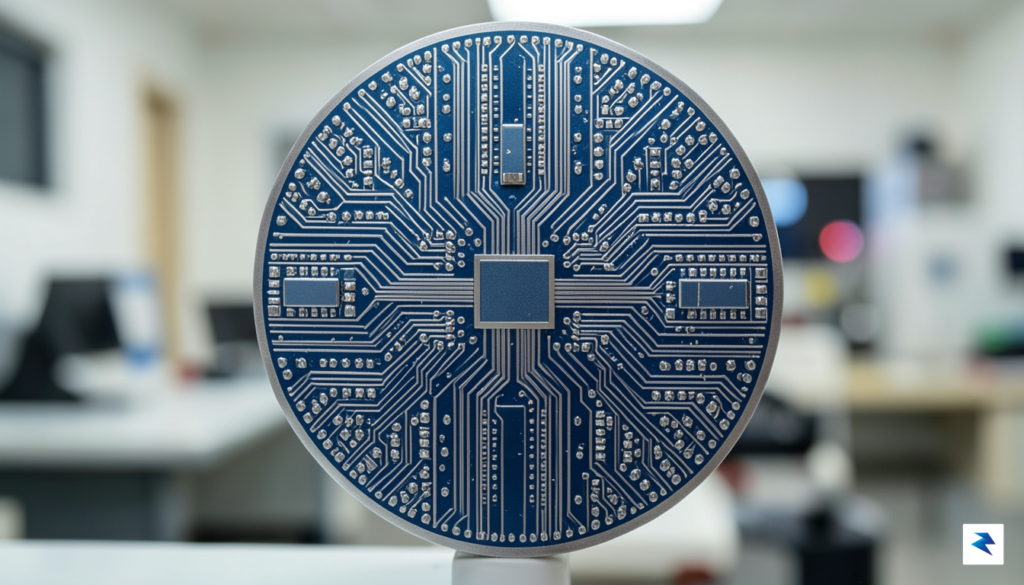
Beyond the technical hurdles of manufacturing, the industry is grappling with a shifting geopolitical map that complicates the acquisition of raw materials and specialized equipment. The production of next-generation AI chips requires a global network of inputs, ranging from rare earth elements to sophisticated photolithography machines that are subject to strict export controls and trade regulations. As nations move to protect their own domestic tech interests and secure their supply lines, the flow of critical components has become subject to sudden, unpredictable disruptions. These geopolitical frictions create a “chokepoint” effect, where the availability of the very tools needed to manufacture ‘Baltra’ can be curtailed by policy decisions made thousands of miles away from Cupertino.
The complexity of modern chip manufacturing means that a delay in the delivery of a single specialized component—or a minor adjustment in trade policy—can ripple through the entire development timeline, forcing companies to recalibrate their ambitions in real-time.
Furthermore, the shift toward server-grade AI hardware introduces a new layer of logistical complexity that Apple is still mastering. Unlike the consumer-grade chips that power the iPhone or MacBook, server-side processors require immense power efficiency and thermal management at an industrial scale. Developing these chips requires deep integration with advanced packaging technologies, which are themselves in short supply globally. Consequently, when Apple encounters delays in its server chip roadmap, it is rarely due to a lack of design ingenuity. Rather, it is a reflection of a broader, systemic struggle to coordinate a global manufacturing apparatus that is currently being asked to do more, with more constraints, than at any point in the history of computing.
The recent adjustments to Apple’s AI server chip deployment timeline, while notable, appear to be a temporary pause in what is clearly a far-reaching and deeply integrated strategy for artificial intelligence. Apple’s long-term vision remains centered on an AI experience that is both profoundly powerful and meticulously private, leveraging its unique vertical integration of hardware and software. This commitment means that every infrastructural enhancement, from the most advanced server chips in data centers to the neural engines within your iPhone, is designed with a singular purpose: to deliver unparalleled performance and user-centric features while upholding the highest standards of data security.
Ultimately, these sophisticated hardware developments, whether on-device or in the cloud, will manifest as remarkably intelligent and intuitive features for consumers. Imagine Siri becoming an even more indispensable personal assistant, capable of understanding complex, multi-turn requests with uncanny accuracy and proactively offering relevant suggestions based on your context, without needing explicit prompts. Picture your photo library not just organizing images by date or face, but intelligently curating memories, suggesting creative edits, or even generating new content based on your personal style. These capabilities will be fueled by the underlying compute power, ensuring that Apple Intelligence doesn’t just respond to commands, but anticipates needs and enhances daily interactions in a seamless, almost prescient manner.
Apple’s approach to AI infrastructure cleverly balances local processing with cloud-based compute, a strategy that is fundamental to its privacy philosophy. Sensitive personal data and immediate, on-device tasks are primarily handled directly on your device, ensuring that your most private information never leaves your control. However, for more complex, computationally intensive AI models—those requiring vast datasets and immense processing power for training and inference—secure private cloud infrastructure becomes essential. Projects like the delayed AI server chip are crucial to this hybrid model, providing the robust, scalable backbone necessary to power advanced AI services that extend beyond the capabilities of a single device, all while maintaining Apple’s stringent encryption and anonymization protocols.
In the broader AI landscape, Apple’s position stands distinct from competitors like Microsoft and Google, who often lean heavily on vast public cloud services and more open data models. While these companies offer powerful and pervasive AI, Apple differentiates itself through its unwavering focus on a cohesive, private ecosystem. This allows for deeper integration of AI into every facet of its products, from the operating system to individual applications, creating a more personalized and secure user experience. Despite any temporary setbacks in infrastructure deployment, Apple’s commitment to this unique blend of on-device intelligence and private cloud compute positions it as a formidable, if uniquely deliberate, player in the race to define the future of AI.
The long-term outlook for Apple Intelligence, therefore, remains exceptionally strong. The current infrastructure challenges, far from indicating a wavering commitment, underscore the complexity and ambition of Apple’s endeavor to build a truly differentiated AI platform. These hurdles are merely temporary waypoints on a journey towards a future where Apple products are not just smart, but intuitively intelligent, deeply personal, and inherently trustworthy. The investment in cutting-edge server chips and a robust, privacy-centric cloud infrastructure is a clear signal that Apple is building for the decades to come, ensuring that its vision for AI will profoundly reshape how users interact with technology.
You must be logged in to post a comment.