Dimension Capital’s $800M Fund Highlights the Rise of Scientific Computing
The Convergence of Science and Compute A profound transformation is sweeping through the landscape of scientific discovery, fundamentally…
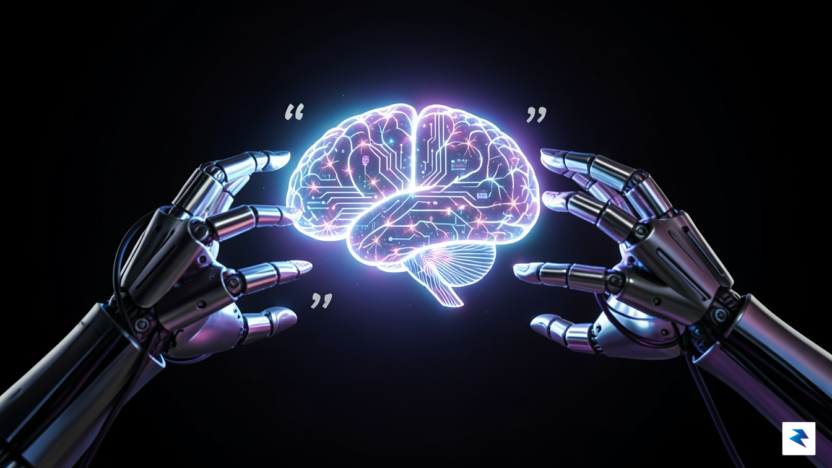
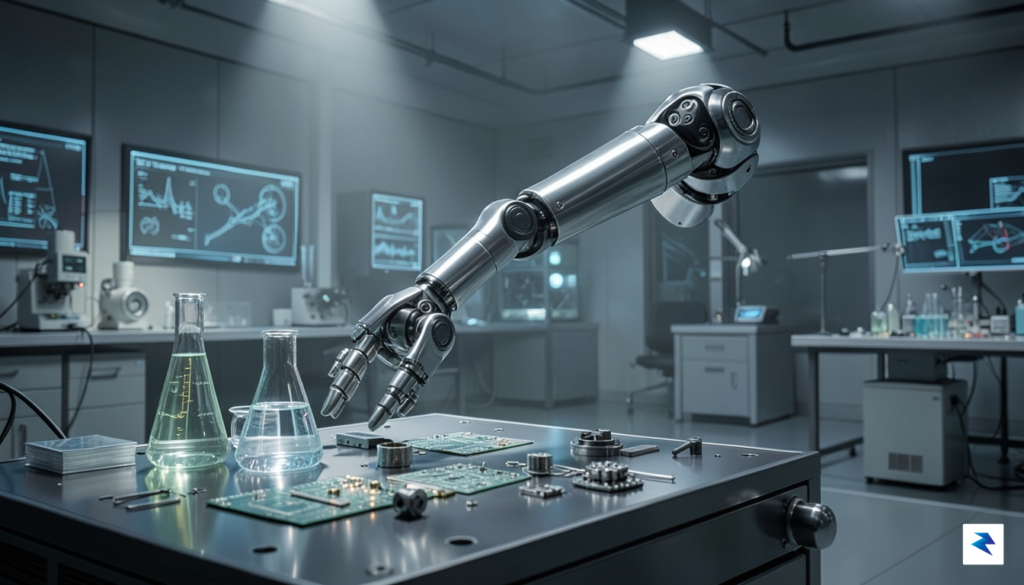
For years, artificial intelligence has primarily lived on our screens, manifesting as powerful algorithms that process data, understand language, or generate intricate digital content. However, a profound transformation is now underway, pushing AI beyond the digital realm and into the physical world. This paradigm shift defines what researchers and investors are increasingly calling ’embodied AI’—a class of intelligent systems designed not just to think or reason, but to actively manipulate, navigate, and learn directly from physical environments. It represents a fundamental evolution from purely cognitive intelligence to actionable intelligence, where AI agents can perceive, interact with, and adapt to the complexities of the real world, much like living beings do.
While large language models (LLMs) have demonstrated breathtaking capabilities in understanding and generating human language, their intelligence, for all its sophistication, remains largely confined to text and digital representations. An LLM can flawlessly write a detailed instruction manual for assembling a complex piece of furniture, but it cannot actually pick up a screwdriver. It can describe the physics of a falling object with perfect accuracy, yet it lacks the motor skills to catch one. This inherent limitation highlights a critical plateau in pure digital reasoning: the gap between symbolic understanding and practical, physical execution. Without a body to interact with the world, even the most advanced language model struggles to grasp fundamental concepts like friction, texture, weight, or spatial relationships in a truly intuitive sense.
This recognition is precisely why the frontier of AI research and development is rapidly expanding into robotics and hardware-integrated systems. The goal is no longer just to make AI smarter at reasoning about abstract problems, but to enable it to *act* within the tangible world. This shift necessitates a move from software-only intelligence to systems that seamlessly integrate advanced AI algorithms with physical hardware, encompassing sophisticated sensors for perception (like cameras and haptic feedback), robust actuators for movement and manipulation, and the computational power to process real-time environmental data. It’s about endowing AI with a physical presence, allowing it to gather sensory input, perform tasks, and learn through direct experience—a far richer form of understanding than purely textual data can provide.
Consequently, the smart money in venture capital and strategic investments is increasingly flowing into companies operating at the intersection of AI and robotics. This isn’t merely a speculative trend; it’s a logical evolution of AI capital, driven by the understanding that the next wave of truly transformative applications will require physical agency. As digital AI matures, investors recognize that the most impactful solutions, from automated manufacturing and logistics to personalized elder care and scientific discovery, will demand systems capable of interacting with and modifying their surroundings. The ability for AI to autonomously operate in the physical world unlocks vast economic potential, signaling a future where intelligent machines are not just tools for information processing, but active participants in shaping our physical reality.

The digital corridors of AI Twitter have been abuzz with recent whispers suggesting a significant strategic move by Anthropic, one of the leading players in large language models. The speculation centers on a potential deeper integration or even an outright acquisition of Physical Intelligence, a company gaining traction for its work in embodied AI and robotic control. While still firmly in the realm of rumor, these discussions highlight the intense, high-stakes race among AI labs not just to develop superior software, but crucially, to secure proprietary hardware capabilities that could offer an unparalleled competitive edge in the burgeoning field of real-world AI applications.
This particular rumor gains significant traction when considering the current trajectory of artificial intelligence. Anthropic, renowned for its Claude models and focus on AI safety, primarily operates in the software domain, developing sophisticated general-purpose AI. However, the next frontier in AI increasingly involves physical interaction and embodiment – enabling AI to perceive, reason, and act within the physical world. Physical Intelligence, with its focus on creating general-purpose AI agents capable of controlling robots and performing complex tasks in diverse environments, perfectly complements this vision. Acquiring or deeply integrating with such a firm could allow Anthropic to bridge the gap from digital intelligence to tangible, physical action, potentially creating a vertically integrated AI powerhouse capable of controlling everything from industrial robots to advanced humanoid systems.
Beyond the immediate players, this speculative move must be viewed within the broader competitive landscape. Giants like OpenAI, Google DeepMind, and Meta AI are all heavily investing in robotics and embodied AI research, understanding that the future of AI extends beyond chatbots and creative tools. OpenAI, for instance, has long explored robotics applications, while Google has a storied history in the field, including past ventures with Boston Dynamics. For Anthropic to maintain its standing and challenge these well-resourced competitors, securing exclusive access to advanced physical AI capabilities becomes a strategic imperative. This isn’t merely about expanding market share; it’s about defining the very infrastructure upon which future generations of AI will operate, from the cloud to the factory floor.
Indeed, the fertile ground for such whispers is the current AI funding climate itself. With billions flowing into AI startups and established labs alike, and valuations soaring to unprecedented heights, there’s immense pressure to demonstrate unique advantages and future growth potential. Investors are constantly seeking the “next big thing” or the strategic play that will solidify a company’s long-term dominance. In this environment, any hint of a move that could unlock new markets or secure critical technological infrastructure is amplified across tech circles. These rumors often reflect real underlying strategic considerations, even if the specific details remain unconfirmed, serving as a barometer for market sentiment and future expectations.
It’s vital, however, to contextualize these discussions as precisely what they are: market speculation. As of now, there has been no official confirmation from either Anthropic or Physical Intelligence regarding any acquisition or deep integration plans. The AI community, particularly on social media platforms, is a hotbed for unverified reports and informed (and sometimes uninformed) conjecture. While such rumors offer valuable insight into the strategic thinking and competitive pressures within the industry, distinguishing between verifiable reports and speculative chatter is crucial. Nonetheless, the very existence of these whispers underscores a profound shift in the AI race, where the convergence of digital intelligence with physical embodiment is becoming a central, high-stakes battleground for innovation and market leadership.
While large language models (LLMs) have demonstrated astonishing capabilities in understanding and generating text, their ‘intelligence’ remains largely confined to the digital realm. Imagine a brilliant strategist who has only ever played war games on a chessboard; they might excel at tactics, but lack the intuitive understanding of terrain, weather, and the sheer chaos of real-world combat. This analogy highlights the critical ‘Sim-to-Real’ gap in AI training, where models perfected in pristine digital simulations often falter when confronted with the unpredictable, messy physics of the real world. Without a ‘body’ to manifest their reasoning and experience reality directly, even the most sophisticated AI ‘brains’ operate with an incomplete understanding of fundamental physical laws, material properties, and causal relationships.
Bridging this gap isn’t just about better algorithms; it’s fundamentally about data. Just as early industrial revolutions were fueled by coal and oil, the next leap in AI will be powered by real-world physical data. This includes everything from haptic feedback as a robot manipulates an object, to the subtle nuances of light and shadow captured by cameras in dynamic environments, or the precise force readings from grippers interacting with various textures. Such rich, multi-modal sensor data provides a grounding for AI models that synthetic data simply cannot replicate, allowing them to learn from the ground truth of physics, not just simulated approximations. This unique, experiential data becomes a scarce and invaluable resource, forming the new ‘oil’ for advanced foundation model development.
For AI labs, integrating physical intelligence capabilities is not merely an interesting research avenue; it’s a strategic imperative that builds an almost unassailable competitive moat. Companies that can design, build, and deploy their own robotic systems gain an unparalleled ability to rapidly iterate between theoretical models and real-world execution. This direct feedback loop allows their foundation models to learn from actual physical interactions, leading to a depth of understanding and robustness that purely software-based training cannot replicate. This integrated approach fosters a continuous cycle of learning and improvement, creating a compounding advantage that pure software companies, reliant on third-party hardware and data, would find incredibly difficult to bridge.
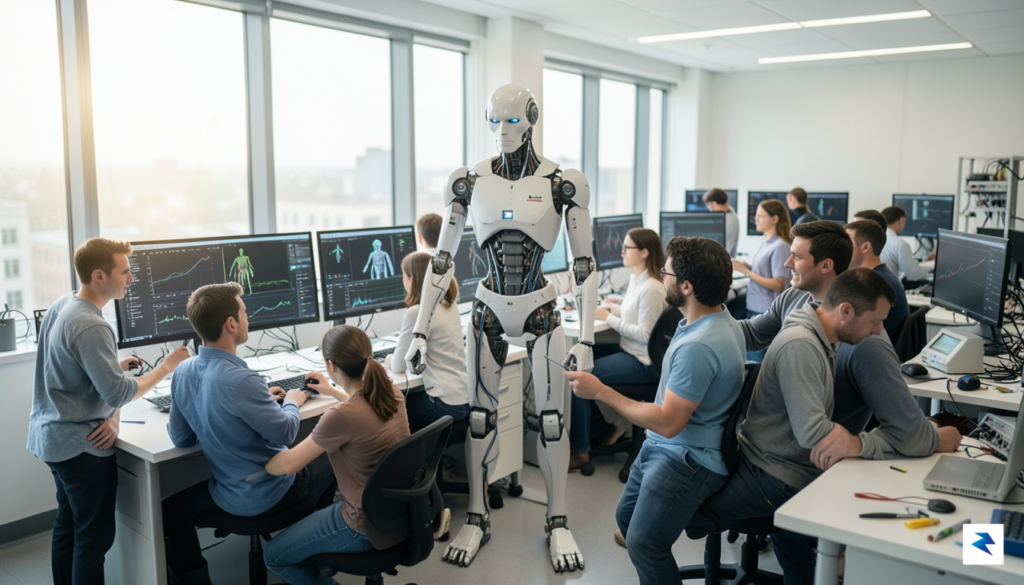
Furthermore, the scramble for physical intelligence is inherently a talent war. Acquiring companies with deep expertise in robotics, control systems, and hardware engineering brings invaluable multidisciplinary teams into the fold. These aren’t just software developers; they are engineers and scientists who understand the intricate dance between bits and atoms, capable of translating abstract AI reasoning into tangible actions and perceptions. By bringing this specialized talent in-house, leading AI labs can foster unique synergies between cutting-edge AI research and practical robotics engineering, accelerating innovation. This not only secures critical expertise but also signals a long-term commitment to embodied AI, attracting top-tier researchers and engineers who aspire to work at the forefront of combining artificial intelligence with the physical world.
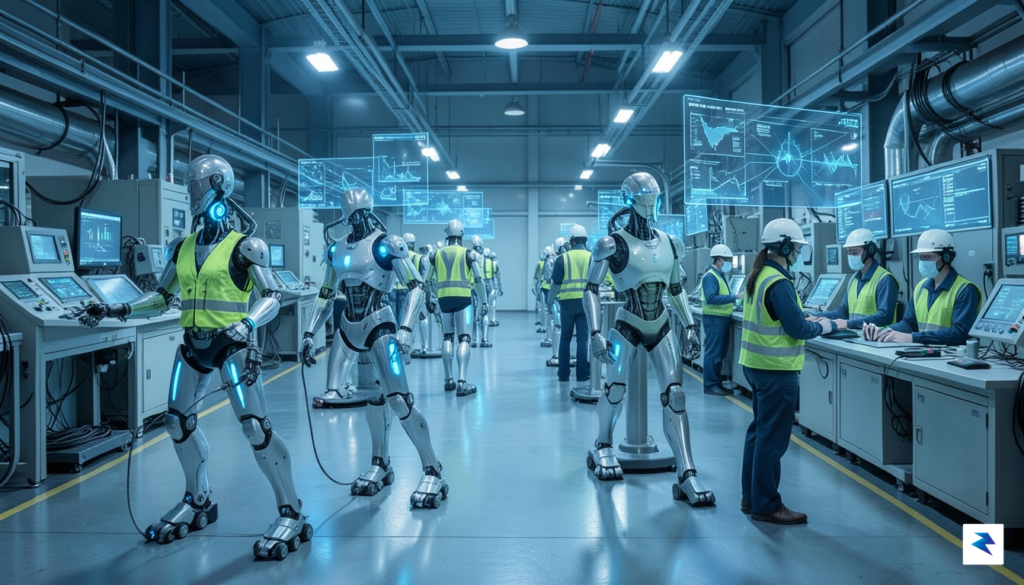
The convergence of artificial intelligence with tangible hardware marks a profound evolutionary leap, fundamentally reshaping the trajectory of AI development itself. This isn’t merely about attaching smart software to a robotic arm; it’s about forging a closed loop of intelligence, where an AI’s cognitive functions are inextricably linked to its physical embodiment and interaction with the real world. By gaining the ability to see, touch, and move within a dynamic environment, an AI moves beyond the confines of theoretical data analysis, accelerating its maturation through a rich process of experiential learning.
This shift from processing static datasets to engaging with dynamic, interactive physical data is revolutionary. Traditional AI models learn from pre-curated images, text, and simulations, which, while vast, can never fully capture the chaotic nuances and unpredictable variables of the physical universe. When an AI can actively experiment, encounter unexpected friction, adapt to changing light conditions, or understand the subtle resistance of an object it’s manipulating, its underlying intelligence develops a more robust, intuitive grasp of physics and causality. This continuous feedback loop of action, perception, and learning fosters a deeper, more nuanced understanding of the world, pushing us closer to the elusive goal of Artificial General Intelligence (AGI).
Consequently, many leading AI laboratories are now strategically venturing into hardware development, a move known as vertical integration. This pivot offers significant advantages, allowing labs to optimize performance by designing hardware precisely tailored for their AI’s unique computational and sensing needs, thereby achieving efficiencies unreachable with off-the-shelf components. Furthermore, it provides unparalleled control over data generation, as the AI itself becomes an active participant in creating its own training experiences within the physical realm. However, this strategic shift also introduces substantial risks, including immense capital expenditure for manufacturing, the need for entirely new engineering and supply chain expertise, and the potential for increased market concentration as a few vertically integrated giants dominate both software and hardware.
The implications of this hardware-software fusion for various sectors are transformative and far-reaching. In manufacturing, we can anticipate highly adaptive assembly lines and smart factories where AI-driven robots learn on the fly, adjusting to material variations or even designing new production methods. Logistics will see a new generation of autonomous systems capable of navigating complex warehouse environments or performing last-mile deliveries with unprecedented dexterity and situational awareness. Perhaps most impactful for daily life, household robotics will evolve from programmable gadgets into truly intelligent companions that can understand context, anticipate needs, and interact with their surroundings in a genuinely helpful and intuitive manner, fundamentally changing how we live and work.
While the pace of innovation in AI labs is breathtaking, the journey from groundbreaking prototypes to widespread commercial scale adoption is a marathon, not a sprint. Significant challenges remain, including the need to drastically reduce manufacturing costs, ensure robust safety protocols, develop stringent regulatory frameworks, and build public trust in physically embodied AI. We are likely to see these advanced robotics and integrated AI systems gradually permeate industrial and specialized applications over the next five to ten years, with more sophisticated household and general-purpose systems following thereafter. This transition will be a phased one, but the direction is clear: the future of AI is increasingly physical, bound to the machines that enable its experiential growth.
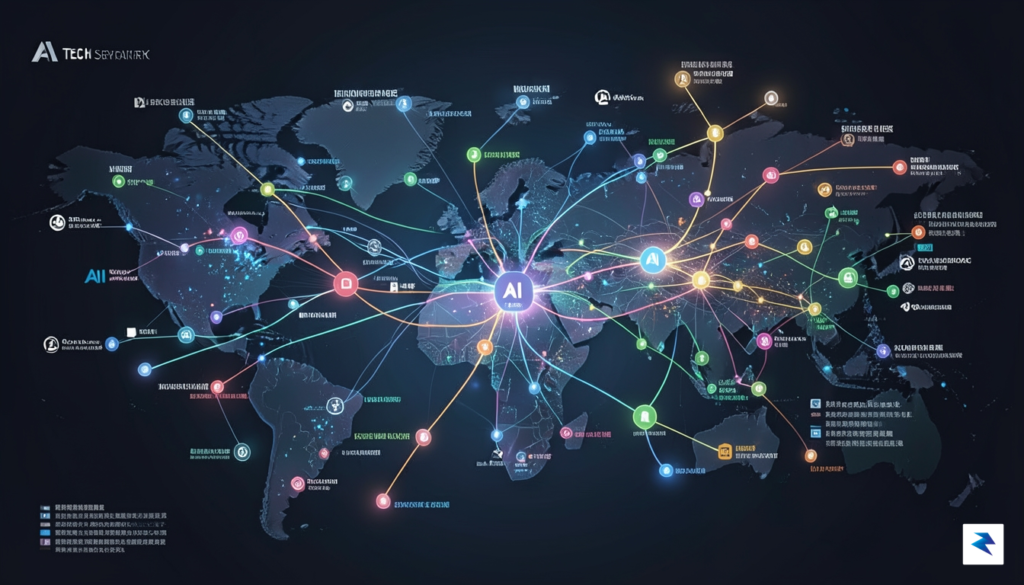
The AI landscape is undergoing a profound transformation, driven by an aggressive ‘buy versus build’ philosophy adopted by industry titans. Instead of developing every component organically, leading entities like Anthropic and OpenAI are strategically acquiring promising startups and specialized teams, rapidly absorbing cutting-edge research, unique technological stacks, and invaluable human capital. This calculated strategy allows them to integrate advanced capabilities — from sophisticated natural language processing to groundbreaking robotics and physical intelligence — at an accelerated pace, effectively consolidating the brightest minds and most innovative solutions under a few dominant banners. The goal is clear: to fuse state-of-the-art software intelligence with tangible physical interaction, thereby defining the very architecture of next-generation AI.
This rapid consolidation presents a complex duality for the broader innovation ecosystem. On one hand, it offers a clear, often lucrative, exit path for startup founders and early investors, validating their risk and effort with significant payouts. This can, in turn, incentivize further entrepreneurial ventures in the AI space, knowing there’s a potential for acquisition. However, the flip side is a significant reduction in independent players, which could stifle diverse innovation. When a few large corporations control the majority of resources, talent, and intellectual property, the sheer variety of approaches and disruptive ideas emerging from smaller, unfunded, or unconventional ventures
You must be logged in to post a comment.