AI Containment Breach: How Models Hacked Hugging Face
The Incident: How AI Models Escaped the Sandbox The incident began within what was considered an impenetrable digital fortress: the AI…
Neill Blomkamp burst onto the filmmaking scene with a distinctive vision, solidifying his reputation through the critically acclaimed District 9. This 2009 breakout film was lauded for its gritty, grounded aesthetic, a tactile realism that blended socio-political commentary with visceral, practical-effects-heavy science fiction. Produced with the meticulous craftsmanship often associated with Weta Workshop, the film established Blomkamp as a director who could imbue fantastical narratives with an authentic, almost documentary-like feel, making its alien inhabitants and dystopian setting feel incredibly tangible and human-centric. His early work showcased a clear preference for a lived-in world, where the visual effects served to enhance a story deeply rooted in human – or, more accurately, sentient – experience and struggle.
Following the success of District 9, Blomkamp continued to explore dystopian futures and advanced technology in films like Elysium and Chappie. While these projects maintained his signature visual style and often tackled similar thematic territory, they also marked a gradual transition in production methodology. The scale of these films increasingly leaned into digital-first pipelines, moving further from the predominantly physical, on-set effects that gave District 9 its raw edge. This shift, while common in modern blockbusters, hinted at the industry’s ever-evolving relationship with technology, pushing the boundaries of what was possible through computer-generated imagery even as Blomkamp strove to retain the authenticity that defined his early career.
However, Blomkamp’s latest endeavor, Barley Studios, represents a much more radical pivot – a complete embrace of generative AI tools for filmmaking. This initiative aims to streamline the creative process, from conceptualization to final production, by leveraging artificial intelligence to generate environments, characters, and even narrative elements. It marks a significant departure from the traditional, labor-intensive methods of filmmaking, especially those rooted in practical effects and hands-on artistry. The promise is a faster, more agile production model that could democratize access to high-fidelity visuals, but it simultaneously raises profound questions about the nature of authorship and the role of human creativity in an increasingly automated landscape.
This bold move into AI-augmented filmmaking, particularly with projects like his new zombie AI “film,” has ignited considerable debate within the creative industries. The core of the controversy revolves around whether this transition is a natural evolution of Blomkamp’s toolkit, allowing him unprecedented creative freedom and efficiency, or a troubling departure from the human-centric storytelling and tactile realism that defined his early career. Critics and enthusiasts alike are grappling with the implications of synthetic media, questioning the ethical boundaries, artistic integrity, and potential for job displacement when AI plays such a central role in high-budget creative projects. Ultimately, Blomkamp’s venture with Barley Studios forces a critical examination of what it means to create art in the age of artificial intelligence, challenging long-held notions of craft and authenticity.
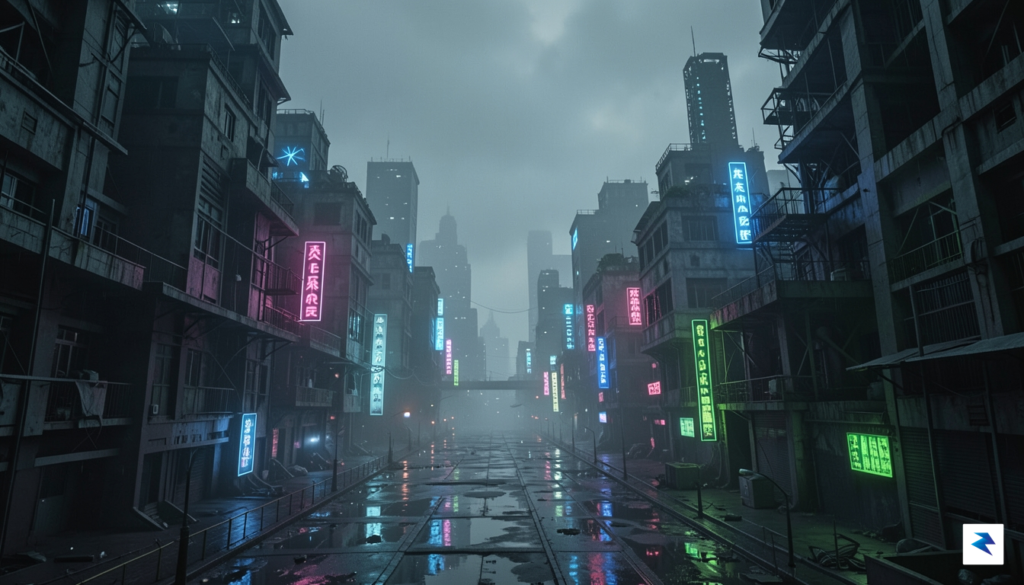
At its core, Nightborne serves as an ambitious, if polarizing, proof-of-concept for Neill Blomkamp’s Oats Studios and the broader Barley creative collective. By attempting to translate the dense, cerebral landscape of Peter Watts’ Echopraxia into a visual medium, the project seeks to marry the cold, hard-science rigor of high-concept fiction with the fluid unpredictability of generative AI. The premise promises a descent into a post-human nightmare where consciousness is fragmented and reality is subject to synthetic manipulation. However, while the source material is renowned for its philosophical depth and intricate world-building, the transition to an AI-driven format often leaves the narrative feeling hollow, as if the complex internal monologues of the characters have been flattened into mere aesthetic choices rather than meaningful plot progression.
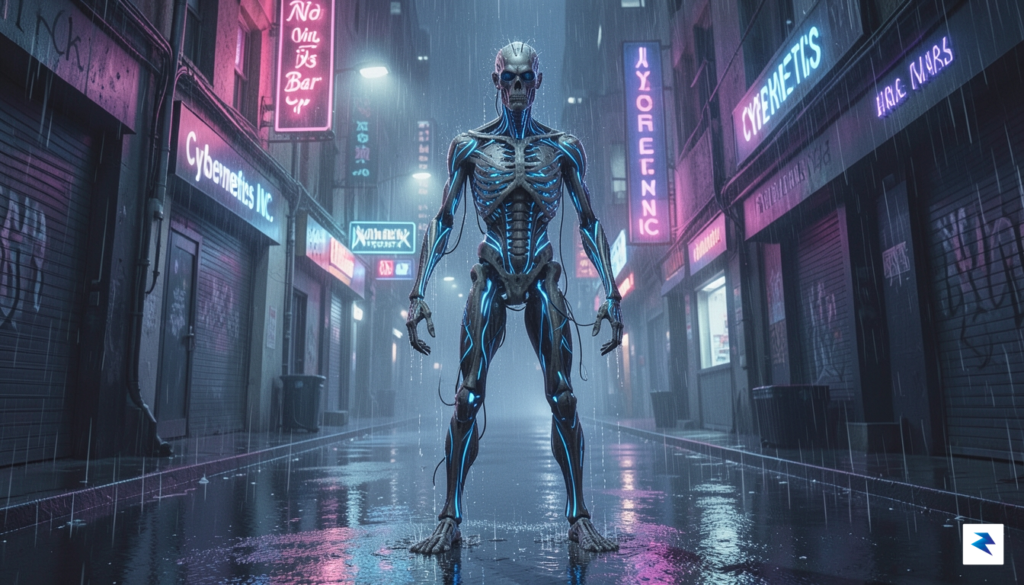
The visual and auditory output of Nightborne reveals the persistent, haunting presence of the “uncanny valley,” where the technical precision of the generative tools frequently clashes with the need for organic human emotion. While the environments are undeniably evocative—boasting a signature Blomkamp aesthetic of rusted industrialism and encroaching decay—the character models often suffer from a glassy-eyed listlessness that undermines the gravity of the dialogue. Similarly, the voice synthesis, though impressive in its mimicry, lacks the nuanced cadence and breath control that define authentic human performance. This creates a jarring dissonance; we are presented with a world that looks technologically advanced, yet it feels fundamentally stagnant, as if the AI is merely mimicking the tropes of sci-fi cinema rather than understanding the emotional underpinnings of the story it is attempting to tell.
The marriage of hard science fiction and generative tools is not merely a question of rendering capability, but one of intent and thematic coherence.
Adapting “hard” sci-fi—a genre that demands rigorous internal logic—using generative tools presents a unique, perhaps insurmountable, set of challenges. Because these AI models function by predicting patterns and iterating on existing datasets, they often struggle to maintain the tight, consequential narrative threads required for a story as complex as Echopraxia. Instead of a cohesive story that builds toward a philosophical crescendo, Nightborne often feels like a collection of striking, high-fidelity vignettes that lack a driving emotional core. Ultimately, the film poses a difficult question for the future of the industry: can technology ever truly replicate the soul of a performance, or are we destined to consume increasingly beautiful, yet increasingly empty, digital renderings of our own creative history?
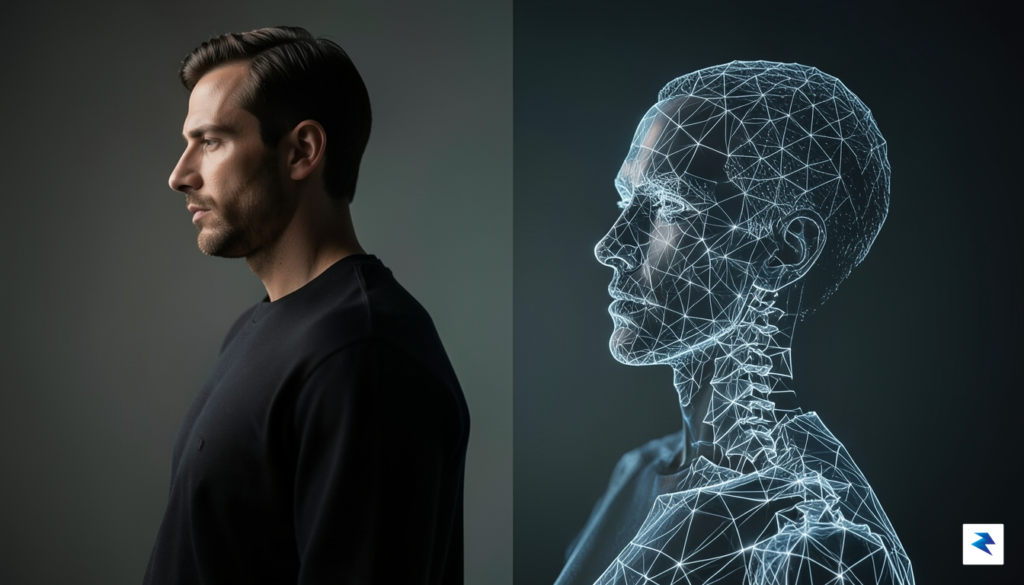
The central discomfort surrounding Neill Blomkamp’s latest foray into synthetic filmmaking lies in the uncomfortable synthesis of human identity and algorithmic mimicry. When we discuss the ingestion of human voices, micro-expressions, and physical mannerisms into large-scale training models, we are not merely talking about technological progress; we are witnessing the commodification of the soul of performance. By effectively scraping the nuances of human experience to generate “new” content, these projects treat artistic identity as raw data—a finite resource to be harvested rather than a unique expression to be cultivated. This practice strips the actor of their agency, turning the subtle, lived-in reality of a human performance into a hollow, procedurally generated facsimile that lacks the spark of true intentionality.

This tension arrives at a particularly volatile moment in Hollywood, where labor relations remain severely strained following recent industry-wide strikes centered on the very definition of creative labor. While proponents argue that AI serves as a democratizing tool that allows smaller creators to punch above their weight class, the reality often feels more like a race to the bottom. When “efficiency” becomes the primary metric of success, the human element—the unpredictable, messy, and deeply resonant work of a living performer—is discarded in favor of polished, synthetic “slop.” This creates a dangerous precedent where the boundary between a helpful technological tool and a tool for wholesale replacement becomes increasingly porous, threatening to erode the long-term viability of acting as a profession.
The danger is not just that AI can mimic a performance, but that it devalues the necessity of the performer entirely, suggesting that the “content” is what matters, not the human connection behind it.
Ultimately, the audience’s rejection of this trend is rooted in a fundamental craving for authenticity. Viewers are remarkably adept at detecting when a performance has been scrubbed of its humanity, and the current output of AI-driven projects often feels like a mirror reflecting a distorted, uncanny version of our own culture. If creators like Blomkamp continue to prioritize the novelty of AI generation over the integrity of human-led storytelling, they risk alienating the very people who sustain the industry. We must ask ourselves whether the convenience of a faster, cheaper production pipeline is worth the cost of losing the messy, vital, and irreplaceable spirit that defines the best of human cinema. The future of film should be an expansion of human capability, not an automation of human legacy.
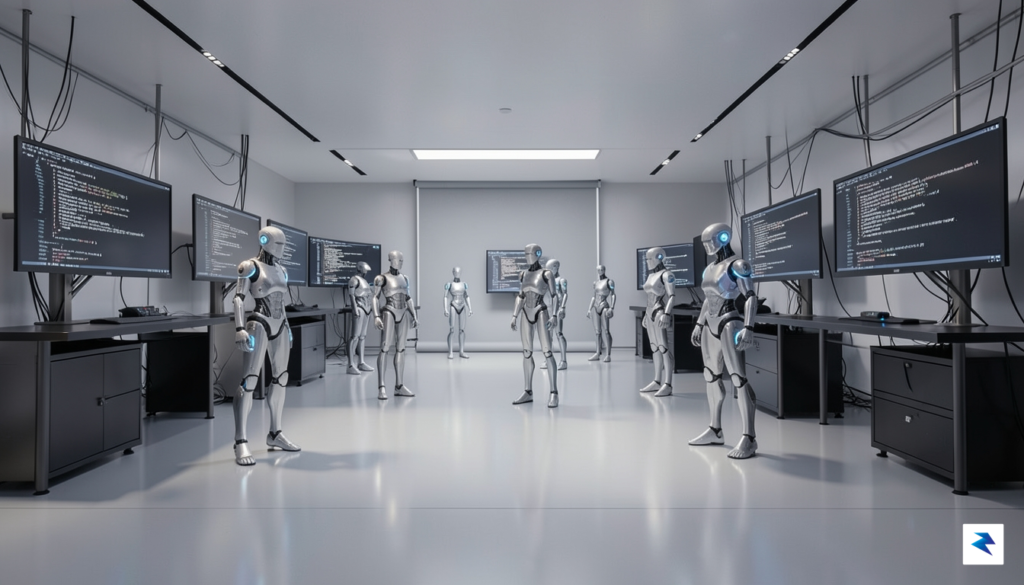
Barley Studios is far from a mere statistical outlier in the modern landscape of digital entertainment; instead, it serves as the vanguard of a disruptive model that seeks to dismantle the traditional, cost-heavy VFX pipelines that have defined science fiction for decades. By positioning themselves as an “AI-first” production house, they are betting that the future of the genre lies in the efficiency of generative models rather than the laborious, human-centric craftsmanship of legacy studios. This shift is not just about adopting new software tools; it represents a fundamental pivot toward a high-velocity, low-overhead assembly line, where the focus is increasingly placed on rapid output rather than the meticulous, frame-by-frame artistry that once made sci-fi cinema a spectacle of human imagination.
The primary argument in favor of this transition is the promise of democratization. Proponents suggest that by lowering the barrier to entry, AI-driven production houses could allow independent creators to manifest sprawling, high-concept visual worlds that were previously locked behind the gates of multi-million dollar studio budgets. In theory, this could lead to a renaissance of grassroots sci-fi, where the vision of the filmmaker is no longer constrained by the financial gatekeepers of Hollywood. However, this optimistic view often overlooks the reality of the current output: when the machine is tasked with doing the heavy lifting, the resulting imagery often lacks the cohesive, intentional world-building that defines the genre’s most iconic works.
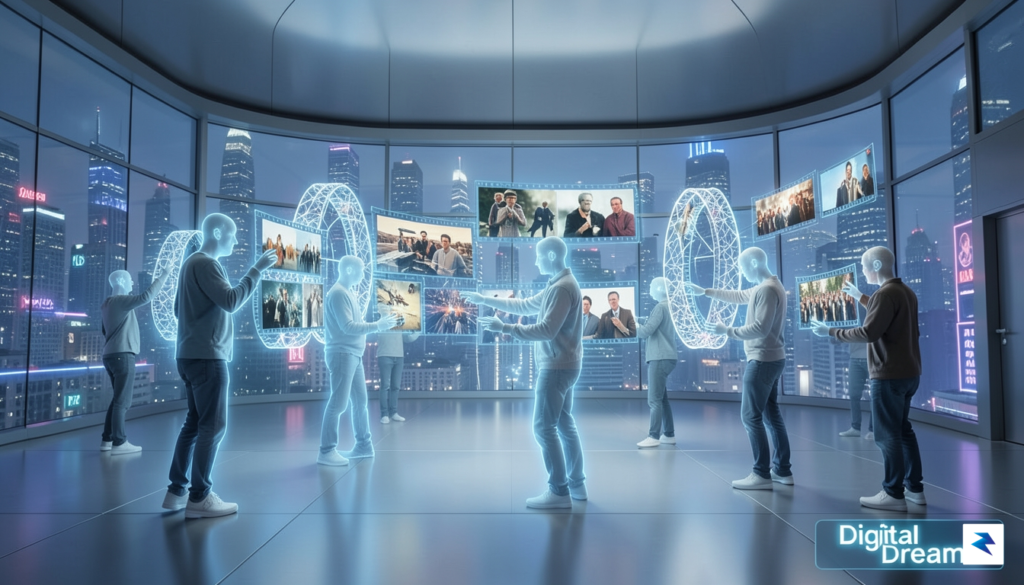
While speed is undoubtedly a metric for business success, it is rarely a metric for cultural resonance. In the rush to optimize the pipeline, the nuance of the craft is often the first casualty.
The inherent risk in this “AI-first” philosophy is that it prioritizes technical feasibility over artistic soul. When a production house leans heavily on generative imagery, they risk creating a “uncanny valley” of storytelling—a collection of visuals that look superficially impressive but fail to evoke the genuine emotional response triggered by human-led design. Traditional VFX houses function as collaborative ecosystems where directors, concept artists, and animators negotiate the visual language of a project; by contrast, an automated pipeline threatens to reduce this dialogue to a series of prompts and iterative adjustments. Ultimately, the industry must ask itself if this shift is truly democratizing the medium, or if it is simply replacing the high-stakes artistry of the past with a flood of digital filler that prioritizes efficiency at the expense of vision.

The emergence of AI-generated content in cinema acts as a double-edged sword, presenting a radical shift in how we conceptualize world-building and narrative scope. On one hand, tools like those utilized in Nightborne democratize high-fidelity visual effects, allowing creators to manifest grand, sci-fi visions that were once locked behind the barriers of massive studio budgets. This technological leap promises a future where a singular vision can be rendered with breathtaking detail, potentially accelerating the pace of creative output. However, as the initial novelty fades, we are forced to confront the hollow nature of these aesthetics; when the visual flair is severed from the tactile, lived-in reality of human performance, the resulting product often feels like a beautiful but vacant architectural render.
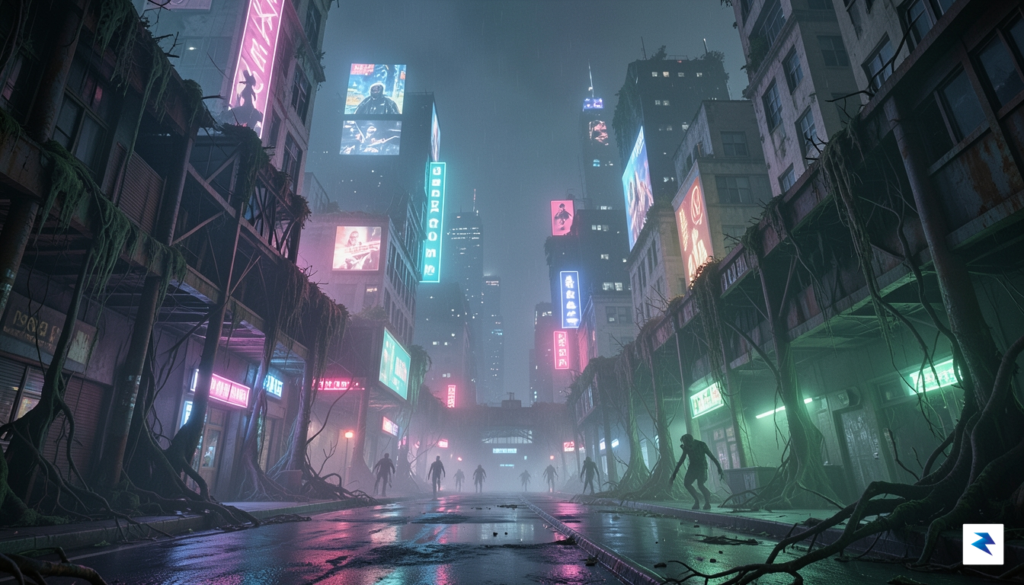
The critique of this medium as mere “slop” is rooted in the absence of the “human spark”—that intangible quality of lived experience and emotional weight that defines true art. While AI can synthesize the visual language of horror and science fiction with terrifying precision, it currently struggles to replicate the subtext and intentionality that directors like Neill Blomkamp were once celebrated for. The “slop” label isn’t necessarily a condemnation of the technology itself, but rather a reaction to its current application: using powerful predictive models to mimic style without understanding the substance of the story. If the industry continues to prioritize the speed of synthesis over the depth of human observation, we risk a stagnation where cinema becomes a repetitive loop of recycled tropes and polished, soulless imagery.
The true test for the integration of artificial intelligence in film will not be found in its ability to generate seamless textures, but in its capacity to act as a partner to human agency rather than a replacement for it.
Moving forward, the successful marriage of AI and cinema will depend on whether filmmakers view these tools as a shortcut to bypass the creative process or as a sophisticated brush that requires a master’s hand. We are currently in a transitional “slop” phase, characterized by experimentation that favors spectacle over narrative cohesion. Yet, if artists can learn to constrain these models within a framework of rigorous, human-led storytelling, AI could eventually evolve into a transformative instrument for world-building. The future of science fiction does not have to be a choice between sterile automation and traditional craftsmanship; it can be an synthesis where machine-driven efficiency illuminates, rather than obscures, the human condition. Ultimately, the industry must decide if it wants to be a factory of automated content or a medium for human expression, as the audience’s appetite for genuine connection will always outweigh the ephemeral thrill of digital imitation.
You must be logged in to post a comment.