
Seedcamp's Strategic Pivot: Breaking into the US Market

Since its inception in 2007, Seedcamp has meticulously cultivated its reputation as the preeminent architect of the European technology landscape. For nearly two decades, the firm has acted as a foundational pillar for regional innovation, providing the necessary capital and operational guidance to transform ambitious garage projects into continental powerhouses. By serving as an early-stage catalyst in hubs like London, Berlin, and Paris, the team has navigated the complexities of fragmented European markets with remarkable consistency. However, this latest $320 million fund injection signifies more than just a capital increase; it marks a fundamental shift in the firm’s maturity and its long-term ambition to operate on a truly global scale.
The timing of this expansion into the United States is both strategic and necessary within the current macroeconomic climate. As the boundaries between regional tech ecosystems blur, the most successful startups are increasingly born with a global mandate from day one, often seeking access to deep-pocketed American liquidity and commercial networks shortly after their seed rounds. By establishing a formal footprint across the Atlantic, Seedcamp is positioning itself to be the bridge that facilitates this transition, ensuring that their portfolio companies can navigate the transition from a European domestic market to the high-stakes environment of Silicon Valley and beyond without losing momentum.

Furthermore, the competitive landscape for early-stage capital has never been more intense, necessitating a more proactive approach to geographic diversification. With US-based venture firms increasingly scouting the European market for undervalued talent, Seedcamp’s move can be viewed as both a defensive fortification and an offensive expansion. By planting a flag in the US, the firm gains direct access to domestic deal flow, allowing them to compete for high-potential founders who view a US presence as a prerequisite for scaling. This move effectively transforms Seedcamp from a regional champion into a global player capable of supporting founders through the entire lifecycle of their business, regardless of where they choose to headquarter.
“The move across the Atlantic is not merely about geographical reach; it is a strategic evolution designed to ensure our founders have the institutional support they need to dominate on a global stage.”
Ultimately, this pivot suggests a maturation of the European venture capital model itself. Instead of waiting for US firms to come to Europe, Seedcamp is bringing the European investment philosophy—one characterized by long-term commitment and rigorous operational support—directly to the heart of the global tech economy. As they deploy this new capital, the industry will be watching closely to see how effectively they can replicate their successful European playbook in a market where the pace is faster, the competition is fiercer, and the stakes for success are exponentially higher.
The Evolution of European Venture Capital
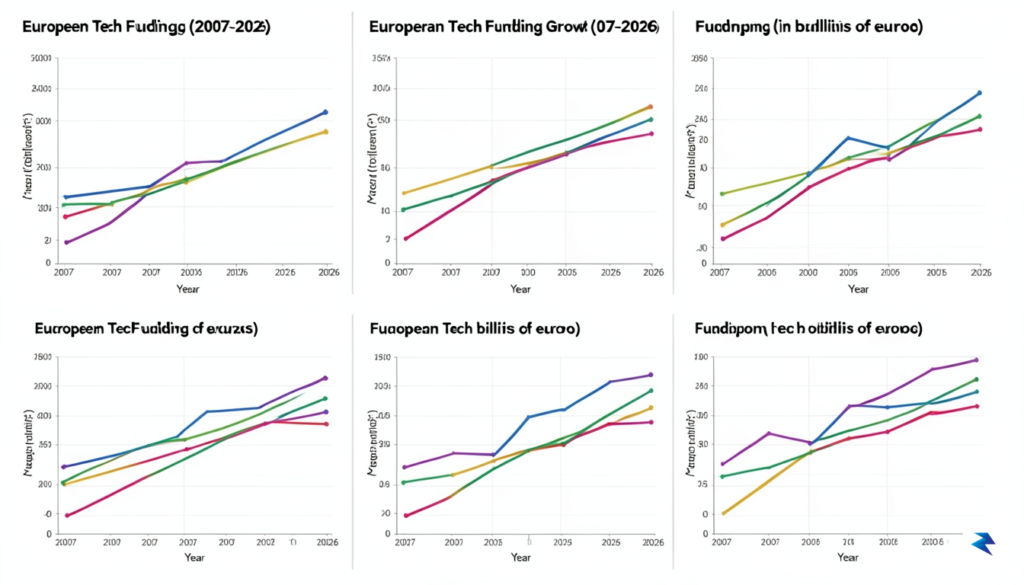
The trajectory of European venture capital has shifted from a cautious, fragmented landscape into a sophisticated, interconnected powerhouse that commands global respect. Historically, European startups were often confined by geographical borders and limited capital access, frequently struggling to scale beyond their domestic markets. However, the ecosystem has undergone a profound metamorphosis over the last decade, fueled by a new generation of founders who view their addressable market as the world, not just their home country. This maturation process has been accelerated by the rise of deep-tech expertise, robust exit environments, and an influx of both domestic and international institutional capital that now treats Europe as a primary source of high-growth innovation.
Seedcamp has been a critical architect of this evolution, effectively acting as a bridge between localized, early-stage ingenuity and the requirements of global scale. By focusing on the “pre-seed” and “seed” stages long before the broader market realized the potential of European intellectual property, the firm helped standardize the support systems necessary for young companies to dream big. They didn’t just provide capital; they cultivated a network of mentorship and operational discipline that allowed founders to bypass the traditional “European lag.” Instead of waiting to conquer local markets before expanding, the entrepreneurs nurtured by Seedcamp often built their products with a global-first mindset, setting the stage for the massive, international expansion we see today.

The current ambition of European founders represents the most significant change in this new era of venture capital. Today’s entrepreneurs are no longer satisfied with building “regional champions”; they are aggressively targeting the United States to secure market share, talent, and strategic partnerships. This shift in sentiment has pushed venture firms to adapt, necessitating a presence on the ground in the US to help their portfolio companies navigate the nuances of the American market.
The move to expand a footprint into the US is not merely about writing checks; it is about providing a structural home for European companies as they cross the Atlantic, ensuring they have the institutional backing to compete on the world’s largest stage.
This strategic evolution signifies that Europe has finally moved past the “catch-up” phase. With institutional maturity, larger fund sizes, and a proven track record of producing unicorns, the European tech industry is no longer a peripheral player. It has become a vital component of the global tech economy, and the expansion of major funds into the US is the natural, inevitable conclusion of a decade-long maturation journey.
How $320 Million Will Redefine Early-Stage Investing

The closing of this $320 million fund marks a pivotal shift in Seedcamp’s operational scale, moving beyond the traditional constraints of European-focused venture capital to embrace a truly global investment thesis. By significantly increasing its total assets under management, the firm is positioning itself to provide not just the initial “seed” spark, but a robust financial runway that can sustain a company’s growth through multiple stages of development. This capital injection is structured to facilitate deeper commitment to high-conviction startups, allowing the firm to deploy larger checks and maintain meaningful ownership stakes as these ventures navigate the complexities of international scaling.
A primary pillar of this strategy is the deliberate expansion into the United States, a move designed to bridge the gap between European innovation and the world’s most liquid venture market. By establishing a physical and strategic footprint across the Atlantic, the firm aims to act as a launchpad for founders who need to navigate the nuances of US competition, talent acquisition, and customer acquisition from day one. This cross-border capability is essential in today’s ecosystem, where the distinction between a local startup and a global disruptor is increasingly blurred by digital-first business models.

Furthermore, the fund is specifically designed to bolster follow-on investment capabilities, ensuring that Seedcamp’s most promising portfolio companies are not left stranded during subsequent fundraising cycles. In an environment defined by market volatility and tighter capital conditions, having the internal resources to double down on winners is a significant competitive advantage. This approach allows the team to be more patient and supportive, shielding founders from the pressures of premature dilution or the need to pivot their long-term vision to satisfy short-term cash flow requirements.
The true measure of this fund lies not in the headline dollar amount, but in the firm’s ability to act as a permanent partner to the founders who are building the infrastructure of tomorrow.
Identifying high-potential startups in such a saturated market requires more than just capital; it demands a rigorous, data-driven approach to pattern recognition. The team is leveraging its extensive experience to refine their selection process, focusing on founders who demonstrate both technical brilliance and an innate understanding of global market dynamics. By prioritizing companies that are solving systemic problems with scalable technology, the firm is not merely betting on trends, but is actively shaping the future of early-stage venture capital by proving that the next wave of unicorns can—and will—originate anywhere.
The Impact on Startup Ecosystems: Europe vs. America

For years, European startups have grappled with a classic dilemma: the “transatlantic gap.” While Europe serves as a prolific engine for technical talent and research-driven innovation, the path to global market dominance has historically required a pivot toward the United States to access deeper capital pools and more aggressive customer bases. Seedcamp’s latest $320 million fund acts as a vital bridge in this journey, effectively shifting the narrative from a fragmented venture landscape to a highly integrated, globalized ecosystem. By formalizing a US footprint, Seedcamp is not merely moving money across the Atlantic; they are institutionalizing the “soft-landing” process for their portfolio companies, ensuring that the transition from a local European hero to a global powerhouse is supported by institutional infrastructure rather than trial and error.

The strategic advantage of this expansion lies in the nuanced synergy between European engineering prowess and the American go-to-market engine. European founders often excel at building robust, technically sophisticated products that prioritize efficiency and long-term sustainability. However, the United States offers a distinct competitive edge: a massive, unified market that rewards speed, scale, and aggressive customer acquisition strategies. By embedding themselves in the US, Seedcamp provides its portfolio companies with immediate access to the networks, talent, and localized market intelligence that are essential for navigating the complexities of American enterprise sales. This “connected” approach means that a founder in London or Berlin can now leverage the same high-level executive connections and regulatory insights that were previously reserved for Silicon Valley natives.
The future of venture capital lies in removing geographic friction; a founder’s location should be a starting point for their ambition, not a limiting factor for their ultimate reach.
Furthermore, this move signals a broader shift in how venture capital functions in an increasingly borderless economy. As geographic lines between founders and investors continue to blur, the value-add of a VC firm is no longer defined by its proximity to a specific office, but by its ability to act as a global talent and growth connector. Seedcamp is effectively creating a pipeline that allows European innovation to flow seamlessly into the US, while simultaneously offering US-based stakeholders early access to some of the most promising technological developments in Europe. This cross-pollination of ideas and operational strategies will likely set a new benchmark for how early-stage firms operate, prioritizing global scale from day one rather than treating international expansion as a secondary, late-stage hurdle.
What This Means for Future Founders

For the next generation of entrepreneurs, the ability to think globally from day one is no longer a luxury—it is a competitive necessity. When considering a path to cross-border venture capital, founders must shift their mindset from building a regional champion to architecting a business that is inherently scalable across diverse markets. Positioning your startup for international investment requires more than just a strong product; it demands a clear narrative on how your operational model can withstand the regulatory, cultural, and competitive friction of the United States. You should begin by documenting your early traction with data that translates across borders, ensuring that your key performance indicators reflect universal growth metrics that resonate with global investors who are accustomed to different economic environments.
Choosing the right venture partner is arguably the most critical decision in this journey. Founders should look beyond the size of the check and prioritize firms that act as bridges rather than just capital providers. A partner who understands the nuances of your home market while possessing the institutional infrastructure to support a US-based expansion is an invaluable asset. This dual expertise allows you to navigate the complexities of international scaling without losing the core identity of your company. Before signing a term sheet, investigate whether the firm has a proven track record of helping portfolio companies cross the Atlantic, and look for evidence of deep networks within the specific industry verticals you intend to disrupt.
Success in the modern startup ecosystem is defined by the ability to harmonize local market execution with global scaling aspirations from the earliest possible stage.
Looking ahead, the globalization of venture capital represents a permanent shift in how innovation is funded. As capital becomes more fluid, the geographical barriers that once siloed startups into regional hubs are rapidly dissolving. This trend suggests that founders should anticipate a future where their competition is as likely to be a high-growth startup from across the ocean as it is a local incumbent. Consequently, building a foundation that is resilient enough to endure international expansion will be the hallmark of the most successful ventures. By focusing on global compatibility early on—through robust documentation, international hiring strategies, and a scalable architecture—founders will be best positioned to attract the sophisticated, cross-border capital necessary to compete on the world stage.