
The Digital Collapse: Understanding Germany’s Rail Network Failure

At the heart of Germany’s recent transportation paralysis lies a critical failure of the GSM-R (Global System for Mobile Communications – Railway) network. This specialized radio communication standard, which serves as the digital nervous system for the entire national rail grid, functions as the primary bridge between train drivers and centralized dispatchers. Unlike standard cellular networks used by the general public, GSM-R is engineered specifically to ensure high-priority connectivity for signaling, emergency commands, and logistical coordination across high-speed lines. When this system suddenly faltered, the fundamental mechanism that guarantees safe passage for thousands of locomotives was effectively silenced, leaving trains unable to receive necessary clearance to move or communicate essential status updates to control centers.
The reliance on this protocol is absolute because it underpins the European Rail Traffic Management System (ERTMS), which mandates constant digital handshakes between the trackside equipment and the train’s onboard computer. Without a functional GSM-R connection, the automated safety protocols on modern trains trigger an immediate “fail-safe” response. Essentially, if a train cannot confirm its safety instructions or verify its position with the network, it must stop immediately to prevent the risk of collisions or signal overruns. This is not merely a bureaucratic slowdown but a hard-coded technical requirement designed to prioritize passenger safety above all else, regardless of the inconvenience caused by a sudden halt.

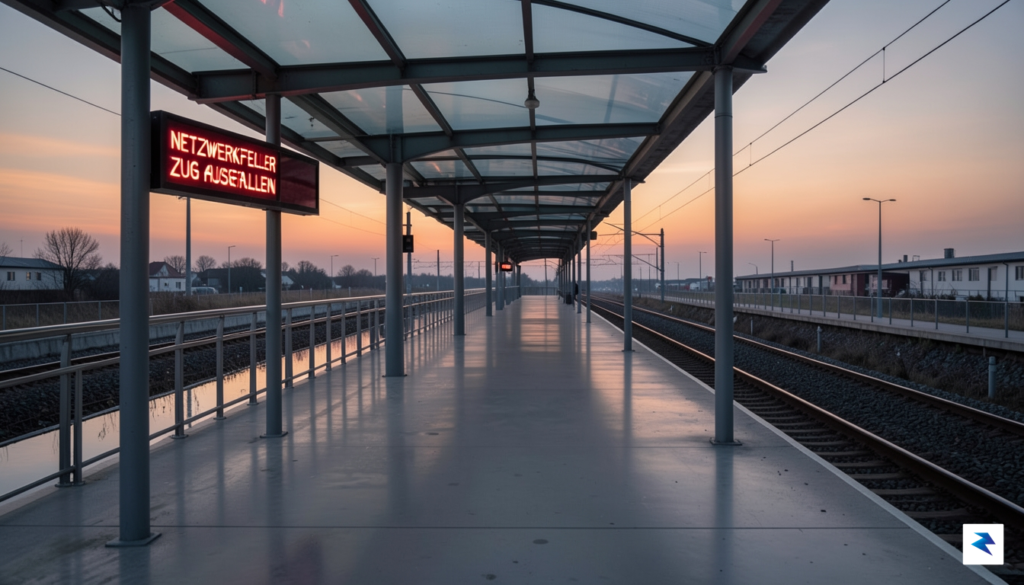
The operational fallout was both immediate and devastatingly widespread. Across Germany, the disruption created a cascading effect that paralyzed both regional commuter lines and high-speed long-distance InterCity Express (ICE) services. Thousands of passengers found themselves stranded in transit hubs or stuck on stationary trains between cities, with the lack of reliable communication channels hindering the ability of Deutsche Bahn staff to provide real-time updates. This confusion was compounded by the fact that the failure struck at the core of the digital infrastructure, meaning that even local station personnel were often left guessing alongside the public. The incident served as a stark reminder of how thin the line between hyper-efficient transport and total vulnerability truly is in our modern, tech-dependent landscape.
The reliance on a unified, digitized communication network highlights a dangerous paradox: while these systems allow for unprecedented speed and synchronization, they also transform a single point of technical failure into a nationwide logistical catastrophe.
Ultimately, the incident underscores the fragility inherent in managing complex, legacy-heavy infrastructure through centralized digital gateways. While the transition to modernized rail technology aims to improve punctuality and capacity, it concurrently necessitates a more robust approach to system redundancy and cybersecurity. As Germany continues to modernize its tracks, the challenge will be to ensure that the “digital backbone” of the network is not just efficient, but resilient enough to withstand the inevitable hiccups of the information age without grinding the country’s mobility to a total standstill.
The Fragility of Legacy Infrastructure in the Modern Age

The recent widespread disruptions across Germany’s rail network served as a stark, inconvenient reminder of a growing paradox: as our critical infrastructure becomes more sophisticated and digitized, it simultaneously inherits a new spectrum of vulnerabilities. For decades, European rail systems, including Germany’s Deutsche Bahn, relied on a foundation of robust, albeit often localized and labor-intensive, analog signaling and communication methods. These systems, while perhaps slower to adapt, often possessed an inherent resilience, with failures typically manifesting in isolated incidents rather than cascading across vast operational areas.
The transition to modern digital communication, exemplified by the rollout of the Global System for Mobile Communications-Railway (GSM-R), represents a monumental leap forward in efficiency, safety, and data integration. GSM-R, a wireless standard specifically designed for railway communication, allows for seamless voice and data exchange between trains, control centers, and trackside personnel. This modernization has enabled more precise train control, better real-time information, and greater capacity utilization, moving away from fragmented, disparate systems towards a unified, interconnected network. Yet, this very interconnectedness, while offering immense advantages, also fundamentally alters the risk profile of the entire network.
One of the most significant challenges in this digital metamorphosis is the immense ‘technical debt’ inherent in maintaining aging physical infrastructure while simultaneously integrating cutting-edge software and network components. Unlike a greenfield project where systems can be designed from scratch, existing rail networks must operate continuously while being upgraded incrementally. This often results in a complex patchwork where modern digital overlays interact with decades-old mechanical switches and copper cables, creating unexpected points of friction and potential failure. The cost and logistical nightmare of replacing every single legacy component mean that compromises are made, leading to a system that is only as strong as its oldest, least compatible link.
This hybrid existence often leads to a distinct ‘brittleness’ in the overall system. While older mechanical systems might fail in a localized and often predictable manner – a single signal breaking down, for instance – modern digital networks, by their very nature, are designed for centralized control and rapid information flow. When a central digital component or communication backbone experiences an issue, be it a software bug, a cyber-attack, or even a simple network latency problem, the impact can be immediate and widespread, propagating across the entire connected network like wildfire. What was designed for reliability can, under specific circumstances, become a single point of catastrophic failure, halting thousands of trains simultaneously.
Consider the stark difference in failure modes between the two paradigms. An old-school mechanical signal box, if it failed, would likely do so visibly, locally, and perhaps even slowly, allowing for manual intervention and rerouting on a limited scale. The failure might affect a few trains in a specific sector, but the rest of the network could continue operating unimpeded. In contrast, a disruption in a digital GSM-R network, which acts as the nervous system for vast stretches of railway, can render an entire region blind and unable to communicate critical safety instructions. This rapid, invisible, and widespread failure mode underscores the profound trade-offs involved in embracing digital transformation. While efficiency and advanced capabilities are gained, the potential for systemic collapse due to a single, often obscure, technical glitch becomes a very real and pressing concern.
The Ripple Effect: Beyond Deutsche Bahn

When a national rail network grinds to a halt, the disruption is rarely confined to the platforms of major metropolitan hubs. In Germany, where the rail system serves as the circulatory system for the nation’s industrial heartland, the sudden silence of the tracks triggers a cascading economic failure. Freight trains, which typically move raw materials and components for the automotive and chemical sectors, are left idling on sidings, effectively breaking the just-in-time delivery cycles that keep manufacturing efficient. This paralysis forces businesses to scramble for alternative, often more expensive, logistics solutions, driving up costs that are ultimately passed down to consumers. As productivity wanes and inventory gaps widen, the sheer scale of the financial loss becomes a tangible burden on the national economy.
Beyond the immediate industrial fallout, the outage places an immense, unforeseen strain on Germany’s secondary infrastructure. As thousands of passengers seek alternative ways to reach their destinations, the nation’s road networks quickly reach a point of saturation. Highways become clogged with private vehicles and overcrowded bus services, leading to gridlock that hinders not just commuters, but also emergency services and local delivery fleets. This secondary congestion highlights a fragile interdependence: when one pillar of the transport system fails, the entire mobility grid buckles under the redistributed load. It is a stark reminder that public infrastructure is a finely tuned ecosystem, and the degradation of one component inevitably degrades the reliability of all others.

The human element of this crisis is perhaps the most insidious, as it erodes the foundational trust that citizens place in their government and essential services. When the digital backbone of a country’s mobility fails, it leaves people feeling stranded and disconnected, transforming a mere inconvenience into a profound sense of insecurity. This incident echoes recent global infrastructure failures, such as the massive IT outages that have crippled airline operations or international payment networks, signaling a troubling trend where modern complexity outpaces our resilience. These moments of systemic collapse do more than ruin a day; they force a public reckoning regarding how much we have entrusted to digital systems that lack robust, analog redundancies.
The true cost of infrastructure failure is measured not just in delayed arrivals or lost revenue, but in the slow, persistent erosion of public confidence in the systems that define modern life.
Ultimately, these disruptions serve as a critical wake-up call for policymakers and infrastructure planners alike. As nations push for greater digitization and integration within their transport grids, the potential for a single point of failure to cause a nationwide shutdown increases exponentially. To mitigate these risks, there must be a shift toward building more resilient, decentralized systems that can withstand technical glitches without forcing a total system freeze. Without such measures, the memory of these outages will continue to linger, leaving the public to wonder if their essential services are truly as reliable as they are promised to be.
Is Digital Transformation Moving Too Fast for Critical Infrastructure?

The rapid transition toward digitized, interconnected transit networks is often heralded as the pinnacle of modernization, yet the recent paralysis of Germany’s rail system exposes a precarious reality: we are increasingly trading fundamental resilience for the convenience of high-speed data integration. While the push for “smart cities” promises greater efficiency and real-time responsiveness, it simultaneously creates a monolithic dependency on centralized software architectures. When these systems are designed to rely on a single, unified communication backbone, a localized glitch or a corrupted update no longer remains localized. Instead, it ripples outward, transforming a minor technical hiccup into a national logistics catastrophe that grounds an entire country’s mobility.
There is a profound tension between the desire to implement cutting-edge, proprietary technological solutions and the historical necessity of robust, established standards. Modern rail systems are increasingly moving away from hardware-reliant, distributed logic toward complex, cloud-integrated software environments that offer higher data throughput but lack the inherent fail-safe protections of their analog predecessors. By prioritizing proprietary “black box” systems, operators often find themselves trapped in a cycle where they cannot easily troubleshoot or isolate faults because the complexity of the code has outpaced the visibility of the operators. This creates a dangerous trade-off: we gain sophisticated diagnostic capabilities, yet we lose the ability to maintain the “analog backups” that historically allowed manual overrides when the digital layers failed.
True resilience in critical infrastructure is not measured by how well a system performs under ideal conditions, but by how gracefully it degrades when the primary intelligence layer vanishes.
To prevent future nationwide collapses, we must rethink the architectural philosophy guiding our infrastructure. Moving forward, engineers and policymakers should prioritize a “distributed-first” approach, where critical transit nodes maintain a degree of autonomy from the central command network. Implementing redundant, decentralized control systems ensures that if the digital “brain” of the rail network experiences a seizure, the individual limbs—the local switches, signaling towers, and regional dispatchers—can still function in a restricted, safe capacity. Ultimately, building a smarter future requires us to embrace a hybrid model: one that integrates modern digital precision while strictly preserving the mechanical and manual safeguards that ensure public safety is never held hostage by a software update.
Building Resilience: Lessons for Global Rail Operators

The recent paralysis of Germany’s rail network serves as a stark reminder that modern transit infrastructure is only as strong as its most vulnerable digital node. To move beyond the cycle of reactive crisis management, global rail operators must transition toward a philosophy of “resilient by design.” This shift requires viewing system failure not as an unthinkable catastrophe, but as a manageable state that the network should be engineered to withstand. By prioritizing modular architecture, operators can ensure that a localized software glitch in one region does not cascade into a total, nationwide standstill. Decoupling critical signaling components ensures that if one digital layer falters, the broader backbone remains capable of supporting essential movement.
Redundancy must move beyond simple duplication; it requires the implementation of diverse communication pathways. Relying on a single proprietary network for critical operations creates a single point of failure that is inherently susceptible to both technical bugs and malicious interference. Instead, rail authorities should integrate hybrid communication models that utilize satellite, cellular, and legacy radio systems simultaneously. When the primary fiber-optic backbone experiences a latency spike or total outage, the system should automatically failover to secondary channels without human intervention. This multi-layered approach provides the necessary buffer to keep trains moving, even when the digital environment becomes unstable.

True resilience is defined by the ability of a system to maintain a minimum viable service level even when its most advanced digital components are offline.
Furthermore, the industry must embrace rigorous, real-world stress testing of software updates. Too often, updates are deployed as monolithic blocks, lacking granular testing in simulated environments that mirror the complexity of live traffic. Operators should adopt “canary deployments,” where updates are rolled out to a small, isolated portion of the network before a full-scale implementation. Alongside these digital safeguards, it is imperative to maintain “human-in-the-loop” systems. Technology should augment, not replace, the fundamental ability of dispatchers and engineers to operate sections of the grid manually. By preserving manual override protocols and training personnel to execute them under pressure, rail operators provide a final, vital failsafe against the inevitability of digital disruption.
Ultimately, the path forward for Germany and its global counterparts lies in treating infrastructure as a living ecosystem rather than a rigid machine. As we integrate more AI-driven scheduling and automated signaling, the complexity of these networks will only increase. By investing in modularity, diverse redundancies, and a culture that values manual operational readiness, policymakers can ensure that the rail systems of tomorrow are robust enough to withstand the unpredictable nature of the digital age. This is not merely a technical challenge, but a strategic necessity for maintaining public trust and the economic vitality of interconnected nations.