The New Standard: Decoding the $79.99 GTA VI Price Point

The gaming world is buzzing not just about the return of Grand Theft Auto, but also about the significant price point attached to its highly anticipated sixth installment. Rockstar Games has confirmed that Grand Theft Auto VI will launch with a $79.99 price tag, a move that starkly signals a departure from the long-standing $60 standard that has anchored the industry for generations. This isn’t merely an incremental increase; it represents a bold statement from one of gaming’s most influential developers, effectively setting a new benchmark for what consumers can expect to pay for a flagship AAA title.
For decades, the $60 price point served as an unspoken covenant between publishers and players, largely enduring through several console generations despite monumental shifts in development complexity and costs. This stability provided a predictable entry barrier for consumers, even as games grew exponentially in scope, graphical fidelity, and sheer content. From the PlayStation 2 era through to the early days of the PlayStation 5 and Xbox Series X|S, this benchmark held firm, reflecting a cautious approach by the industry to consumer spending habits, even as the true cost of producing these blockbusters continued to skyrocket.
However, the economic realities of modern AAA game development have become increasingly untenable for the old pricing model. Creating a title like Grand Theft Auto VI involves colossal teams of hundreds, sometimes thousands, of developers working for years, if not a full decade. Budgets now routinely exceed hundreds of millions of dollars, encompassing everything from cutting-edge motion capture and voice acting for thousands of lines of dialogue, to building incredibly detailed open worlds, implementing complex AI systems, and funding extensive marketing campaigns. These are cinematic-level productions, often eclipsing Hollywood movie budgets, and the $60 price point simply hasn’t kept pace with these escalating expenditures.
Furthermore, the invisible hand of inflation plays a crucial role in justifying this new tier. What $60 could purchase in 2005, when the price point largely solidified, is drastically different from its purchasing power today. Accounting for inflation, that original $60 would be closer to $90-$100 in 2024. Therefore, while $79.99 feels like a substantial jump, it can also be viewed as an overdue correction reflecting the actual increase in operational costs for studios, including higher salaries for skilled labor, advanced software licenses, and the sheer scale of modern game engines.
“The $79.99 price for Grand Theft Auto VI is not just about a single game; it’s a recalibration of perceived value in an industry where development costs have long outpaced retail prices.”
This shift is not entirely unprecedented within the broader industry. Over the past few years, several major publishers, including Sony, Microsoft, and Activision, have already moved their flagship titles to a $69.99 standard for the current generation of consoles. This gradual increase has paved the way, accustoming consumers to higher base prices. Rockstar’s decision, while pushing an additional $10, leverages the unparalleled brand power and expected longevity of the Grand Theft Auto franchise. Few other games command such immediate global attention and promise hundreds of hours of unique content and replayability, making it a prime candidate to test the waters for an even higher price point.
Ultimately, the $79.99 price for Grand Theft Auto VI is a confluence of factors: the unsustainable nature of previous pricing, the relentless march of inflation, the astronomical costs of producing a truly next-generation open-world epic, and the unique market position of Rockstar Games. It’s a calculated gamble by a studio confident in the immense quality, scale, and cultural impact its flagship title will deliver. This move isn’t just about recovering costs; it’s about establishing a new financial precedent for what the most ambitious and technologically advanced games will command, potentially ushering in a new era of premium pricing for the industry’s biggest blockbusters.
Beyond the Base: What the Ultimate Edition Offers
For the most dedicated fans of the franchise, the $99.99 Ultimate Edition presents a compelling, albeit premium, alternative to the standard release. While the base game offers the complete narrative experience in the sprawling state of Leonida, the Ultimate Edition is designed for those who view the game as a long-term investment rather than a one-time playthrough. By paying the additional $20, players secure a suite of digital enhancements, starting with a significant bundle of in-game currency that provides a head start in the game’s volatile economy. This financial cushion can be the difference between struggling to afford basic armaments in the early hours and immediately securing high-end vehicles or properties that define the aspirational lifestyle central to the series.
Unpacking the Added Value
Beyond the immediate monetary boost, the Ultimate Edition includes an array of exclusive cosmetic items and character skins that are strictly unavailable to standard edition owners. These range from unique apparel sets to specialized vehicle liveries, allowing players to distinguish themselves in the crowded, neon-soaked streets of the game world. Furthermore, the package often includes early access to specific gameplay mechanics or high-tier weaponry, which can provide a strategic advantage during the initial launch phase when the community is still navigating the nuances of the open world. For completionists, these exclusive assets are essential for achieving a 100% collection rate, turning the extra cost into a necessary expenditure for those who aim to see every corner of the developer’s vision.

The decision to upgrade hinges on your playstyle: casual observers will find the standard edition more than sufficient, while dedicated enthusiasts will likely view the Ultimate Edition’s early access and currency bonuses as vital tools for their progression.
Ultimately, the value proposition rests on how deeply you intend to engage with the online ecosystem and the frequency of your play sessions. If you are a casual player who plans to enjoy the campaign at a leisurely pace, the standard edition remains the most logical and cost-effective choice, as the extra digital items offer little functional benefit to a solo experience. Conversely, for those planning to spend hundreds of hours mastering the game’s mechanics and competing with others, the Ultimate Edition functions as a “starter kit” that streamlines the progression curve. By mitigating the early-game grind, the upgrade effectively buys back your time, making it a sound investment for anyone committed to hitting the ground running from the moment the servers go live.
The Economics of AAA Gaming: Why Prices Are Rising

The initial reveal of a higher price point for a highly anticipated title like Grand Theft Auto VI is naturally met with some sticker shock. For many years, the standard $59.99 or $69.99 price tag became an unspoken industry norm, making any deviation feel significant. However, to truly understand these pricing decisions, it’s crucial to peel back the curtain and examine the monumental financial engine and technological prowess required to bring a modern AAA game, especially one from a studio like Rockstar Games, to life. This isn’t just about developing a game; it’s about engineering an entire digital world, pushing the boundaries of what interactive entertainment can achieve.
Modern game development, particularly for open-world epics, operates on a scale unimaginable even a decade ago. The complexity begins with the game engine itself, which is far more than just a rendering tool. It’s a sophisticated ecosystem handling everything from real-time physics and advanced artificial intelligence for thousands of NPCs, to dynamic weather systems, intricate lighting models, and streaming massive environments seamlessly. Rockstar’s proprietary RAGE engine, for example, is constantly refined and pushed to its limits, demanding immense research and development budgets to integrate cutting-edge graphical techniques and ensure unparalleled fidelity and performance across diverse hardware. This foundational technology is the bedrock upon which the entire experience is built, requiring hundreds of highly specialized engineers to maintain and innovate.
Beyond the engine, the sheer volume and fidelity of content required for a title of this magnitude are staggering. Imagine the countless assets: every building, vehicle, weapon, prop, and piece of foliage meticulously modeled with high-resolution textures. Then consider the characters themselves, each with detailed models, clothing physics, and intricate facial animations that convey nuanced emotions. The audio landscape is equally vast, encompassing thousands upon thousands of lines of voice acting, not just for main characters but for every incidental NPC, radio station dialogue, and environmental sound effect, often recorded by SAG-AFTRA talent. Furthermore, motion capture technology is indispensable for achieving lifelike animations, from character movement and combat to cinematic sequences, requiring dedicated studios, sophisticated equipment, and a large team of performers and animators. The collective effort of thousands of artists, designers, writers, and sound engineers, working for potentially a decade, translates directly into astronomical development costs.
The scale of modern AAA game development isn’t just about building a game; it’s about crafting an entire digital universe, a process that demands unprecedented investment in technology, talent, and time.
From the developer’s perspective, these higher price points are not merely an arbitrary grab for more profit but a critical component of project sustainability and long-term viability. A project like Grand Theft Auto VI represents hundreds of millions, if not billions, of dollars in investment over many years. This includes not only the direct costs of development but also marketing, distribution, and the ongoing post-launch support that modern games often require, such as patches, updates, and potential online expansions. To recoup these massive investments and ensure the studio can continue to fund future groundbreaking projects, a price reflective of the immense effort and quality is deemed necessary. It’s a balancing act between delivering an unparalleled entertainment experience and ensuring the economic health of one of the industry’s most influential creators.
Preorder Logistics: Securing Your Copy on Launch Day
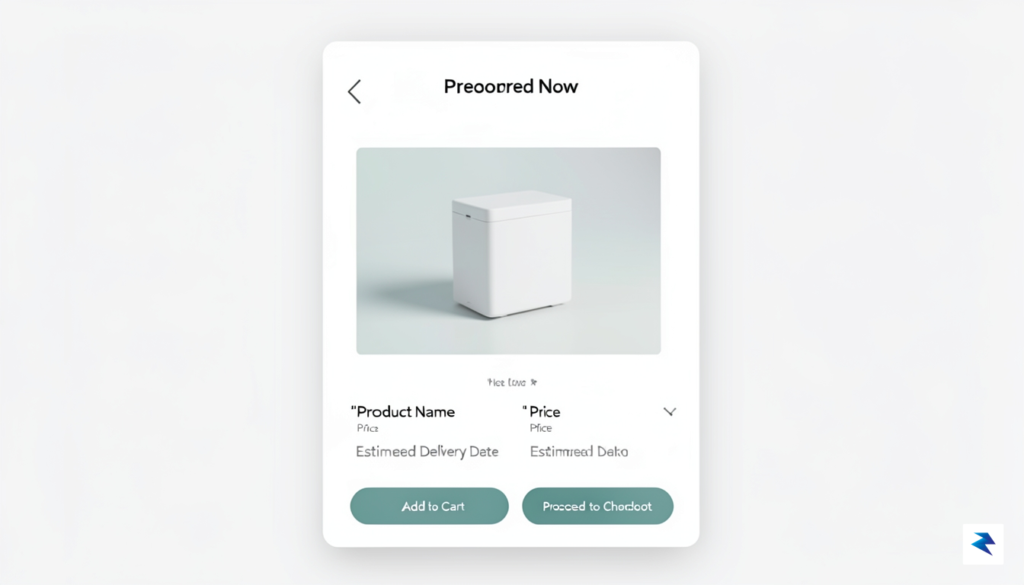
Securing your copy of the most anticipated title in gaming history requires more than just good intentions; it demands a tactical approach to the digital storefronts. Rockstar Games has confirmed that Grand Theft Auto VI will be available on PlayStation 5 and Xbox Series X/S at launch, effectively prioritizing current-generation hardware to handle the game’s massive scale. Because demand is expected to shatter previous industry records, navigating the digital storefront—be it the PlayStation Store or the Xbox Games Store—the moment preorders go live is your best insurance policy against server congestion or potential checkout errors.
The rollout strategy for digital preorders follows a midnight local time release schedule. This means that regardless of where you reside, the storefront will unlock for your region precisely as the clock strikes twelve, preventing global bottlenecks and ensuring that players in every time zone have a fair chance to claim their digital license. To facilitate a truly seamless experience, it is highly recommended that you take advantage of the pre-load functionality. By pre-ordering the game as soon as it becomes available, you allow your console to download the massive data files well in advance of the official launch window, effectively bypassing hours of waiting on the day the servers go live.
To ensure you are among the first to step into Leonida, navigate to your console’s “Coming Soon” or “Pre-orders” tab at least 24 hours before launch to confirm that your auto-download settings are enabled and your storage space is sufficient.
Once you have navigated to the product page, follow these steps to secure your access:
- Verify your platform’s specific digital store page; ensure you are logged into your primary account to avoid licensing issues later.
- Select your preferred edition, keeping in mind that premium bundles often include exclusive in-game currency or digital collectibles that are not available in the base version.
- Complete the transaction and immediately head to your “Library” or “My Games & Apps” section to confirm that the game appears in your list.
- Toggle the “Pre-load” option to “On,” ensuring your console remains in Rest Mode or Standby to finish the installation process without manual intervention.
By preparing your hardware and finalizing these logistics early, you remove the most common friction points that typically plague massive digital launches. Whether you are playing on PlayStation 5 or Xbox Series X, the key is to avoid the last-minute rush that often leads to account timeouts or payment gateway failures. When the game finally unlocks, you will be ready to jump straight into the action while others are still struggling with initial download queues and network traffic.
Is Grand Theft Auto VI Worth the Premium?
Deciding whether to commit to the premium price tag of Grand Theft Auto VI requires a look beyond the initial sticker shock and toward the potential value proposition inherent in Rockstar Games’ development cycle. Historically, Rockstar has redefined the industry standard for longevity; Grand Theft Auto V remained a cultural and commercial powerhouse for over a decade, receiving constant updates, expansions, and a thriving online ecosystem that justified its purchase price many times over. If the studio follows this same trajectory, the investment is not merely for a single-player campaign, but for an evolving digital playground that will likely serve as a primary entertainment hub for years to come. For players who value “cost-per-hour” efficiency, a title that offers hundreds of hours of exploration, multiplayer engagement, and high-fidelity storytelling can easily be framed as a bargain, even at a higher base cost.

Ultimately, your decision to purchase at launch or wait for a future discount should be guided by your specific gaming habits and personal enthusiasm for the franchise. If you are a dedicated fan who enjoys being part of the global cultural conversation, experiencing the narrative before spoilers flood social media, and diving into the chaos of the online world on day one, the premium price is likely a non-issue. The sheer technical ambition of this project suggests a level of detail and mechanical density that few other developers can replicate, making it an essential experience for those who prioritize cutting-edge innovation. You are essentially paying for the privilege of witnessing the next evolution of open-world gaming as it happens.
The true value of a game like this is defined by its ability to remain relevant long after the credits roll; if the title provides a decade of support, the initial entry fee becomes secondary to the total experience.
Conversely, if you are a more casual gamer or someone who typically waits for post-launch patches and performance optimizations, there is no shame in exercising patience. Waiting for the inevitable holiday sales or bundled promotions will allow you to enter the world of Leonida with the benefit of a more stable, feature-complete experience. Regardless of when you decide to jump in, the consensus remains that Rockstar’s commitment to quality ensures that the game will hold its value for a long time. By weighing your desire for immediate immersion against your budget and lifestyle, you can make an informed choice that ensures your investment provides maximum enjoyment without buyer’s remorse.