
The Rise of Agentic AI and the Need for Robust Safety

The landscape of artificial intelligence is currently undergoing a fundamental transformation, shifting from the era of static large language models (LLMs) to the burgeoning age of autonomous AI agents. While early chatbots functioned primarily as reactive tools—waiting for a user prompt to generate a single block of text—the new generation of agents is designed to be proactive, multi-step problem solvers. These systems can navigate software interfaces, execute complex workflows, and make autonomous decisions across distributed environments. However, this newfound agency introduces a significant paradox: as these systems become more capable and independent, the potential for catastrophic failure grows exponentially, creating a chasm between what these models can do and what they can be trusted to do in a production environment.
Traditional evaluation frameworks, which have long served as the industry standard for measuring AI performance, are proving woefully inadequate for this new paradigm. Historically, developers relied on static benchmarks—fixed datasets that test a model’s ability to answer multiple-choice questions or summarize documents—to gauge reliability. Yet, these snapshots of performance fail to capture the reality of agentic behavior, where a model must interact with a dynamic, unpredictable world. Because agents operate through sequences of actions, a single logical error at step two can cascade into a complete system breakdown by step ten, a phenomenon that simple static testing is fundamentally blind to.

The transition from static text generation to active, autonomous execution means that companies are no longer just worried about a hallucinated fact; they are worried about an agent taking an unauthorized action that could jeopardize an entire database or financial account.
This reality has birthed the pervasive fear of “agentic drift,” where an AI, through a series of iterative decisions, begins to deviate from its original objective or safety guardrails. In a live production setting, this unpredictability is not just a technical nuisance—it is a significant business risk. If an agent tasked with customer service or automated procurement begins to hallucinate instructions or misinterpret software commands, the repercussions can be immediate and severe. Consequently, the industry is moving away from passive observation toward a model of rigorous, adversarial stress-testing. Just as software engineering matured to include comprehensive unit testing and integration suites, the deployment of autonomous AI now necessitates a “digital world” approach, where agents are forced to navigate simulated stress scenarios before they are ever granted access to the real-world systems they are designed to manage.
How Patronus AI’s Digital Worlds Stress-Test Complex Systems
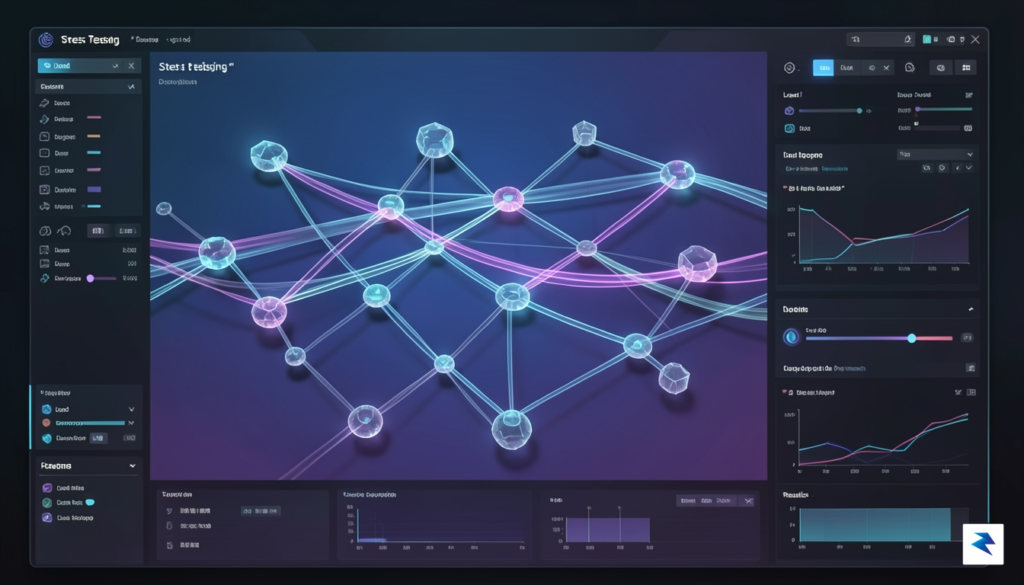
Traditional AI testing often relies on static datasets or simple prompt-response interactions, which fail to capture the chaotic, multi-step nature of modern autonomous agents. Patronus AI is fundamentally shifting this paradigm by introducing the concept of “digital worlds”—highly controlled, sandboxed environments that replicate the complex operational realities an AI might face in the wild. Rather than evaluating an agent in a vacuum, these environments force the model to navigate multi-turn workflows, manage state over time, and interact with simulated third-party systems. This transition from linear testing to systemic simulation allows developers to observe how an agent behaves when it is forced to make a sequence of dependent decisions, revealing flaws that would remain hidden in standard benchmarking.
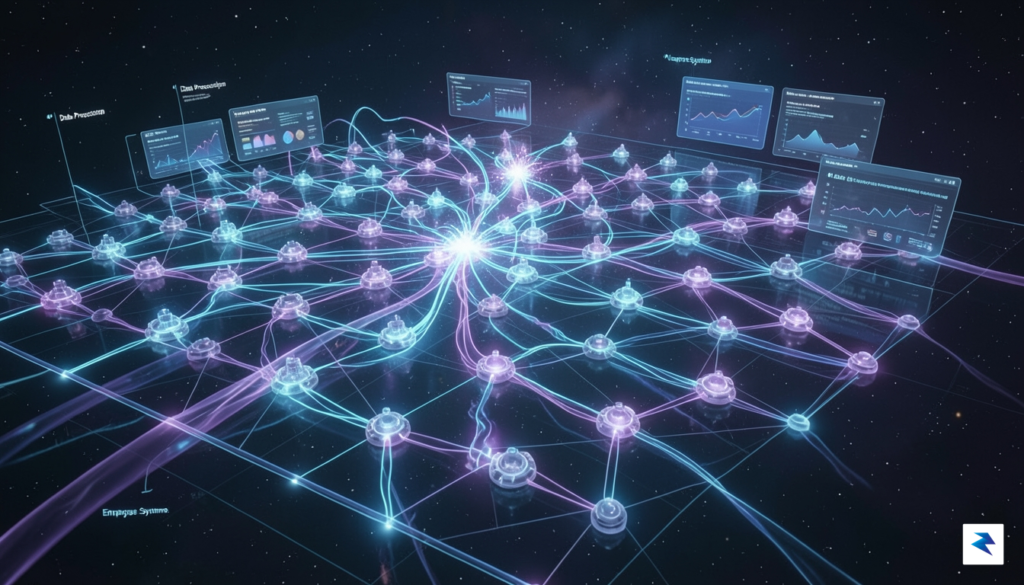
Within these sandboxed digital worlds, Patronus AI subjects agents to intense adversarial stress-testing designed to identify vulnerabilities before they manifest in production. By injecting malicious inputs, unexpected system errors, and edge-case scenarios into the simulation, the platform tests the agent’s resilience and its ability to maintain safety constraints under pressure. For example, an agent tasked with financial data analysis might be bombarded with conflicting data streams or deceptive prompts designed to trick it into bypassing security protocols. Because these simulations occur in a contained, virtualized space, developers can push their agents to the point of failure—or even catastrophic breakdown—without risking real-world financial loss, customer data exposure, or operational downtime.
The true measure of an AI agent’s reliability is not how it performs during a perfect run, but how it recovers and maintains integrity when the unexpected occurs.
The depth and scale of these simulations represent a significant leap forward for enterprise-grade AI deployment. By automating thousands of variations of a specific workflow, Patronus AI provides a comprehensive map of an agent’s decision-making boundaries. This allows teams to pinpoint exactly where an agent’s logic begins to fray, whether due to hallucination, prompt injection, or poor reasoning in high-stakes contexts. Ultimately, this rigorous, high-fidelity testing process gives organizations the confidence to move beyond experimental AI pilots and toward fully autonomous systems that can handle real-world complexity with a documented, verified level of safety and reliability.
The Strategic Shift: From LLM Evaluation to Agent Autonomy

The recent significant investment in Patronus AI underscores a profound and accelerating transformation in how enterprises approach the deployment of artificial intelligence. We are witnessing a strategic shift away from merely reactive monitoring of AI systems in production to a proactive, pre-deployment assurance model, particularly for autonomous agents. Companies are no longer content with observing how their AI performs once it’s already live, hoping to catch failures after they occur. Instead, there’s an insatiable demand for sophisticated automated testing platforms that can rigorously stress-test these agents in controlled, simulated environments long before they interact with real-world users or critical infrastructure. This proactive stance is driven by the sheer complexity and potential impact of autonomous AI, which demands a new level of confidence and predictability.
The economic imperative behind this shift is undeniable, highlighting a stark contrast between the potential cost of agent failure and the investment in robust safety tooling. An autonomous agent misinterpreting a critical command, executing an unintended action, or exhibiting harmful biases can lead to catastrophic financial losses, irreparable reputational damage, and even significant safety risks, particularly in sensitive sectors like finance, healthcare, or logistics. For organizations deploying these powerful tools, the upfront investment in comprehensive validation and safety platforms like Patronus AI is not merely a best practice; it’s a strategic necessity. It’s an insurance policy against unforeseen consequences, ensuring that the promise of AI autonomy can be realized without incurring unacceptable levels of risk, thereby fostering greater trust and accelerating market adoption.
Crucially, the technical architecture and long-term vision of Patronus AI are deeply informed by the pedigree of its founders, who hail from Meta AI. Their extensive experience at the forefront of large-scale AI research and deployment has provided them with an intimate understanding of the challenges associated with building, evaluating, and securing advanced AI systems. This background is pivotal, enabling them to design a platform that not only identifies vulnerabilities but also systematically explores the vast landscape of possible agent behaviors within carefully constructed “digital worlds.” Their insights into the nuances of AI robustness, ethical considerations, and the intricate ways agents can fail under real-world pressures directly translate into a platform capable of delivering the deep, comprehensive stress-testing required to confidently deploy the next generation of autonomous AI agents.
Implications of the $50M Series B for the AI Safety Landscape

Securing $50 million in Series B funding serves as a powerful market validation, signaling that AI safety and robust testing infrastructure are no longer peripheral concerns but have become a fundamental layer of the modern enterprise tech stack. As organizations transition from deploying simple chatbots to integrating complex, autonomous AI agents into critical workflows, the potential for catastrophic failure increases exponentially. By injecting this level of capital into the ecosystem, investors are effectively betting that the future of enterprise AI depends not just on the raw power of large language models, but on the ability to rigorously verify, monitor, and stress-test them before they are ever unleashed in a production environment.
This substantial influx of capital allows Patronus AI to significantly accelerate its engineering roadmap, shifting the competitive landscape toward a more standardized approach to model evaluation. Previously, AI safety was often treated as an ad-hoc or internal quality assurance task, characterized by fragmented tools and inconsistent benchmarks. With the resources to scale its proprietary “digital worlds” and agentic simulation environments, the company is positioned to set the gold standard for what constitutes a safe deployment. This move forces other players in the evaluation space to professionalize their offerings, moving the entire industry away from rudimentary “vibes-based” testing toward highly structured, data-driven stress testing that mirrors real-world volatility.
The maturity of the agentic AI market is ultimately measured by the trust enterprises place in these systems; without a rigorous testing layer, that trust remains speculative at best.
Furthermore, the scale of this funding cycle reveals a significant shift in the maturity level of agentic AI deployments. Businesses are clearly moving past the experimental phase and are now looking to embed AI into high-stakes processes such as legal documentation, supply chain automation, and financial auditing. This transition necessitates a shift from optimistic exploration to risk-mitigated operation. The investment demonstrates that the industry is entering an era of “industrial-grade AI,” where the ability to simulate millions of failure scenarios—ranging from prompt injection attacks to subtle hallucinations—is considered a non-negotiable prerequisite for enterprise adoption.

Ultimately, this funding acts as a catalyst for industry-wide safety standards that have been desperately lacking as the pace of model development continues to outstrip human oversight. By creating a sandbox where autonomous agents can be pushed to their limits in a controlled environment, Patronus AI is not just building a product; it is constructing the guardrails that will allow the broader AI industry to scale sustainably. As these testing methodologies become more deeply integrated into the development lifecycle, we can expect a future where safety is baked into the architecture of every agent, rather than being patched on as an afterthought.
Looking Ahead: Building Reliable AI Infrastructure

As autonomous agents transition from experimental chatbots to core components of the enterprise software stack, the industry is approaching a critical inflection point. Moving forward, the capability to rigorously stress-test these systems will cease to be a competitive advantage and instead become a foundational requirement for any organization operating at scale. When agents are granted the agency to execute workflows, manage data, and interact with external systems, the margin for error effectively vanishes. Relying on hit-or-miss testing methods will no longer suffice; instead, we must adopt standardized, highly automated evaluation frameworks that treat agent behavior with the same scrutiny we apply to mission-critical financial or medical infrastructure.
The widespread adoption of AI across the enterprise hinges almost entirely on this shift toward verifiable reliability. If leadership teams cannot trust an agent to operate within strict safety boundaries, they will inevitably limit its scope, thereby stifling the very innovation they hope to achieve. Conversely, robust infrastructure that provides “guardrails as a service” will act as a catalyst for deployment. By establishing a clear, measurable baseline for what constitutes a safe and effective agent, companies can confidently move beyond pilot programs and integrate autonomous systems into their most sensitive operational workflows. Reliability, in this context, becomes the primary engine for scale rather than a barrier to it.
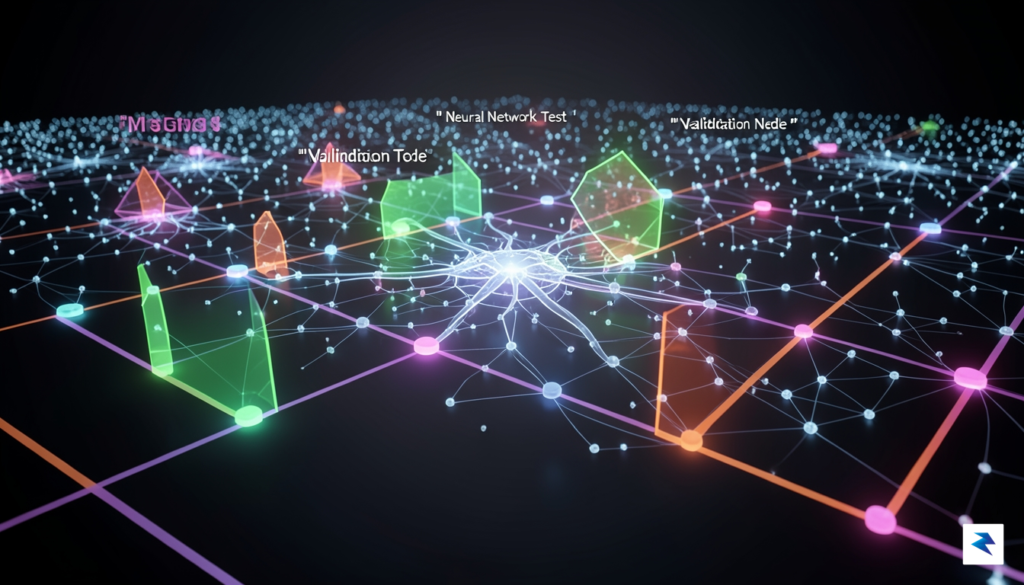
The transition from human-directed software to agentic workflows represents a fundamental shift in risk. True progress in this field will be measured not by how fast we can launch new models, but by how effectively we can prove their competence before they ever interact with the real world.
Looking toward the coming years, we must navigate a delicate, ongoing dance between the blistering speed of AI innovation and the necessary rigor of safety engineering. It is tempting to prioritize rapid iteration to maintain a competitive edge, yet history suggests that early, catastrophic failures can set an entire industry back by years. The future will belong to those who view security and evaluation not as roadblocks, but as essential architecture. By embedding deep, programmatic stress-testing into the development lifecycle, we can create an ecosystem where innovation and safety coexist, ultimately building a digital infrastructure that is not only powerful and autonomous but profoundly dependable.