
The European AI Dilemma: Sovereignty vs. Innovation

For decades, the European Union has wielded the “Brussels Effect” as its primary instrument of influence, effectively positioning itself as the world’s digital referee. By establishing rigorous frameworks like the GDPR and the recent AI Act, Europe has successfully mandated privacy and safety standards that global tech giants are forced to adopt. However, a growing consensus among policymakers and industry leaders suggests that acting as the global policeman of technology is no longer a sufficient strategy for the modern era. While these regulations have protected citizens, they have often come at the expense of an environment where homegrown innovation can thrive, leaving the continent in a position of perpetual reliance on external technological powers.
This reliance on American and Chinese artificial intelligence models has evolved from a matter of convenience into a profound strategic risk. When the foundational algorithms that power everything from public infrastructure to local commerce are developed in foreign jurisdictions, Europe finds itself vulnerable to shifts in geopolitical agendas, data governance protocols, and proprietary black-box decision-making. By outsourcing the digital nervous system of the continent to entities that do not share the same regulatory philosophy or societal priorities, Europe risks being relegated to a mere consumer of technologies it cannot control, audit, or modify to suit its unique cultural and economic values.
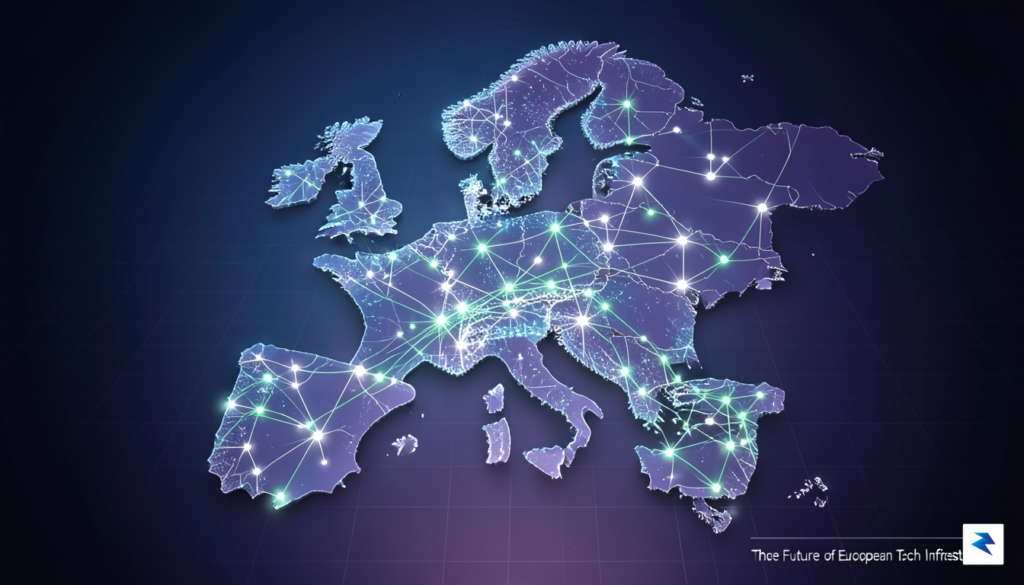
The Imperative of Technological Sovereignty
In response to this precarious reality, the European Commission has elevated the concept of “technological sovereignty” to the top of its agenda. This is not merely an exercise in protectionism; it is a fundamental shift toward building the indigenous infrastructure required to compete on the global stage. Achieving this sovereignty means fostering a robust ecosystem of cloud providers, high-performance computing centers, and domestic foundational models that are natively “European.” By nurturing a sovereign AI stack, the EU aims to ensure that its internal market remains competitive, resilient, and capable of driving innovation that reflects its specific legal and ethical standards rather than simply adjusting to the standards imposed by Silicon Valley or Beijing.
True sovereignty in the age of artificial intelligence requires more than defensive policy; it necessitates the aggressive cultivation of local talent, capital, and computational power to ensure that Europe remains an architect of the future rather than a spectator of its own digital decline.
The path forward is admittedly fraught with challenges, including fragmented capital markets, a lack of massive venture funding compared to US counterparts, and the inherent difficulties of scaling research across diverse linguistic borders. Yet, there is a palpable sense of urgency that the time for passive oversight has passed. Policymakers are now realizing that to lead in the age of AI, Europe must transition from being the world’s toughest regulator to becoming a formidable developer of its own intelligent systems. This pivot is essential for maintaining economic autonomy and ensuring that the next generation of technological breakthroughs is built on a foundation of European values, ingenuity, and strategic independence.
The Trump Factor: Geopolitical Catalysts for European Autonomy
For years, Europe’s digital strategy was built on the comfortable assumption that Silicon Valley would remain a reliable, open partner. However, the shifting tides of American political volatility—most notably the looming prospect of a return to “America First” protectionism—have fundamentally shattered this complacency. European policymakers are increasingly viewing their heavy reliance on US-based tech giants not merely as a commercial convenience, but as a precarious national security vulnerability. When the foundational infrastructure of an entire continent’s economy is tethered to the whims of a volatile geopolitical climate, the status quo becomes impossible to maintain.
The “Trump factor” serves as a potent accelerant for this newfound urgency. Memories of sudden trade tariffs, unpredictable shifts in international alliances, and the potential for restricted access to critical technologies have forced European leaders to confront a stark reality: dependence is a strategic liability. If the United States were to pivot toward a more insular tech policy, Europe could find itself locked out of the very innovations required to power its future industries. Consequently, the conversation in Brussels and Berlin has shifted away from purely market-based concerns toward the necessity of “digital sovereignty.” The goal is no longer just to participate in the AI revolution, but to ensure that the bedrock of that revolution exists within European borders, shielded from the turbulence of foreign elections.
Digital sovereignty is no longer a luxury of political rhetoric; it is an essential survival strategy for a continent that can no longer guarantee the continuity of its supply chains or its access to critical digital infrastructure.
This transition toward localized AI clusters is driven by a desire to insulate European businesses from the sudden legislative or protectionist shocks that often accompany American political cycles. By fostering domestic champions and investing in indigenous computing power, Europe aims to create a robust ecosystem that functions independently of Silicon Valley’s priorities. This move is not necessarily about replacing American products, but about building a credible alternative that guarantees the continent retains control over its data, its standards, and its security. As geopolitical fragmentation becomes the new normal, the ability to build and maintain an autonomous technological foundation has become the ultimate metric of a region’s power, prompting Europe to move with a speed and determination that was previously unimaginable.
Beyond Regulation: Shifting from the Brussels Effect to Active Creation

For years, the European Union has been lauded—and often criticized—for its powerful regulatory reach, famously dubbed the “Brussels Effect.” This influence has seen EU standards, particularly in areas like consumer protection and environmental policy, become de facto global benchmarks. However, in the rapidly accelerating world of technological innovation, this very strength has frequently been perceived as a significant liability. Stringent data privacy laws, most notably the General Data Protection Regulation (GDPR), were often pointed to as stifling the agility and risk-taking essential for groundbreaking advancements. As the world embraced artificial intelligence, concerns mounted that the forthcoming AI Act, with its comprehensive framework for governing AI systems, would further entrench Europe’s position as a regulatory giant rather than an innovative powerhouse, leaving it perpetually playing catch-up to the tech titans of Silicon Valley and Beijing.
Yet, a profound shift in perspective is now underway, transforming what was once seen as Europe’s Achilles’ heel into a potential strategic advantage. The narrative is pivoting dramatically: instead of viewing these robust legal frameworks as obstacles, European policymakers and innovators are increasingly positioning them as the very bedrock upon which a distinct and superior form of AI can be built. This isn’t about loosening standards to compete on speed alone; it’s about redefining the terms of competition. The ambition is to move beyond merely regulating AI developed elsewhere and instead foster an ecosystem where cutting-edge AI is developed ethically by design, inherently compliant with human-centric values that resonate deeply across the continent.
This reframing highlights a unique market proposition: “privacy-first” and “trustworthy” AI. GDPR, once a source of apprehension for businesses navigating its complex requirements, is now being championed as a foundational asset, offering a clear, predictable blueprint for data handling that builds unparalleled user trust. In an era where data breaches are commonplace and algorithmic biases are under increasing scrutiny, the promise of AI systems developed under the rigorous ethical and transparency mandates of the AI Act becomes a compelling differentiator. This approach ensures that AI applications are not only powerful but also accountable, safe, and respectful of fundamental rights, potentially making them more attractive to global partners and consumers who prioritize ethical considerations.
Consequently, European startups and research institutions are not just passively complying with these regulations; they are actively innovating within them, turning legal requirements into design principles. A new generation of AI models and applications is emerging, built from the ground up to be natively compliant with EU law, effectively creating a unique and highly specialized market niche. This proactive integration of ethical and privacy considerations from the outset means these European-developed AI solutions can offer a distinct competitive edge, particularly in sectors like healthcare, finance, and public services where data sensitivity is paramount. By embracing its regulatory identity, Europe is now aiming to lead the world in developing AI that is not just smart, but also inherently responsible and trusted, carving out its own space on the global stage.
The Infrastructure Hurdle: Computing Power and Data Sovereignty

The pursuit of sovereign artificial intelligence is not merely a matter of software development; it is a grueling test of physical and logistical endurance. At the heart of the modern AI revolution lies an insatiable demand for high-end graphics processing units (GPUs) and specialized silicon that are currently dominated by a handful of American giants. For European startups and research institutions, acquiring this hardware is a Herculean task, often requiring them to compete for limited supply against the vast, deep-pocketed hyperscalers of the United States. This dependency creates a precarious bottleneck, as European innovators find themselves at the mercy of global supply chains that prioritize existing, massive-scale contracts, leaving the continent’s domestic tech ecosystem fighting for the scraps of current-generation hardware.
Beyond the simple acquisition of chips, the logistical challenge of assembling the necessary computing power is exacerbated by the continent’s stringent environmental standards. Training a state-of-the-art large language model (LLM) consumes staggering amounts of electricity, putting European ambitions in direct conflict with the region’s commitment to “Green AI.” While hyperscalers can often locate their data centers in regions with cheap, unregulated energy, Europe must balance its high-performance computing (HPC) needs with aggressive decarbonization goals. This creates a unique pressure to innovate not just in AI performance, but in energy efficiency and sustainable cooling technologies—a technological pivot that could eventually serve as a competitive advantage if Europe successfully bridges the infrastructure gap.

To overcome these barriers, the European Union has leaned heavily into large-scale public-private partnerships, most notably through the EuroHPC Joint Undertaking. By pooling the financial resources of member states and private industry, these initiatives aim to build supercomputing clusters—such as the LUMI supercomputer in Finland—that are capable of competing on the global stage. These supercomputing hubs are designed to provide the necessary backbone for European research teams to train models without relying entirely on US-based cloud providers. However, the path remains arduous; maintaining these clusters requires constant investment and a unified strategy that transcends individual national interests to ensure that Europe can sustain its own indigenous AI development.
True digital sovereignty in the age of AI requires more than just code; it requires a physical foundation of silicon, energy, and interconnected infrastructure that Europe must build on its own terms to remain a relevant global actor.
Ultimately, the battle for AI independence is a race against time and geography. While the sheer scale of American investment is difficult to replicate, Europe is betting that a more collaborative, sustainable, and transparent approach to infrastructure development will foster a more resilient ecosystem in the long run. By prioritizing regional data sovereignty and localizing computing resources, the continent is attempting to shift the narrative from one of dependency to one of strategic autonomy, ensuring that the next generation of AI is built on a foundation that reflects European values and regulatory standards.
Collaboration Over Competition: Building a Unified European Ecosystem

For too long, Europe’s potential in the artificial intelligence sector has been stifled by a patchwork of national borders, regulatory silos, and isolated research hubs. While the United States and China benefit from vast, singular markets that allow for rapid scaling, Europe has historically functioned as a collection of fragmented ecosystems. To truly compete on the global stage, the continent must pivot from individual national interests toward a unified, cross-border strategy. By harmonizing research and development efforts, Europe can transform its academic prowess into a cohesive technological engine capable of challenging the dominance of monolithic tech giants.

The path toward this integration is already being paved by ambitious initiatives like the European High-Performance Computing Joint Undertaking (EuroHPC JU), which pools resources to provide the massive computational power necessary for training large-scale models. Such projects demonstrate that when European nations pool their capital and expertise, they can build the infrastructure that no single country could afford to develop alone. Success stories like Mistral AI in France or various research partnerships spanning Germany and the Nordics prove that brilliance is not in short supply; rather, the challenge lies in scaling these innovations across diverse regulatory and legal frameworks. By fostering a “Single Market for AI,” policymakers are aiming to reduce the friction that currently prevents a startup in Lisbon from seamlessly deploying its services in Warsaw.
True digital sovereignty for Europe relies less on isolationism and more on the seamless integration of our collective intellectual assets.
A significant hurdle in this journey remains the linguistic and cultural complexity inherent to the continent. Unlike models predominantly trained on English-language datasets, a truly European AI must respect and understand the nuances of dozens of distinct languages, each with its own cultural context and regulatory sensitivity. This necessitates a collaborative approach to data curation, where public and private institutions share high-quality, multilingual datasets to ensure that European models are not just technically proficient, but culturally representative. Training these systems requires a level of cooperation that transcends borders, essentially turning Europe’s diversity from a logistical obstacle into a unique competitive advantage.
Ultimately, the goal is to foster the emergence of “European Champions”—large, robust firms that are equipped to scale across the continent without being hampered by bureaucratic redundancies. By creating a unified ecosystem, Europe can offer its innovators a sandbox that is large enough to test, iterate, and deploy at a global scale. This shift toward strategic coordination ensures that European AI is built on principles of transparency and ethical oversight, providing an alternative to the Silicon Valley model. Through this collective effort, the continent is positioning itself not as a follower, but as a primary architect of the next generation of intelligent technology.
The Road Ahead: Can Europe Close the AI Gap?

Closing the technological chasm between Europe and the current AI powerhouses in the United States and China is a gargantuan undertaking that requires more than just capital—it demands a fundamental restructuring of the digital ecosystem. Rather than attempting to replicate the monolithic dominance of GPT-4 overnight, Europe’s most pragmatic path lies in cultivating a sustainable, sovereign infrastructure. This means shifting the focus toward localized data sovereignty, specialized industrial AI models, and an interoperable framework that honors the continent’s stringent regulatory landscape while fostering innovation. By prioritizing these unique advantages, Europe can build an AI ecosystem that functions not as a secondary competitor, but as a robust alternative rooted in European values and specific linguistic and cultural requirements.
The viability of “sovereign AI” often faces skepticism, with critics frequently dismissing it as a branding exercise or a protectionist reaction to foreign tech hegemony. However, when we look beyond the political rhetoric, the potential for a European-led AI sector is anchored in the continent’s deep-rooted academic excellence. Europe remains a world leader in fundamental research, boasting elite technical universities and a highly skilled workforce that currently acts as a talent pipeline for Silicon Valley. The challenge ahead is not one of intellect or scientific capability, but rather one of translation: transforming world-class research into scalable, commercialized ventures that can compete on the global stage. If the European Union can successfully bridge the “valley of death” between academic discovery and market-ready application, sovereign AI could shift from an idealistic goal to a structural reality.
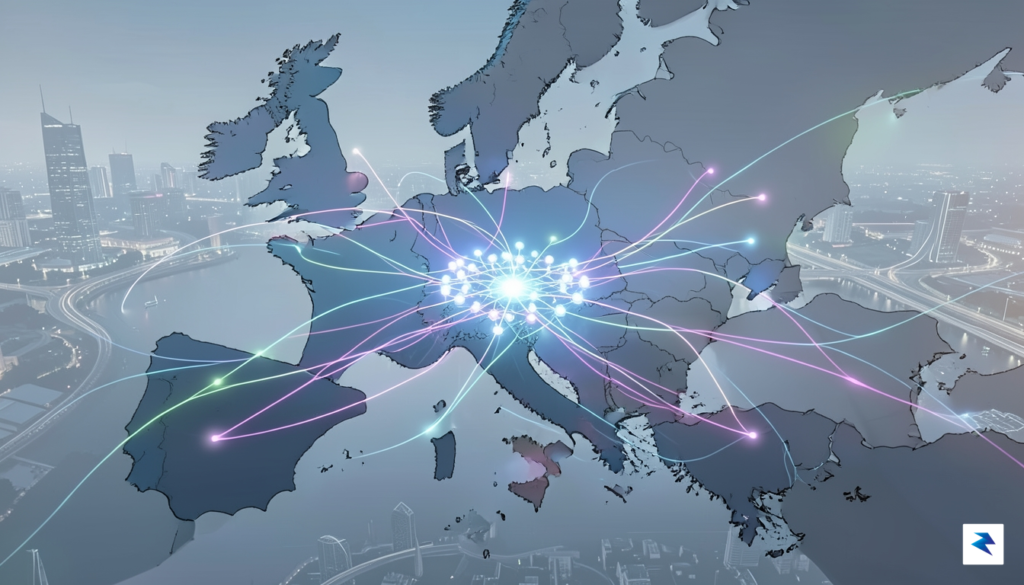
For this transition to take root, policymakers and private stakeholders must address the persistent issues of talent retention and venture capital fragmentation. While the talent is undeniably present, the current exodus of researchers to North American companies suggests that the existing infrastructure fails to provide the necessary resources, equity, and high-growth environments that top-tier AI engineers demand. To reverse this trend, Europe must create a more cohesive investment landscape that allows startups to scale across borders without the friction of disparate national regulations. The coming decade will be the ultimate litmus test; success will be measured not by the creation of a single “European ChatGPT,” but by the development of a resilient, diverse, and self-sustaining AI research culture that keeps its brightest minds on home soil.
The true metric of European success will not be the imitation of current global leaders, but the creation of an AI infrastructure that is inherently tailored to the complex, multi-lingual, and highly regulated needs of the European market.
Ultimately, the road ahead is paved with both significant hurdles and untapped opportunities. A realistic outlook suggests that Europe will likely settle into a strategic niche: leading in areas like B2B AI, green-tech integration, and privacy-preserving machine learning. By doubling down on these sectors, the continent can secure a vital position in the global value chain. If European nations can align their vast academic research output with a more agile approach to risk-taking and commercialization, they will secure more than just digital independence—they will ensure a seat at the table where the future of global intelligence is defined.