
The Mechanics of the Proposed 100% Tariff
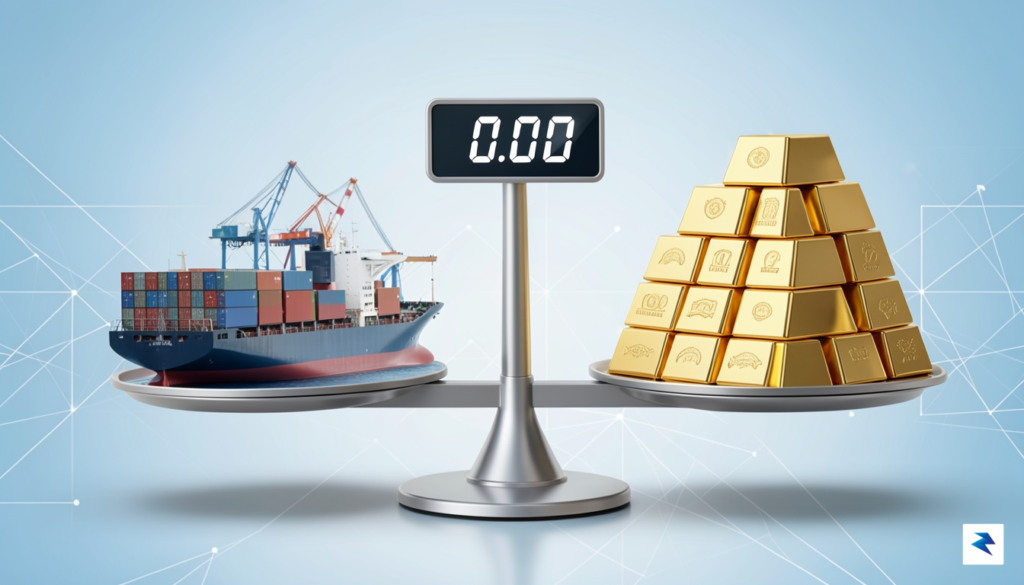
The proposal of a 100% tariff on European goods represents a radical departure from traditional trade diplomacy, moving beyond standard protectionism into the realm of aggressive economic leverage. At its core, this tariff structure is designed to function as a punitive barrier, effectively doubling the cost of imported European products to neutralize what the administration perceives as unfair digital services taxes (DSTs). By targeting the total value of these goods, the policy aims to force European nations to abandon levies that specifically impact American technology giants. This represents a significant shift in trade strategy, moving away from multilateral negotiations toward a unilateral “maximum pressure” model that risks destabilizing established transatlantic supply chains.
From a legal perspective, such a drastic measure would likely rely on executive authority granted under long-standing trade statutes, such as Section 301 of the Trade Act of 1974. This provision empowers the executive branch to investigate and take action against any act, policy, or practice of a foreign government that is deemed unjustifiable or unreasonable and that burdens or restricts United States commerce. While Congress holds the constitutional power to regulate foreign commerce, the expansion of executive power over the last several decades has granted the presidency significant latitude to impose these penalties without immediate legislative approval. This concentration of authority allows for rapid implementation, yet it also invites prolonged legal challenges and potential retaliation from the World Trade Organization (WTO).

A 100% tariff is not merely a tax on trade; it is an economic ultimatum designed to force a fundamental realignment of how sovereign nations tax the digital activities of multinational corporations.
The administration’s focus on these specific tech taxes is rooted in the belief that European nations are unfairly singling out high-performing American companies to bolster their own regional revenues. By implementing DSTs, countries like France, Italy, and Spain have created a framework that disproportionately impacts U.S.-based firms, which the current administration views as a form of discriminatory taxation. In response, the threat of a 100% tariff acts as a mirror-image deterrent, forcing European policymakers to choose between maintaining their tax revenues or preserving duty-free access to the lucrative American consumer market.
Predictably, the announcement of such an aggressive tariff strategy has triggered immediate volatility in global financial markets. Investors and multinational corporations, fearing a protracted trade war, have begun pricing in the risks of supply chain disruptions and increased operational costs. Market analysts note that the uncertainty surrounding the implementation of these tariffs creates a “wait-and-see” environment, slowing down capital expenditure and international investment. As businesses scramble to model the potential impact on their bottom lines, the broader economic sentiment has shifted toward caution, reflecting the high stakes involved in this escalating transatlantic dispute.
Trade Tensions: Understanding the Digital Services Tax Conflict

At the heart of the current trade friction lies a fundamental disagreement over how to capture revenue from a borderless digital economy. For years, several European nations have implemented Digital Services Taxes (DSTs), arguing that tech giants—many of which are headquartered in the United States—generate significant profits within their borders without paying a commensurate share in local corporate taxes. From the European perspective, these companies utilize local digital infrastructure and data to monetize their user bases, yet they often shift these earnings to low-tax jurisdictions to minimize their global tax liability. Consequently, these governments view DSTs as a necessary mechanism to ensure that multinational corporations contribute fairly to the public coffers of the countries where their economic value is actually created.
The United States government, however, views these levies through a lens of discriminatory protectionism. Washington has consistently argued that because the vast majority of companies impacted by these taxes are American tech titans, the policies function as a targeted strike against U.S. commercial interests rather than a neutral tax reform. By singling out digital services, the U.S. maintains that European countries are effectively circumventing international tax treaties to create a localized revenue stream at the expense of American innovation. This has led to a stalemate in global negotiations, as the U.S. demands a multilateral approach—ideally through the OECD—while Europe remains increasingly impatient with the slow pace of international consensus.

Recent diplomatic efforts to harmonize these tax policies have largely faltered, leaving a vacuum that individual nations have rushed to fill. The failure of these high-level talks has hardened stances on both sides of the Atlantic, transforming what was once a technocratic policy dispute into a high-stakes geopolitical standoff. While Europe asserts its sovereign right to set its own tax laws, the U.S. has signaled that it is prepared to retaliate with aggressive trade barriers to protect its domestic companies from what it deems an arbitrary and punitive tax regime.
The tension represents a clash between the traditional reliance on physical presence for tax jurisdiction and the modern reality of a digital-first economy where value is intangible and globally distributed.
Ultimately, the threat of a 100% tariff is the latest escalation in a long-standing struggle to redefine tax sovereignty in the 21st century. As the U.S. threatens to impose these severe duties, the global economic impact remains a significant concern, as both sides risk triggering a cycle of retaliatory measures. This dispute highlights the profound challenge of updating international tax frameworks to reflect a world where corporate presence is defined by clicks and data packets rather than factories and physical storefronts.
Impact on EU-US Trade Relations and Global Markets

The prospect of a 100% tariff on European goods represents a seismic shift that threatens to dismantle the foundational pillars of the Atlantic alliance, which has served as the bedrock of global stability for decades. By weaponizing trade policy against traditional democratic partners, such a move would effectively replace diplomatic cooperation with zero-sum economic warfare. The fragile truces established in recent years—designed to soothe tensions over aircraft subsidies and digital services taxes—would likely be rendered obsolete overnight. Consequently, the trust required for long-term geopolitical alignment risks being permanently eroded, potentially pushing the European Union to seek greater strategic autonomy and look toward alternative trading blocs in Asia or the Global South to mitigate its reliance on American markets.

Should the United States proceed with such a draconian tariff regime, the European Union would undoubtedly be forced into a position of immediate, large-scale retaliation. Brussels has historically demonstrated its ability to calibrate countermeasures that target politically sensitive sectors within the U.S., including agriculture, luxury goods, and automotive manufacturing. This tit-for-tat dynamic creates a perilous cycle of escalation that rarely remains contained to a single industry. Instead, it threatens to trigger a full-scale global trade war, forcing multinational corporations to navigate a landscape of unpredictable costs and regulatory barriers. For companies with deeply integrated, cross-Atlantic supply chains, the operational chaos would be immense, likely leading to delayed production cycles and significantly higher prices for consumers on both sides of the ocean.
The imposition of prohibitive tariffs acts as a destabilizing force that ripples through the global economy, turning specialized trade disputes into systemic risks for investors and manufacturers alike.
Beyond the immediate diplomatic fallout, the broader economic consequences involve significant market volatility that could dampen growth in the Eurozone and the United States simultaneously. As capital markets react to the uncertainty of fractured trade relations, investors may flee toward “safe-haven” assets, causing unpredictable fluctuations in currency valuations and interest rates. Furthermore, the inflationary pressure created by a 100% tariff would likely be felt most acutely by the average consumer, as the cost of imported electronics, vehicles, and machinery would soar. In an era where global supply chains are already struggling with post-pandemic adjustments, such aggressive protectionism could serve as a catalyst for a broader economic contraction, undermining the very prosperity that both the U.S. and the EU claim to be protecting.
Economic Consequences for American Consumers and Businesses

A proposed 100% tariff, while framed as a punitive measure against European countries, would in practice function as a direct tax levied at the U.S. border on goods imported from those nations. Crucially, this tariff is not paid by the exporting European producer but by the American importer – the domestic businesses purchasing these products to sell within the United States. This immediate and dramatic doubling of import costs places immense financial strain on U.S. companies, forcing them to confront a stark choice: absorb the prohibitive increase, pass it on to American consumers, or scramble to find alternative suppliers, which is often a costly and complex endeavor.
The inflationary impact of such a tariff would be felt across various sectors, significantly affecting the price of goods that American consumers and businesses rely on. Consider European electronics, which range from high-end consumer devices and specialized industrial components to crucial parts for manufacturing processes; doubling their import cost would translate into substantially higher retail prices for gadgets and increased operational expenses for U.S. firms needing these inputs. Similarly, the luxury goods market, where European brands often dominate categories like fashion, fine wines, spirits, and high-end accessories, would see prices soar, potentially rendering these items unaffordable for many and severely impacting the American retailers who specialize in them. Furthermore, the automotive sector would face immense pressure, as many European car brands with U.S. assembly plants depend on imported components, while fully imported European vehicles would also see their sticker prices skyrocket, making them far more expensive for American buyers.

Faced with such an extraordinary tariff, most American businesses would find themselves with little recourse but to adjust their pricing models accordingly. This inevitably means passing the amplified import costs directly onto consumers, resulting in widespread price increases across a diverse range of products. For the average American household, this would translate into a tangible decrease in purchasing power, as their dollars would simply buy less than before. Families would be compelled to make tougher budgetary decisions, potentially cutting back on discretionary spending or even necessities, which in turn could dampen overall consumer demand and slow down economic activity within the U.S. The ripple effect extends to businesses that use imported European goods as inputs for their own products, leading to higher production costs and further inflationary pressures throughout the supply chain.
Beyond immediate price hikes, a 100% tariff would fundamentally challenge the operational costs and strategies of American businesses. Companies currently sourcing components or finished goods from Europe would face immense pressure to either absorb the doubled cost, which would severely erode profit margins, or embark on a costly and time-consuming process of supply chain diversification. This search for new suppliers outside
The Future of Transatlantic Diplomatic Negotiations

As the prospect of a 100% tariff looms over the transatlantic corridor, the path toward a diplomatic resolution remains narrow but navigable. Traditional international frameworks, most notably the World Trade Organization (WTO), face a significant stress test in this scenario. While the WTO is designed to adjudicate trade disputes and prevent unilateral protectionism, its current capacity to enforce rapid resolutions is limited by long-standing procedural backlogs and the absence of a fully functional appellate body. Consequently, both Washington and Brussels must look beyond conventional litigation, pivoting instead toward high-level bilateral negotiations that prioritize long-term economic stability over short-term political posturing.
A viable compromise likely rests on the successful implementation of a global minimum tax framework—a concept that has already gained significant traction within the OECD. By harmonizing how multinational technology firms are taxed across borders, the US and the European Union could effectively neutralize the need for individual nations to impose unilateral digital services taxes. This multilateral approach would provide a predictable regulatory environment for tech giants while ensuring that governments receive their fair share of revenue. If negotiators can pivot from the threat of retaliatory tariffs toward a standardized international tax treaty, it would represent a landmark achievement in modern economic diplomacy, replacing chaotic trade barriers with a structured, rules-based system.

However, the window for de-escalation is closing rapidly, and the stakes for the global economy could not be higher. Should diplomatic channels collapse, the resulting trade war would likely stifle innovation, disrupt supply chains, and exacerbate inflationary pressures that are already burdening consumers on both sides of the Atlantic. Proactive engagement through established diplomatic backchannels remains the only way to avoid a period of prolonged volatility. By acknowledging the legitimate concerns surrounding digital competition while simultaneously rejecting the blunt instrument of tariffs, both powers can preserve the integrity of their partnership.
The strength of the global economy is inextricably linked to the stability of the US-EU trade relationship; a collapse into protectionism would be a self-inflicted wound that neither region can afford to endure.
In the final analysis, the future of this standoff will be defined by whether leaders choose to view tax policy as a zero-sum game or as a collaborative challenge. Stable trade relations are the bedrock of global economic growth, and the cost of dismantling decades of cooperation far outweighs the potential benefits of aggressive unilateralism. Moving forward, the international community must hope for a shift toward multilateralism, as the alternative—a fragmented, tariff-heavy landscape—threatens to reverse years of progress toward an integrated and resilient global marketplace.