
The Evolution of Supercomputing Architecture

For the better part of a decade, the landscape of high-performance computing (HPC) has been largely defined by one dominant architectural paradigm: GPU-accelerated systems. This era saw graphics processing units, initially designed for the demanding task of rendering intricate visual worlds in video games, ascend to become the indispensable workhorses of scientific research, artificial intelligence, and supercomputing. As we now observe a significant shift represented by groundbreaking systems like China’s LineShine, it becomes crucial to understand the foundational reasons behind the industry’s profound reliance on these specialized chips and, critically, how that very dependency inadvertently forged a strategic vulnerability in the face of escalating global trade restrictions.
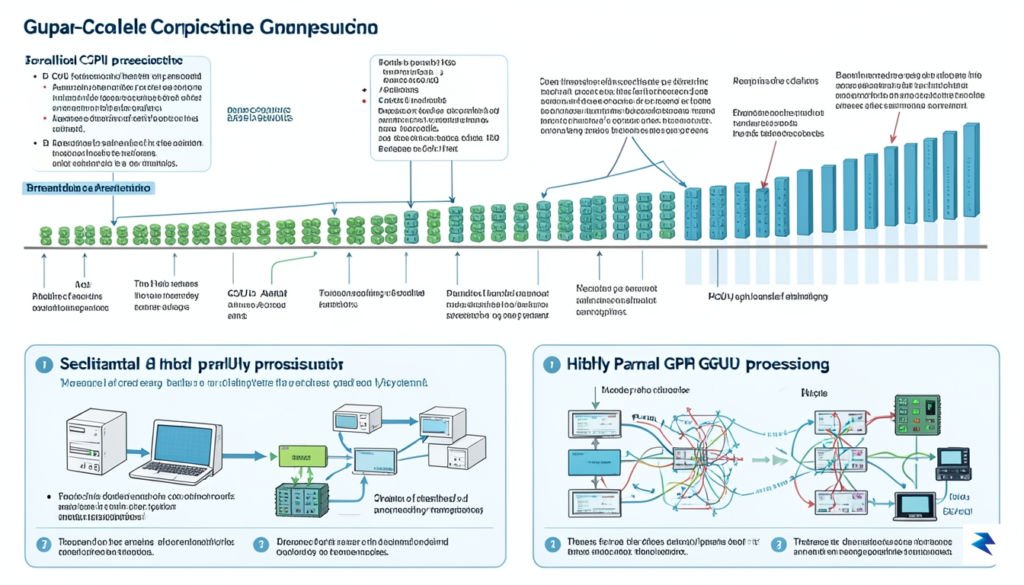
The turn of the 2010s marked a pivotal moment where traditional CPU-only architectures began to hit inherent limitations for certain burgeoning workloads. While central processing units (CPUs) are masters of complex, sequential tasks, their design prioritizes versatility and deep instruction sets, making them less efficient for operations that require massive parallel computation. Tasks like training neural networks, running intricate climate simulations, or performing advanced molecular dynamics involve billions upon billions of relatively simple, repetitive calculations that can be executed simultaneously. CPUs, with their limited number of powerful cores, simply couldn’t keep pace with the exponential demand for raw computational throughput, creating a bottleneck that threatened to slow the progress of critical scientific and technological advancements.
Enter the Graphics Processing Unit, or GPU. Originally engineered to process the millions of pixels and polygons required for real-time 3D graphics, GPUs are inherently designed with thousands of smaller, highly parallel processing cores. This architecture proved to be a perfect fit for the data-parallel nature of many HPC and AI tasks, where the same operation needs to be applied to vast quantities of data concurrently. NVIDIA, a leading GPU manufacturer, strategically capitalized on this synergy by developing its CUDA platform, a comprehensive software layer and programming model that allowed developers to harness the parallel power of GPUs for general-purpose computing. This move transformed GPUs from mere graphics accelerators into powerful, programmable parallel processors, effectively standardizing them as the core computational engine for the world’s fastest supercomputers and the burgeoning field of artificial intelligence.
This rapid embrace of GPU-accelerated computing, while undeniably transformative for scientific discovery and technological innovation, also consolidated significant power and expertise within a handful of companies, predominantly American. NVIDIA, in particular, established an ecosystem so robust and integral that it became virtually synonymous with high-performance computing. However, this profound dependency, while fostering incredible progress, also created a single point of failure in the global technological supply chain. When geopolitical tensions escalated and export controls began to target advanced semiconductor technology, particularly high-end GPUs, nations heavily invested in these architectures found themselves in a precarious position. The inability to access these critical components, previously the bedrock of their supercomputing ambitions, has thus compelled a radical and urgent rethink of hardware design, pushing the boundaries of innovation in unforeseen directions to cultivate domestic alternatives.
Beyond GPUs: China’s Shift in Computational Strategy
The emergence of LineShine represents a fundamental departure from the prevailing industry consensus that equates supercomputing prowess solely with the acquisition of high-end graphical processing units (GPUs). For years, the global race for exascale computing has been defined by the integration of massive arrays of specialized accelerators, largely manufactured by Western firms, to handle parallel processing tasks. By contrast, Chinese engineers have pivoted toward a sophisticated, CPU-only architecture that leverages highly optimized, custom-designed silicon. This strategic shift demonstrates that raw computational power is not merely a product of component specifications, but is instead deeply rooted in the synergy between hardware architecture and bespoke instruction sets.

This architectural pivot serves a dual purpose: it maximizes performance while effectively circumventing the constraints imposed by current U.S. export restrictions. Because these specialized CPUs are designed and fabricated domestically, they render the scarcity of imported high-end GPUs irrelevant to the machine’s operational capability. By focusing on deep-level integration at the chip level, developers have minimized the overhead typically associated with moving data between a host CPU and external accelerators. This approach effectively eliminates the “bottleneck” effect, allowing the system to maintain consistent, high-speed throughput across complex scientific simulations that would otherwise stutter on traditional, heterogeneous systems.
“Efficiency is the new frontier of supercomputing; when you cannot rely on off-the-shelf accelerators, you are forced to innovate at the fundamental level of the motherboard and the interconnect.”
The speed gains observed in the LineShine project are further bolstered by advancements in interconnect technology and software-level optimizations. Rather than relying on standard commercial networking protocols, the system utilizes a proprietary high-bandwidth interconnect fabric that allows individual processor nodes to communicate with near-zero latency. When paired with a custom-built, lightweight operating system that strips away unnecessary background processes, the machine achieves a level of efficiency that rivals, and in some metrics exceeds, clusters reliant on power-hungry GPU farms. This holistic engineering philosophy proves that China’s computational strategy has matured into a self-sustaining ecosystem, one where software agility and custom hardware design compensate for the lack of global supply chain access. Consequently, LineShine acts as a clear signal that the future of high-performance computing may move away from the “more is better” GPU model, favoring instead the refined, architectural precision of specialized, integrated clusters.
Navigating the Geopolitical Chip Landscape

The friction between Washington and Beijing over semiconductor technology has evolved from a targeted trade dispute into a fundamental realignment of the global tech ecosystem. For years, the United States utilized its control over the intellectual property and manufacturing tools essential for advanced chip production as a primary instrument of foreign policy. By placing key Chinese research institutions and technology conglomerates on the “Entity List,” the US government intended to stall China’s progress in high-performance computing (HPC) and artificial intelligence. However, rather than forcing a total cessation of development, these restrictive measures have inadvertently catalyzed a shift toward radical self-sufficiency.

This pursuit of “technological sovereignty” has become the cornerstone of China’s current economic and defense strategy. When access to Western-manufactured GPUs—the standard engine for modern supercomputing—was curtailed, Chinese engineers were forced to abandon the path of least resistance. Instead of relying on imported architectures, they pivoted toward custom, heterogeneous computing frameworks that prioritize efficiency and domestic integration. This transition is not merely a reactionary move; it is a calculated effort to insulate China’s critical infrastructure from future geopolitical volatility. By redesigning systems from the ground up, China is effectively decoupling its high-end research capabilities from the influence of global supply chain politics.
The move toward indigenous chip design reflects a broader geopolitical reality: when a nation is denied the tools of the status quo, it is incentivized to innovate an entirely new paradigm of performance.
The broader implications for the global tech sector are profound. As China proves that exascale performance is achievable without relying on the traditional, US-sanctioned GPU supply chain, the monolithic dominance of Western chip architectures faces an unprecedented challenge. This divergence risks creating a bifurcated world of technology standards, where different regions operate on incompatible hardware ecosystems. Ultimately, the success of systems like the one recently unveiled suggests that isolationist policies, while intended to suppress, are often the primary fuel for deep, structural shifts in technical capability. We are no longer watching a race to build faster computers; we are witnessing the birth of a decentralized, multi-polar era of silicon innovation where national security interests dictate the very physical design of the processors powering our future.
The Technical Feat: Efficiency and Optimization

At the heart of LineShine’s unprecedented performance lies a fundamental shift in philosophy: hardware is only as powerful as the software orchestration that commands it. While Western exascale systems have leaned heavily into the high-throughput, brute-force capabilities of massive GPU clusters, the architects behind LineShine chose a different path rooted in software-defined hardware. By engineering a custom, tightly coupled software stack, the developers managed to squeeze near-theoretical maximums out of their underlying compute fabric. This optimization layer acts as a traffic controller for massive parallel processing, ensuring that no compute cycle is wasted on idle memory waits or inefficient task scheduling, which are common bottlenecks in conventional systems.
The system’s true genius reveals itself in its interconnect architecture. In standard GPU-centric supercomputers, latency often balloons when data must traverse the complex pathways between thousands of independent processors. To circumvent this, the designers of LineShine implemented a proprietary, low-latency interconnect fabric that prioritizes data locality. By minimizing the physical and logical distance data must travel, the system effectively compensates for its lack of high-end, Western-manufactured GPUs. This high-speed synchronization allows the processors to function as a singular, cohesive entity rather than a collection of disparate nodes, drastically reducing the overhead typically associated with distributed computing tasks.

This approach stands in stark contrast to the existing global paradigm, which assumes that more raw GPU horsepower is the only route to exascale dominance. Western systems often rely on massive memory bandwidth to mask inefficient code, assuming that hardware can brute-force its way through algorithmic bottlenecks. Conversely, LineShine proves that sophisticated software engineering can achieve equivalent performance on less specialized hardware. By refining the ways in which data is partitioned and distributed across its internal architecture, the system achieves efficiency metrics that challenge the industry status quo. It is a masterclass in optimization, proving that when silicon availability is constrained, software ingenuity becomes the ultimate force multiplier.
The true breakthrough of LineShine is not found in a single chip, but in the seamless, orchestrated communication between millions of them. By prioritizing interconnect efficiency over raw per-core power, the system redefines what is possible in the age of restricted hardware access.
Ultimately, the system’s success serves as a case study for future supercomputing design. While others focus on increasing the transistor count within a single die, the developers of LineShine have focused on the efficiency of the entire ecosystem. This holistic view of the machine—where the compiler, the OS, and the interconnect are treated as a unified instrument—allows for a level of performance that is both surprising and highly scalable. As the global race for computational supremacy continues, this shift toward software-centric architecture may prove to be the most significant disruption in the field to date.
Global Implications for AI and Scientific Research

The emergence of a new supercomputing paradigm in China represents a pivotal turning point for the trajectory of artificial intelligence. As the global race for computational dominance intensifies, the reliance on traditional, GPU-centric hardware has become a potential bottleneck for nations facing restricted access to high-end silicon. By demonstrating that world-class performance can be achieved through alternative architectures, China is effectively challenging the current monopolistic reliance on established chip ecosystems. This development suggests that the future of large-scale AI training may no longer be tethered to a single standard, forcing the international research community to adapt to a more heterogeneous landscape where disparate hardware stacks must learn to communicate and collaborate.
This shift potentially heralds a bifurcated era of High-Performance Computing (HPC), where the global industry splits between Western GPU-based clusters and an emerging, specialized alternative-based ecosystem. If this trend holds, we are likely to see a diversification of AI software stacks designed to optimize performance across these fundamentally different physical substrates. Researchers will no longer be able to rely solely on universal libraries optimized for one specific architecture; instead, they will need to develop more versatile, platform-agnostic models that can leverage the unique strengths of various high-performance systems. This fragmentation, while challenging, may ultimately catalyze innovation in software engineering, pushing developers to create more efficient algorithms that require less raw brute force to reach scientific milestones.

The true measure of this technological shift will not be found in raw benchmark scores alone, but in how effectively these systems accelerate the timeline for solving humanity’s most complex, data-heavy challenges.
Ultimately, the implications for scientific research are profound, particularly in fields that demand massive parallel processing capabilities, such as climate modeling and genomic drug discovery. When supercomputers can simulate atmospheric changes or molecular interactions at unprecedented speeds using non-traditional hardware, the barrier to entry for complex scientific inquiry is significantly lowered. By democratizing access to high-performance computing through these alternative pathways, the scientific community could see an explosion in breakthroughs from regions that were previously hindered by hardware embargoes. This evolution points toward a future where the pace of discovery is determined not just by the availability of specific chips, but by the ingenuity of researchers in mapping sophisticated AI models onto diverse, cutting-edge computational infrastructures.