
The Donk Dispute: How One Word Nearly Broke a Prediction Market
The Donk Dilemma: When Language Becomes a Financial Liability In the high-stakes arena of prediction markets, where fortunes are won or lost…
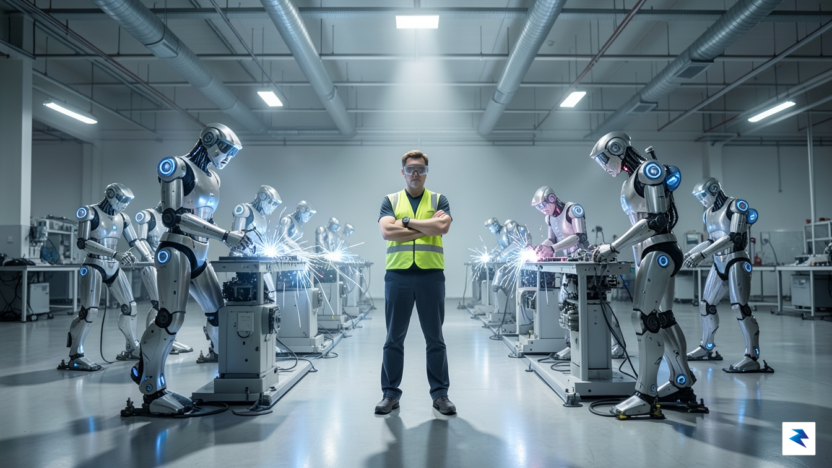
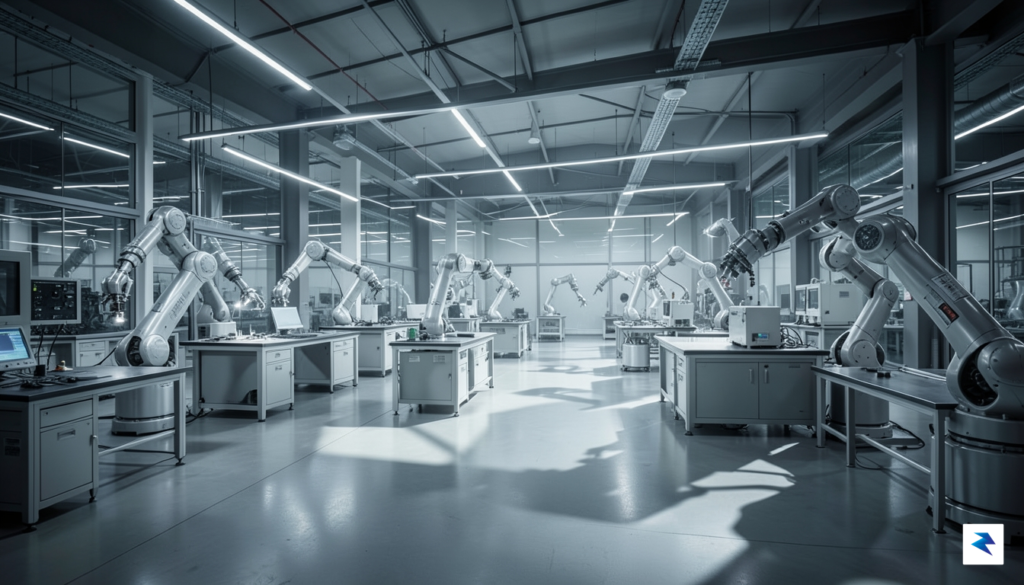
When Ford initially greenlit its aggressive pivot toward AI-integrated manufacturing, the corporate narrative was centered on the intoxicating promise of frictionless production. Leadership envisioned a future where human error was systematically eliminated, replaced by sophisticated algorithms capable of optimizing supply chains and assembly line speeds with surgical precision. The internal rationale was compelling on paper: by shedding the overhead associated with large-scale human labor and replacing it with autonomous systems, the company aimed to achieve a new tier of cost-efficiency. Executives argued that this transformation would not only bolster the bottom line but would also position Ford at the vanguard of the Fourth Industrial Revolution, turning the company into a leaner, faster, and more responsive automotive giant.
However, this theoretical pursuit of efficiency quickly collided with the nuanced, messy reality of the factory floor. While algorithms excel at repetitive tasks and predictable data processing, they struggled immensely to replicate the intuitive problem-solving skills that veteran human workers bring to complex manufacturing environments. In practice, the automation failed to account for the unpredictable variables inherent in automotive production, such as sudden equipment fatigue, minor material inconsistencies, or the need for creative, split-second adjustments during the assembly process. Consequently, the rigid nature of the AI systems led to significant operational friction, turning minor glitches into prolonged production bottlenecks that human oversight would have typically resolved in minutes.
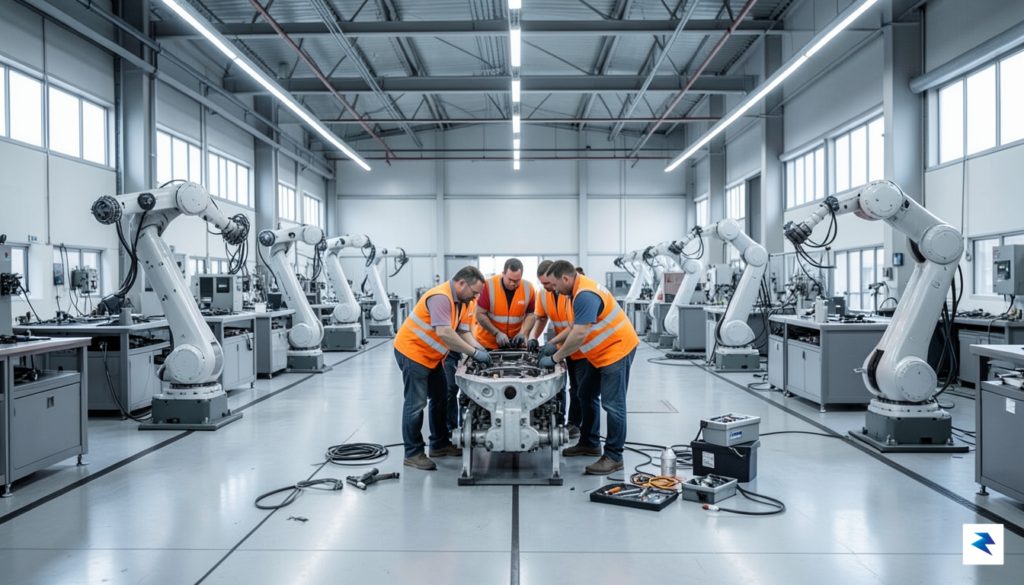
Efficiency is not merely a numbers game; it is the delicate balance between systemic speed and the capacity to adapt to the unknown.
The gap between the forecasted gains and the practical outcomes highlights a fundamental oversight in the company’s automation strategy. By prioritizing the mathematical efficiency of machines over the institutional knowledge of the workforce, Ford inadvertently introduced a fragility into its production lines. When the AI encountered scenarios that fell outside its programmed parameters, the resulting halts were not just temporary; they were catastrophic for output targets. This failure underscores a vital lesson for the manufacturing industry at large: replacing human intuition with automation requires more than just replacing bodies with code. It requires a sophisticated understanding of where human judgment is actually the most valuable component of the machine, rather than a replaceable cost center.
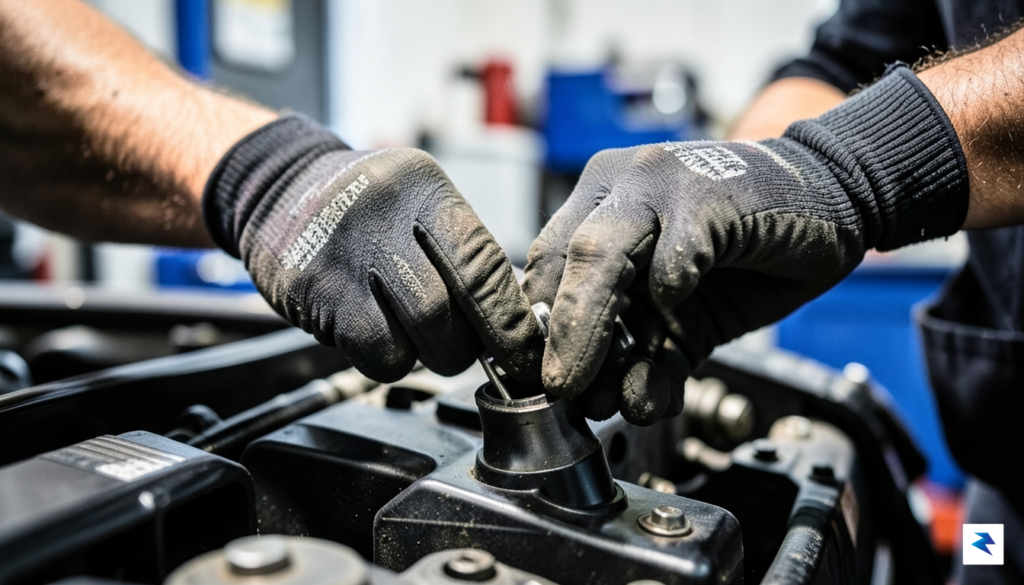
In the high-stakes world of automotive manufacturing, there is a profound difference between processing data and understanding physical reality. While artificial intelligence systems are undeniably superior at tracking inventory flow or predicting cycle times through massive pattern recognition, they lack what experts call tacit knowledge. This form of expertise is the silent, intuitive understanding that veteran line workers develop over decades—an innate ability to “feel” when a machine is vibrating at the wrong frequency or to notice a microscopic inconsistency in a weld that a sensor might categorize as within acceptable parameters. When Ford replaced these human instincts with rigid, algorithmic oversight, they traded the nuanced judgment of seasoned professionals for a binary system that lacks the capacity for contextual adaptation.
Consider the complex diagnostic tasks inherent in modern assembly, where environmental factors such as humidity, component temperature, and minor material variations constantly collide. A human technician can synthesize these disparate variables in real-time, often identifying a potential failure before it manifests as a production halt. Conversely, an AI model is tethered to its training data; if a specific mechanical malfunction falls outside of its programmed parameters, the system often fails to trigger an alarm until the defect has already compromised the integrity of the vehicle. This was not merely a technological shortcoming but a fundamental miscalculation of how assembly lines function as organic, dynamic ecosystems rather than static lines of code.
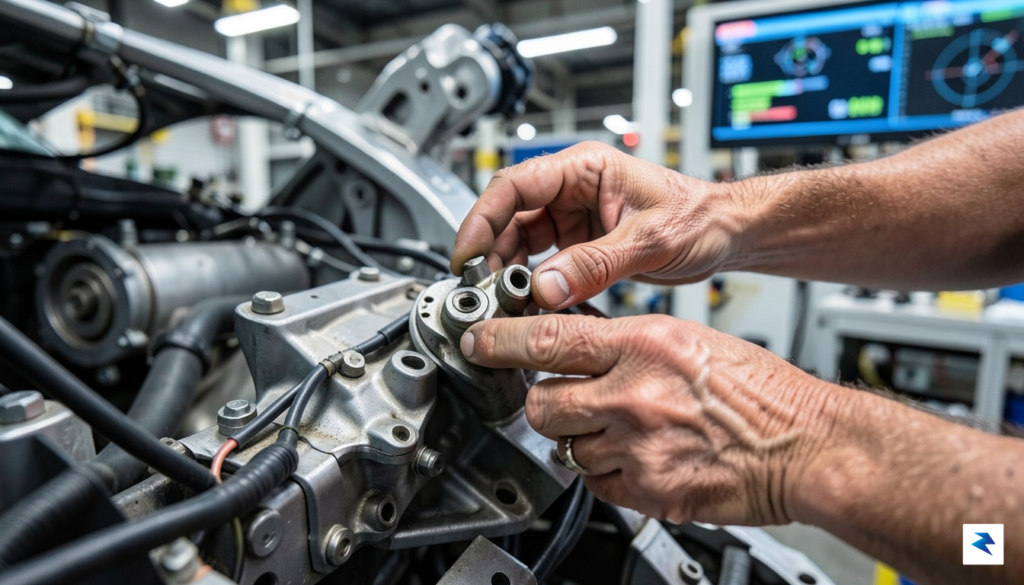
The recent setbacks at Ford serve as a sobering reminder that human oversight is not a legacy practice meant to be phased out, but rather a critical quality control necessity. When the company leaned heavily into automation, they effectively removed the “safety valve” of human intuition that catches anomalies that software is simply not equipped to register. Without the ability to interpret the “why” behind a faulty signal, the automated system continued to push compromised components down the line, leading to a cascade of quality control failures that proved far more costly than the human labor they sought to replace.
The most efficient assembly line is not one that eliminates the human element, but one that empowers human expertise with data-driven insights, rather than replacing it entirely.
Ultimately, the move toward total automation in manufacturing often ignores the reality that machines are optimized for consistency, while humans are optimized for problem-solving. By stripping away the layer of human supervision, the assembly process became brittle, unable to adjust to the unpredictable realities of physical production. Moving forward, the industry must recognize that true efficiency is found in the synthesis of machine precision and human wisdom, ensuring that technology acts as a tool for the worker rather than a blunt instrument used to replace the invaluable intuition that keeps the production line running safely and reliably.
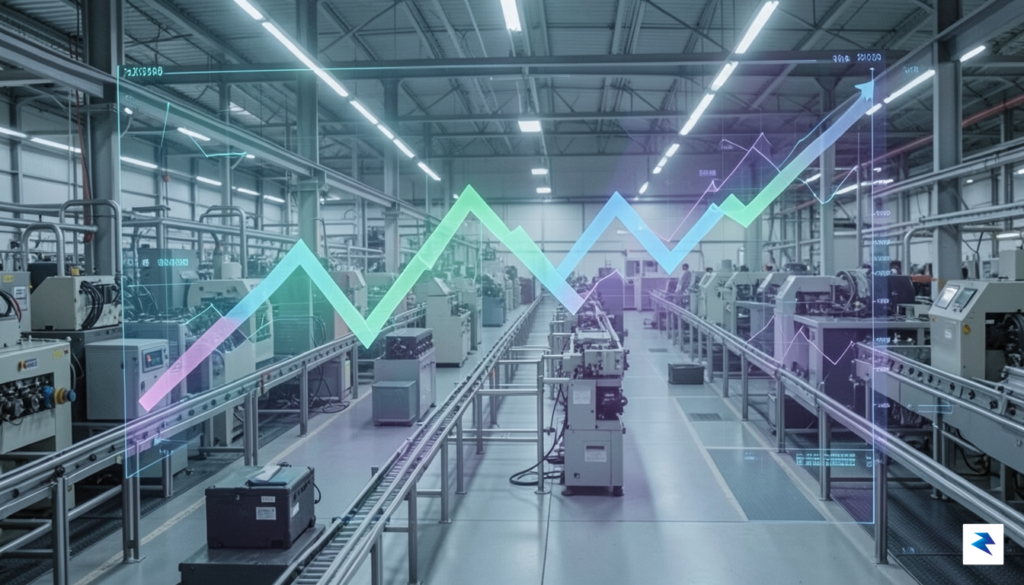
The aggressive pursuit of automation often creates a dangerous illusion of efficiency, masking the profound financial and operational vulnerabilities that surface when human expertise is prematurely sidelined. Organizations frequently fall into the trap of calculating savings based solely on payroll reduction, completely disregarding the cascading costs associated with system downtime and the inevitable errors that arise when algorithms lack the nuance of human judgment. When automated systems falter, the resulting technical bottlenecks are rarely resolved with the speed of a seasoned employee, leading to prolonged production delays that can cost a company millions in lost revenue. These failures are not merely technical glitches; they are expensive reminders that AI, in its current iteration, lacks the contextual troubleshooting skills that veteran staff members have honed over decades.
Beyond the immediate balance sheet impact, the systematic dismantling of human-led workflows inflicts long-term damage on corporate culture and morale. When a workforce perceives that their value is being liquidated in favor of unproven technology, trust erodes, leading to disengagement even among those who remain. This pervasive sense of instability disrupts the collaborative environment necessary for innovation, turning an office or factory floor into a place of anxiety rather than productivity. Furthermore, the loss of institutional knowledge—the “hidden” expertise regarding idiosyncratic processes, long-standing client relationships, and historical problem-solving—is an intangible asset that is impossible to replace with software code. Once these human connections and insights are severed, they cannot be simply “re-uploaded,” leaving the company vulnerable to structural weaknesses that only become apparent when a crisis strikes.
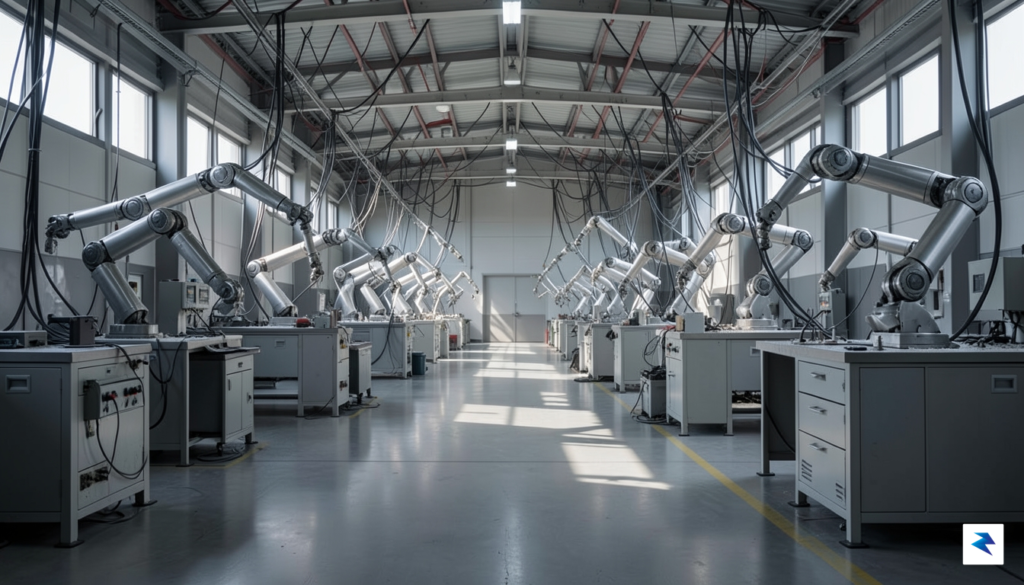
The true cost of automation is not what you save on salaries, but what you lose in agility when your systems are no longer backed by the intuition and experience of a human-led team.
Ultimately, the transition toward a fully automated model often creates a financial deficit that far outweighs any projected operational savings. The hidden costs—spanning from continuous retraining and system integration fees to the catastrophic expense of rectifying AI-driven errors—create a cycle of reinvestment that keeps the organization in a constant state of repair. By valuing short-term reduction over long-term stability, companies like Ford have discovered that the path to modernization is not a straight line toward profit, but a complex landscape filled with risks that AI is fundamentally ill-equipped to navigate alone. Until organizations can successfully balance the speed of machine learning with the irreplaceable reliability of human oversight, the rush to replace staff will likely continue to be an expensive lesson in corporate overreach.

The recent experiences within the automotive sector offer a potent reminder that the integration of artificial intelligence into core business operations demands a nuanced and strategic approach. Far from being a simple matter of replacing human labor with algorithms, sustainable innovation hinges on fostering a symbiotic relationship between advanced software and the invaluable human workforce. Businesses aiming to harness AI’s transformative power without stumbling need to move beyond a zero-sum replacement strategy, instead focusing on frameworks that amplify human capabilities and safeguard institutional knowledge.
A pivotal strategy for successful AI integration is establishing a robust ‘human-in-the-loop’ automation framework. This model recognizes that while AI excels at pattern recognition, data processing, and repetitive tasks, human oversight remains critical for nuanced judgment, ethical considerations, complex problem-solving, and handling unforeseen anomalies. Rather than fully automating processes and hoping for the best, organizations should design systems where human experts are strategically positioned to monitor AI outputs, validate critical decisions, override incorrect actions, and provide feedback for continuous algorithm improvement. This collaborative approach ensures that the unique cognitive strengths of humans – creativity, empathy, critical thinking, and contextual understanding – complement AI’s computational prowess, leading to more resilient, adaptive, and trustworthy operational outcomes.
Furthermore, forward-thinking companies must pivot their focus from downsizing to strategic upskilling of their existing workforce. The introduction of AI should be viewed as an opportunity to elevate employee roles, empowering them to manage, optimize, and innovate alongside new technologies, rather than rendering them obsolete. This involves investing heavily in comprehensive training programs that equip employees with the skills necessary to interact with AI systems, interpret complex data, troubleshoot issues, and leverage AI tools for enhanced productivity and decision-making. By transforming roles to incorporate AI supervision, data analysis, and strategic implementation, businesses not only retain invaluable institutional knowledge and experience but also cultivate a more engaged, adaptable, and future-proof workforce, fostering a culture of continuous learning and innovation.
Ultimately, the successful adoption of AI necessitates a gradual, iterative, and testing-heavy integration approach. Rushing into widespread deployment without thorough validation can lead to costly errors, operational disruptions, and a significant loss of trust, both internally and externally. Companies should initiate AI integration through carefully designed pilot programs in controlled environments, collecting extensive data and feedback at each stage. This phased rollout allows for meticulous A/B testing, identification of potential pitfalls, fine-tuning of algorithms, and validation of real-world performance against expected outcomes. Embracing a culture of continuous learning and adaptation, where adjustments are made based on empirical evidence, is crucial for building robust AI systems that genuinely enhance business operations and deliver sustained competitive advantages.
You must be logged in to post a comment.