
The Polestar-Volvo Divide: Why Federal Trade Rules Are Reshaping the EV Market
The Regulatory Pivot: How Polestar Found Itself in the Crosshairs The recent intensification of federal trade policy has created a complex…


The recent FIFA World Cup in Qatar transcended the traditional spectacle of global football; it served as a high-stakes proving ground for an array of technological integrations that are fundamentally reshaping professional football. This wasn’t merely an incremental update but a deliberate, comprehensive deployment of cutting-edge systems, transforming everything from player performance analysis to fan engagement and match officiating. The tournament became a living laboratory, showcasing how a deep embrace of digital innovation could elevate the sport to unprecedented levels of precision, fairness, and immersive experience.
For years, FIFA has cautiously integrated technology into the beautiful game, moving from rudimentary electronic scoreboards to more sophisticated innovations like goal-line technology and the advent of the Video Assistant Referee (VAR). Each step was met with its share of debate, yet the underlying current of progress was undeniable. Qatar, however, represented a quantum leap. Here, the existing appetite for technological advancement met an infrastructure purpose-built to host such ambitions. The compact nature of the host nation, with state-of-the-art stadiums in close proximity and unparalleled digital connectivity, provided the perfect ecosystem for a seamless and integrated technological experiment on a global scale.
This new era of ‘tech-forward’ football encompasses far more than just officiating tools. It extends into granular player tracking with semi-automated offside technology, advanced ball sensors providing real-time data on speed and trajectory, and sophisticated data analytics used by teams for tactical insights. Furthermore, the fan experience was revolutionized through personalized stadium apps, augmented reality features, and broadcast enhancements that offered viewers deeper statistical insights and dynamic perspectives. Every aspect, from medical diagnostics to security protocols, was underpinned by a robust digital framework, demonstrating the vast potential when technology is woven into the very fabric of a major sporting event.
At the heart of this digital transformation lies an unwavering pursuit of transparency and precision, which have become the new gold standards for the sport. Subjectivity, once an inherent part of football, is increasingly being challenged by objective data and machine-assisted decision-making. This push aims to minimize human error, ensure fairer outcomes, and provide a more consistent application of rules across matches. The sheer volume and quality of data collected during the Qatar World Cup not only informed immediate game decisions but also laid the groundwork for future innovations, offering invaluable insights into player welfare, performance optimization, and the evolution of gameplay itself. The legacy of Qatar as a technological crucible will undoubtedly influence how football is played, managed, and experienced for decades to come, setting a new benchmark for global sporting events.


At the center of the technological transformation witnessed on the pitch is a piece of equipment that appears deceptively traditional: the match ball. Beneath its textured outer layer lies a sophisticated electronic marvel known as the Inertial Measurement Unit (IMU) sensor. This lightweight, battery-powered device is suspended in the very heart of the ball, held in place by a specialized stabilization system that ensures the sensor remains perfectly centered regardless of the force of a strike or the velocity of the flight. By measuring movement through space with incredible sensitivity, the sensor acts as the primary data-gathering engine, translating the physical kinetics of a match into a continuous digital stream.

The true brilliance of this system lies in its ability to communicate with the officiating team in real-time. As the ball moves across the field, the IMU sensor transmits data packets to the Video Assistant Referee (VAR) operations room at an astonishing rate of 500 frames per second. This rapid-fire transmission ensures that the exact millisecond of contact between a player’s foot and the ball is captured with absolute certainty. Before this technology existed, officials relied on the limits of human perception and standard camera frame rates, which often resulted in “blur” or ambiguity during split-second decisions. Now, the IMU provides a precise timestamp that can be synchronized perfectly with optical tracking cameras positioned around the stadium.
The integration of IMU sensors effectively removes the guesswork from game-defining moments, turning subjective visual estimation into objective, data-driven fact.
This granular level of detail is particularly revolutionary when it comes to the complex enforcement of offside rules. In scenarios where a player’s position is separated by mere centimeters, the system utilizes the sensor’s data to pinpoint the exact moment the ball was played. By cross-referencing this moment with the synchronized imagery of the player’s limb positions, the automated system can generate a virtual offside line that is accurate down to the smallest fraction of an inch. Consequently, the reliance on human judgment for high-speed, tight-margin calls is significantly reduced, fostering a more equitable environment where the outcome of a match is determined by the athletes’ performance rather than a referee’s imperfect view of a crowded penalty area.
Beyond its utility in officiating, this connectivity serves as a cornerstone for deeper tactical analysis and player development. Because the sensor records data on speed, trajectory, and spin, coaches and analysts can now deconstruct the mechanics of a strike or the efficiency of a pass with unprecedented depth. By moving beyond the naked eye and into the realm of high-frequency data collection, FIFA has effectively turned the ball into a diagnostic tool, ensuring that the integrity of the modern game keeps pace with the rapid evolution of digital sports science.

For decades, the offside rule stood as the most polarizing element of professional football, frequently leaving fans and players frustrated by the margin of error inherent in human perception. The introduction of Semi-Automated Offside Technology (SAOT) during the Qatar tournament marked a definitive shift away from subjective guesswork toward mathematical precision. By integrating sophisticated hardware with high-speed data processing, FIFA successfully transformed what was once a source of endless debate into a streamlined, evidence-based officiating process.
The infrastructure behind this system is nothing short of an engineering marvel, beginning with the installation of twelve specialized tracking cameras mounted beneath the stadium roofs. These cameras are specifically calibrated to track both the ball and every individual player on the pitch, capturing movement at a staggering rate of 50 times per second. This constant stream of data is fed into a centralized processing hub that performs “skeleton tracking,” a sophisticated computational process that maps 29 distinct data points on a player’s body. By identifying the exact position of limbs, shoulders, and feet, the system can determine the precise geometry of an offside situation in a fraction of a second, effectively removing the human eye’s inability to perceive depth at high speeds.
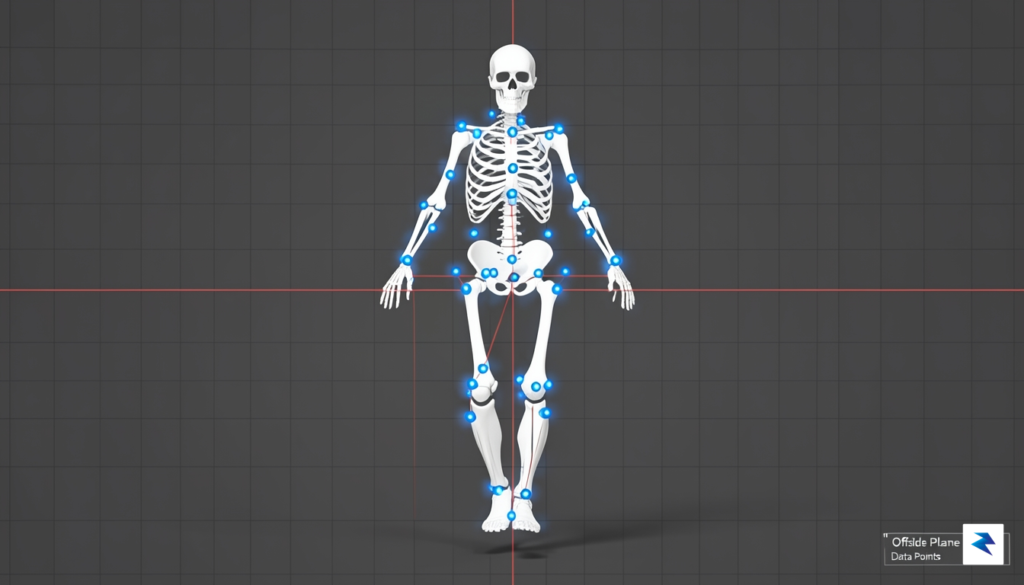
The sophistication of SAOT extends beyond mere optical tracking by incorporating an Inertial Measurement Unit (IMU) sensor placed inside the match ball itself. This sensor transmits data at 500 hertz, providing the system with the exact moment of contact when a pass is initiated. When this ball-tracking data is synchronized with the player-tracking skeletons, the system creates an automated alert sent directly to the Video Assistant Referee (VAR) booth. If the software determines that a player is in an offside position at the exact moment the ball is played, a signal is triggered, allowing officials to verify the data in seconds rather than minutes.
The core strength of the SAOT system lies in its ability to provide an objective, data-driven foundation for decisions, ensuring that the integrity of the game is upheld through cold, hard logic rather than human estimation.
Ultimately, this technological leap has drastically reduced the downtime associated with VAR reviews, transforming a once-arduous process into a seamless aspect of the broadcast. By presenting officials with pre-calculated, verified lines, the technology ensures that the “subjective bias” of a linesman—or even a video operator—is kept at bay. Fans watching at home benefit as well, as the system generates 3D animations that clearly illustrate the offside decision, providing transparency that was previously impossible to achieve during a live broadcast. This successful implementation in Qatar proved that football could embrace modernization without sacrificing the spirit of the game, setting a permanent new standard for officiating on the global stage.
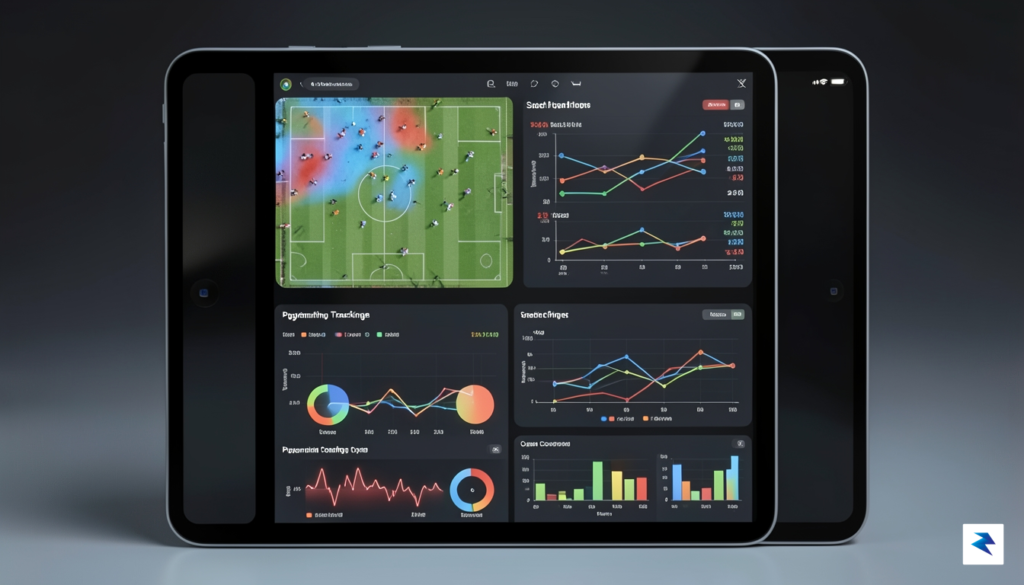
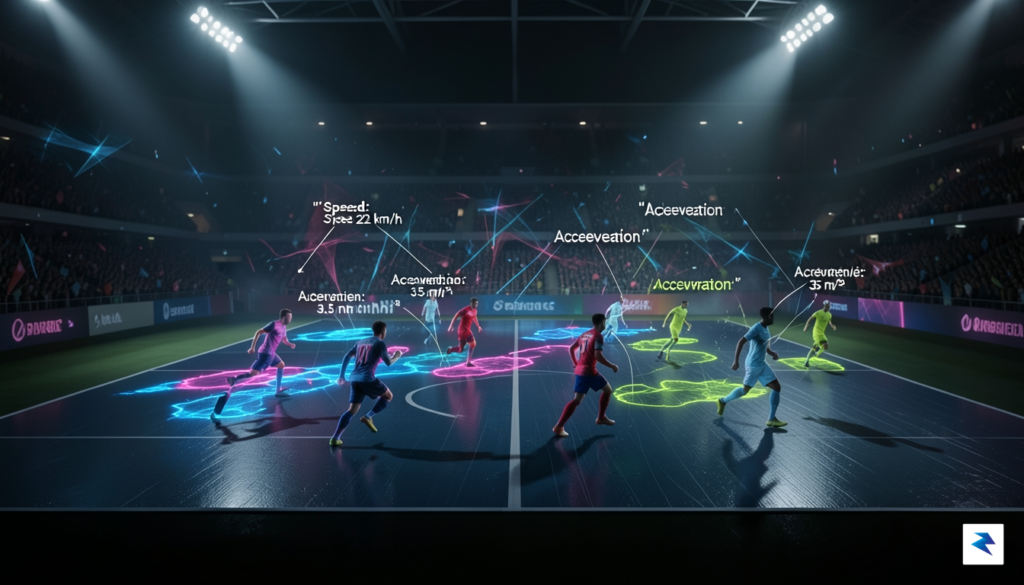
The data revolution in professional football found its most sophisticated proving ground in Qatar, where the integration of advanced tracking technology fundamentally shifted how coaching staffs perceive the beautiful game. Central to this evolution was the FIFA Player App, a digital interface that granted every athlete unprecedented access to their own performance metrics immediately following the final whistle. By synthesizing data points from optical tracking cameras positioned throughout the stadium, the app transformed raw, chaotic match movement into structured, actionable insights. Players could review their physical exertion levels, including total distance covered, high-intensity sprints, and the frequency of pressure applied to opponents, allowing them to visualize their contributions with a level of scientific clarity that was previously impossible to achieve.
Beyond individual post-match reflection, these comprehensive data sets are actively reshaping the tactical landscape of modern training sessions. Managers now utilize granular metrics regarding positional efficiency—such as how often a player occupies specific “half-spaces” or maintains a defensive structure under fatigue—to tailor practice drills that address microscopic tactical deficiencies. Instead of relying solely on the subjective eye of a coach, training programs are increasingly data-driven, with intensity levels modulated based on the specific physical demands recorded during tournament play. This precision ensures that players remain at their peak physical condition throughout grueling tournament cycles, effectively minimizing the risk of injury while maximizing tactical output.
The shift toward data-centric coaching means that the traditional “hunch” is being replaced by empirical evidence, allowing managers to scout talent and rotate squads with mathematical confidence.
This analytical depth has also rippled outward, profoundly impacting the global scouting landscape. As clubs examine the data generated in Qatar, they are placing a premium on specific efficiency markers, such as the ability to recover high-speed ground or the percentage of successful line-breaking passes made under extreme pressure. By moving beyond traditional goal and assist statistics, analysts are uncovering “hidden gems” whose positional discipline and tactical intelligence might have previously gone unnoticed. Consequently, the legacy of Qatar’s technology test lab is not merely a collection of tournament records; it is the establishment of a new, highly objective standard for evaluating the elite physical and tactical limits of human performance in football.

The innovations tested under the intense spotlight of the Qatar tournament were never meant to remain confined to the desert sands. FIFA’s broader vision is rooted in the creation of a scalable technological framework that can be exported to leagues with vastly different financial capacities. While the high-fidelity limb-tracking cameras and sensor-laden balls captured headlines, the underlying software architecture is becoming increasingly modular. By streamlining these data pipelines, FIFA is enabling smaller confederations and national leagues to integrate semi-automated offside technology and performance analytics at a fraction of the initial cost. This democratization of high-end data ensures that the standard of officiating and player monitoring is no longer a luxury reserved solely for the sport’s wealthiest elite, but a baseline expectation for professional play worldwide.

However, as the game becomes more digitized, the footballing community remains locked in a delicate dialogue regarding the preservation of the sport’s soul. Critics often argue that excessive reliance on algorithms threatens to strip away the spontaneity and human error that have defined football for over a century. Yet, the current trajectory suggests that technology is not replacing the human element, but rather acting as a necessary guardrail against the heightened stakes of the modern game. By delegating objective binary decisions—such as whether a ball crossed the line or a player was inches offside—to automated systems, the sport actually liberates referees to focus on the nuanced, subjective interpretations of conduct that machines cannot replicate.
The true success of Qatar’s technological experiment lies not in the precision of the sensors, but in the shift toward a sport that values objective fairness as the foundation for its global growth.
Ultimately, the future of football is undeniably data-driven, yet it remains firmly rooted in human passion. As these tools continue to evolve, they will likely move beyond officiating and into the realm of fan engagement, providing spectators with real-time tactical insights that were previously visible only to coaches. This evolution creates a more transparent, equitable, and immersive experience for everyone involved. While the technology will continue to advance, the core objective remains constant: to provide a fair stage where the world’s greatest athletes can showcase their talents without the cloud of controversy. Football is entering an era where precision and performance go hand in hand, ensuring that the beautiful game remains as captivating in the digital age as it was in the era of analog tradition.
You must be logged in to post a comment.