
Understanding the Memory Market Antitrust Allegations

The global semiconductor landscape is currently navigating a period of intense legal scrutiny following the filing of a major class-action lawsuit against the three pillars of the memory industry: Samsung Electronics, SK Hynix, and Micron Technology. These corporations collectively dominate the worldwide market for Dynamic Random Access Memory (DRAM), a critical component that acts as the short-term working memory for nearly every modern electronic device. From the smartphone in your pocket to the high-performance servers powering global cloud infrastructure and enterprise data centers, DRAM serves as the essential bridge between high-speed processing and long-term storage, making it one of the most vital commodities in the digital age.

At the heart of the legal dispute are serious allegations of anti-competitive behavior and systemic price manipulation. The plaintiffs, representing a broad spectrum of both individual consumers and corporate entities, contend that these three manufacturers engaged in a coordinated effort to limit the supply of DRAM chips. By allegedly restricting production output, the companies are accused of creating an artificial shortage that pushed prices to unsustainable heights over several years. This form of collusion, if proven, would represent a direct violation of antitrust laws designed to ensure fair competition and protect the global supply chain from monopolistic exploitation.
The core of the litigation rests on the argument that the “Big Three” memory giants leveraged their collective market share to stifle competition, effectively transforming a supposedly free market into a tightly controlled oligopoly that favored corporate profit margins over equitable consumer pricing.
The significance of this lawsuit cannot be overstated, primarily because Samsung, SK Hynix, and Micron maintain an iron grip on the vast majority of the global DRAM market share. Because the barriers to entry for manufacturing advanced memory chips are astronomically high—requiring billions of dollars in specialized fabrication equipment and decades of proprietary research—the industry has naturally consolidated into this trio of dominant players. Consequently, when these companies move in tandem, the resulting price fluctuations ripple across the entire tech ecosystem. If the court determines that this consolidation facilitated illegal price-fixing, it could fundamentally reshape how the semiconductor industry operates, potentially leading to increased regulatory oversight and far-reaching financial consequences for the accused manufacturers.
Moving forward, the judicial process will focus on deciphering internal communications and production data to determine whether the synchronized market trends were the result of natural supply-and-demand cycles or a deliberate, orchestrated strategy. As legal experts weigh the implications of the evidence, the industry remains on high alert. The outcome of this case will not only determine the legitimacy of the plaintiffs’ claims but will also serve as a definitive benchmark for how antitrust legislation applies to the highly concentrated and increasingly essential semiconductor sector in the years to come.
The Mechanism of DRAM Price Fixing Claims

The global semiconductor industry is defined by an oligopolistic structure, where a small handful of dominant players—Samsung, SK Hynix, and Micron—control the vast majority of the world’s DRAM supply. In such a concentrated market, the barriers to entry are exceptionally high due to the astronomical capital expenditures required to build and maintain cutting-edge fabrication plants. Because these companies are so few in number, their individual production decisions carry massive weight; when one firm adjusts its manufacturing output, the global supply equilibrium shifts almost instantaneously. This high level of interdependence creates an environment where companies can theoretically sustain higher price floors by collectively managing their inventory levels, rather than engaging in the aggressive price competition typical of more fragmented markets.

At the heart of the current legal dispute is the allegation of “production curtailment.” In a perfectly competitive market, firms would naturally increase production to capture more market share when demand is high and scale back during downturns. However, the plaintiffs contend that the defendants engaged in a strategic, coordinated effort to artificially constrain supply during periods of softening demand. By limiting the number of chips entering the market, these firms allegedly prevented the natural price erosion that usually occurs when supply exceeds consumer appetite. When producers act in concert to maintain these price floors, they effectively neutralize the market-clearing mechanisms that would otherwise benefit consumers and downstream electronics manufacturers.
Proving such allegations is notoriously difficult because “tacit collusion” can look remarkably similar to independent, rational business behavior. In an industry defined by cyclical volatility, it is standard practice for firms to adjust output to prevent inventory gluts that could crash their balance sheets. Legal teams must therefore look beyond simple production data to uncover evidence of intent. Antitrust investigations often hinge on discovering internal communications, such as emails or meeting notes, that suggest firms were signaling their intentions to one another. When distinct market leaders adopt identical strategies regarding capacity expansion or supply tightening simultaneously, regulators and plaintiffs often argue that this pattern is not merely a coincidence, but a result of synchronized, anti-competitive behavior designed to maximize profits at the expense of fair market competition.
“The challenge in antitrust litigation for commodities lies in distinguishing between a legitimate, independent response to market volatility and a coordinated effort to manipulate the supply-demand equilibrium for illicit gain.”
Ultimately, the case rests on whether the observed market behaviors were the result of individual firms reacting to the same economic pressures, or if they were part of a larger, orchestrated scheme to suppress competition. If the plaintiffs can demonstrate that the defendants’ production patterns were inconsistent with what would be expected from firms acting in their own isolated self-interest, the argument for price fixing gains significant traction. As the litigation proceeds, the industry will be closely watched to see if these patterns of parallel conduct are deemed a violation of the Sherman Antitrust Act, potentially setting a major precedent for how oligopolies are regulated in the high-stakes world of modern technology.
Impact on the Global Semiconductor Supply Chain


When the delicate equilibrium of the DRAM market is disrupted by allegations of price-fixing, the repercussions ripple outward with the force of a bullwhip effect. In the semiconductor industry, small fluctuations in the cost of raw memory components translate into massive, magnified instabilities as they travel downstream to systems integrators, OEMs, and finally, the end consumer. Because DRAM is a non-discretionary requirement for everything from entry-level tablets to high-performance enterprise servers, manufacturers cannot simply opt out of purchasing it when prices climb. Instead, they are forced to absorb these costs or pass them along, creating a systemic strain that destabilizes long-term production planning and inventory management.
The impact is markedly uneven, creating a landscape where industry giants and smaller hardware manufacturers operate on entirely different playing fields. Large-scale corporations often have the leverage to negotiate long-term supply contracts or absorb margin compression without compromising their market share. In contrast, smaller hardware manufacturers—the backbone of niche computing and specialized industrial equipment—frequently lack the capital reserves to weather sudden, artificially induced price hikes. When memory costs spike due to anti-competitive practices, these smaller entities are often squeezed out of profitability, leading to diminished competition, innovation stagnation, and a consolidation of the market that ultimately harms the consumer’s ability to choose from a diverse range of products.
The cost of memory is the silent architect of modern electronics pricing; when the foundation shifts, the entire structure of the tech economy must compensate for the instability.
Furthermore, memory component costs serve as a primary engine for inflation within the consumer electronics sector. Since DRAM and NAND flash memory are essential “building blocks,” any artificial inflation in their pricing acts as a hidden tax on every device sold. Whether it is a cloud service provider scaling their data centers or a parent purchasing a laptop for a student, the final price tag is heavily influenced by these foundational memory costs. When producers artificially restrict supply or coordinate pricing, they essentially dictate the operational budgets of the entire tech infrastructure, forcing companies to scale back on R&D or increase consumer pricing. This dynamic not only slows down the pace of technological upgrades but also places a tangible financial burden on the digital economy at large, proving that what happens inside the cleanrooms of semiconductor giants is never just an internal business matter—it is a global economic issue that hits every household.
What This Means for Consumers and Enterprise Buyers

While the intricate legal battle unfolds in court, the immediate and tangible impact of alleged price-fixing practices invariably lands squarely on the shoulders of the end-user. Whether you are an individual eagerly anticipating the latest flagship smartphone or a corporation scaling a colossal server farm, the cost of memory components, specifically DRAM and NAND flash, constitutes a significant and often overlooked chunk of the total expenditure. Any market manipulation that inflates these core component prices essentially extracts additional value directly from the buyer, manifesting as higher retail prices for consumer devices and elevated capital expenditures for businesses.
For the everyday consumer, the influence of memory costs is woven into the very fabric of modern electronics pricing. Every smartphone, laptop, tablet, gaming console, and even smart home device relies heavily on DRAM for processing power and NAND flash for storage. When the underlying cost of these essential components is artificially inflated, it directly translates into a higher Manufacturer’s Suggested Retail Price (MSRP) for the finished product. A premium smartphone, for instance, might see its price jump by tens or even hundreds of dollars, not due to innovative features or design, but simply because the memory inside costs more to acquire from the component manufacturers. Consumers, often unaware of the intricate supply chain dynamics, are left paying a premium for fundamental hardware, unknowingly subsidizing alleged anti-competitive practices.
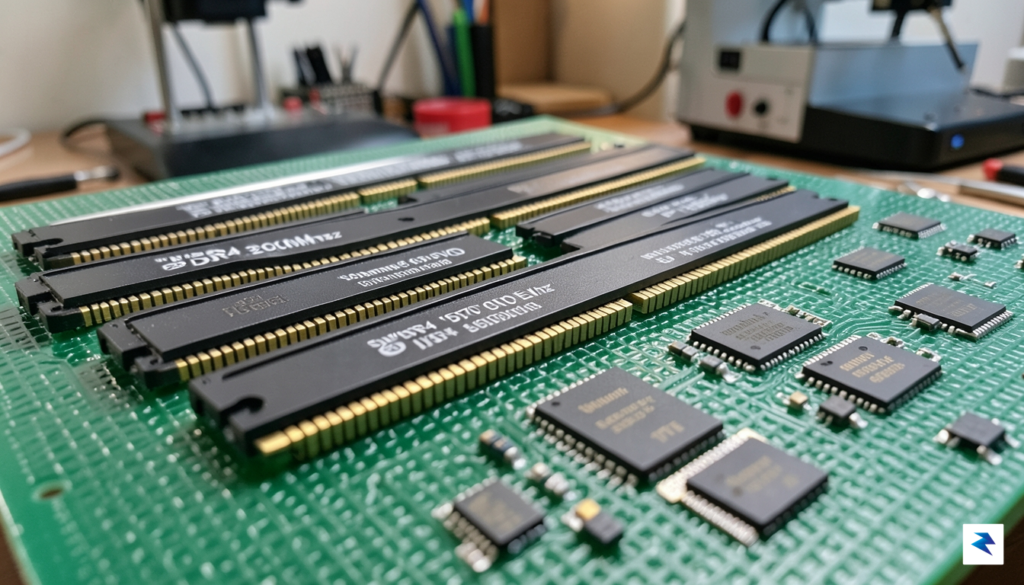
Shifting to the enterprise landscape, the scale of impact multiplies exponentially. Large-scale enterprise buyers, including hyperscale cloud providers, data centers, and major corporations, operate infrastructures that demand thousands, often tens of thousands, of memory modules and solid-state drives. For these entities, even a seemingly small percentage increase in the price per gigabyte or per module can translate into millions, if not tens of millions, of dollars in additional capital expenditure annually. These increased costs can stifle innovation, delay expansion plans, or even force companies to pass on higher service fees to their own customers, creating a ripple effect across the digital economy. Managing thousands of servers means purchasing thousands of DIMMs, and any artificial inflation directly impacts their bottom line and strategic investments.
Should the allegations of price-fixing be substantiated and the lawsuit succeed, the potential ramifications extend beyond mere punitive damages. A successful outcome could pave the way for significant financial restitution for those who demonstrably overpaid during the period of alleged manipulation. This could lead to substantial refunds or credits for affected businesses and, indirectly, could foster a more competitive pricing environment for memory components moving forward. Such a shift would ultimately benefit both consumers, who might see more affordably priced devices, and enterprises, who could allocate their capital more efficiently towards innovation and growth rather than inflated hardware costs. The litigation thus represents not just a legal battle, but a critical effort to restore fairness and transparency to a foundational sector of the global technology market.
Historical Context: How Chip Manufacturers Have Faced Litigation Before

The semiconductor industry’s current legal entanglements are far from unprecedented, echoing a period of intense regulatory scrutiny that defined the early 2000s. During that era, the DRAM market was rocked by a massive, multi-year investigation into a global price-fixing cartel that involved industry titans, including Samsung, Hynix, Infineon, and Micron. Federal regulators uncovered a sophisticated web of communication where executives met in secret to coordinate production levels and artificially inflate the cost of memory modules. The fallout from these revelations was seismic, culminating in billions of dollars in fines and several criminal convictions for industry leaders, effectively forcing a structural shift in how these companies approached competitive market behavior.
When analyzing the landscape of twenty years ago versus today, the fundamental market structure has undergone a dramatic consolidation. In the early 2000s, there were more significant players competing for market share, yet the industry still proved highly susceptible to collusion due to the high costs of entry and the commodity-like nature of DRAM chips. Today, the market is an oligopoly dominated by a tight trio of Samsung, SK Hynix, and Micron. While these companies argue that current price fluctuations are driven by complex supply chain dynamics and surging demand—particularly from the AI and data center sectors—critics point out that this extreme concentration makes it significantly easier for firms to engage in “tacit collusion,” where companies align their pricing strategies without ever needing to exchange a single direct message.

Regulatory bodies, including the U.S. Federal Trade Commission (FTC) and the Department of Justice, have developed much more sophisticated tools for detecting these anticompetitive behaviors compared to two decades ago. International watchdogs, such as the European Commission and China’s State Administration for Market Regulation, have also become increasingly aggressive in policing the silicon sector, recognizing that memory chips are the essential building blocks of the modern global economy. These agencies now utilize advanced algorithmic monitoring to track price anomalies across global regions, making it increasingly difficult for firms to hide coordinated price hikes behind the guise of “market volatility.”
The history of the DRAM industry serves as a stark reminder that when a critical technology becomes concentrated in the hands of a few, the temptation to abandon fair competition often overrides the principles of a free market.
Understanding this historical context is essential for anyone attempting to forecast the trajectory of the current litigation. The legal precedents set during the 2005 investigations established a clear framework for how evidence of price-fixing is gathered and prosecuted. Whether the current plaintiffs can prove that these modern price surges were the result of intentional, coordinated anti-competitive conduct—rather than legitimate supply-chain constraints—will likely hinge on the discovery of internal documents that mirror the “smoking gun” emails recovered during the industry’s previous brush with the law. Ultimately, the outcome of this case will not only affect the balance sheets of these tech giants but will also signal to the industry whether the era of aggressive antitrust enforcement has truly entered a new, more rigorous chapter.
The Future of Semiconductor Regulation and Market Competition

As silicon solidifies its status as the “new oil” powering the global digital economy, the stakes for maintaining a fair and open semiconductor market have reached an unprecedented level. The current DRAM landscape, dominated by a formidable triopoly of Samsung, SK Hynix, and Micron, has long been characterized by high barriers to entry and massive capital requirements. However, as Artificial Intelligence and machine learning demand exponential increases in high-bandwidth memory capacity, this industry concentration risks stifling the very innovation it is meant to support. If these market giants are found to have engaged in price-fixing, the resulting regulatory fallout could fundamentally reshape how these companies interact with the global supply chain, forcing a transition toward more transparent, audit-heavy pricing models.
The implications of this legal challenge suggest that government regulators are no longer content to let the industry police itself. We are likely to see a shift toward more aggressive oversight, where antitrust bodies may impose stricter reporting requirements on manufacturing output and inventory management to prevent future collusion. Furthermore, policymakers are beginning to view the semiconductor industry through the lens of national security, leading to a potential push for the diversification of the memory market. By incentivizing the emergence of new, smaller players or domestic alternatives, governments may seek to break the stranglehold of the current dominant trio, thereby fostering a more competitive ecosystem that prevents any single group of entities from exerting undue influence over global tech prices.

Ultimately, the outcome of this litigation will serve as a bellwether for the future of semiconductor trade policy. If the industry is compelled to adopt more open pricing mechanisms, it could lead to greater predictability for downstream hardware manufacturers who are currently at the mercy of volatile memory costs. This shift would not only protect the margins of consumer electronics companies but also ensure that the costs of building the next generation of AI infrastructure remain sustainable for smaller startups and academic research institutions. As the world moves deeper into an era defined by computing power, the preservation of competitive market dynamics will be essential to ensuring that the semiconductor industry remains a vehicle for progress rather than a bottleneck for global innovation.
The core of the issue lies in whether the semiconductor market can maintain its rapid pace of development while simultaneously adhering to the rigid transparency standards required for fair global trade.
Looking ahead, we should expect a broader trend of “technological sovereignty” where nations prioritize the stability of their chip supply chains above all else. Whether through heavy-handed intervention or the strategic fostering of new market entrants, the days of opaque, consolidated industry dominance are likely numbered. By forcing a reckoning with these past practices, this lawsuit may well become the catalyst for a more robust, decentralized, and equitable semiconductor future.