Oil Prices and Geopolitics: Understanding the U.S.-Iran Shipping Deal
The Fragility of Global Energy Markets The global energy market functions much like a high-stakes ecosystem, where the delicate balance…

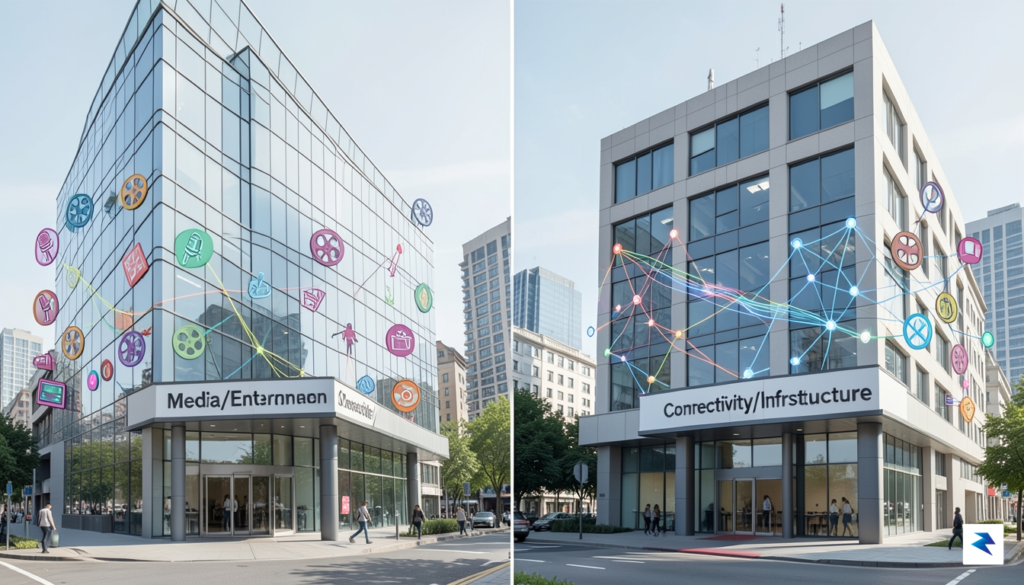
When Comcast first moved to acquire NBCUniversal in 2011, the corporate strategy was built upon the then-revolutionary concept of vertical integration. By marrying the nation’s largest cable distributor with a sprawling content powerhouse, Comcast aimed to create a self-sustaining ecosystem where the network pipes delivering the data were owned by the same entity creating the films, news, and entertainment flowing through them. This synergy thesis suggested that Comcast could insulate itself from the rising costs of programming licensing while simultaneously giving NBCUniversal’s content a guaranteed platform in millions of households. For more than a decade, this marriage served as the blueprint for the modern media conglomerate, creating a massive, diversified behemoth capable of weathering shifts in consumer behavior.

However, the landscape of media consumption has undergone a seismic transformation, rendering the original logic of the 2011 merger increasingly obsolete. The rapid ascent of streaming platforms and the corresponding decline of traditional cable television have fundamentally altered the financial reality for companies like Comcast. While the broadband division remains a steady, cash-generative utility, the volatile nature of the content production business—buffeted by the unpredictable success of theatrical releases and the expensive, high-stakes race for streaming dominance—has created a divergence in growth trajectories. Investors have grown wary of bundling these two distinct business models, arguing that the stability of the internet service provider business is being masked or dragged down by the erratic performance of the media entertainment sector.
The decision to spin off these assets represents a hard-nosed admission that the era of the “everything company” is giving way to a more specialized, agile corporate structure.
By untethering NBCUniversal, Comcast is effectively attempting to unlock shareholder value by allowing each entity to pursue its own strategic destiny. The core cable and broadband business can focus on infrastructure, connectivity, and the essential utility services that provide reliable recurring revenue. Simultaneously, the new media entity will be free to navigate the competitive and capital-intensive world of content production and streaming without being tethered to the capital allocation requirements of a massive telecommunications infrastructure provider. This strategic uncoupling is not merely a divestiture; it is a profound recognition that in the current digital economy, focus and flexibility are often more valuable than the sheer scale of a conglomerate.

The media industry is currently undergoing its most profound transformation since the advent of television, a seismic shift fundamentally driven by evolving consumer behavior. As millions of households increasingly opt for on-demand streaming services over scheduled programming, the phenomenon known as “cord-cutting” has accelerated, placing immense pressure on the traditional linear cable model. This systemic decline in pay-TV subscriptions has effectively reversed the economic incentives that once championed vertical integration, compelling media giants to critically re-evaluate their sprawling operational structures.
A primary catalyst for this introspection is the dramatic decline of linear television revenue. For decades, cable companies and their affiliated media networks benefited from a dual revenue stream: lucrative advertising sales and substantial affiliate fees paid by distributors for carrying their channels. However, with each passing quarter, subscriber numbers for traditional pay-TV packages dwindle, eroding both the audience base for advertisers and the negotiating power for affiliate fees. This continuous bleed has transformed what was once a highly predictable and profitable business into a sector fraught with uncertainty, making long-term strategic planning increasingly challenging.
Compounding the challenges of declining linear revenue is the astronomically high cost of content production in the fiercely competitive streaming wars. To attract and retain subscribers in a crowded market dominated by giants like Netflix, Disney+, and Max, media companies must invest billions annually in creating exclusive, high-quality programming. This content arms race involves bidding wars for top-tier showrunners, writers, actors, and highly sought-after intellectual property, pushing production budgets to unprecedented levels. The transition from a bundled content model, where costs were shared across many channels, to a direct-to-consumer streaming model demands a constant flow of marquee content, representing a high-stakes, high-risk endeavor with no guarantee of commensurate returns.

Amidst this volatile media landscape, broadband internet has emerged as Comcast’s unequivocal primary growth engine. While the entertainment sector faces intense competition and escalating costs, internet service has solidified its position as an essential utility, driving consistent subscriber growth and robust, predictable revenue streams. The capital expenditure required to maintain and upgrade internet infrastructure, while significant, offers a more stable return on investment compared to the speculative nature of content creation. For Comcast, broadband represents a foundational, indispensable service that underpins modern life and commerce, providing a reliable financial bedrock.
Ultimately, the strategic rationale behind potentially spinning off NBCUniversal reflects a recognition of the fundamental divergence between these two business models. One, broadband, is a stable, utility-like service with ever-increasing demand and predictable growth. The other, entertainment, is a high-risk, high-reward enterprise characterized by intense competition, soaring content costs, and fickle consumer preferences. Separating these distinct operations allows each entity to focus on its core strengths, allocate capital more efficiently, and pursue tailored strategies in their respective markets, ultimately unlocking greater value for stakeholders in an era defined by profound industry upheaval.
Breaking away from the sprawling, infrastructure-heavy portfolio of Comcast marks a pivotal moment for NBCUniversal, transforming it from a subsidiary into a nimble, focused media powerhouse. Without the obligation to prioritize the massive capital expenditures required to maintain a national broadband network, NBCUniversal can now pivot its financial resources entirely toward the creative arts and digital innovation. This newfound autonomy allows leadership to allocate capital with surgical precision, pouring investment directly into high-growth areas like original film production and the continued evolution of the Peacock streaming platform. By shedding the weight of its former parent’s utility-like obligations, the company is effectively being granted the freedom to embrace a more volatile, high-reward creative strategy that favors agility over bureaucratic stability.
The future of Peacock, in particular, stands to benefit immensely from this strategic decoupling. As a standalone entity, the streamer no longer needs to justify its growth metrics against the broader, often competing priorities of Comcast’s cable division. Instead, it can aggressively pursue exclusive licensing deals, high-budget prestige series, and live event programming designed to maximize subscriber retention rather than cable bundle stability. This shift could lead to a more cohesive user experience where the platform’s content library is curated with a singular vision, untethered from the legacy requirements of traditional broadcast television scheduling.
The separation empowers NBCUniversal to act as a pure-play content creator, prioritizing creative risk-taking and rapid digital expansion over the preservation of aging cable models.
Beyond digital distribution, the internal synergy between NBC News and the entertainment divisions—including Universal Pictures—is poised for a significant realignment. Freed from the corporate layers that often separate news reporting from lifestyle entertainment, the company may explore innovative cross-platform storytelling that integrates hard-hitting journalism with serialized, long-form narratives. Furthermore, this independence opens the door to a new era of partnerships and potential acquisitions. Without the regulatory hurdles that previously hindered Comcast’s expansion, NBCUniversal is now a prime candidate to seek out strategic alliances with emerging tech firms or niche production studios, enabling it to bolster its creative pipeline and compete more effectively against the global giants that currently dominate the streaming landscape.

With the departure of its media assets, Comcast is effectively pivoting away from the volatile, hit-driven world of entertainment to embrace a more predictable role as the backbone of the digital age. By shedding NBCUniversal, the company is stripping away layers of operational complexity, allowing its leadership to concentrate exclusively on the core business of connectivity. This transition signals a strategic commitment to treating internet access and network infrastructure not merely as a service, but as an essential utility that is as vital to the modern household as water or electricity. In an economy increasingly defined by remote work, cloud computing, and high-definition streaming, Comcast is positioning itself to be the primary architect of the pipes that keep society operational.

The roadmap for this new iteration of Comcast centers heavily on an aggressive expansion of fiber optic networks and the integration of 5G technologies. By doubling down on capital expenditures for physical infrastructure, the company aims to fortify its competitive position against both traditional cable rivals and the emerging threat of satellite and 5G-home internet providers. This infrastructure-first approach is designed to enhance network resilience, ensuring that as consumer demand for bandwidth continues to climb, Comcast’s offerings remain the gold standard for speed and reliability. By prioritizing long-term physical assets over content acquisition, the firm is building a defensible moat that is difficult for competitors to replicate without similarly massive capital investments.
“By focusing on connectivity as a utility, Comcast is shifting from a volatile media conglomerate to a steady, infrastructure-heavy powerhouse designed for long-term subscriber retention.”
From a financial perspective, this realignment is intended to capitalize on the inherent stability of subscription-based internet revenues. Unlike the media business, which is subject to the unpredictable whims of advertising cycles and box-office returns, high-speed broadband and mobile service subscriptions provide a reliable, recurring cash flow. This predictable income stream is highly attractive to investors who prioritize consistency, and it grants Comcast the flexibility to reinvest in future-proofing its networks. By streamlining its operations, the company is effectively insulating itself from the broader systemic risks facing the media industry, choosing instead to bet on the inexorable growth of global data consumption.
Ultimately, this evolution pits Comcast directly against the telecommunications giants, forcing a reckoning in a market where speed and service quality are the primary differentiators. As the digital divide narrows and the requirements for home connectivity become more sophisticated, the company’s ability to bundle mobile services with ultra-fast residential internet will be its most potent weapon. By shedding the distractions of film studios and theme parks, Comcast is not just simplifying its corporate structure; it is refining its identity to match the demands of a world that is becoming more connected, more digital, and more dependent on robust telecommunications infrastructure than ever before.

The decision to separate NBCUniversal from Comcast represents a seismic shift in corporate strategy, signaling a definitive departure from the “bigger is better” philosophy that dominated the media landscape for the past two decades. For years, the industry was defined by aggressive vertical integration, with companies betting that owning both the distribution pipes—cable and broadband—and the content itself would create an insurmountable competitive moat. However, as the rapid rise of streaming services and the erosion of the traditional cable bundle have fragmented audience attention, the synergies that once justified these massive conglomerates have begun to evaporate. Investors are increasingly viewing these sprawling entities as inefficient, often penalizing them with a “conglomerate discount” where the value of the separate parts is perceived to be greater than the sum of the whole.

This move mirrors a broader trend across the telecommunications and entertainment sectors, echoing recent high-profile separations like Warner Bros. Discovery’s struggles to find its footing and the ongoing pressures faced by other legacy media giants. By pivoting toward a “pure-play” model, companies are attempting to provide investors with clearer visibility into their earnings potential. A focused media entity can potentially command higher valuation multiples by being unencumbered by the capital-intensive demands of building and maintaining broadband infrastructure, while the remaining telecommunications business can prioritize steady, utility-like cash flows. However, this transition is not without its risks. The loss of cross-divisional leverage—such as the ability to bundle content with internet service—could strip these firms of a key tool for customer retention in an era defined by aggressive churn.
The pivot to a lean, specialized operational model represents a desperate, yet calculated, attempt to appease a market that no longer values the bloated multi-industry structure of the early 2000s.
Whether this strategy becomes the industry standard remains the central question for Wall Street analysts. If the market rewards Comcast for this split, it will almost certainly trigger a wave of similar divestitures across the media landscape, as other executives face intense pressure from activist investors to unlock trapped value. We are likely entering a new era of “de-conglomeration,” where agility and specialized focus take precedence over sheer scale. Ultimately, the future of media will not be defined by who controls the most assets, but by which companies can successfully navigate the transition from legacy distribution models to the high-stakes, data-driven environment of the modern digital economy.
You must be logged in to post a comment.