
Yeasound RIC800 Review: Great Audio, Frustrating App Experience
Introduction: The Promise of Affordable AI Hearing Aids For decades, high-performance hearing assistance was largely locked behind a wall of…


For decades, the Office of Management and Budget (OMB) functioned primarily as the invisible architect of federal logistics, ensuring that taxpayer dollars were distributed with a focus on fiscal responsibility and procedural efficiency. However, a massive 412-page proposal released on May 29th signals a departure from this traditional role, transforming the agency from a bureaucratic overseer into a potential gatekeeper of scientific inquiry. By revising the rules governing federal financial assistance, the OMB is effectively proposing a systemic restructuring of how American research is incentivized and governed. What was once a process grounded in objective merit and expert peer review is now being subsumed into a broader framework of administrative oversight that prioritizes ideological alignment over empirical discovery.

The scope of this proposal is vast, touching nearly every corner of the federal grant-making apparatus. Critics argue that the language embedded within these hundreds of pages grants administrators unprecedented authority to intervene in the research process, effectively turning federal funding agencies into instruments of policy enforcement. Historically, the scientific community operated under a tacit agreement: researchers would propose rigorous, evidence-based projects, and federal agencies would evaluate them based on feasibility, innovation, and potential societal impact. This new framework threatens to dissolve that barrier, inviting political litmus tests into the laboratory. Consequently, the criteria for “success” may no longer be defined by the quality of data or the breakthrough potential of a hypothesis, but by the researcher’s ability to navigate an increasingly complex and politically charged administrative landscape.
The shift toward administrative oversight risks turning the pursuit of knowledge into a game of regulatory compliance, where the fear of losing funding outweighs the drive for scientific innovation.
This transition has ignited deep concerns regarding a chilling effect on the academic and scientific communities. When federal grants become contingent upon adherence to shifting political mandates, researchers—particularly those in the early stages of their careers—may be forced to self-censor or steer clear of “controversial” topics to protect their livelihoods. The autonomy that has driven American scientific dominance for over a century is predicated on the freedom to follow the data wherever it leads, even if those findings challenge the status quo. If the OMB’s proposed changes are implemented without sufficient safeguards, the result could be a homogenized research culture, where the pressure to conform to administrative expectations stifles the very creativity and critical inquiry that define high-level scientific progress. By forcing scientists to look over their shoulders at federal regulators, we risk trading our competitive edge for a hollow form of institutional security.

The true danger of recent policy proposals lies not in their explicit prohibitions, but in the calculated ambiguity of their language. By embedding politically charged buzzwords into federal grant guidelines, policymakers are effectively creating a subjective filter that can be applied to any field of inquiry. When terminology like “ideological bias” or “divisive concepts” becomes a formal criterion for funding, the definition of what constitutes a violation is left entirely to the discretion of administrative gatekeepers. This linguistic ambiguity allows for the selective defunding of entire disciplines—such as climate science, sociology, or public health—simply by labeling their foundational frameworks as incompatible with shifting political mandates.
This shift represents a departure from traditional, merit-based peer review toward a system of ideological compliance. In a healthy scientific environment, research is vetted based on methodology, data integrity, and reproducibility. Under the new proposed standards, however, a project could be deemed ineligible for support not because the science is flawed, but because the framing of the research question is perceived as “non-compliant.” This creates a chilling effect where researchers may self-censor, avoiding critical areas of study—such as systemic inequality or environmental policy—to ensure their grant applications survive a new, politically motivated administrative scrub. The result is a narrowing of the scientific horizon, where only “safe” and politically palatable topics receive the necessary resources to progress.

The burden of compliance for universities and laboratories will be immense, as these institutions are forced to build out massive bureaucratic layers to interpret and enforce these vague federal mandates. Administrators will likely default to extreme caution, preemptively flagging or rejecting research proposals that carry even a hint of “controversial” terminology to avoid potential federal audits or funding clawbacks. This defensive posture effectively outsources the censorship of science to institutional offices, creating a fragmented landscape where scientific freedom is sacrificed on the altar of administrative safety.
When the rules for scientific inquiry are written in the language of culture war, the primary casualty is the objective pursuit of knowledge.
Ultimately, this approach threatens to dismantle the collaborative, global nature of American research. If federal guidelines demand that scientists align their work with specific political ideologies, the credibility of U.S.-based institutions on the international stage will inevitably suffer. When science is tethered to the whims of partisan rhetoric, it loses its status as an objective tool for societal progress and becomes instead a reflection of the current administration’s political agenda. By inviting subjective scrutiny into the funding process, we are not just changing the rules of the game; we are fundamentally altering the integrity of the scientific enterprise itself.

For decades, the bedrock of American innovation has been the merit-based peer review system. This mechanism ensures that federal research dollars are directed toward projects that demonstrate scientific rigor, feasibility, and potential impact, as judged by independent experts in the relevant fields. By insulating funding decisions from the immediate whims of political cycles, the peer-review process allows scientists to pursue unpopular, complex, or paradigm-shifting questions without fear of immediate financial retaliation. Shifting this responsibility toward executive-branch oversight threatens to dismantle that firewall, effectively replacing objective inquiry with a framework defined by ideological alignment.
When grant allocation transforms into an instrument of political warfare, the integrity of the entire research pipeline is compromised. History provides sobering lessons on what happens when political agendas dictate scientific inquiry. In the mid-20th century, various international regimes famously suppressed research into genetics and environmental science because the findings conflicted with state-sanctioned ideologies. These interventions did not merely stifle dissent; they set back medical progress and agricultural productivity by decades, leaving those nations struggling to catch up to the rest of the world. If American federal agencies begin to prioritize political conformity over empirical evidence, the nation risks repeating these errors, effectively trading long-term progress for short-term ideological posturing.

The long-term danger to scientific objectivity cannot be overstated. Science is fundamentally built on the willingness to challenge the status quo and iterate upon existing knowledge; it requires an environment where findings can be published and debated solely on their merit. If researchers perceive that their funding depends on whether their conclusions align with the current administration’s political agenda, the inevitable result is self-censorship. This “chilling effect” discourages the pursuit of controversial but potentially vital research, leading to a landscape where only safe, predictable, and politically palatable science receives backing. The ultimate cost of this shift is not just a loss of efficiency, but a profound erosion of public trust in the scientific community.
True innovation thrives only when researchers are free to follow data wherever it leads, regardless of whether that destination is comfortable for policymakers or the public at large.
Furthermore, removing independent peer review in favor of executive control risks turning the scientific community into a revolving door of partisan loyalists. When federal agencies prioritize political loyalty over scientific expertise, they lose the ability to attract and retain the brightest minds in the world. Exceptional researchers who value professional independence will naturally gravitate toward the private sector or international institutions that protect academic freedom. If the United States abandons its commitment to meritocracy, it will not only stifle its current research output but will also trigger a “brain drain” that could permanently diminish its position as the global leader in scientific and technological advancement.

For decades, the United States has served as the undisputed epicenter of global scientific advancement, drawing the brightest minds from every corner of the globe to its laboratories and universities. This supremacy, however, is not a static birthright; it is a fragile ecosystem built upon the bedrock of academic freedom and the pursuit of objective truth. When domestic research agendas become tethered to the shifting tides of political ideology, we risk triggering a profound “brain drain” that could hollow out our national capacity for innovation. If researchers perceive that their inquiries will be scrutinized not for their scientific rigor, but for their alignment with current administrative preferences, they will inevitably seek more stable, intellectually hospitable environments. As the world’s top-tier talent looks elsewhere, the American scientific engine faces the very real danger of stalling, ultimately leaving our domestic industries without the visionary breakthroughs required to lead in the 21st century.

The economic ramifications of this shift extend far beyond the ivory tower, directly impacting the private sector’s ability to compete on the global stage. Private innovation—from the pharmaceutical breakthroughs that define modern healthcare to the advancements in artificial intelligence and renewable energy—is almost always built upon the foundation of basic, federally funded research. When we impose ideological filters on what can be studied or discussed, we are essentially narrowing the funnel of discovery, which inevitably limits the commercial applications that follow. Industry leaders rely on the intellectual freedom of our universities to provide the raw data, fundamental physics, and social science insights that fuel their business models. If that pipeline is constricted, the United States will quickly lose its competitive edge, finding itself unable to keep pace with nations that prioritize data-driven outcomes over political conformity.
The strength of a nation’s economy is inextricably linked to the freedom of its scientists to pursue inquiries that challenge the status quo; when that freedom is compromised, innovation slows to a crawl.
Furthermore, our global competitors are watching these internal policy shifts with keen interest, and they are poised to capitalize on any signs of American instability. Countries that are actively investing in their own research infrastructure view our current political volatility as a prime opportunity to lure away disillusioned scholars and secure the next generation of technological breakthroughs. By allowing political rhetoric to dictate the parameters of scientific inquiry, we are inadvertently handing a strategic advantage to rival powers. The international community views scientific prestige as a currency of soft power, and if the U.S. signals a retreat from its traditional commitment to objective, unrestricted research, it will lose its influence in the global marketplace of ideas. Maintaining our position as a world leader requires us to recognize that scientific autonomy is not just an academic ideal, but a critical component of national security and economic prosperity that cannot be sacrificed for short-term political gains.
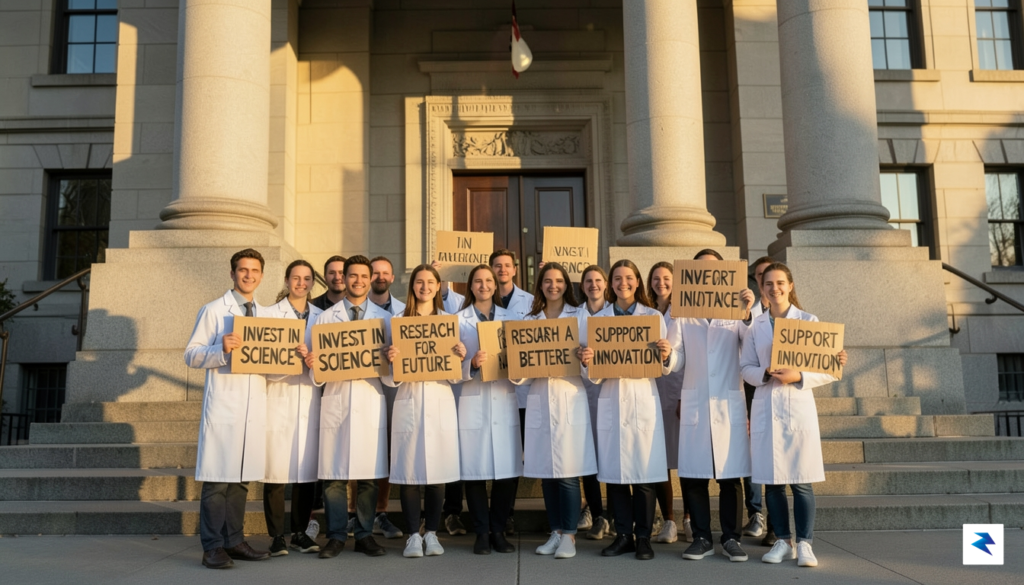
While the prospect of sweeping regulatory changes can feel overwhelming, the American democratic system was intentionally designed with mechanisms to ensure that administrative overreach is kept in check. Central to this process is the public comment period required for Office of Management and Budget (OMB) proposals. This is not merely a bureaucratic formality; it is a vital window of opportunity for the scientific community to submit evidence-based arguments, highlight potential harms to national competitiveness, and demand a more objective, merit-based approach to research funding. When thousands of individual scientists, clinicians, and researchers submit detailed, professional commentary, they create a formal public record that agencies must legally address, thereby raising the political cost of implementing poorly conceived policies.
Beyond individual participation, academic institutions must assume a more proactive role in safeguarding scientific independence. Universities are not just hubs of discovery; they are powerful stakeholders in the national economy. By leveraging their government relations offices and forming coalitions with peer institutions, university leaders can lobby policymakers to emphasize that the politicization of grant criteria undermines the very rigor that drives American innovation. These institutions should push for the establishment of non-partisan oversight committees that insulate funding decisions from the shifting tides of cultural politics, ensuring that scientific inquiry remains tethered to empirical evidence rather than ideological litmus tests.

The defense of scientific integrity requires a broad, cross-disciplinary coalition that extends far beyond the walls of the laboratory. It is essential for scientists to partner with ethicists, legal scholars, and public policy experts who can articulate the broader societal implications of restricted research. By building a unified front, the scientific community can translate complex technical challenges into a compelling narrative that resonates with the general public and lawmakers alike. This collaborative approach helps to clarify that when science is stifled by dogma, society at large loses out on life-saving treatments, technological breakthroughs, and a deeper understanding of the world around us.
The strength of the American research enterprise has always relied on its ability to follow evidence wherever it leads, free from the constraints of political orthodoxy. Protecting this freedom is not a partisan issue; it is a foundational necessity for progress.
Ultimately, the goal of this advocacy is to shift the conversation from defensive reaction to proactive reform. By engaging with local representatives, writing op-eds in regional publications, and participating in professional society committees, advocates can ensure that the standards for funding remain transparent and grounded in excellence. The window for action is narrow, but by utilizing these democratic levers, the scientific community can push back against restrictive mandates and protect the essential autonomy required to solve the most pressing challenges of our era.
You must be logged in to post a comment.