Understanding the Public Service Loan Forgiveness (PSLF) Program
The Public Service Loan Forgiveness (PSLF) program was established by Congress in 2007 with a clear, strategic objective: to incentivize talented professionals to commit their careers to the essential sectors that keep society running. By offering a path to tax-free student loan forgiveness after a decade of dedicated service, the federal government aimed to bridge the gap between the often lower salaries in public service and the mounting burden of higher education debt. For teachers, nurses, emergency responders, and civil servants, this program represents more than just a financial benefit; it is a promise that their choice to prioritize the public good over potentially more lucrative private-sector roles will be honored and supported.

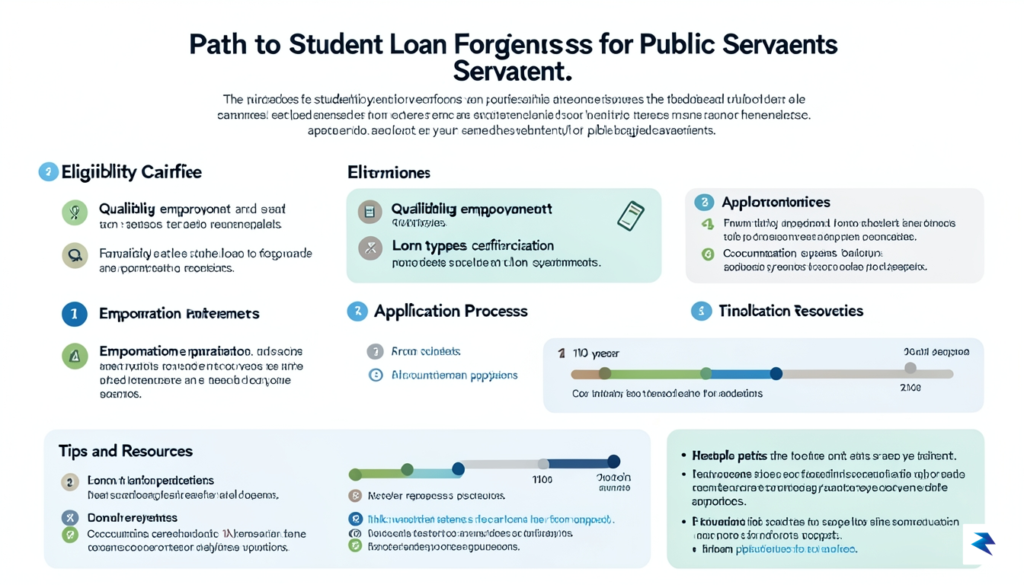
To benefit from this program, borrowers must navigate a specific set of rigorous criteria designed to ensure long-term commitment to public service. At its core, the program requires participants to make 120 separate monthly payments—the equivalent of ten years of service—while working full-time for a qualifying employer. These payments must be made under a qualifying income-driven repayment plan, which ensures that the monthly obligation remains proportional to the borrower’s earnings. It is important to note that these payments do not need to be consecutive; however, the ten-year threshold is a non-negotiable benchmark that demands persistence and meticulous administrative record-keeping from every applicant.
Defining who qualifies for this relief is perhaps the most critical aspect of the program, as the definition of a “qualifying employer” is strictly regulated. Generally, this includes:
- Government organizations at the federal, state, local, or tribal levels, including the military and public schools.
- Non-profit organizations that are tax-exempt under Section 501(c)(3) of the Internal Revenue Code.
- Other non-profit organizations that provide specific public services, such as emergency management, public interest law, or public health, even if they do not hold a 501(c)(3) status.
The economic significance of PSLF cannot be overstated, as it serves as a cornerstone for workforce retention in high-need fields. When the program functions effectively, it allows the public sector to remain competitive, drawing in skilled graduates who might otherwise be forced to abandon their chosen fields to satisfy their student loan obligations. However, the program’s inherent complexity—ranging from the intricacies of repayment plans to the evolving standards for employer certification—has historically left borrowers vulnerable. Even minor regulatory shifts or administrative missteps can create significant hurdles, turning a straightforward promise of debt relief into a precarious journey for those who rely on it most.
The stability of the public service workforce depends heavily on the predictability of PSLF; when the rules governing this program change, it directly impacts the financial security and career trajectory of millions of essential workers across the country.
The Court Ruling: What Just Happened?

In a significant shift for the landscape of federal student aid, recent federal court rulings have placed a firm block on the administration’s attempt to revise the eligibility criteria for Public Service Loan Forgiveness (PSLF). The proposed rule sought to introduce more stringent requirements, which would have fundamentally altered how government and non-profit employees qualify for debt cancellation after ten years of service. By granting an injunction against these changes, the courts have effectively halted the implementation of the new policy, keeping the previous framework in place for the time being. This judicial intervention serves as a critical checkpoint, as it prevents the immediate application of stricter standards that critics argued would have disproportionately burdened long-term public servants.

The core of the legal dispute centers on the administration’s authority to unilaterally redefine the scope of loan forgiveness programs without explicit new mandates from Congress. The presiding judges, in their written opinions, highlighted concerns regarding whether the Department of Education overstepped its regulatory bounds by attempting to narrow the definition of “eligible service” and recalculate repayment milestones. Specifically, the court found that the plaintiffs raised serious questions about the administrative necessity of these changes, suggesting that the sudden shift in eligibility could cause irreparable harm to borrowers who had already structured their career paths based on the existing, more inclusive program guidelines. Consequently, the ruling mandates that the status quo remains intact while the merits of the case are debated further in the judicial system.
The temporary injunction acts as a vital safeguard for the PSLF program, ensuring that thousands of public sector workers are not suddenly disqualified from their path to debt relief due to shifting bureaucratic interpretations.
While this development provides a much-needed sigh of relief for many, it is essential to recognize that this is not necessarily a permanent victory. The litigation is currently in its preliminary stages, and the administration maintains the right to appeal these decisions to higher courts, including the potential for Supreme Court review. Because the legal battle is ongoing, the long-term stability of the program remains in a state of flux. Borrowers should remain vigilant, as future court rulings could either uphold the current injunction or ultimately overturn it, leading to a reinstatement of the proposed changes. For now, the program continues to operate under the established guidelines, but the underlying legal tension suggests that the definition of “public service” and the criteria for forgiveness will remain a focal point of intense legal and political scrutiny for the foreseeable future.
Impact on Public Sector Employees

For the thousands of teachers, nurses, emergency responders, and civil servants who have built their financial lives around the promise of the Public Service Loan Forgiveness (PSLF) program, the recent judicial intervention represents both a temporary victory and a persistent source of underlying anxiety. While the court’s decision to block rule changes provides a momentary reprieve, it underscores the fragility of relying on federal policy to dictate long-term personal debt management. When the eligibility criteria for debt relief are subject to sudden shifts, borrowers are forced into a precarious position where their path to financial independence—often spanning a decade of service—could be obstructed by administrative or legal reinterpretation. This instability does more than just complicate monthly budgeting; it fundamentally alters the way public sector employees weigh the value of their chosen career paths against the crushing reality of their remaining student loan balances.

The financial burden of unexpected ineligibility cannot be overstated, as many professionals in the public sector trade higher private-sector salaries for the long-term security promised by loan forgiveness. If those criteria were to narrow, borrowers who have spent years making qualifying payments could suddenly find themselves disqualified, leaving them with years of accrued interest and a total debt load that is significantly higher than when they began their careers. This creates a “debt trap” where the financial sacrifice of working in the public sector yields no ultimate benefit, potentially forcing individuals to abandon mission-driven roles in favor of higher-paying private employment simply to service their insurmountable debt. The psychological toll of this unpredictability is significant, as it prevents workers from making confident decisions regarding home ownership, retirement contributions, or starting a family.
The uncertainty surrounding the future of PSLF transforms a straightforward career benefit into a high-stakes gamble, forcing employees to constantly evaluate the risk of their debt forgiveness being revoked or altered by shifting political and legal winds.
Furthermore, this environment of regulatory flux significantly impacts the retention and recruitment efforts of public agencies. When the path to loan forgiveness is perceived as volatile, top-tier talent may hesitate to commit to public service, fearing that the promised relief will not materialize when they reach the finish line. For those already in the system, the lack of a clear, permanent mandate creates a “wait-and-see” approach to life planning, where major financial milestones are deferred indefinitely. Ultimately, the stability of the PSLF program is not merely a matter of bureaucratic policy; it is a critical component of the social contract between the government and its workforce. Without a reliable, consistent framework for forgiveness, the long-term financial future of our public servants remains tied to the unpredictability of the courtroom rather than the commitment they have demonstrated to their communities.
Navigating Future Uncertainty and Loan Management


The ongoing legal battles surrounding student loan forgiveness policies create a climate of volatility that can feel overwhelming for public servants counting on relief. However, the most effective defense against administrative instability is a proactive approach to record-keeping. You should maintain a comprehensive, chronological archive of every Employment Certification Form (ECF) you have ever submitted. Even if a form has already been processed and approved by your servicer, keep a digital and physical copy of both the submitted document and the official confirmation of receipt. These records act as your primary evidence if there is a discrepancy in your payment count or a transition between loan servicers, which often occurs during periods of regulatory flux.
Beyond simply filing paperwork, you must take active steps to verify your employer’s ongoing eligibility within the program. Public service eligibility is tied strictly to the nature of your organization, and sometimes, administrative changes or restructuring within your workplace can inadvertently jeopardize your status. Periodically log into the official Federal Student Aid (FSA) website to confirm that your employer remains recognized under current guidelines. If you are ever in doubt, submitting an updated ECF annually is a best practice; it forces a review of your status and ensures your progress is officially logged in the Department of Education’s database while the rules remain in their current state.
Consistency is your greatest asset in navigating shifting federal policies. By documenting every step of your journey now, you insulate yourself against future administrative errors that often arise when policies are in transition.
Effective communication with your loan servicer is equally vital to ensuring your progress is not stalled by clerical oversight. When you contact your servicer, always request the name of the representative you spoke with, the date and time of the call, and a reference number for the interaction. If you receive critical information regarding your repayment plan or forgiveness progress, follow up with an email or a secure message through your online portal to create a paper trail. By maintaining a written record of these conversations, you provide yourself with leverage should any disputed payment counts or account errors emerge.
Finally, prioritize your information sources by relying exclusively on official government channels. The student loan landscape is frequently subject to speculative commentary and misinformation on social media, which can lead to unnecessary anxiety or poor financial decision-making. Monitor the U.S. Department of Education’s official announcements and the StudentAid.gov website for the most accurate updates regarding policy shifts. Staying informed through these primary sources will help you distinguish between actual regulatory changes and mere legal noise, allowing you to manage your debt with confidence even when the broader political landscape remains uncertain.
Next Steps for Borrowers

Navigating the shifting landscape of federal student loan policy can feel overwhelming, especially when judicial rulings introduce uncertainty into long-term financial planning. However, for public servants currently tracking their progress toward debt cancellation, the most effective strategy is to maintain a steady course while practicing heightened vigilance regarding your account status. Rather than reacting impulsively to legal news, you should focus on verifiable actions that protect your existing progress and ensure your records remain ironclad against potential bureaucratic errors.

To keep your path toward forgiveness clear, consider this five-point checklist for managing your account during this period of legal flux:
- Perform an annual Employment Certification: Do not wait for the end of your loan term to verify your service. Submit updated Employment Certification Forms (ECF) at least once every 12 months to ensure your qualifying payments are officially logged by the Department of Education.
- Archive all correspondence: Create a dedicated folder—digital or physical—for every letter, email, and payment confirmation you receive from your loan servicer. These records serve as your primary defense should a dispute arise regarding your payment history.
- Monitor your payment counts: Regularly log in to the StudentAid.gov portal to verify that your “qualifying payment count” is accurate. If you notice a discrepancy, file a formal inquiry immediately to have your records reviewed.
- Automate for consistency: If possible, enroll in auto-pay to ensure that your monthly obligations are met on time, every time. Consistency is the bedrock of the forgiveness process, and automation prevents accidental late payments that could potentially disrupt your eligibility.
- Audit your loan type: Ensure you are enrolled in a Direct Loan program, as other older federal loan types may not qualify for the same benefits. If your loans are not yet consolidated into the Direct Loan program, investigate whether this step is necessary for your specific situation.
Key Takeaway: Judicial rulings often impact future policy implementation, but they rarely erase the progress you have already documented. Focus on maintaining rigorous records of your service to minimize the impact of external administrative changes.
Addressing Myths vs. Facts
It is easy to fall prey to misinformation during periods of litigation, but it is vital to distinguish between political rhetoric and your actual account standing. A common myth circulating is that legal challenges immediately terminate existing forgiveness programs for current participants; in reality, these court decisions usually address the scope and implementation of new rules rather than stripping away earned benefits for those already in the system. Furthermore, while some fear that their progress will be reset entirely, the Department of Education generally strives to preserve the count of verified qualifying payments. By maintaining a proactive stance and checking your loan health quarterly, you shield yourself from the anxieties caused by speculative news cycles and stay firmly on track toward your financial goals.