
The Strategic Rationale Behind the Comcast-NBCUniversal Separation
The decision to untether the cable and broadband giant from its media and entertainment powerhouse represents a definitive rejection of the vertical integration strategies that dominated the early 2000s. For years, the prevailing wisdom in the boardroom was that owning both the “pipes”—the high-speed internet and cable infrastructure—and the “content”—the movies, news, and sports programming—would create an insurmountable competitive moat. However, the modern media landscape has fundamentally shifted, rendering the old “triple play” bundling strategy increasingly obsolete as consumers abandon linear television in favor of fragmented, on-demand digital experiences.
Market analysts have long observed that investors no longer reward the massive, sprawling conglomerates that once defined the industry. Instead, there is a clear preference for leaner, more focused business models that allow for clearer financial reporting and distinct strategic paths. By separating these two entities, Comcast is acknowledging that the synergy between a broadband provider and a content studio has reached a point of diminishing returns. The operational friction of managing a utility-like network alongside a volatile, hit-driven creative studio is no longer seen as a competitive advantage; rather, it is viewed as a distraction that limits the agility required to survive in an era defined by rapid technological disruption.

This move towards operational agility is a direct response to the aggressive pace of cord-cutting, which has eroded the traditional revenue streams that once tied these two sectors together. When the cable bundle was the primary gateway for home entertainment, the synergy was undeniable; today, that connection is fraying as internet service becomes a standalone commodity. By decoupling, each new entity can pursue its own specific goals without the drag of the other’s legacy constraints:
- Focus on Infrastructure: The broadband arm can concentrate on capital-intensive network upgrades and 5G expansion without needing to subsidize expensive content production.
- Creative Independence: The media arm gains the flexibility to pursue partnerships, licensing deals, and streaming strategies that are not tethered to a cable-provider’s specific subscriber base.
- Market Valuation: Each company can now be valued by the market based on its specific industry metrics, potentially unlocking hidden value that was previously obscured by the conglomerate structure.
The era of the ‘media conglomerate’ as a catch-all solution for market dominance is fading. Success in the current climate requires specialized focus rather than the clumsy protectionism of bundled services.
Ultimately, this pivot signals a broader surrender of the “bigger is better” philosophy that drove the massive M&A sprees of the last two decades. As the industry grapples with the permanent reality of a post-cable world, the ability to pivot quickly, manage debt loads independently, and capitalize on specific market trends has become the new currency of success. Comcast’s separation is not merely a corporate restructuring; it is a profound admission that in a world of infinite digital choice, specialization is the only viable path to long-term sustainability.
Market Shifts and the Future of Media Conglomerates

The decision to potentially decouple Comcast’s cable and broadband business from its content-heavy NBCUniversal arm represents a watershed moment in the evolution of modern media. For decades, the vertical integration of distribution and production—the “walled garden” approach—was the bedrock of profitability for telecommunications giants. By controlling both the pipes that deliver the signal and the shows that populate the screen, conglomerates could extract value at every touchpoint. However, the relentless erosion of the traditional cable bundle has fundamentally altered this calculus. As cord-cutting accelerates and consumers increasingly favor on-demand streaming over linear programming, the steady, predictable cash flows once harvested from cable subscriptions have become a dwindling resource, forcing executives to rethink the viability of keeping these diverse, yet increasingly mismatched, business units under a single corporate umbrella.

Separating capital-intensive infrastructure from creative content production is no longer just a strategic option; it is a defensive necessity. Maintaining the physical network—the vast web of coaxial and fiber-optic cables—requires constant, massive capital expenditure to keep pace with internet connectivity demands. Conversely, the entertainment industry operates on a high-risk, hit-driven model that demands massive investment in premium intellectual property to stay relevant in a global streaming market. When these two distinct financial profiles are married, they often suppress one another’s valuation. Investors have grown wary of the valuation gap that emerges when a steady, utility-like internet service provider is tethered to the volatile, cyclical nature of a film and television studio. By splitting these assets, Comcast may be attempting to unlock value by allowing each entity to pursue a capital structure that aligns with its specific market role.
The shift toward a purely digital, subscription-based economy has rendered the “one-size-fits-all” conglomerate model an obstacle to growth rather than a safeguard for it.
Furthermore, the market’s current appraisal of these entities suggests that the sum of the parts is worth significantly more than the current combined whole. ISPs are generally valued for their stable, recurring cash flows and their role as the essential utility of the 21st century. In contrast, studios are valued based on their ability to scale content libraries and capture global subscriber attention. When bundled together, the stagnation in the legacy cable business often masks the potential of the studio, or conversely, the high costs of content production drag down the perception of the connectivity business. As the industry navigates this transition, the move toward separation serves as a broader signal: the era of the massive, all-encompassing media conglomerate is giving way to a more specialized, agile, and transparent future where businesses must justify their existence to shareholders based on the merits of their specific sector alone.
Speculative M&A Targets: Who Could Join the Comcast Ecosystem?

With Comcast narrowing its strategic aperture to focus heavily on its core broadband and connectivity infrastructure, the industry is buzzing with conjecture regarding how the firm might deploy its newfound operational agility. By shedding the weight of legacy cable networks, the company is effectively transforming into a pure-play connectivity giant, creating a vacuum that invites aggressive expansion into emerging sectors. This transition suggests that Comcast is no longer interested in simply being a utility provider; instead, it is positioning itself to become the backbone of the next generation of smart-home ecosystems and high-speed data delivery platforms. Analysts are increasingly looking at potential consolidation within the telecommunications sector, specifically eyeing large-scale mergers with peers like Charter Communications, which would grant Comcast unprecedented control over the nation’s residential data infrastructure.
Beyond traditional infrastructure consolidation, the most compelling opportunities for Comcast lie in the intersection of broadband and advanced technology services. As the smart-home market matures, the demand for seamless, low-latency connectivity has never been higher, placing Comcast in a prime position to acquire companies specializing in IoT (Internet of Things) integration and home automation. By folding niche tech players into its existing Xfinity ecosystem, Comcast could evolve from a mere internet service provider into an indispensable digital concierge. This pivot would likely involve deep integration with cloud-based platforms, allowing the company to offer bundled services that manage everything from home security and energy management to high-end entertainment interfaces, thereby locking customers into a more sticky, comprehensive service model.
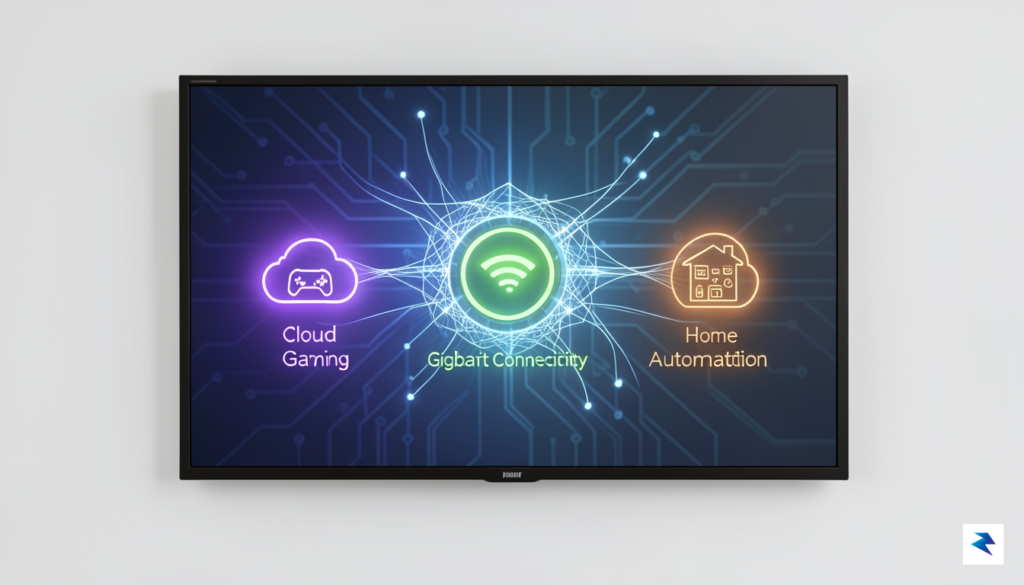
Furthermore, the gaming and interactive media sectors offer a lucrative horizon for a company that already controls the “last mile” of high-speed internet delivery. The rise of cloud gaming, which requires massive bandwidth and low latency, presents a natural synergy for a firm that is doubling down on its fiber and connectivity footprint. Rather than attempting to build a gaming studio from scratch, Comcast might look to acquire established cloud gaming infrastructure providers or form high-level strategic partnerships that prioritize their network traffic. By embedding gaming-optimized pathways directly into their modem hardware, Comcast could effectively capture the gaming demographic, turning their broadband service into the premier gateway for interactive entertainment.
The shift toward connectivity-first operations signals a move away from content ownership and toward the ownership of the digital conduits that power our modern lives.
Ultimately, this evolution is about scale and control in an increasingly digital-first economy. Whether through a transformative merger with a major industry rival or a series of smaller, tactical acquisitions in the cloud and IoT spaces, Comcast is clearly signaling that the future of the company lies in the physical and digital infrastructure that powers the modern household. By prioritizing the reliability and speed of its network over the volatile landscape of cable content production, the organization is betting that in the coming decade, the company that controls the connection will be the one that truly dictates the digital experience.
NBCUniversal as an Independent Powerhouse: Potential Suitors

The prospect of NBCUniversal shedding its ties to Comcast’s traditional cable business fundamentally reshapes its appeal, transforming it into an exceptionally attractive asset in the fiercely competitive media landscape. Freed from the strategic constraints and legacy burdens often associated with a sprawling cable conglomerate, a standalone NBCUniversal emerges as a modern, content-rich entity perfectly positioned for the streaming era. This shift would unlock its inherent value, showcasing its diverse portfolio spanning premium content, robust distribution channels, and world-class experiential entertainment, making it a prime target for companies eager to dominate the future of media consumption.
At the heart of NBCUniversal’s allure lies its formidable content and streaming ecosystem. While Peacock, its flagship streaming service, is still striving to catch up with market leaders, it boasts a compelling library of exclusive content, including beloved NBC sitcoms, critically acclaimed originals, and valuable live sports rights, which are increasingly crucial for subscriber retention. Furthermore, Universal Pictures consistently delivers box office hits and possesses an extensive film and television library, providing a steady stream of content for various platforms. Coupled with the enduring strength of the NBC broadcast network and its highly respected news division, including MSNBC, this content engine represents a powerful, multi-faceted draw for any potential acquirer.
Beyond its media assets, NBCUniversal also owns and operates a highly lucrative and resilient theme park division. Universal Studios theme parks, with their immersive attractions and globally recognized brands like Harry Potter and Super Nintendo World, consistently generate significant revenue and brand loyalty. These parks offer a valuable diversification beyond the cyclical nature of media production, providing a steady, high-margin cash flow and a direct connection with consumers. The ongoing investments in new attractions and expansions further underscore their long-term growth potential and strategic importance within the broader portfolio.
Given this rich tapestry of assets, tech giants such as Apple and Amazon stand out as particularly keen potential suitors. These companies possess immense financial resources and, crucially, lack the legacy broadcast and cable infrastructure that often encumbers traditional media players. Apple, with its ambition to significantly expand Apple TV+ and integrate more services into its vast hardware ecosystem, could leverage NBCUniversal’s content library and production capabilities to become a formidable force in streaming. Similarly, Amazon could enhance Prime Video, deepen its advertising opportunities, and further embed itself into consumers’ daily lives by acquiring such a comprehensive media entity, leveraging its existing customer base and technological prowess.
However, any deal of this magnitude would inevitably face intense scrutiny from regulatory bodies. In an era marked by heightened antitrust concerns, especially regarding the growing influence of big tech, a merger involving a major content producer like NBCUniversal and a tech behemoth would likely trigger extensive reviews from the Department of Justice and the Federal Trade Commission. Regulators would meticulously examine potential impacts on market competition, consumer choice, and the broader media landscape. Such scrutiny could lead to prolonged approval processes, demands for significant concessions, or even the outright blocking of a deal, underscoring that while the prize is significant, the path to acquisition is fraught with considerable challenges.
What This Means for Consumers and the Future of Streaming

For the average household, the separation of Comcast and NBCUniversal represents more than just a corporate restructuring; it signals a potential shift in the competitive landscape of digital entertainment. Historically, the integration of a massive internet service provider with a major content studio allowed for seamless, albeit occasionally restrictive, bundling practices. As these entities detach, consumers might witness a move away from “all-in-one” ecosystem pricing. While this could lead to more transparent billing, it also raises the possibility of fragmented subscription models where viewers are forced to curate their own libraries from an increasingly complex marketplace of standalone apps.
The future of Peacock remains one of the most critical variables for the streaming public. As a standalone platform, Peacock will likely need to refine its value proposition to attract and retain subscribers without the automatic support of a parent company’s broad telecommunications infrastructure. Users should anticipate a more aggressive push toward premium tiers and specialized content niches as the service seeks to prove its profitability independently. This pivot may translate to higher subscription costs or a shift toward ad-supported tiers that lean heavily into real-time sports and live event programming, which remain Peacock’s most potent competitive advantages in a crowded market.
The core of the consumer experience will likely balance between the convenience of high-speed connectivity and the rising cost of siloed content libraries.
Conversely, the split offers a compelling narrative for the future of broadband connectivity. By untethering its infrastructure operations from the volatility of the media business, Comcast is positioned to double down on network reliability and speed. Consumers who prioritize a stable, high-performance internet connection—whether for remote work, gaming, or 4K streaming—could benefit from a more focused investment strategy. As Comcast pivots to become a pure-play connectivity giant, we may see a more rapid deployment of next-generation hardware and improved network latency, provided that the company continues to prioritize infrastructure over the distraction of content production.
- Pricing Dynamics: The end of bundled incentives may initially increase the total monthly cost for those who currently enjoy integrated video and internet packages.
- Content Portability: A standalone Peacock may become more platform-agnostic, potentially making its app more robust across competing hardware ecosystems.
- Broadband Focus: Infrastructure-first management may lead to more competitive high-speed data plans, reflecting a shift away from the legacy cable-television model.
Ultimately, the consumer experience will be defined by how these two entities navigate their newfound autonomy. While the media landscape is currently defined by an “arms race” of content production, the separation suggests that the next phase will be defined by efficiency and specialization. Subscribers should prepare for a transition period characterized by changing loyalty programs and the potential for new, third-party distribution partnerships that aim to fill the void left by the dissolved corporate integration.