From Idea to Income: How AI Book Generators Are Changing Professional Publishing
The Evolution of AI-Assisted Non-Fiction Writing For generations, the path to becoming a published non-fiction author was guarded by a…

Anthropic, a leading AI research and development company, has once again expanded the capabilities of its Claude family of models with the introduction of Claude Sonnet 3.5. This latest iteration marks a significant strategic shift, moving beyond the mere pursuit of raw intelligence benchmarks towards a profound emphasis on practical application and autonomous functionality. While earlier models like the ultra-fast Haiku and the highly capable Opus each carved out their niches, Sonnet 3.5 is engineered to excel in a domain increasingly critical for real-world AI deployment: agentic workflows. Its release signals Anthropic’s commitment to delivering AI that doesn’t just understand complex queries, but actively executes multi-step tasks with precision and efficiency, fundamentally reshaping how businesses and developers leverage large language models.
The term ‘agentic capabilities’ is central to understanding Sonnet 3.5’s significance. In essence, it refers to an AI’s ability to act as an intelligent agent, capable of planning, reasoning, executing, and self-correcting through complex, multi-stage processes without constant human intervention. This goes far beyond simply generating text or answering questions; it involves interacting with various tools, navigating databases, performing internet searches, and making decisions based on evolving information to achieve a defined goal. For instance, instead of just summarizing a document, an agentic model could research a topic, draft a comprehensive report, source relevant data, and even refine its output based on feedback, all as part of a single, orchestrated workflow. This autonomy unlocks a new paradigm of automation, allowing AI to tackle more sophisticated and practical business challenges.
Strategically, Claude Sonnet 3.5 is positioned as the new sweet spot within Anthropic’s model hierarchy, bridging the gap between the speed-optimized Claude Haiku and the frontier intelligence of Claude Opus. Haiku remains an excellent choice for high-volume, low-latency tasks where cost-efficiency is paramount, while Opus continues to lead in tackling the most complex, open-ended problems requiring deep reasoning. Sonnet 3.5, however, emerges as the optimal balance, offering a substantial leap in performance and intelligence over Haiku, particularly for agentic tasks, while being significantly more cost-effective and faster than Opus. This makes it an incredibly attractive option for enterprises seeking to deploy powerful, reliable, and economically viable AI agents that can handle sophisticated operational demands efficiently.
This release underscores a broader, crucial shift in the AI industry: a pivot from pure research benchmarks to utility-focused development. Anthropic’s focus with Sonnet 3.5 demonstrates an acute understanding that for AI to truly revolutionize industries, it must be able to perform practical, valuable work autonomously and affordably. By prioritizing robust agentic capabilities, Anthropic is empowering developers to build sophisticated applications that can automate complex processes, streamline workflows, and enhance productivity across various sectors. Consequently, Sonnet 3.5 is not just another model; it represents a tangible step towards a future where AI agents are integral to daily operations, transforming how we interact with and benefit from artificial intelligence on a tangible, measurable scale.

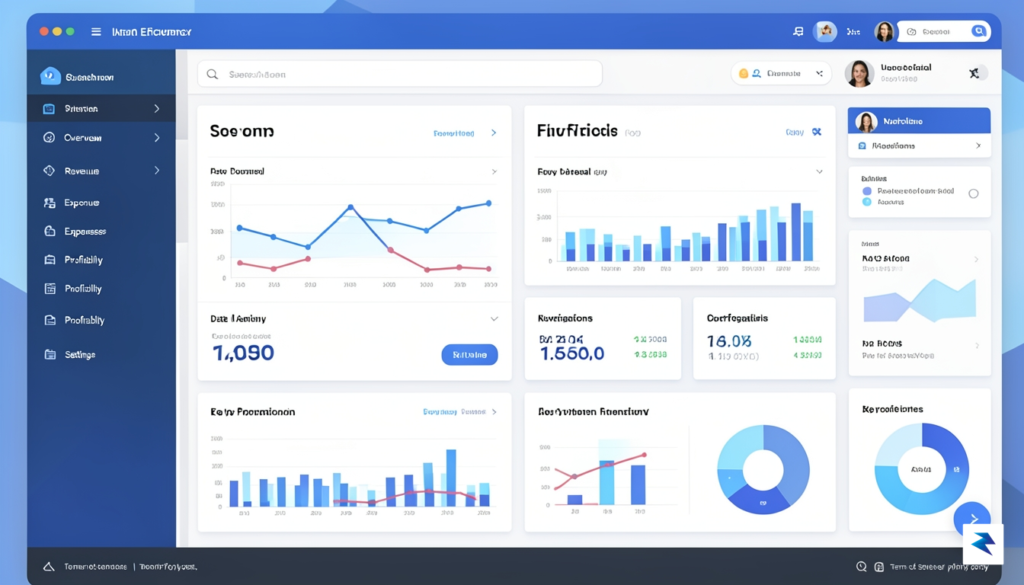
For businesses looking to integrate artificial intelligence into their core operations, the transition from simple chatbot interfaces to sophisticated, autonomous agents has hit a significant financial bottleneck: the cost of inference. While flagship models offer unparalleled reasoning capabilities, their price-per-token often makes them unsustainable for workflows requiring thousands of iterative steps. When an agent must “think” through a problem, search external databases, generate code, and self-correct its own errors, the cumulative token count can balloon quickly. By lowering the barrier to entry, Claude Sonnet 3.5 shifts the economics of automation from a luxury experiment to a scalable enterprise utility.
The primary advantage of this new pricing model is the newfound feasibility of “agent loops”—the repetitive, multi-step cycles that allow AI to perform complex tasks without human hand-holding. Previously, developers had to choose between the high-octane performance of top-tier models, which could drain a budget in hours, or smaller, cheaper models that lacked the nuance to follow multi-part instructions effectively. Sonnet 3.5 bridges this gap by providing a high-intelligence model at a price point that encourages experimentation. Companies can now afford to let an agent run ten or twenty iterations to refine a project outcome, knowing that the aggregate cost remains within the bounds of a standard operational budget.
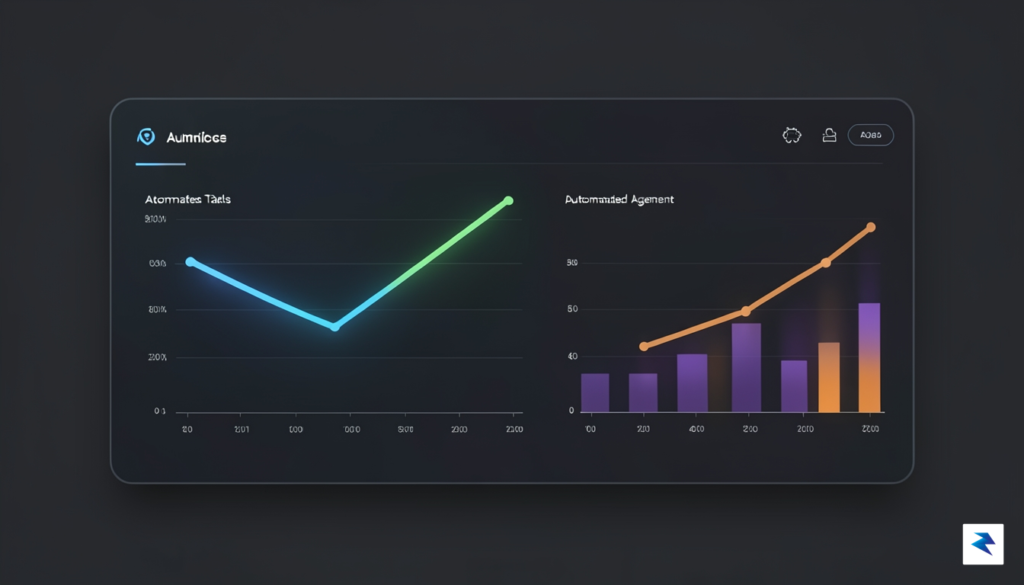
The democratization of AI automation is ultimately determined by the margin between the cost of running an agent and the value created by that agent’s output. When inference costs drop, the range of “profitable” tasks for AI expands exponentially.
To understand the magnitude of this shift, one must compare the financial architecture of Sonnet 3.5 against its more expensive counterparts like Opus or various competitor flagship models. While a top-tier model might offer marginal gains in specialized reasoning, those gains are often overshadowed by a five-to-tenfold increase in cost. For the vast majority of enterprise use cases—such as automated ticketing, data summarization, or recursive research—the incremental benefit of the most expensive models is rarely worth the premium. By opting for Sonnet 3.5, organizations can reallocate their budget toward deploying a larger fleet of agents, effectively trading a small amount of peak reasoning power for a massive increase in total throughput and operational reach.
Ultimately, this reduction in costs represents the true democratization of intelligent software. It removes the “price-gating” that previously prevented mid-sized businesses from adopting advanced AI agents, allowing them to compete on a level playing field with larger enterprises. As the cost of intelligence trends downward, the focus of the AI industry is moving away from simply building “smarter” models and toward building more durable, reliable, and cost-effective agents that can operate independently within the complex, messy realities of real-world business workflows.

The fundamental tension in large language model development has long been the trade-off between the depth of reasoning and the speed of output. Traditionally, achieving high-level cognitive performance required massive, computationally expensive models that were often too slow for real-time applications. With the release of Claude 3.5 Sonnet, Anthropic has fundamentally shifted this paradigm by optimizing the model’s internal architecture to prioritize efficiency without pruning its core intelligence. Through architectural refinements in how the model processes tokens and manages attention mechanisms, Sonnet 3.5 achieves a significant reduction in latency, allowing it to respond with the nimbleness of a smaller model while retaining the nuanced analytical capabilities typically reserved for the industry’s largest flagship systems.

This architectural leap is particularly evident when the model is deployed for agentic workflows, where the ability to iterate rapidly is just as vital as the accuracy of the final result. In tasks such as complex coding, real-time data analysis, and multi-document synthesis, Sonnet 3.5 demonstrates an exceptional ability to maintain “state” and contextual awareness even at high throughput speeds. By streamlining the path from prompt to execution, the model minimizes the idle time that often plagues autonomous agents, ensuring that sequences of tool calls or logical deductions occur in a fluid, nearly instantaneous manner. This responsiveness is not merely a convenience; it is a functional requirement for agents that must interact with dynamic environments where delays can lead to synchronization errors or stale data.
The true breakthrough of Claude 3.5 Sonnet lies in its ability to execute multi-step logical reasoning at a speed that feels conversational, effectively removing the performance bottleneck that has historically hindered AI-driven automation.
For developers and enterprise users, these improvements translate into tangible gains across several mission-critical domains. When writing code, for instance, the model can generate entire modules or debug complex snippets with a lower risk of “hallucinated” syntax, as the increased efficiency allows it to devote more computational energy to logic rather than token generation overhead. Similarly, in document synthesis, the model can parse massive datasets and extract salient insights with remarkable velocity, turning what used to be a minutes-long background process into a near-instantaneous interaction. By successfully bridging the gap between high-fidelity reasoning and low-latency execution, Anthropic has provided a tool that does not just perform tasks faster, but performs them with a level of reliability that makes sophisticated, real-time agentic orchestration a practical reality for the first time.

The introduction of Claude Sonnet 3.5 marks a pivotal moment for developers and enterprise architects, signaling a strategic imperative to re-evaluate and potentially migrate existing or planned agentic workloads. This isn’t merely another iteration in the fast-evolving landscape of large language models; it represents a significant shift towards more efficient, cost-effective, and robust AI agent deployments. By strategically leveraging Sonnet 3.5’s enhanced capabilities and optimized performance, businesses can unlock substantial reductions in operational overhead while simultaneously expanding the scope and sophistication of their automated internal processes and customer-facing applications. The model’s arrival prompts a deeper dive into how it can be integrated to foster innovation and drive tangible business value.
A crucial decision for any enterprise integrating advanced AI involves choosing the appropriate model for a given task. Sonnet 3.5 positions itself as an exceptional workhorse, striking an optimal balance between intelligence, speed, and cost-efficiency. While larger, more powerful models like Opus remain indispensable for highly complex, multi-modal reasoning tasks requiring deep contextual understanding and intricate problem-solving, Sonnet 3.5 excels in the vast majority of agentic workflows. Consider it the go-to choice for iterative tasks, information extraction, summarization, classification, orchestrating simpler processes, or serving as a specialized sub-agent within a broader system. This nuanced approach ensures that businesses aren’t overspending on compute for tasks that can be handled just as effectively, if not more efficiently, by a streamlined model, thereby optimizing resource allocation and maximizing return on investment.
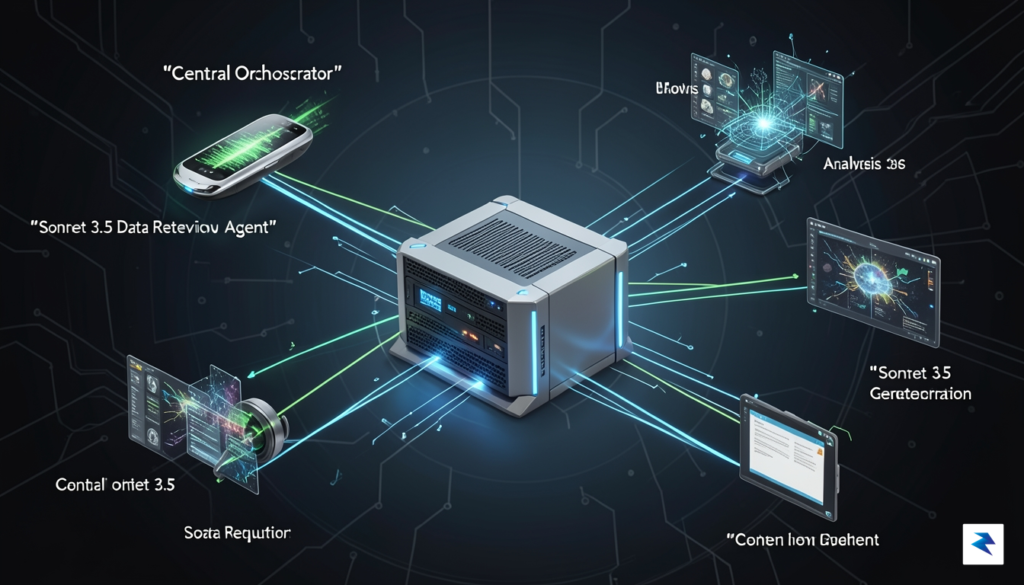
The efficiency of Sonnet 3.5 significantly impacts architectural decisions for agentic systems. Developers can now design more intricate and resilient agent architectures without incurring prohibitive costs. Common patterns include single-agent loops for straightforward, repetitive tasks like data validation or routine customer query responses, where the agent executes a series of actions and reflections. For more complex workflows, multi-agent systems become highly viable; here, Sonnet 3.5 can serve as a central supervisor or orchestrator, delegating specific sub-tasks to other specialized Sonnet 3.5 agents, or even to external tools and APIs. This modularity allows for greater scalability, easier maintenance, and improved fault tolerance, as individual components can be swapped or updated independently. Frameworks like LangChain or LlamaIndex are increasingly vital in abstracting away much of the complexity, enabling architects to focus on the business logic rather than low-level integration details.
Effective prompt engineering is paramount to harnessing the full potential of Sonnet 3.5 in agentic contexts. Given that agents operate in iterative loops, the clarity and structure of prompts directly influence their performance and reliability. Techniques such as Chain-of-Thought (CoT) prompting, where the model is encouraged to “think step-by-step,” can significantly improve reasoning capabilities and task execution accuracy. Furthermore, integrating tool use or function calling within prompts allows agents to interact with external systems, expanding their capabilities beyond pure linguistic generation. Prompting for self-correction and reflection empowers agents to evaluate their own outputs, identify errors, and refine their approach, leading to more robust and autonomous operations. Careful context management is also critical; while Sonnet 3.5 has a generous context window, keeping prompts concise and relevant helps maintain focus, reduces token usage, and ultimately lowers operational costs.
One of the most immediate and impactful benefits of Sonnet 3.5’s enhanced speed is the potential for drastically reduced latency in customer-facing AI applications. Faster inference times translate directly into a more fluid and responsive user experience, which is critical for maintaining engagement and satisfaction. Consider applications such as real-time chatbots that can provide instant, accurate responses, dynamic content generation engines that personalize user experiences on the fly, or AI assistants capable of rapid analysis and immediate action. This improved responsiveness not only elevates the perceived quality of AI interactions but also enables new categories of applications where near-instant feedback is a prerequisite. Businesses can leverage this speed to build more interactive, seamless, and ultimately more effective AI solutions that integrate deeply into their customer journeys.

As AI agents transition from simple chatbots to autonomous systems capable of executing multi-step workflows, the margin for error effectively vanishes. When a model gains the agency to interact with software, draft communications, or manage data, the traditional “human-in-the-loop” model faces new challenges regarding oversight and alignment. Anthropic’s approach with the latest iteration of Sonnet is built on the fundamental premise that increased autonomy must be tethered to robust, inherent guardrails. By refining the model’s architecture, Anthropic ensures that agents remain strictly within the boundaries of their designated tasks, preventing the “hallucination” of unauthorized actions that could jeopardize enterprise security.

Maintaining reliability throughout long-running, complex agent cycles is perhaps the most significant hurdle for widespread industrial adoption. Unlike a one-off query, an autonomous agent might operate over minutes or even hours, during which drift or logical errors could compound. To combat this, the new model leverages sophisticated system prompting and internal monitoring mechanisms that act as a constant feedback loop. By prioritizing high-fidelity adherence to complex instructions, the model can self-correct when faced with ambiguous prompts, ensuring that the final output remains consistent with the user’s original intent, even through extended sequences of operations.
True reliability in autonomous AI isn’t just about avoiding errors; it is about building a system that predictably honors human intent, even when the agent is operating in environments that require complex, multi-layered decision-making.
For enterprise leaders, these safety protocols are not merely a technical necessity—they are a critical competitive advantage. Organizations are often hesitant to deploy autonomous agents due to fears regarding data leakage or rogue behavior, but Anthropic’s commitment to safety serves as a bridge for this trust gap. By integrating safety-first design into the core of the model, businesses can deploy agents with the confidence that they are operating within a hardened framework. This level of reliability allows companies to scale their automation efforts without the constant need for manual auditing, ultimately transforming AI from a experimental tool into a reliable, high-value asset in the corporate infrastructure.
You must be logged in to post a comment.