
Understanding the Shift in AI Export Policy

The initial decision to place Anthropic’s Mythos and Fable models under stringent export controls was rooted in a broader White House initiative designed to prevent state-sponsored entities from leveraging advanced U.S. artificial intelligence for potentially destabilizing activities. By restricting access for foreign nationals and limiting the deployment of these frontier models in overseas jurisdictions, the administration aimed to establish a regulatory “moat” around critical dual-use technologies. At the time, the prevailing policy sentiment was one of extreme caution; regulators feared that the sophisticated reasoning capabilities inherent in Mythos and Fable could be weaponized for cyber-espionage or the development of biological threats if they fell into the wrong hands. Consequently, the temporary suspension of these exports forced Anthropic to silo its operations, effectively barring the company from participating in the burgeoning global market for high-tier generative AI.

However, the administration’s recent reversal suggests a fundamental recalibration of its national technology strategy. Proponents of the new, more permissive policy argue that maintaining such heavy-handed export curbs was inadvertently stifling American innovation rather than protecting it. By walling off these models from international collaborators and enterprise clients, the U.S. government was arguably forcing global markets to turn toward alternatives developed in Europe or Asia, where regulatory environments have become increasingly hospitable to AI firms. The rationale for this pivot is clear: the administration now views commercial dominance as a key component of national security. By allowing Anthropic to compete on a global scale, the U.S. can ensure that its own ethical standards and technical safety protocols become the de facto international benchmark for AI development.
“The decision to lift these barriers reflects an evolving understanding that the greatest risk to American leadership in artificial intelligence is not just the misuse of technology abroad, but the erosion of our own competitive edge through excessive isolationism.”
The economic implications of this policy shift are significant for the broader tech sector. Export controls often create a chilling effect on capital investment, as venture firms become wary of funding companies whose target markets are subject to sudden, unpredictable federal lockdowns. With the Mythos and Fable models now cleared for broader distribution, Anthropic can more easily scale its operations, tap into foreign talent pools, and integrate its services into international supply chains. This shift indicates that the administration is moving toward a more nuanced approach—balancing the imperative of national security with the reality that AI leadership requires open, interconnected, and robust global competition. Ultimately, this change marks a transition from a reactive, defensive posture to a proactive strategy that prioritizes American technological preeminence.
Technical Capabilities of Mythos and Fable

At the heart of the current policy shift lies the sheer cognitive horsepower of Anthropic’s Mythos and Fable models. These systems represent a significant leap forward in large-scale reasoning, moving beyond simple pattern matching to demonstrate an advanced ability to synthesize complex, multi-layered information across diverse domains. Unlike their predecessors, which were largely confined to text generation or basic synthesis, Mythos and Fable exhibit a profound capacity for logical deduction, nuanced coding assistance, and near-native multilingual fluency. This architecture allows the models to navigate intricate technical challenges—such as identifying architectural flaws in software or optimizing complex logistical systems—with a precision that mirrors high-level human expertise.

The strategic concern surrounding these models stems from their status as “dual-use” technologies, meaning they possess the potential to be applied toward both benign commercial innovation and highly sensitive military or geopolitical ends. Because Mythos and Fable can autonomously write, debug, and secure complex codebases, there is an inherent risk that such capabilities could be leveraged to streamline cyber-offensive operations or accelerate the development of advanced defense systems. Furthermore, their superior grasp of global languages and cultural context enables them to process vast amounts of proprietary data with unprecedented efficiency, making them powerful tools for intelligence gathering. Consequently, the decision to lift export controls is not merely a matter of trade policy; it is a calculation of whether the economic advantages of global integration outweigh the risks of these models falling into the hands of state actors with adversarial intentions.
The challenge for regulators is defining the threshold of “exportable intelligence” in an era where AI capabilities evolve faster than traditional legislative frameworks can adapt.
Ultimately, the controversy is rooted in the difficulty of “bottling” intelligence. By design, these models are meant to be general-purpose tools, yet their versatility is precisely what makes them so difficult to restrict. While traditional export controls have historically focused on physical hardware—such as high-end semiconductors or specialized manufacturing machinery—Mythos and Fable challenge this paradigm by existing as purely digital assets that are infinitely scalable and easily disseminated. This creates a regulatory dilemma: if the United States restricts access to these models, it risks slowing domestic technological progress and losing its competitive edge in the global AI race; however, if it opens the gates, it must grapple with the reality that it is exporting a foundational layer of digital infrastructure that could fundamentally shift the global balance of power.
Geopolitical Implications of AI Access
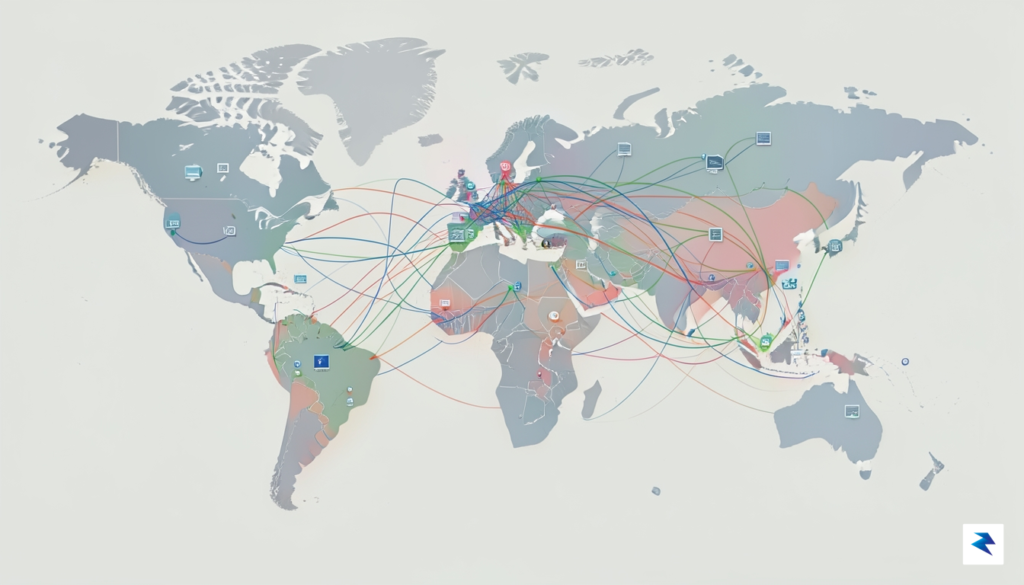
The decision to ease export restrictions on high-level artificial intelligence tools like Mythos and Fable marks a profound pivot in Washington’s approach to digital statecraft. For years, the prevailing logic in national security circles favored a “fortress” strategy, where cutting-edge models were treated akin to munitions, strictly guarded to prevent foreign adversaries from gaining a technological edge. By loosening these controls, the current administration is betting that the benefits of setting the global standard for AI architecture outweigh the risks of proliferation. This shift acknowledges a fundamental reality of the modern era: in a race for technological hegemony, isolationism often leads to irrelevance. If American models are locked away, international users will simply pivot to domestic alternatives developed by competing powers, effectively ceding the “operating system” of the future to rival geopolitical blocs.
However, this transition is not without significant peril. Critics argue that once sophisticated reasoning engines are released into the global wild, their dual-use nature makes them impossible to fully contain. A tool designed for benign creative writing or coding assistance can, in the hands of bad actors, be repurposed for sophisticated cyberattacks, disinformation campaigns, or the acceleration of biological research for weaponization. By allowing these models to cross borders more freely, the US is essentially betting on its ability to maintain “soft power” influence over how these tools are governed. The strategy relies on the hope that if the world builds on top of American foundations, those countries will be more likely to adopt Western norms regarding privacy, safety, and transparency.
The true test of this policy shift will be whether the US can foster a global ecosystem that favors open collaboration without inadvertently handing the keys to its most dangerous capabilities to its greatest strategic competitors.
Furthermore, this policy change acts as a diplomatic signaling mechanism. By integrating these models into international markets, the US is effectively creating a technological dependency that binds foreign economies closer to American innovation. This approach forces a complex trade-off: in exchange for the economic and diplomatic leverage gained by spreading our software, we accept a higher baseline of risk regarding the misuse of our proprietary technologies. Ultimately, the success of this move will depend on the administration’s ability to enforce rigorous “guardrails” at the software level—ensuring that even as the models travel, their underlying safety protocols remain immutable and resistant to tampering by foreign entities.
Security Safeguards and Future Compliance

The decision to ease export restrictions on the Mythos and Fable models does not signify a move toward a “wild west” era of artificial intelligence; rather, it marks the transition to a more sophisticated, nuanced framework of regulatory oversight. Anthropic has worked closely with federal agencies to develop a proactive safety architecture that replaces blunt, blanket export bans with targeted monitoring protocols. By integrating advanced “know-your-customer” (KYC) requirements and real-time usage telemetry, the company aims to ensure that these powerful models are utilized for constructive, ethical purposes while maintaining the ability to rapidly disable access if anomalous or malicious patterns are detected.

Central to this new compliance strategy is a multi-layered verification system that Anthropic has committed to maintaining for all international partners. Before any entity can deploy Mythos or Fable abroad, they must undergo rigorous vetting processes that assess both their technical infrastructure and their adherence to international security standards. This approach allows the government to maintain a “bird’s-eye view” of how these models are being deployed globally, ensuring that they do not fall into the hands of prohibited actors or state-sponsored entities that might exploit the technology for cyber warfare or destabilizing misinformation campaigns.
The core of this transition lies in shifting from a model of total prohibition to one of active, intelligent stewardship, ensuring that technological progress does not come at the expense of national security.
Looking ahead, Anthropic is positioning its compliance framework as a living, breathing entity that evolves alongside the capabilities of its AI. As Mythos and Fable continue to scale in power, the company has pledged to implement “circuit-breaker” mechanisms that automatically restrict model output if certain safety thresholds are breached. This dynamic balancing act—pitting the desire for global innovation against the necessity of responsible guardrails—represents a new paradigm in the technology sector. By maintaining transparency with regulators and adopting a posture of extreme caution, Anthropic hopes to prove that international accessibility and stringent security are not mutually exclusive goals, but rather two sides of the same coin in the modern AI ecosystem.
Ultimately, the company’s commitment to self-regulation, coupled with ongoing government audits, provides a roadmap for how high-stakes technologies can be managed in a globalized market. The focus has moved away from simply guarding the perimeter and toward understanding the internal health and ethical trajectory of the models themselves. As these systems become more deeply embedded in global research, industry, and governance, the vigilance applied today will set the precedent for how future iterations of AI are governed on the world stage.