
The Rise of Neocloud: Understanding Together AI’s $8.3B Valuation
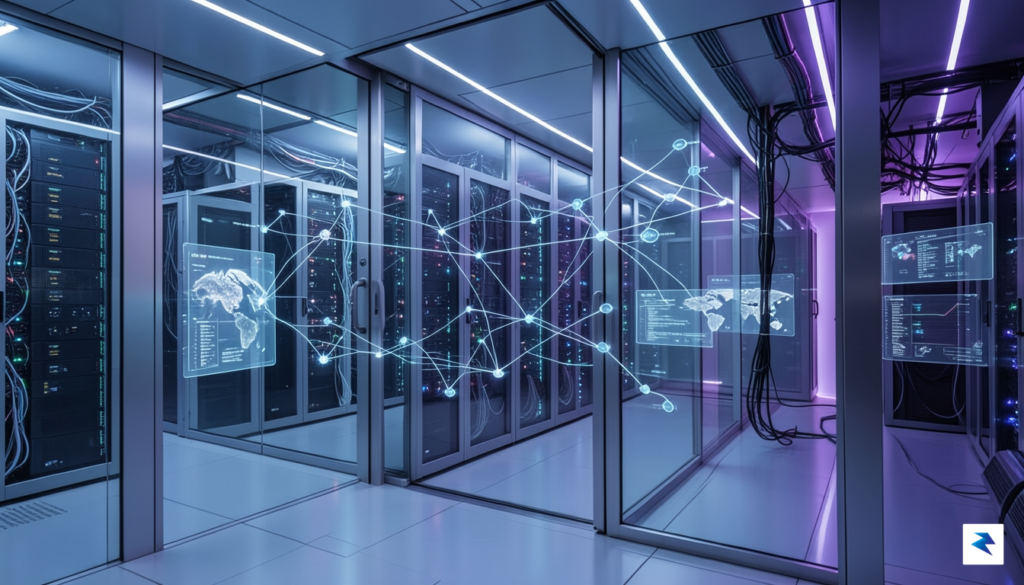
The landscape of artificial intelligence infrastructure underwent a tectonic shift this week as Together AI announced a massive $800 million funding round, catapulting the company to an impressive $8.3 billion valuation. This financial milestone is not merely a number; it represents a profound validation of the “neocloud” movement—a new generation of specialized cloud providers designed specifically to meet the grueling computational demands of the generative AI era. By moving beyond the traditional, general-purpose cloud computing models that have dominated the last decade, Together AI has positioned itself as an essential backbone for companies looking to integrate cutting-edge machine learning into their core business operations.
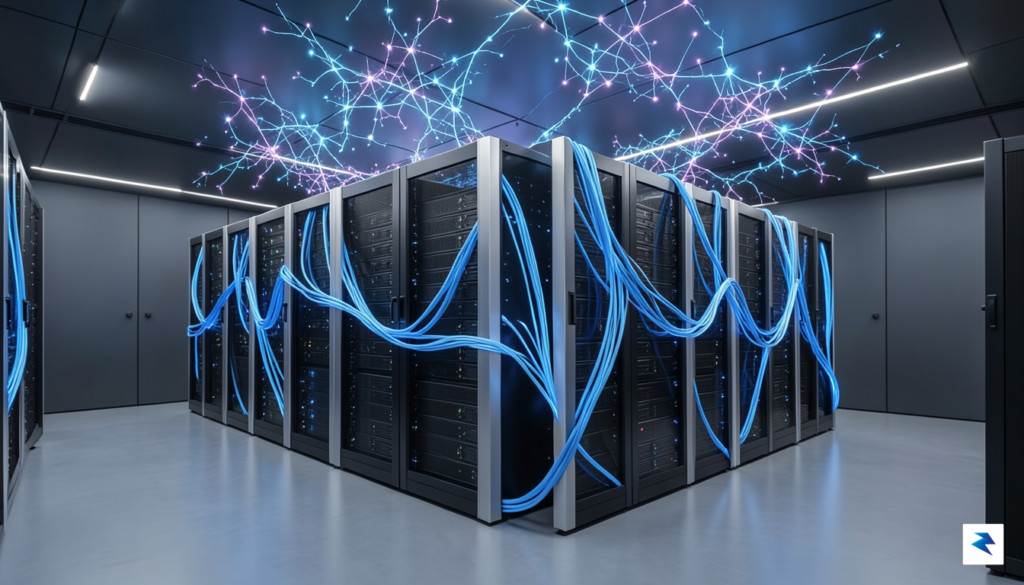
At its heart, Together AI functions as a high-performance bridge between complex AI research and practical enterprise deployment. While legacy cloud giants often struggle with the specific, hardware-intensive needs of training and deploying large-scale models, Together AI has engineered a specialized stack that optimizes every layer of the compute process. Their role is particularly critical in the democratization of open-source models, providing researchers and developers with the seamless, low-latency access required to fine-tune and run sophisticated AI systems without the prohibitive friction found in older, clunkier environments. By streamlining this process, they have effectively lowered the barrier to entry for firms striving to build proprietary AI solutions.
The rise of the neocloud signifies that the era of “one-size-fits-all” computing is over, replaced by a specialized architecture that treats the AI model as a first-class citizen of the enterprise tech stack.
This rapid ascent to an $8.3 billion valuation serves as a clear signal to the market that investors are prioritizing companies that solve the “plumbing” problems of the AI revolution. As enterprises move from the experimental phase of AI adoption to full-scale production, the need for reliable, scalable, and cost-effective inference infrastructure has never been more urgent. Together AI’s ability to secure such significant capital suggests that they are not just viewed as a service provider, but as a foundational utility for the next generation of software development. As they continue to expand their capacity and refine their infrastructure, they are defining what it means to operate in a post-traditional cloud world, where speed, specialized hardware, and open-source accessibility are the primary drivers of technological dominance.
Why Open Source Models Are Driving Cloud Infrastructure Demand
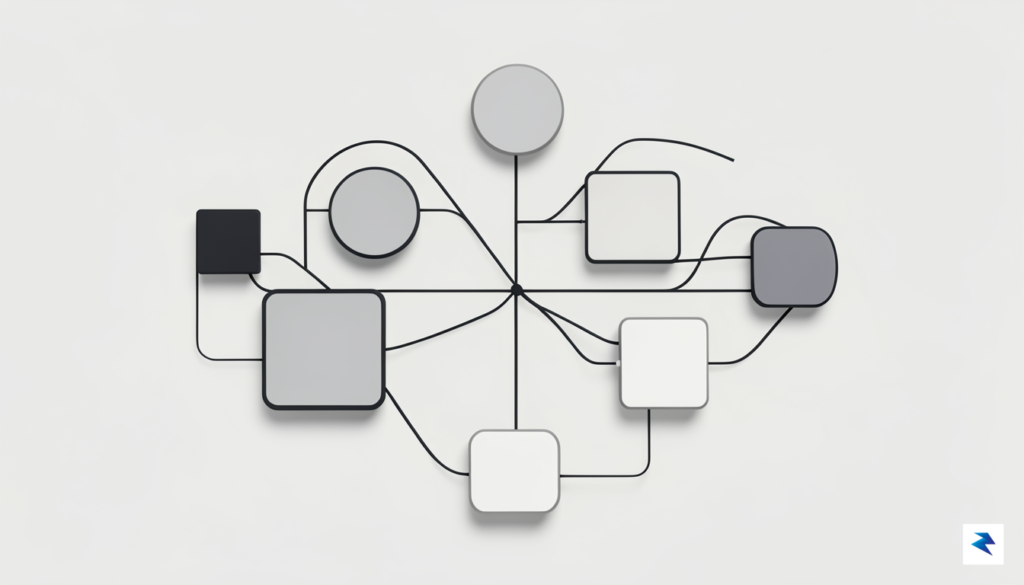
While the headlines are frequently dominated by the monolithic, closed-source offerings from tech giants like Google and OpenAI, a parallel revolution is unfolding in the open-source community. Developers and enterprises are increasingly turning to open-weight models—such as Meta’s Llama or Mistral’s high-performance architectures—to build bespoke AI applications that prioritize transparency, data sovereignty, and cost-efficiency. This shift represents a fundamental change in how software is constructed: instead of relying on a “black box” API that dictates terms and costs, companies are opting to host their own models, tailoring them precisely to their proprietary datasets and specific business logic.
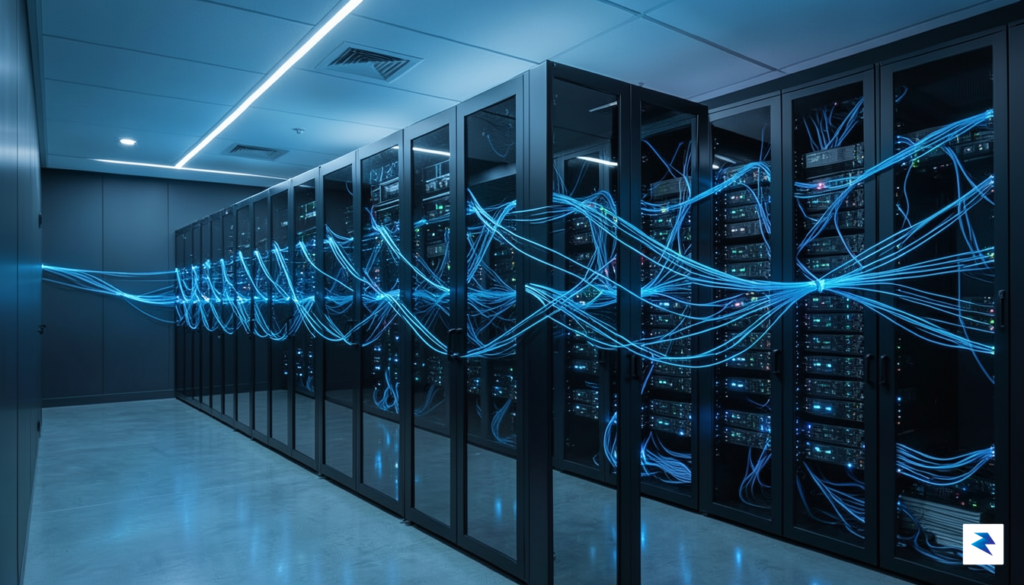
However, running these sophisticated models at scale creates a significant technical bottleneck for the average organization. Large Language Models require massive amounts of memory, specific GPU orchestration, and highly optimized inference engines to operate without latency. Traditional cloud providers, while vast in their storage and compute capacity, are often built for general-purpose workloads rather than the hyper-specific, high-throughput demands of modern generative AI. This is where the “Neocloud” paradigm emerges; it is not just about renting server space, but about providing a specialized, high-performance stack designed specifically to handle the unique nuances of open-source model architectures.
The true value of the current AI infrastructure shift lies in the ability to bridge the gap between complex research-grade models and production-ready enterprise performance.
Together AI has positioned itself as the engine room of this movement by streamlining the deployment process through specialized hardware optimizations. By focusing exclusively on the open-source ecosystem, the company allows businesses to bypass the heavy lifting of infra-management, such as model quantization, kernel optimization, and efficient distributed inference. Unlike legacy cloud giants that treat AI as one of many services, this new breed of provider treats the model itself as the primary interface. This creates a distinct value proposition: companies gain the flexibility of open-source control combined with the ease of a managed service, effectively democratizing access to high-end AI performance that was previously reserved for organizations with deep pockets and massive engineering teams.
Ultimately, the surge in valuation for companies like Together AI reflects a broader market realization: the future of enterprise AI will not be singular, but decentralized. As more firms look to integrate custom-tuned models into their workflows, the demand for specialized infrastructure that can scale these models efficiently will only intensify. By lowering the barrier to entry for open-source deployment, these infrastructure providers are ensuring that innovation is no longer bottled up within the labs of a few tech behemoths, but is instead accessible to any developer with a vision and the right tools at their disposal.
The Strategic Significance of the $800M Funding Round
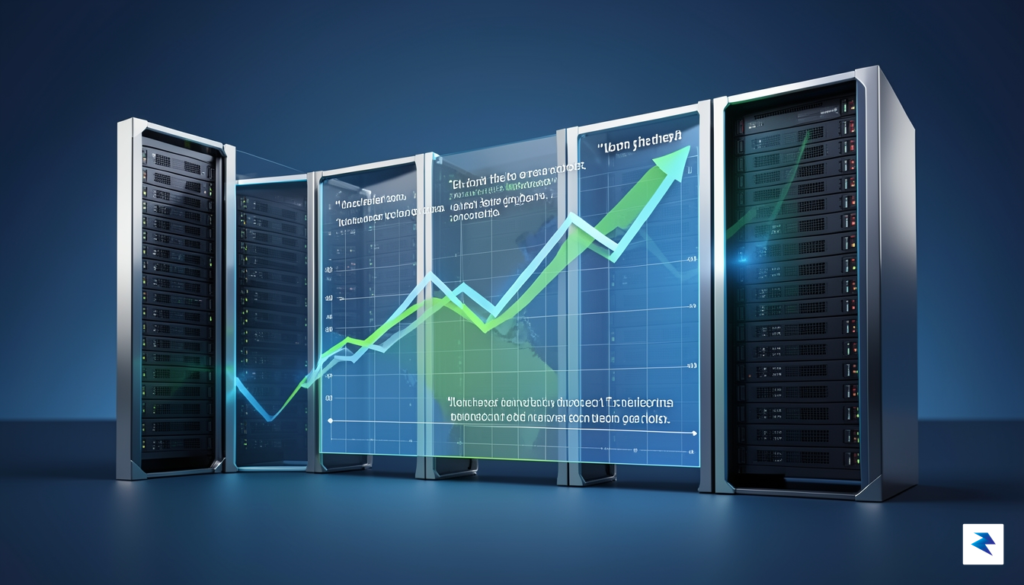
Securing an $800 million capital infusion in today’s hyper-competitive artificial intelligence landscape is far more than a simple balance sheet boost; it represents a fundamental shift in the company’s operational velocity. In an industry where the barrier to entry is defined by the sheer cost of compute, this level of funding acts as a strategic moat. By accelerating its procurement of next-generation graphics processing units (GPUs), the company is positioning itself to bypass the typical supply chain bottlenecks that have plagued smaller startups. This massive investment ensures that as demand for high-performance inference spikes globally, the company will possess the physical hardware capacity to satisfy enterprise-level requirements without compromising on availability or uptime.
Beyond the raw acquisition of hardware, this capital is earmarked for the complex, resource-intensive task of software optimization. Having the best chips is only half the battle; the real competitive advantage lies in the proprietary software layers that orchestrate these resources to maximize throughput. By pouring resources into engineering teams focused on low-latency inference, the company intends to fundamentally lower the cost-per-token for its end users. This is a critical move, as the market is rapidly moving away from expensive, experimental AI projects toward cost-efficient, production-grade applications that must scale to millions of requests per day.
The true measure of a cloud AI provider today is not just how much compute they control, but how effectively they can translate that raw power into seamless, affordable, and lightning-fast developer experiences.
Furthermore, the strategic allocation of these funds highlights a clear focus on the “Neocloud” philosophy—a departure from traditional, rigid cloud service models toward more agile, AI-first infrastructure. By scaling its inference capabilities, the company is effectively lowering the barrier for developers who need to deploy sophisticated models without the overhead of managing their own clusters. This capital allows for:
- Aggressive expansion of GPU clusters to ensure near-zero wait times for model deployment.
- Dedicated research into model quantization and specialized kernels to squeeze more performance out of existing hardware.
- Building a robust, globally distributed network that brings computation closer to the end user, thereby slashing latency.
Ultimately, this funding round provides the runway necessary to transition from an emerging provider to an essential pillar of the modern AI stack, ensuring that the company remains at the forefront of the infrastructure race as enterprise adoption hits its next inflection point.
Infrastructure as a Moat: How Together AI Compels Big Tech
In the high-stakes arena of artificial intelligence, the dominant cloud hyperscalers—Amazon Web Services, Microsoft Azure, and Google Cloud—have long relied on their massive, general-purpose infrastructure to capture the lion’s share of the market. These giants provide a “one-size-fits-all” computing environment, offering vast arrays of storage, databases, and networking tools designed to support everything from traditional enterprise applications to basic web hosting. While this breadth provides immense stability, it often results in bloated, inefficient environments for developers who need to squeeze every millisecond of performance out of complex large language models. Together AI distinguishes itself by rejecting this monolithic approach, instead focusing exclusively on the performance layer of the AI stack to build a specialized “neocloud” that hyperscalers simply cannot replicate without disrupting their own business models.
The core of Together AI’s competitive advantage lies in the concept of a “performance moat.” Unlike traditional cloud providers that treat AI workloads as just another application running on a virtualized server, Together AI optimizes the entire software-hardware stack specifically for generative models. By integrating high-performance kernels and custom orchestration layers directly into their infrastructure, they eliminate the latency and resource overhead that typically plague general-purpose cloud environments. This hyper-optimization allows startups to achieve faster inference times and more cost-effective training cycles, effectively turning the infrastructure itself into a strategic asset rather than a commodity utility. As a result, they act more like a dedicated research partner than a faceless vendor, helping developers navigate the complexities of model deployment with precision.
The true value of a neocloud provider is not just providing access to GPUs, but providing the software intelligence to make those GPUs perform at their theoretical maximum potential.
This shift toward specialized infrastructure suggests that the future of AI development will favor platforms that prioritize efficiency over sheer scale. When a startup chooses Together AI, they are not merely renting computing power; they are gaining access to a refined engine designed to handle the unique mathematical demands of transformer architectures. While hyperscalers are currently engaged in a massive arms race to secure hardware, their legacy software stacks often prevent them from achieving the same level of granular, model-specific optimization. By prioritizing deep integration between hardware and software, Together AI has effectively carved out a defensible niche that compels even the most sophisticated AI-first teams to look beyond the big three. This evolution signals a broader trend in the tech industry: the era of the generalist is fading, and the era of the infrastructure specialist has arrived.
Looking Ahead: The Future of Democratized AI Compute


The staggering $8.3 billion valuation of Together AI serves as a definitive turning point for the infrastructure layer of the artificial intelligence ecosystem. Over the next 18 to 24 months, we are likely to witness a massive migration away from monolithic, closed-source computing environments toward a more fluid, “neocloud” architecture. This shift is not merely about raw processing power; it represents a fundamental change in how the industry treats AI as a utility. Much like the transition from private power plants to the public electrical grid in the early 20th century, the neocloud sector is poised to provide high-performance compute on-demand, allowing developers to scale sophisticated models without the prohibitive capital expenditures that once limited innovation to only the largest tech conglomerates.
As this democratization accelerates, infrastructure providers will be forced to pivot their service models to support decentralized and local-first AI applications. We anticipate that the next phase of this evolution will focus heavily on interoperability and efficiency, enabling developers to run complex training workloads across distributed clusters seamlessly. This move toward edge-computing and decentralized resources will empower smaller research teams and startups to experiment with large language models (LLMs) that were previously locked behind the private APIs of a few dominant players. Consequently, the barrier to entry for building high-quality, specialized AI tools will continue to plummet, fostering a more competitive and diverse ecosystem.
The true measure of this valuation is not the dollar amount, but the degree to which it accelerates the shift from AI as a luxury service to AI as a fundamental, accessible layer of the internet.
In the long run, the maturation of these neocloud platforms will likely redefine the software development lifecycle itself. As hardware abstraction layers become more refined, developers will spend less time managing the underlying orchestration of GPUs and more time fine-tuning the intelligence of their specific applications. This democratization ensures that innovation is no longer siloed within corporate research labs, but instead distributed across a global network of builders. By lowering the cost of compute, the industry is effectively unleashing a wave of creativity that will reshape sectors ranging from healthcare and finance to creative arts and education, proving that the most significant breakthroughs are often born when powerful tools are placed into the hands of the many, rather than the few.