
The Solopreneur AI Paradox

In a rapidly evolving technological landscape, where artificial intelligence is consistently hailed as the ultimate force multiplier, a novel and somewhat perplexing breed of startup is beginning to emerge. This new phenomenon challenges long-held assumptions about company building: the high-valuation, single-founder venture. These aren’t lean, bootstrapped operations, but rather ambitious companies commanding significant seed funding—often in the millions—while maintaining a workforce of precisely one. It presents a striking contradiction: how can a nascent enterprise be deemed worth millions by sophisticated investors before a single employee beyond the founder has even been hired?
Historically, venture capitalists have almost religiously prioritized strong founding teams, viewing a diverse skill set and shared vision as critical elements for de-risking early-stage investments. The absence of a robust team was often an immediate red flag, suggesting a lack of execution capability or broad strategic thinking. However, the advent of sophisticated AI tools and platforms has fundamentally shifted this perception. Investors are now increasingly willing to back visionary individuals, not just based on their personal brilliance, but on the profound potential of AI to augment and scale a solo founder’s efforts exponentially, making the traditional team structure seem less indispensable in the earliest stages. This represents a seismic shift in how capital is deployed and what qualities are valued in nascent companies.
The enabling mechanism for this solopreneur model is what can be termed an ‘AI-first’ architecture, fundamentally redefining how a company can operate from its inception. Unlike traditional startups that build out teams for development, operations, sales, and customer support as they grow, these AI-centric ventures are designed from the ground up to automate a vast array of core functions. AI isn’t just a feature; it’s the operational backbone, handling everything from code generation and data analysis to rudimentary customer interactions and even strategic insights. This allows a single founder to leverage an arsenal of intelligent systems, effectively multiplying their output and reach in a way that was previously unimaginable, thereby circumventing the linear hiring model that has long defined startup growth.
While undeniably efficient and a testament to the transformative power of AI, this emergent model also brings forth inherent contradictions and unique challenges. Can a single individual truly bear the immense strategic, operational, and emotional burdens of a multi-million-dollar company, even with the most advanced AI co-pilots? The human element of leadership, team building, nuanced decision-making, and navigating unforeseen crises remains a complex domain where AI, for all its prowess, still has limitations. Thus, while AI empowers unprecedented solo scalability, it also sharpens the focus on the founder’s singular capacity to lead, innovate, and ultimately build a sustainable enterprise that will inevitably require human expansion at some critical juncture.
The Evolution of the Lean Startup
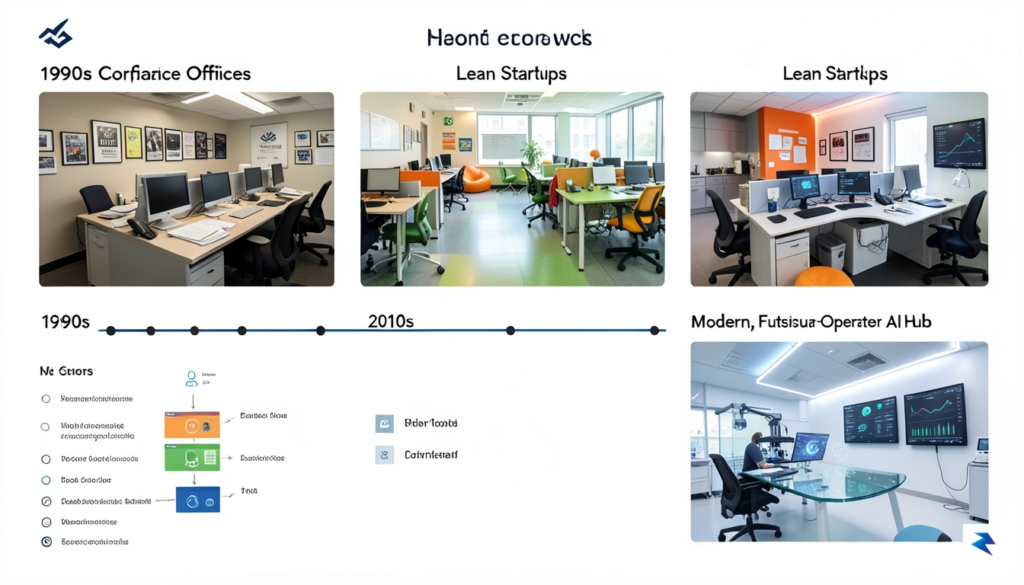
For over a decade, the “Lean Startup” methodology defined the gold standard of entrepreneurship, championing the mantra of validated learning and rapid iteration. Founders were taught to build a Minimum Viable Product (MVP), gather user feedback, and pivot accordingly, all while keeping burn rates as low as possible. However, even the leanest startups of the 2010s eventually hit a wall of human limitations. To scale, they required the “first five hires”—a group of developers, marketers, and operational leads who demanded not only significant salaries but also substantial chunks of equity. The cost of human capital was the primary anchor on growth, forcing founders to seek venture capital prematurely just to keep the lights on and the code shipping.
Today, we are witnessing a fundamental shift in this philosophy, supercharged by the advent of Large Language Models (LLMs) and agentic workflows. Where the lean movement once relied on outsourcing or hiring contractors to fill gaps, the modern founder is increasingly turning to an ecosystem of autonomous AI agents. These digital workers can synthesize market research, write production-ready code, draft sophisticated marketing copy, and manage customer support inquiries simultaneously. By automating the tasks that previously necessitated a mid-sized team, a single founder can now maintain the output of a traditional startup while preserving the agility of a solo project. This transition represents the ultimate realization of lean principles: the removal of overhead not just in office space or perks, but in headcount itself.

The implications for equity retention and operational control are profound. Because the “zero-employee” startup can bootstrap further into its lifecycle without the immediate pressure of payroll, founders are no longer forced to dilute their ownership stake to satisfy early-stage investors. In the past, the need to hire specialized talent was a primary driver for venture capital solicitation; today, that barrier to entry has been radically lowered. When one person can act as the product lead, the growth marketer, and the operations manager, the definition of a “high-growth company” changes. It is no longer about how many people you can hire to execute a vision, but how effectively you can orchestrate a fleet of AI tools to scale that vision autonomously.
The most successful startups of the coming decade may not be measured by their headcount, but by the sophistication of their automated workflows and the clarity of their singular, AI-augmented vision.
This paradigm shift does not suggest that human expertise is becoming obsolete, but rather that it is being reallocated. The focus has moved from managing people to managing systems. By replacing the traditional “first five hires” with agentic software, founders are effectively trading the administrative burden of human resources for the technical challenge of prompt engineering and workflow architecture. As this trend matures, we are likely to see a new breed of unicorn: companies with massive market impacts, yet a footprint consisting of only a handful of individuals supported by an intricate, invisible layer of artificial intelligence.
Scaling Without Staff: The Automation Dilemma

The vision of a company operating with an almost imperceptible human footprint, driven primarily by artificial intelligence and automated systems, is incredibly compelling in an era obsessed with efficiency and scalability. This model, often touted as the “zero-headcount” startup, leans heavily on a sprawling network of API ecosystems and sophisticated autonomous agents to execute tasks traditionally handled by human teams. From managing customer interactions and processing data to orchestrating marketing campaigns and even generating code, these AI agents become the digital workforce, stitching together various software-as-a-service (SaaS) tools and cloud infrastructure to create a seemingly seamless operational flow. The initial setup involves meticulously configuring these interconnected systems, a complex ballet of integrations that demands significant technical acumen and strategic foresight, even if the day-to-day execution then runs on autopilot.
However, beneath the allure of automated operations lies a critical reality: the ‘bottleneck of one.’ While AI agents can perform tasks with astounding speed and precision, the ultimate arbiter of direction, strategy, and problem-solving remains the human founder. Every significant pivot, every unforeseen challenge, every nuanced market shift demands a human decision, and the speed at which that single individual can process information, strategize, and provide decisive input becomes the primary constraint on growth. This creates a paradox where an incredibly efficient automated backend is often waiting on a single human’s cognitive capacity, limiting the company’s ability to truly scale beyond the founder’s bandwidth and time.
Furthermore, relying on sophisticated, often opaque AI models for critical business processes introduces significant reliability risks. Many advanced AI systems function as “black boxes,” meaning their internal workings and decision-making processes are not fully transparent or easily auditable by humans. This lack of visibility can lead to unexpected errors, biased outputs, or “hallucinations”—where the AI generates plausible but incorrect information—which can have severe consequences for customer relations, financial reporting, or product development. Debugging or course-correcting these systems requires deep expertise and careful monitoring, often demanding a level of human intervention that belies the ‘set it and forget it’ promise of full automation.
The architectural limits of AI-only operations also become apparent when considering ongoing maintenance and the inevitable accumulation of technical debt. Just like human-built software, AI models and the API ecosystems they depend on are not static; they require continuous updates, security patches, and adaptations to evolving external environments. APIs change, new regulations emerge, and the underlying AI models themselves need retraining or fine-tuning to remain effective. This constant need for oversight and adjustment means the founder isn’t just a strategic visionary but also an architect, an IT manager, and a chief operations officer, consistently dedicating time to ensure the digital infrastructure remains robust and relevant. The burden of this ongoing stewardship means the ‘zero-headcount’ ideal transforms into an intensely hands-on, high-responsibility role for the sole human at the helm.
Ultimately, while AI can undoubtedly automate tactical execution and optimize many operational workflows, it doesn’t eliminate the fundamental human need for strategic insight, adaptability, and ethical judgment. The founder of an AI-driven company must continuously navigate not only market dynamics but also the evolving capabilities and limitations of their automated workforce, ensuring that the technology serves the business’s overarching goals rather than dictating them. The promise of a lean, agile operation remains, but the operational realities reveal a profound shift in the nature of human responsibility, not an outright abolition of it.
The Strategic Risks of One-Person Ventures
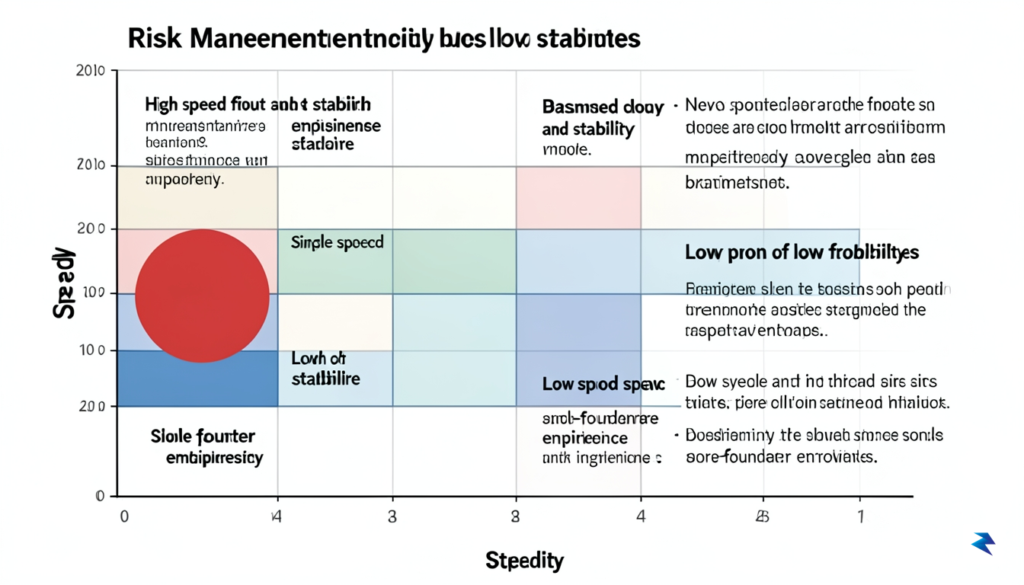
While the allure of a lean, AI-augmented venture is undeniable, the “zero-employee” model introduces profound existential risks that go beyond simple operational efficiency. Funding may provide the necessary fuel to keep the lights on, but it cannot replace the engine of human collaboration. When a founder acts as the sole architect, strategist, and executor, the company becomes inextricably linked to a single point of failure. This creates a psychological burden that is notoriously difficult to sustain, as the lack of a sounding board often leads to cognitive biases and decision-making myopia. Without a team to challenge assumptions or offer dissenting perspectives, the founder risks falling into an echo chamber where flawed strategies are nurtured rather than corrected.
Institutional knowledge is another casualty of this hyper-solo approach. In a traditional company, knowledge is distributed and refined through interpersonal friction and shared experiences; in a one-person startup, critical insights exist solely within the founder’s mind. If that individual faces burnout, illness, or a sudden crisis, the company effectively ceases to function, leaving investors with no continuity plan and no internal mechanism to absorb the shock. Furthermore, there is the fundamental issue of culture. A company is more than just a product; it is a set of values and a community of practice. Scaling culture is impossible when there is no one else to embody it, making it difficult for the venture to transition from a project into a lasting, resilient institution.

The true test of a business model is not how it performs when the founder is at their peak, but how the company survives the inevitable moments of human vulnerability and market volatility.
From the perspective of venture capital, the zero-employee model presents a complex paradox. While investors are eager to capitalize on the productivity gains promised by generative AI, they are also inherently risk-averse regarding key-person dependency. A company that relies on a single individual to manage every pivot and unforeseen market shift lacks the redundancy required for long-term stability. If the founder must take a leave of absence or simply loses the conviction to continue, the entire enterprise loses its core functionality. Investors must therefore weigh the short-term cost savings of an AI-driven, solo-founder team against the long-term danger of building a business that lacks the structural integrity to survive the absence of its primary architect.
Ultimately, the rise of the one-person venture may be less of a permanent shift in corporate structure and more of a temporary bubble driven by the novelty of new automation tools. While AI can certainly handle high-volume tasks, it cannot replicate the complex emotional intelligence and collective problem-solving capabilities of a diverse team. As these ventures look to mature, they will inevitably reach a threshold where the limitations of a single brain become the primary bottleneck to growth. Whether these companies can successfully evolve into organizations with depth, or if they are destined to remain fragile experiments, remains the defining question for this new era of entrepreneurship.
The Future of the Lean AI Enterprise

We are currently witnessing the birth of a new corporate archetype: the “one-person unicorn.” As AI tools become increasingly sophisticated, the traditional startup roadmap—which once prioritized rapid headcount growth to signal success—is being fundamentally challenged. This shift suggests that capital, once primarily earmarked for human talent acquisition, will increasingly flow toward compute, proprietary data sets, and high-level strategy. As a result, the definition of a company is being rewritten, moving away from a collective of employees toward a centralized intelligence hub that leverages an automated, synthetic workforce to achieve massive scale.
Whether this trend heralds a golden age of hyper-efficient productivity or serves as a cautionary tale of isolation remains an open question. On one hand, the ability to launch a global enterprise with zero employees offers unprecedented agility, lowering the barrier to entry for innovators who possess the vision but lack the resources to manage large teams. On the other hand, the erosion of the traditional startup ecosystem poses significant risks to mentorship, collaborative culture, and the social fabric of the labor market. If companies no longer require entry-level workers to function, we must grapple with where the next generation of leaders will receive their training and how the broader economy will sustain itself if human participation is sidelined in favor of algorithmic execution.
The future of work will not be defined by the elimination of the human element, but by the radical expansion of individual capability through artificial intelligence.
Moving forward, investors and entrepreneurs must pivot their priorities to navigate this transition effectively. Rather than focusing on team size as a proxy for growth, stakeholders should prioritize the sustainability of the underlying AI architecture, the security of proprietary data, and the adaptability of the founder’s vision. The successful venture of the next decade will likely be an “augmented” entity—a lean core of human decision-makers who utilize AI to handle the heavy lifting of operations, design, and distribution. This evolution does not necessarily signal the end of the traditional startup team, but rather a transition toward a model where each human contributor is exponentially more powerful than they were only a few years ago.

Ultimately, the impact on the global labor market will be profound and multifaceted. We are likely heading toward a bifurcated workforce where the ability to govern, prompt, and architect AI systems becomes the most valuable skill set in the economy. While the allure of the zero-employee startup is undeniable, the most enduring companies will likely be those that strike a balance between extreme technical efficiency and the nuanced, creative, and empathetic intelligence that only human beings can provide. As we enter this cycle, the winners will not just be those with the most powerful models, but those who best understand how to integrate these tools into a mission that still resonates with real-world users.