
Telegram Ban in India: What It Means for Your Privacy and Messaging Habits
The Telegram Landscape: Understanding the Indian Regulatory Context For many years, Telegram has carved out a significant niche within India's…


In 2011, the scientific community celebrated a significant milestone when researchers successfully developed a vaccine candidate specifically targeting the Bundibugyo strain of the Ebola virus. This particular strain, first identified in western Uganda, had long presented a complex challenge for virologists because it was distinct from the more commonly studied Zaire strain. At the time, the early clinical data suggested a robust immune response, offering a beacon of hope for regions historically plagued by unpredictable and deadly outbreaks. Despite this scientific triumph, the momentum ground to a halt shortly after the initial research phase, leaving a highly effective tool trapped in laboratory storage for over a decade.
The primary culprit behind this delay is a phenomenon well-known within the pharmaceutical industry as the “valley of death.” This represents the treacherous gap between basic laboratory discovery and the massive, expensive clinical trials required to bring a drug or vaccine to market. While the 2011 research proved that the vaccine could work in controlled settings, the transition to large-scale human trials requires tens of millions of dollars in investment. Without a predictable market or a sustained mandate from global health organizations, many promising candidates simply lose their momentum when the immediate panic of a localized outbreak subsides, causing investors and government agencies to shift their attention toward more pressing, high-profile crises.

This cycle of neglect is driven largely by the harsh realities of commercial viability. Because rare Ebola strains like Bundibugyo do not present the consistent, global profit potential of chronic disease medications, pharmaceutical companies often view them as “neglected tropical diseases.” The economic model for vaccine development usually relies on the expectation of widespread, long-term use, which simply does not exist for pathogens that emerge sporadically in remote areas. Consequently, when the world’s attention moves away from a specific outbreak, the urgency to finalize regulatory approval for a niche vaccine often evaporates. This leads to a tragic pattern: researchers create a solution, the public health emergency fades, and the funding disappears, effectively burying the breakthrough until the next tragedy forces us to dig it up again.
The failure to move beyond the prototype stage isn’t a failure of science, but a failure of a systemic, market-driven approach that struggles to value preventative medicine for rare, yet catastrophic, infectious diseases.
Ultimately, the 15-year shelf life of this specific vaccine serves as a stark indictment of how we prioritize global health security. We have spent over a decade waiting for a crisis to become severe enough to justify the costs of moving from the lab to the clinic, rather than proactively maintaining a stockpile of defenses. By failing to bridge the valley of death during times of relative calm, we have consistently left ourselves vulnerable to the cyclical nature of viral threats, proving that scientific discovery is only half the battle in the fight against global pandemics.

For decades, the global scientific community has directed the vast majority of its resources toward the Zaire ebolavirus, the strain responsible for the most devastating and high-profile outbreaks in history. However, the Bundibugyo ebolavirus represents a distinct and dangerous biological entity that poses its own set of unique challenges. While both belong to the same viral family, Bundibugyo is genetically divergent enough that vaccines tailored specifically for the Zaire strain often fail to provide adequate cross-protection. This creates a dangerous “blind spot” in our medical defenses; as the virus circulates in remote regions, it can spark localized epidemics that move rapidly through vulnerable populations before international health organizations can pivot their strategies to address a strain that lacks a widely distributed, stockpiled vaccine.
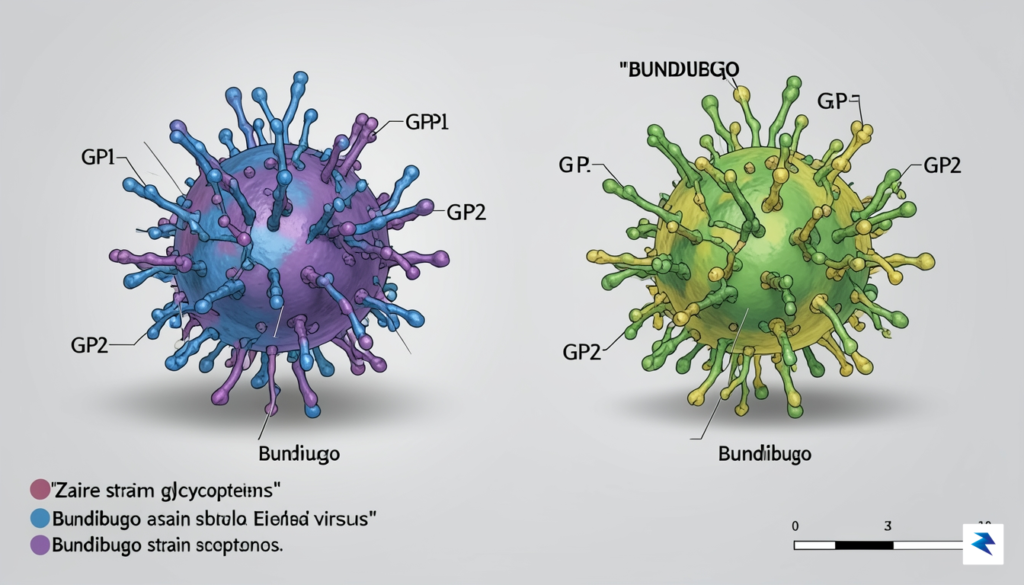
The 2011 vaccine candidate, which has languished in laboratory storage for over a decade, was engineered with a sophisticated understanding of these viral nuances. Unlike earlier iterations that relied on broad, generalized viral components, this specific candidate utilizes a targeted viral vector approach designed to trigger a highly specific immune response against the unique protein markers found on the Bundibugyo strain. By training the human immune system to recognize the specific “molecular signature” of this variant, the vaccine offers a level of precision that traditional Zaire-based inoculations simply cannot replicate. This specificity is crucial because, in the world of viral immunology, a near-match is rarely enough to prevent systemic infection; the immune system requires an exact blueprint to mount an effective defense before the virus overwhelms the host’s biological systems.
Achieving broad-spectrum protection against Ebola is akin to designing a universal key for a series of ever-changing, complex locks.
The difficulty in creating a single, catch-all vaccine lies in the incredible evolutionary plasticity of the Ebolavirus genus. Viral immunology is a relentless game of cat and mouse, where subtle mutations in the virus’s surface glycoproteins—the “keys” it uses to enter human cells—can render a well-intentioned vaccine completely obsolete. Because the Zaire and Bundibugyo strains have evolved along different paths, their surface structures are distinct enough that antibodies generated against one are often ineffective at neutralizing the other. This biological reality highlights why the long-neglected 2011 candidate is so vital: it serves as a necessary bridge in our immunological arsenal. Relying on a single-strain strategy is a luxury we can no longer afford if we intend to mitigate the risk of future, unpredictable outbreaks occurring in regions where the Bundibugyo strain remains an endemic threat.

The stagnation of life-saving medical research often hinges on a concept economists call “market failure.” In the traditional pharmaceutical R&D model, investment is primarily driven by the prospect of high-margin returns, which naturally gravitates toward treatments for chronic conditions in wealthy nations. Diseases that disproportionately affect impoverished or marginalized populations—often labeled “neglected diseases”—frequently lack the profit incentive necessary to justify the high costs of clinical trials and regulatory hurdles. Consequently, even when a vaccine candidate shows early promise, it can languish in a laboratory freezer for over a decade simply because there is no immediate, lucrative consumer base to justify a full-scale commercial launch.

To bridge this persistent gap, the global health community has increasingly relied on a fragile patchwork of non-governmental organizations (NGOs), philanthropic foundations, and government-backed public-private partnerships. These entities act as a vital safety net, stepping in to fund research that would otherwise be deemed “unprofitable” by corporate standards. However, this reliance on external funding creates a volatile landscape for vaccine development. When the public spotlight fades or political priorities shift, the funding for these long-term projects can suddenly evaporate, leaving promising breakthroughs stranded in the pipeline. It is a systemic failure of vision that treats health security as a series of reactive, isolated events rather than a continuous, proactive necessity.
Beyond the financial barriers, conducting clinical trials for pathogens like Ebola presents profound logistical and ethical challenges that further complicate the timeline. Testing a vaccine in the middle of an active outbreak or within a conflict zone requires an extraordinary level of infrastructure, including stable cold-chain storage for vaccines, trained medical personnel, and the trust of local communities. In many of these regions, the absence of basic healthcare architecture means that researchers are often building the delivery mechanism from the ground up while simultaneously fighting an evolving, lethal virus. These complexities make it nearly impossible to maintain the rigid, predictable schedules that investors demand, effectively discouraging private sector involvement in regions where it is needed most.
The systemic failure to prioritize vaccines for resource-poor regions is not merely a scientific oversight; it is a profound ethical misalignment that leaves humanity vulnerable to predictable, preventable tragedies.
Ultimately, the delay of this Ebola vaccine serves as a sobering case study of how our global medical infrastructure prioritizes revenue over readiness. If we are to prevent the next pandemic, we must shift away from a model that treats vaccine development as a commercial product and instead recognize it as a core component of global public safety. Strengthening international cooperation and creating permanent, sustainable funding mechanisms are the only ways to ensure that when a solution is found, it does not remain a forgotten relic on a shelf while the world waits for another crisis to force our hand.

As a fresh outbreak of Ebola continues to cast a long shadow over the Democratic Republic of the Congo, the global medical community has shifted into a state of urgent, high-stakes mobilization. This crisis has acted as a catalyst, forcing researchers to breathe new life into a vaccine candidate that has spent over a decade gathering dust in storage facilities. The current race to clinical application is not merely a logistical challenge; it is a profound test of international cooperation and regulatory agility. By revisiting this 15-year-old solution, scientists are now working around the clock to ensure that the initial data, which once seemed like a scientific curiosity, can be rapidly translated into a life-saving intervention on the ground.

The regulatory pathway for this revival has been remarkably accelerated through the implementation of Emergency Use Authorization (EUA) protocols. Rather than adhering to the traditional, multi-year timeline of drug approval, global health authorities are utilizing a “rolling review” process. This mechanism allows regulators to evaluate clinical data as it becomes available, rather than waiting for the final completion of every trial phase. This flexible approach is essential for addressing the ethical imperative of providing protection to high-risk populations during an active epidemic. By streamlining these bureaucratic hurdles, experts are successfully bridging the gap between historical laboratory success and the immediate necessity of public health deployment.
However, the transition from the laboratory to the front lines is fraught with daunting logistical complications, most notably the requirement for a rigorous cold-chain distribution system. Because the vaccine must be maintained at ultra-low temperatures to remain viable, researchers are facing the challenge of transporting these sensitive biologicals through remote, infrastructure-poor regions of the Congo. This requires an intricate web of specialized freezers, reliable power sources, and trained personnel capable of navigating difficult terrain. Success in this area relies on a combination of cutting-edge mobile refrigeration technology and the deep, local knowledge of regional healthcare workers who understand how to reach the most vulnerable communities.
The true measure of medical innovation is not just the discovery of a molecule, but the endurance of the commitment to bring that discovery to the people who need it most.
Ultimately, the ongoing efforts to deploy this vaccine serve as a sobering reminder of the necessity for sustained, long-term medical research. Had this vaccine been abandoned entirely, the current outbreak would be significantly more difficult to contain. Moving forward, the global scientific community must prioritize the continuous funding of promising leads, even when an immediate market or urgent crisis seems absent. By maintaining these programs, we build a robust foundation of medical intelligence that allows humanity to react with speed and precision whenever the next health threat inevitably emerges.
You must be logged in to post a comment.