
Elastic Acquires DeductiveAI: A New Era for Automated Software Debugging
The Strategic Value of AI-Driven Debugging The escalating challenge of modern software development, characterized by intricate microservices…
For many years, Telegram has carved out a significant niche within India’s bustling digital landscape, evolving into far more than just a simple messaging app. It rapidly became a critical communication backbone, hosting an incredibly diverse range of activities from large-scale educational groups facilitating remote learning and exam preparation to vibrant community forums discussing local issues, and even crucial channels for news dissemination and business communication. Its robust features, such as large group capacities, channel broadcasting, and a perceived emphasis on user privacy, made it an attractive alternative to other platforms, fostering a loyal user base that deeply integrated the app into their daily personal and professional lives across the nation.
However, this widespread adoption and the platform’s operational philosophy have recently brought it into direct confrontation with India’s evolving regulatory framework. The Indian government, increasingly focused on digital sovereignty and national security, has introduced stringent cybersecurity and content laws designed to hold online platforms accountable for the content shared within their ecosystems. These regulations demand proactive content moderation, swift takedowns of material deemed illegal or harmful, and in some cases, the identification of the originators of such content, especially concerning issues like misinformation, incitement to violence, or illegal activities that threaten public order.
At the heart of this conflict lies the concept of “intermediary liability,” a legal doctrine that places a significant burden on technology platforms. Under Indian law, particularly through amendments like the Information Technology (Intermediary Guidelines and Digital Media Ethics Code) Rules, 2021, platforms are no longer considered mere neutral conduits. Instead, they are expected to actively monitor and remove objectionable content upon notification from authorities or courts. Failure to comply can lead to platforms losing their “safe harbor” status, making them liable for user-generated content and facing potential legal repercussions, including fines or even operational restrictions within the country.
This regulatory push collides squarely with Telegram’s foundational design principles, particularly its strong stance on user privacy and its technical architecture. While not all Telegram chats are end-to-end encrypted by default (only “Secret Chats” are), the platform has consistently asserted its inability or unwillingness to proactively monitor private conversations or easily comply with broad content takedown requests that might compromise user data. The company’s global servers and encryption protocols are designed to protect user communications, making it technically complex and philosophically challenging for them to provide granular access or identify specific individuals behind content without potentially undermining their core privacy promises. This fundamental impasse between regulatory demands for accountability and Telegram’s commitment to user privacy forms the crux of the ongoing friction, shaping the future of digital communication in India.

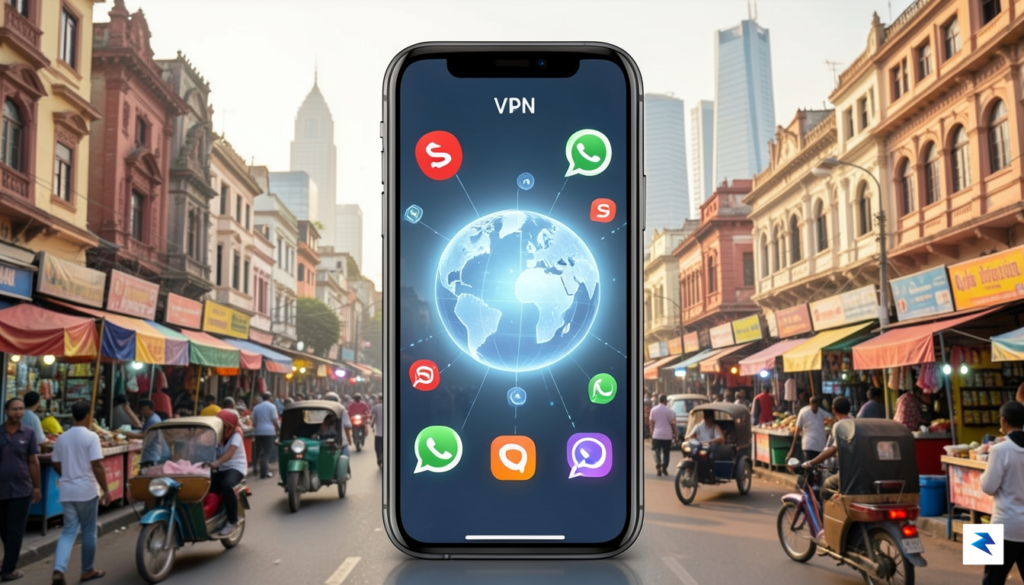
The mere prospect of a regulatory crackdown on Telegram has triggered a seismic shift in how Indian users navigate their digital communication. As rumors of a potential ban circulate, app store analytics have revealed a frantic surge in VPN downloads, as tech-savvy users seek to bypass potential geofencing measures. While a VPN can effectively mask a user’s IP address to simulate a connection from a different region, this workaround is not without its technical caveats. Relying on these tools often introduces latency issues and can degrade the overall performance of real-time messaging, potentially compromising the seamless experience that users expect from a platform like Telegram. Furthermore, many free VPN services operate on opaque business models, often monetizing user metadata in ways that may ultimately negate the very privacy benefits users are trying to preserve.
Parallel to the rise of VPN usage is a mass migration toward alternative messaging platforms, with Signal and WhatsApp seeing the most significant influx of new registrations. Signal, long championed by privacy advocates for its robust end-to-end encryption and open-source protocol, has become the primary destination for those prioritizing security. Meanwhile, Session—a platform that requires no phone number for account creation—is gaining traction among niche communities who demand a higher degree of anonymity. However, this transition is rarely smooth due to the powerful ‘network effect.’ Because Telegram has become the central hub for everything from academic groups and stock market analysis to specialized hobbyist forums, users are finding it incredibly difficult to migrate their entire social and professional ecosystems to a new, less populated platform.
The true challenge of a mass exodus is not merely downloading a new application; it is the friction involved in migrating established communities, archives, and institutional contacts that have lived on Telegram for years.
Moving to these alternative platforms involves inherent risks that many casual users may overlook. While established giants like WhatsApp have clear moderation policies, smaller or “privacy-first” apps often lack the sophisticated infrastructure needed to handle rapid growth or combat malicious content. As the digital landscape fragments, users are inadvertently trading the convenience of Telegram’s massive, feature-rich interface for the uncertainty of less-vetted environments. This migration underscores a critical dilemma: the desire for uninterrupted connectivity versus the necessity of finding a secure, sustainable harbor in an increasingly volatile regulatory climate. As the situation evolves, the Indian digital population remains caught in a tug-of-war between the comfort of their established online homes and the pressing need to secure their digital footprints against the threat of a total blackout.

The recent actions surrounding Telegram in India have ignited a profound debate at the very heart of digital governance, pitting fundamental principles of platform responsibility against the imperative of digital access. At its core, Telegram argues vehemently that blocking an entire platform, which serves millions of legitimate users for various purposes, constitutes a disproportionate and overly broad response to the problem of specific harmful or illegal content. This perspective champions a surgical approach, advocating for targeted takedowns of individual problematic posts or accounts rather than imposing a blanket ban that impacts the digital rights and communication channels of an entire user base.
Conversely, the government’s stance often implies a belief in systemic platform failure, suggesting that when a platform struggles to effectively moderate or remove illicit content at scale, broader measures become necessary. This clash highlights a critical philosophical divide: should digital platforms be held accountable for facilitating specific harmful acts, or for creating an environment where such acts can proliferate unchecked? The implications of state-mandated content filtering are far-reaching, potentially setting a precedent where governments can compel platforms to act as extensions of state censorship, thereby eroding the open and free nature of the internet and raising serious questions about the future of digital autonomy in a connected world.
This case, therefore, extends far beyond Telegram itself, casting a long shadow over how other international tech giants will navigate the vast and strategically important Indian market. Companies like Meta (Facebook, WhatsApp), Google, and X (formerly Twitter) are keenly observing, understanding that the outcome here could dictate the terms of their operation, data policies, and content moderation strategies within India. The precedent could empower the state to exert greater control over the digital ecosystem, forcing tech companies to choose between compliance with increasingly stringent local regulations and upholding their global commitments to free expression and user privacy. This delicate balancing act could fundamentally alter how digital services are provided and accessed in one of the world’s largest internet markets.
Ultimately, this dispute forces a critical examination of the inherent tension between freedom of expression and the paramount concern for digital safety and national security. While governments often invoke the latter to justify content restrictions, critics warn that such expansive powers can be misused to stifle legitimate dissent, curtail journalistic endeavors, and suppress minority voices. The challenge lies in establishing clear, transparent, and legally sound frameworks for defining “harmful content” and determining who holds the authority to make such critical distinctions. Without such clarity, the digital landscape risks becoming a battleground where the vital rights of users to communicate freely are continuously weighed against evolving interpretations of public order and safety, with profound consequences for the future of democratic discourse in the digital age.

As the landscape of digital communication in India undergoes a period of intense scrutiny, the recent regulatory friction serves as a wake-up call for every digital citizen. Relying on a single platform for your entire social and professional life is no longer a sustainable strategy; instead, users should embrace a diversified portfolio of messaging tools. By spreading your presence across different platforms—ranging from encrypted mainstream apps to privacy-focused niche services—you mitigate the risk of being suddenly cut off from your contacts. This proactive approach ensures that your ability to communicate remains intact, even when specific applications face legal headwinds or service disruptions.

The rush to adopt Virtual Private Networks (VPNs) as a workaround is understandable, yet it requires a nuanced understanding of digital hygiene. While VPNs can mask your traffic and bypass regional blocks, they are not a silver bullet for total anonymity. Users must be discerning, opting for reputable services that maintain strict no-logs policies rather than falling for “free” services that may monetize your data. Furthermore, understanding the difference between end-to-end encryption and metadata privacy is crucial. Simply switching an app is not enough; you must also be mindful of the permissions you grant to these applications and the security settings within them, such as enabling two-factor authentication and disappearing messages.
True digital resilience in India will depend less on the specific tools we use and more on our ability to adapt to a shifting regulatory environment without compromising our core privacy standards.
Looking toward the horizon, we are likely to see a gradual migration toward decentralized or sovereign communication protocols that operate outside the traditional “centralized server” model. These emerging technologies offer a glimpse into a future where users own their data and the infrastructure is distributed, making it significantly harder for any single entity—be it a corporation or a government—to censor or shut down communication channels. While these decentralized tools may currently have a steeper learning curve, they represent the next frontier for those who prioritize long-term digital sovereignty over the convenience of Big Tech.
Ultimately, the regulatory trends in India suggest that the era of “set it and forget it” messaging is coming to a close. As lawmakers continue to prioritize national security and data localization, the burden of protecting personal information will increasingly fall on the user. By staying informed, diversifying your digital footprint, and prioritizing security-first habits, you can build a resilient messaging strategy that withstands the volatility of the current digital climate. The future of privacy in India is not about finding the perfect, permanent app, but about cultivating the agility to navigate an ever-evolving ecosystem.
You must be logged in to post a comment.