
Solomaxxing: Why Gen Z is Choosing the Single Life
The Rise of Solomaxxing: Beyond the Stigma For generations, societal scripts have dictated that the ultimate marker of maturity and success is…


The escalating challenge of modern software development, characterized by intricate microservices architectures, distributed systems, and continuous deployment pipelines, has pushed manual debugging to its breaking point. As software environments grow exponentially in scale and complexity, the sheer volume of logs, metrics, and traces generated can overwhelm even the most seasoned engineering teams. This deluge of data often leads to a significant accumulation of technical debt, where valuable resources are disproportionately spent on identifying and fixing problems post-deployment rather than on innovation and new feature development. Consequently, the operational costs associated with maintaining high-quality, resilient software, including extensive human hours for bug triaging and incident response, continue to climb, creating a pressing industry-wide need for more efficient and intelligent paradigms.
This critical bottleneck has catalyzed a profound industry shift, moving away from purely reactive problem-solving towards a proactive, AI-assisted approach to software health and reliability. Instead of merely alerting engineers to an issue after it has occurred and impacted users, the new frontier involves intelligent systems that can predict potential failures, pinpoint root causes with unprecedented accuracy, and even suggest automated resolutions before major user disruption. This paradigm represents a fundamental evolution in observability, transforming it from a diagnostic tool into a predictive and prescriptive engine. It promises not only to drastically reduce downtime and improve system stability but also to free up valuable developer time, allowing teams to focus on strategic initiatives and innovation rather than endless firefighting.
Within this rapidly evolving landscape, companies like DeductiveAI represent a highly strategic acquisition target, particularly for large-scale data platforms such as Elastic. DeductiveAI’s core strength lies in its specialized application of artificial intelligence to autonomously catch, diagnose, and even facilitate the resolution of software bugs. By leveraging advanced machine learning algorithms to analyze vast datasets of system behavior, code changes, and historical incidents, it can identify subtle anomalies and complex interdependencies that might otherwise elude human inspection. This capability is immensely valuable for a company like Elastic, which provides powerful search, observability, and security solutions, as it directly augments their platform’s ability to offer truly automated and intelligent incident management and proactive problem-solving.
Integrating DeductiveAI’s sophisticated technology into Elastic’s existing observability stack significantly enhances the latter’s value proposition and market leadership. It allows Elastic to move beyond simply aggregating and visualizing data, enabling it to provide actionable insights and automated workflows that streamline the entire debugging lifecycle. Imagine a system that not only tells you what went wrong but also why it happened, how to fix it, and even automates the fix itself in some cases. This advanced capability directly addresses the burgeoning demand for solutions that can tame the chaos of modern distributed systems, making Elastic’s offerings indispensable for enterprises striving for operational excellence, faster Mean Time To Resolution (MTTR), and overall developer productivity. The acquisition therefore isn’t just about adding a new feature; it’s about fundamentally transforming how organizations maintain, scale, and secure their critical software infrastructure in an increasingly complex digital world.
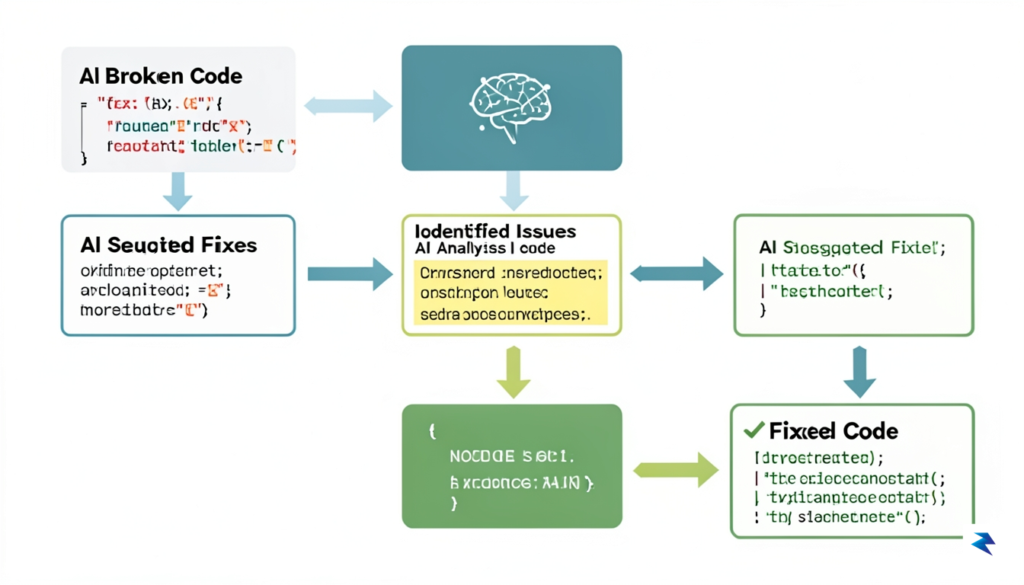
At its core, DeductiveAI leverages advanced machine learning models to transform the traditional software debugging process from a manual, reactive exercise into a proactive, automated workflow. By analyzing vast repositories of code, error logs, and system telemetry, the platform can predict potential failure points before they manifest in production. This diagnostic capability relies on sophisticated pattern recognition that identifies anomalies in execution flows, effectively acting as an always-on observer that understands the intent behind the code. Rather than requiring developers to sift through thousands of lines of stack traces, the system pinpoints the specific logic errors that cause crashes or performance regressions, providing actionable insights that accelerate the root cause analysis phase significantly.
The true power of this technology lies in its seamless integration into existing Continuous Integration and Continuous Deployment (CI/CD) pipelines. By embedding directly into the developer’s workflow, DeductiveAI ensures that every pull request is automatically scrutinized against potential vulnerabilities or functional defects before it is merged. This creates a safety net that allows engineering teams to ship features with confidence, knowing that the platform is actively verifying the integrity of their deployments. Consequently, the burden of maintenance is shifted away from manual quality assurance, freeing up engineers to focus on architectural innovation rather than tedious bug hunting.

This integration directly translates into a dramatic reduction in Mean Time to Repair (MTTR), which is perhaps the most critical metric for modern engineering organizations. When an incident occurs, the platform provides immediate, context-aware suggestions for remediation, allowing teams to resolve issues in minutes rather than hours or days. This efficiency does more than just improve developer productivity; it enhances the overall reliability and stability of the system, minimizing downtime and improving the end-user experience. By closing the loop between error detection and resolution so rapidly, DeductiveAI helps teams maintain a high-velocity delivery cadence without sacrificing the health of their production environments.
The integration of automated diagnostic intelligence marks a fundamental shift in software engineering, where the focus moves from simply writing new code to maintaining a resilient, self-healing ecosystem.
Ultimately, the impact of these capabilities is a cultural shift within development teams. By lowering the cognitive load required to troubleshoot complex distributed systems, DeductiveAI fosters a more creative and experimental environment. Developers are no longer held back by the fear of introducing complex bugs that could take days to debug; instead, they are empowered by a robust diagnostic partner that provides the visibility needed to move faster. As this technology becomes a staple of the development lifecycle, the expectation for system uptime and software quality will naturally rise, setting a new industry standard for what it means to build and maintain high-performing digital services.

Elastic’s strategic move to acquire DeductiveAI signals a profound evolution in its product roadmap, transcending a mere talent acquisition to embed deep intelligence directly into its core observability stack. This integration is poised to redefine how enterprises approach the daunting task of monitoring, troubleshooting, and maintaining complex distributed systems. Rather than simply collecting vast amounts of data, Elastic is positioning itself to transform that data into actionable insights, proactively identifying anomalies and pinpointing root causes with unprecedented speed and accuracy. This foundational shift is critical for any organization grappling with the scale and complexity of modern cloud-native environments, where manual debugging often consumes an inordinate amount of engineering resources.
The immediate and most significant beneficiaries of this integration will be Elastic’s observability and search platforms. Imagine a scenario where, instead of manually sifting through gigabytes of logs, metrics, and traces, an AI-powered system automatically correlates events, identifies patterns indicative of impending failures, and even suggests potential fixes before human intervention is required. This capability drastically reduces Mean Time To Resolution (MTTR) by automating large portions of the diagnostic process, freeing up engineers to focus on innovation rather than fire-fighting. The promise of integrated AI debugging tools is not just about making existing processes faster; it’s about fundamentally changing the reactive nature of incident response into a proactive, predictive posture, thereby enhancing system reliability and operational efficiency across the board.
There’s a natural and powerful synergy between Elastic’s renowned search capabilities and the AI-driven root cause analysis that DeductiveAI brings. Elastic Search has always excelled at making vast quantities of diverse data searchable and discoverable. Now, with an intelligent layer that can interpret and contextualize that data, the platform transcends simple search to become an analytical powerhouse. It’s no longer just about finding specific log lines; it’s about connecting disparate data points across the entire stack—from application logs to infrastructure metrics—to understand the full narrative of an incident. This deep integration allows the platform to not only tell you what happened but also to infer why it happened, drastically accelerating the diagnostic process and ensuring that engineers can move from symptom to solution much more rapidly.
This acquisition significantly strengthens Elastic’s competitive standing in the fiercely contested observability market, placing it in a more formidable position against established players like Datadog and New Relic. While competitors offer robust monitoring solutions, Elastic’s strategy of embedding advanced AI debugging directly into its unified search and observability platform creates a distinct differentiator. Instead of relying on separate tools or bolt-on AI features, Elastic is aiming for a seamless, intelligent experience that leverages its strengths in data ingestion and search at its very core. This integrated approach promises a more comprehensive, proactive, and ultimately more valuable solution for enterprise clients seeking to manage the complexity of their digital operations, potentially setting a new benchmark for intelligent observability.
Ultimately, this strategic move underscores Elastic’s commitment to not just observe but to understand and act upon the vast streams of data generated by modern applications. By weaving AI intelligence into the fabric of its observability stack, Elastic is charting a course towards a future where software debugging is less about frantic investigation and more about automated insight and proactive resolution. This vision positions Elastic as a leader in providing enterprises with the advanced tools necessary to maintain optimal performance, foster innovation, and navigate the ever-evolving landscape of digital transformation with greater confidence and efficiency.
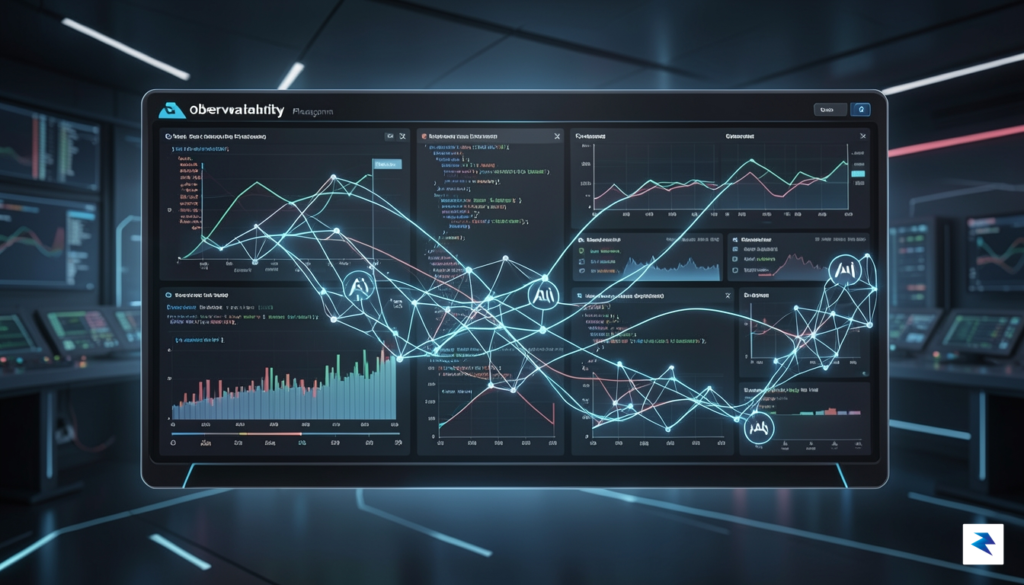

The integration of DeductiveAI into the Elastic ecosystem marks a pivotal shift in how engineering teams will approach observability and system reliability. By embedding advanced AI-driven reasoning capabilities directly into the Elastic stack, developers can expect a transition from traditional, rule-based alerting toward a more sophisticated, autonomous debugging workflow. Instead of manually sifting through mountains of logs and disparate traces to pinpoint the root cause of a latency spike or a service failure, teams will likely gain access to intelligent agents capable of synthesizing vast telemetry datasets to suggest—or even execute—remediations in real time. This evolution effectively lowers the cognitive load on DevOps and SRE teams, allowing them to focus on feature innovation rather than the “firefighting” that often consumes significant portions of their work week.

For enterprises, this acquisition serves as a strong signal that the future of cloud management is inherently proactive. Organizations struggling to maintain uptime amidst the increasing complexity of microservices architectures will find immense value in the predictive capabilities that DeductiveAI brings to the table. By leveraging machine learning models that understand the specific behavioral patterns of their environment, companies can reduce their Mean Time to Resolution (MTTR) significantly. This shift will likely accelerate the adoption of automated infrastructure management, as businesses realize that human-centric observability is no longer scalable in a landscape characterized by petabyte-scale data ingestion and distributed, ephemeral systems.
The move toward autonomous debugging is not just a feature upgrade; it is a fundamental shift toward self-healing cloud environments where data-driven insights act as the central nervous system for enterprise operations.
This strategic buyout is also emblematic of a broader trend within the AI-infrastructure sector, where major platform players are aggressively acquiring specialized startups to consolidate their hold on the “AI-ready” observability market. We are currently witnessing a consolidation phase where general-purpose search and analytics platforms are transforming into intelligent, automated control planes. As these tools become more integrated and capable of independent decision-making, the competitive advantage will increasingly belong to firms that can best operationalize generative AI to provide actionable, high-fidelity insights. Ultimately, this deal underscores the reality that in the modern era of software development, the value lies not just in storing and searching data, but in the platform’s ability to reason over it to solve complex engineering challenges automatically.
You must be logged in to post a comment.