
Barret Zoph Exits OpenAI: What the Latest Departure Means for Enterprise AI
The revolving door at OpenAI: Barret Zoph’s exit The landscape at OpenAI has once again shifted as the company confirms the departure of…

At the very heart of the global technological competition, particularly in the realm of advanced semiconductors, stands ASML, the Dutch company that holds an unrivaled monopoly on the world’s most sophisticated lithography machines. These aren’t just any tools; they are the critical enablers for manufacturing the most advanced microchips, those with features smaller than 7 nanometers, which power everything from cutting-edge smartphones and artificial intelligence systems to high-performance computing and advanced defense technologies. Without ASML’s Extreme Ultraviolet (EUV) lithography systems, producing these next-generation processors is simply not feasible, making their availability—or lack thereof—a pivotal factor in national technological prowess.
EUV lithography itself represents an astonishing feat of engineering, utilizing precisely generated extreme ultraviolet light to print incredibly intricate patterns onto silicon wafers. These machines are massive, often the size of a city bus, and contain hundreds of thousands of components, including mirrors polished to atomic precision and a highly complex vacuum environment where molten tin droplets are zapped by lasers to create the EUV light. The level of precision required is mind-boggling, demanding nanometer-level accuracy to etch circuits that are thinner than a human hair. Consequently, these systems are not merely pieces of equipment; they are highly integrated, sensitive ecosystems that require constant, specialized calibration and maintenance.
This technical indispensability has thrust ASML into the center of geopolitical tensions, particularly concerning export control regimes led by the United States. While ASML is a Dutch company, its supply chain, intellectual property, and even some key components are deeply intertwined with American technology, granting Washington significant leverage. Through multilateral agreements like the Wassenaar Arrangement, which aims to prevent the proliferation of dual-use goods and technologies, and direct diplomatic pressure, the U.S. has effectively influenced the Dutch government to restrict the sale of ASML’s most advanced EUV (and, more recently, some Deep Ultraviolet or DUV) machines to China. The strategic goal is clear: to impede China’s progress in developing indigenous capabilities for advanced chip manufacturing.
The practicalities of acquiring and operating an EUV machine further underscore the formidable barriers to circumvention. These are not “plug-and-play” devices that can be simply shipped and switched on. Each system requires a dedicated team of ASML’s highly specialized engineers for everything from transport and installation in ultra-cleanroom environments to complex software integration, precise calibration, and ongoing maintenance. Without ASML’s direct, sustained oversight and technical support, even if a nation were to somehow acquire an EUV machine, the immense technical challenges involved in getting it operational, maintaining its performance, and troubleshooting its myriad complexities would be virtually insurmountable. This dependency on ASML’s proprietary expertise acts as a crucial layer of control, making covert deployment and independent operation extraordinarily difficult.
Therefore, when allegations arise that ASML’s “top chip tool may be in China,” the context often needs careful examination. While older generation DUV machines have been sold to Chinese entities in the past and remain a point of discussion regarding potential misuse or reverse engineering, the notion of advanced EUV systems operating in China without ASML’s knowledge and involvement is highly improbable due to these profound technical and logistical hurdles. The current focus of restrictions and allegations typically revolves around preventing the sale of these cutting-edge EUV systems in the first place, rather than the clandestine operation of already-delivered ones, highlighting the ongoing, intricate dance between technological control and geopolitical ambition.
At the heart of the dispute lies a fundamental disagreement between the machinery of global intelligence and the operational realities of semiconductor manufacturing. ASML, the Dutch titan of lithography, maintains that the notion of a clandestine installation of its most advanced Extreme Ultraviolet (EUV) tools is a technical impossibility. From the company’s perspective, these machines are not merely “plug-and-play” hardware; they are hyper-complex ecosystems that require continuous, real-time connectivity to ASML’s global data centers. By enforcing rigorous proprietary software locks and requiring a constant stream of diagnostic telemetry, ASML argues that any attempt to operate an unauthorized unit would be instantly detected by their headquarters in Veldhoven.
Furthermore, the sheer physical and logistical scale of an EUV machine serves as its own security measure. These units are effectively multi-story, 180-ton precision instruments that demand a highly specialized infrastructure, including vibration-isolated flooring, massive industrial power grids, and an ultra-pure chemical environment that is difficult to replicate in secret. ASML emphasizes that the installation process requires a small army of specialized engineers who possess unique certifications and access credentials. Because every movement of their components is tracked through a global supply chain, the prospect of smuggling thousands of high-precision parts into a country without triggering a massive logistical trail is, according to the firm, essentially nonsensical.
“The complexity of our machines is our primary defense against unauthorized usage. Without our active maintenance, remote software keys, and specialized supply chain, these tools are little more than multi-million dollar sculptures.”
Despite these assurances, the United States government remains skeptical, driven by the broader geopolitical imperative to contain China’s technological ascent. For Washington, the concern is less about whether ASML is intentionally circumventing bans and more about whether sophisticated state actors could potentially “jailbreak” or cannibalize parts to build an indigenous capability. Intelligence agencies often prioritize worst-case scenarios, viewing corporate software locks as hurdles that can be bypassed over time through reverse engineering. This creates a widening gap: while ASML speaks to the reality of operational control, the US government speaks to the reality of strategic risk. Ultimately, this standoff highlights the friction inherent in trying to regulate a globalized, highly technical supply chain when national security interests and corporate operational realities begin to diverge.
At the heart of the current tension lies a fundamental misunderstanding of ASML’s business model: it is not merely a hardware vendor, but the linchpin of a hyper-integrated global semiconductor ecosystem. To suggest that the company would jeopardize its standing for a single unauthorized transaction ignores the reality of its supply chain dependencies. ASML’s lithography machines are marvels of international cooperation, relying on critical components, optics, and software sourced from a web of suppliers across the United States, Germany, and Japan. If the company were to bypass export controls, it would effectively be severing its own access to the proprietary technologies and intellectual property that make its machines possible in the first place. For ASML, compliance is not merely a bureaucratic preference; it is a structural necessity for survival.
The consequences of a violation would be nothing short of catastrophic, functioning as a company-ending event that would trigger an immediate collapse of its operational capacity. If the U.S. government were to revoke ASML’s export licenses or restrict its access to essential American-made components, the company would be unable to manufacture, service, or upgrade its existing fleet of machines worldwide. Because ASML maintains a deep, ongoing relationship with its clients—often stationing engineers on-site for years to calibrate and refine these multi-million dollar tools—any suspicion of “rogue” behavior would lead to an immediate loss of trust among its most lucrative customers. The short-term revenue gain from a singular illicit sale to a sanctioned entity pales in comparison to the multi-billion dollar losses that would follow from being locked out of the global semiconductor market.
Furthermore, ASML’s business model relies on total transparency and a high-trust environment to function effectively. The company’s value proposition is built on the promise that its clients are receiving the most advanced technology currently available, backed by a global service network that ensures peak performance. Engaging in clandestine activities would destroy the institutional reputation that allows ASML to operate in over a dozen countries simultaneously. Maintaining strict compliance with international sanctions allows the company to act as a stable, predictable partner for firms like Intel, Samsung, and TSMC. By prioritizing adherence to global regulations, ASML protects its long-term viability against the unpredictable volatility of geopolitical maneuvering, ensuring that it remains the sole gatekeeper of the world’s most advanced chip-making capability.
The structural dependency of ASML on global supply chains ensures that compliance is the only rational path for a company that serves as the backbone of modern computing.
Ultimately, the calculus is simple: ASML is far too integrated into the global economy to operate as a rogue actor. The sheer complexity of its machines—which require thousands of specialized parts—means that any attempt to circumvent regulations would be immediately apparent to its partners and suppliers. In an industry where secrecy is the norm, the transparency required to keep the lights on at ASML is its most powerful safeguard against the risks of non-compliance.
At the heart of China’s semiconductor aspirations lies the “lithography bottleneck,” a critical technological hurdle that dictates the nation’s ability to produce the world’s most advanced processors. Extreme Ultraviolet (EUV) lithography machines, manufactured exclusively by the Dutch firm ASML, are the foundational tools required to print the intricate, nanometer-scale circuits found in modern artificial intelligence chips and cutting-edge military hardware. Without access to these machines, China’s domestic manufacturers are largely locked out of the “leading edge” of chip production, forced to rely on older, less efficient methods that cannot keep pace with the power and density requirements of next-generation computing.
To circumvent these restrictions, Chinese foundries have experimented with multi-patterning—a technique that uses older Deep Ultraviolet (DUV) machines to etch a single layer of a chip multiple times. While this method can technically shrink features to smaller nodes, it comes at a staggering cost. The process is significantly more expensive, time-consuming, and prone to manufacturing defects compared to the single-pass exposure allowed by EUV technology. Consequently, even if a facility manages to produce a functional high-end chip via multi-patterning, the yield rates are often too low to make large-scale commercial production economically viable or globally competitive.
The reliance on multi-patterning is a temporary stopgap, not a long-term solution. It creates a “complexity trap” where the effort required to produce a single chip grows exponentially, ultimately stalling the industry’s progress toward true parity with Western counterparts.
The implications of this isolation extend far beyond the commercial smartphone market; they strike at the core of China’s national security and AI development goals. High-performance AI models require massive parallel processing power, which necessitates the most advanced nodes currently available. Should the current export restrictions remain in place, Chinese firms may find themselves permanently trailing in the global AI race, limiting their ability to deploy sophisticated autonomous systems, advanced surveillance, or high-speed military guidance computers. Even if China were to clandestinely acquire a high-end lithography machine, the hardware alone is not a panacea. These systems are incredibly delicate, requiring constant maintenance, specialized software updates, and a workforce of elite engineers to calibrate the optics. Without the deep institutional knowledge and technical support ecosystem that ASML provides, these machines would likely become little more than expensive, non-functional museum pieces within a matter of months.
Ultimately, the quest for self-sufficiency is a race against both physics and time. China is investing billions into domestic alternatives to lithography, but the gap in software, materials science, and precision manufacturing remains a formidable barrier. Until the nation can replicate the entire supply chain of advanced chipmaking—not just the light-source mechanics but the complex ecosystem surrounding it—the absence of EUV technology will remain the single greatest anchor on its technological ambitions.

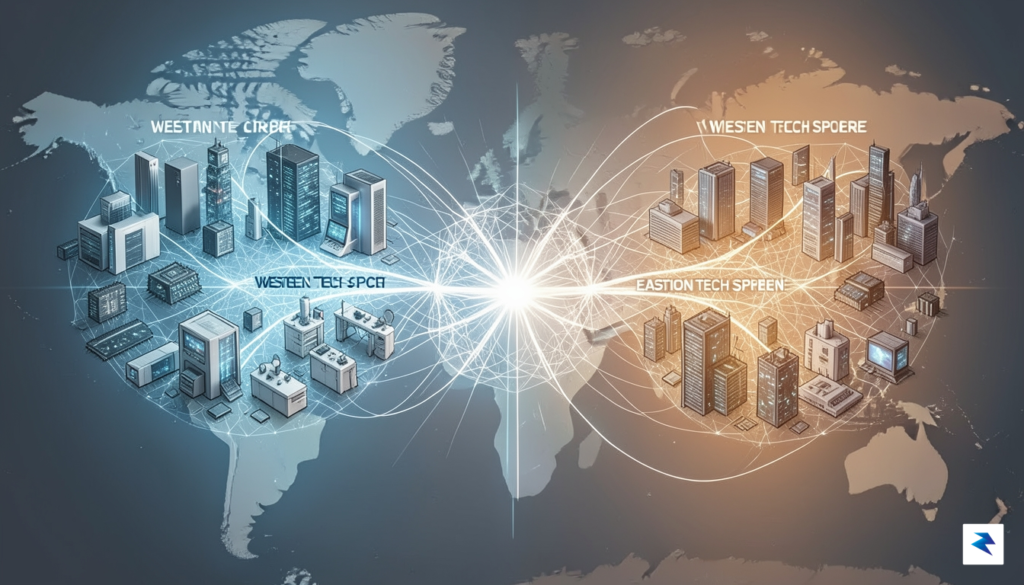
The escalating restrictions on advanced chipmaking tools, often exemplified by the stringent controls placed on critical European manufacturers, represent far more than isolated trade disputes. Instead, these actions are a stark microcosm of a much larger, systemic decoupling underway between the United States and China, fundamentally reshaping the global technology landscape. As technological prowess increasingly becomes the ultimate currency of national power and economic dominance, businesses and nations alike are finding themselves inexorably drawn into an increasingly bifurcated global market, where historical interdependence gives way to strategic autonomy. The implications of this shift are profound, extending beyond individual company bottom lines to impact the very architecture of global innovation and supply chains.
This increasingly bifurcated landscape compels other nations and multinational corporations to make incredibly difficult strategic choices. Countries that have long thrived by balancing economic ties with both superpowers are now facing immense pressure to align their technological ecosystems, or at least their regulatory frameworks, with one side or the other. For companies, this often means re-evaluating their entire global strategy, from where they source components to where they conduct research and development, and even where they sell their products. The economic and political costs of miscalculation are substantial, potentially leading to exclusion from key markets or disruption of vital supply chains, forcing many to consider costly and inefficient parallel operations.
Moreover, the ripple effects extend deeply into the future of global research and development collaboration. For decades, breakthroughs in fields from artificial intelligence to biotechnology have been accelerated by the free flow of ideas, talent, and resources across borders. However, as trust erodes and intellectual property concerns intensify, the era of seamless, cross-border R&D partnerships appears to be waning. Governments are increasingly scrutinizing joint ventures and academic exchanges, fearing unwanted technology transfer, which inevitably stifles the serendipitous innovation that often emerges from diverse, international teams. This fragmentation risks slowing down the pace of global technological advancement, as separate innovation ecosystems duplicate efforts rather than synergizing them.
Consequently, the semiconductor industry, being the foundational bedrock of nearly all modern technology, stands as the most prominent battlefield for this strategic decoupling. We are witnessing the nascent stages of a “dual-track” system emerging, where Western and Chinese standards, supply chains, and even fundamental technological architectures diverge. This means that instead of a singular, globally integrated approach to chip design, manufacturing, and deployment, we may soon see two distinct, largely independent ecosystems. Such a shift would lead to immense inefficiencies, as economies of scale are lost, and companies are forced to develop separate product lines and manufacturing processes to cater to incompatible standards and regulatory environments. The future could see devices and platforms built on fundamentally different underlying technologies, creating significant challenges for interoperability and global market access.
You must be logged in to post a comment.