
The Dawn of Amazon Kuiper: A New Era in Orbital Connectivity

Amazon has officially hit a transformative milestone in the telecommunications sector, successfully placing 396 satellites into low Earth orbit to form the backbone of Project Kuiper. This achievement represents far more than a mere technical success; it marks the definitive transition of the initiative from a long-term research project into a functional, tangible orbital network. By achieving this critical mass of satellites, Amazon has moved beyond the prototype phase, demonstrating that its ambitious infrastructure is capable of sustaining continuous data transmission. This deployment strategy is designed to create a robust web of connectivity that can bridge the digital divide, providing high-speed, low-latency internet to regions that have historically been left behind by traditional terrestrial broadband providers.

The strategic importance of this coverage cannot be overstated, as it establishes the foundation for a global network that operates independently of ground-based fiber or cellular towers. By populating the sky with this specific array of satellites, Amazon is positioning itself to offer service to “initial latitudes,” a key operational threshold that will allow them to begin beta testing with select enterprise and government partners. For these early users, the availability of Kuiper signals means access to reliable connectivity in remote areas where installation costs for physical cables would be otherwise prohibitive. This phased rollout approach is essential, as it allows engineers to fine-tune signal handoffs and network performance before scaling the service to a wider, global consumer audience.
The successful deployment of this initial satellite constellation signifies that Amazon is no longer just a spectator in the space race, but a formidable architect of the future of global telecommunications.
This development sets the stage for a dramatic escalation in the competition against established players like SpaceX’s Starlink. While Starlink currently holds the advantage of a first-mover, Amazon’s entry is backed by the vast logistical prowess of the AWS cloud ecosystem, which could provide unique integration benefits for corporate and industrial clients. The race is no longer just about who can launch the most hardware; it is about who can provide the most stable, scalable, and cost-effective internet service to a world that is increasingly reliant on constant, high-bandwidth connectivity. As the constellation grows, the battle for orbital dominance will likely pivot from hardware deployment to service quality, reliability, and the seamless integration of space-based data into the modern digital economy.
Understanding the Technology: How Kuiper Bridges the Digital Divide
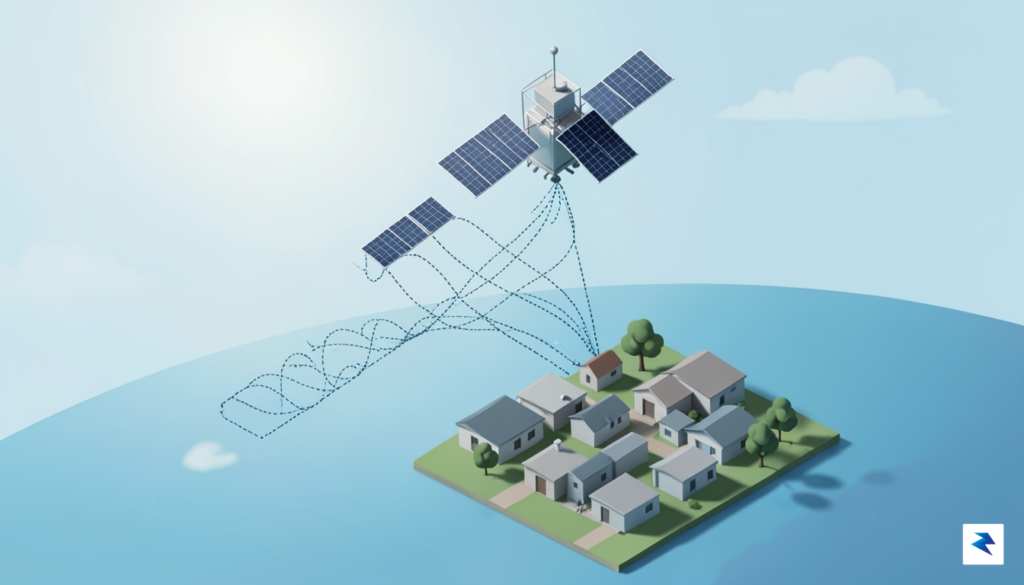

At the core of Project Kuiper lies a sophisticated architecture built on the principles of low-Earth orbit (LEO) satellite deployment. Unlike traditional telecommunications satellites that hover in geostationary orbit—some 22,000 miles above the Earth—Amazon’s constellation operates just a few hundred miles above the surface. This drastically reduced altitude is the primary driver behind the project’s low-latency performance. Because the physical distance signals must travel is shortened so significantly, the round-trip time, or “ping,” is cut from the sluggish delay of half a second typical of older systems to just a few milliseconds. This creates a seamless experience that finally makes real-time applications like video conferencing, online gaming, and remote cloud computing viable for users who have historically been left behind by the digital revolution.
To access this high-speed network, Amazon has developed proprietary hardware designed to be both compact and incredibly powerful. At the heart of the user experience is a customized phased-array antenna, a piece of technology that utilizes advanced electronic steering to track satellites as they zip across the sky at thousands of miles per hour. Because these satellites are constantly moving relative to the user, the antenna must perform rapid, seamless “handoffs” between units to maintain a stable, uninterrupted connection. This hardware is not merely a receiver; it acts as a sophisticated gateway, translating invisible radio-frequency data beams into the high-speed Ethernet or Wi-Fi signals that modern homes, businesses, and mobile platforms require to function effectively.
The mission of Project Kuiper extends far beyond simple consumer convenience; it is fundamentally about democratizing access to the global economy for the billions of people living in regions where fiber-optic cables simply cannot reach.
The impact of this technology is poised to be transformative across several distinct sectors. In rural and mountainous regions where the cost of laying physical cable is often prohibitive, Kuiper offers a scalable alternative that bypasses the need for costly infrastructure projects. Furthermore, the maritime and aviation industries stand to benefit immensely. By providing consistent, high-bandwidth connectivity to vessels in the middle of the ocean or commercial aircraft traversing remote flight paths, Amazon is effectively extending the reach of the modern internet to every corner of the planet. Through this combination of advanced aerospace engineering and consumer-focused hardware, Project Kuiper is systematically dismantling the geographic barriers that have prevented equitable digital access for decades.
Competition and Market Dynamics: Kuiper vs. Starlink

The arrival of Project Kuiper into the commercial satellite internet arena marks the end of SpaceX’s long-standing monopoly, yet displacing Starlink will be a monumental undertaking. SpaceX currently enjoys a massive first-mover advantage, having already deployed thousands of operational satellites and secured a global subscriber base that spans residential, maritime, and aviation sectors. While Starlink’s launch cadence remains industry-leading—bolstered by the rapid reusability of its Falcon 9 fleet—Amazon is betting on a more measured, high-capacity deployment strategy. By leveraging its own heavy-lift launch partnerships, including Blue Origin’s New Glenn rocket and United Launch Alliance’s Vulcan, Amazon aims to build a robust constellation that can match, and perhaps eventually exceed, the raw throughput of its predecessor.
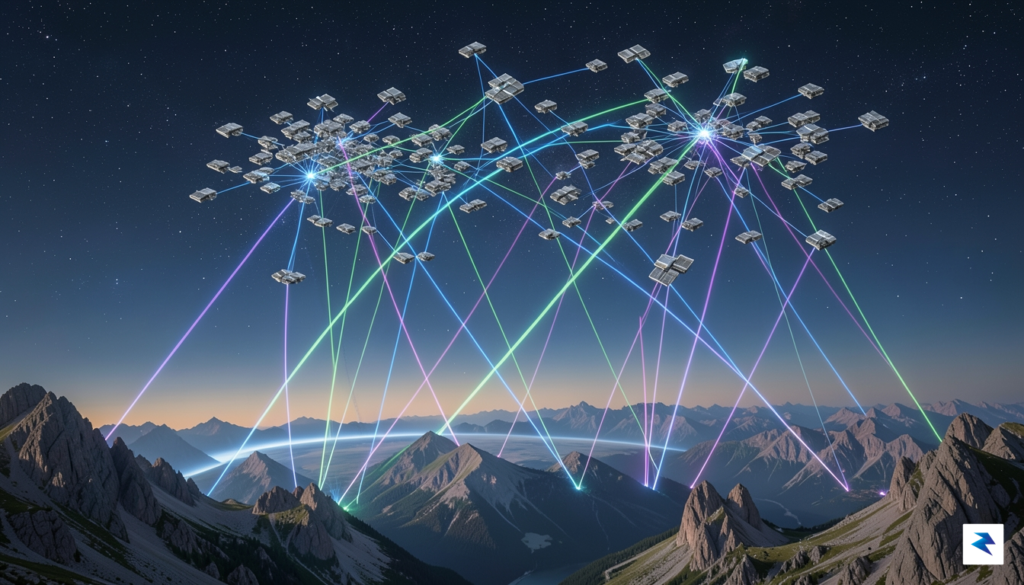
What sets Amazon apart from other competitors is its formidable corporate ecosystem, which provides a level of integration that SpaceX currently lacks. Kuiper is not merely a standalone connectivity play; it is designed to plug directly into the Amazon Web Services (AWS) infrastructure. This allows enterprise clients to process data at the “edge” using AWS hardware, seamlessly transmitting it via Kuiper to the cloud. For multinational corporations and governments, this creates a turnkey solution for remote operations that is inherently more attractive than a simple “dumb pipe” internet connection. Furthermore, Amazon’s mastery of global logistics and its retail footprint could allow for faster consumer hardware distribution, potentially lowering the barrier to entry for residential users who are currently intimidated by the complexities of satellite installation.
The battle between Starlink and Kuiper will not be won solely on satellite counts; it will be determined by who can provide the most seamless integration into the existing digital workflows of modern businesses.
Pricing and market segmentation will likely become the primary theaters of conflict as these two giants vie for dominance. Starlink has already established a premium residential market, but Amazon’s historical strategy of aggressive, margin-conscious pricing could disrupt these expectations. Whether Kuiper focuses on undercutting Starlink’s monthly fees or pivots toward providing superior service-level agreements (SLAs) for the enterprise sector remains a key point of speculation. Regardless, both companies must navigate an increasingly complex web of regulatory hurdles, ranging from spectrum interference disputes to international landing rights. As the orbital environment becomes more crowded, the ability to secure regulatory approval while simultaneously maintaining constellation safety will separate the true market leaders from the peripheral players.
- Strategic Advantage: Deep integration with AWS cloud services for seamless enterprise data management.
- Operational Scale: Utilization of diverse launch partners like Blue Origin to ensure steady constellation expansion.
- Market Differentiation: Leveraging Amazon’s global logistics network to streamline hardware deployment for residential and industrial customers.
The Logistical Challenge: Scaling from Pilot to Global Coverage


Transitioning from a successful prototype phase to a fully operational global constellation is an unprecedented engineering hurdle that tests the limits of modern supply chain management. While Amazon has secured the necessary hardware to begin its initial rollout, moving toward a full-scale deployment requires a relentless, high-velocity manufacturing pipeline. The company must sustain a cadence of production that produces thousands of individual units, each subjected to rigorous quality control standards to ensure they can withstand the harsh, unforgiving environment of low Earth orbit for years on end. This scale of industrial output is not merely a matter of assembly; it requires a perfectly synchronized global supply chain that can source critical components—from radiation-hardened semiconductors to specialized solar array materials—without succumbing to the bottlenecks that frequently plague the aerospace sector.
Furthermore, the physical deployment of these satellites introduces a complex layer of orbital debris management and international regulatory compliance. As the number of active nodes in the Kuiper constellation grows, Amazon must demonstrate sophisticated collision-avoidance capabilities to maintain the safety of the increasingly congested orbital neighborhood. This involves continuous coordination with global space agencies and other private entities to ensure that orbital planes do not intersect in ways that jeopardize existing infrastructure or create dangerous space junk. Such efforts are not just technical requirements; they are fundamental to maintaining the “social license” to operate in space, as international regulators demand stricter transparency and more robust end-of-life de-orbiting plans for every unit launched.
Successfully scaling a satellite network is not just about the launch capacity; it is about maintaining a seamless, high-availability data network that functions as a single, cohesive unit regardless of where the user is located on the planet.
Looking ahead, the timeline for the next phases of deployment remains aggressive, necessitating a transition from developmental validation to mass-market commercial availability. Amazon’s roadmap hinges on the ability to integrate its ground-based network—the gateways and user terminals—with the space segment in real-time. This requires a delicate balance of software-defined networking that can hand off data packets between satellites moving at thousands of miles per hour without dropping the connection. As the constellation reaches its target density, the shift from testing to full commercial service will likely occur in waves, beginning with underserved regions where the infrastructure can provide the highest immediate value. This phased rollout will allow engineers to refine the network’s performance in live, unpredictable environments before attempting to cover the entire globe, ensuring that the service meets the high-performance expectations set by today’s terrestrial fiber-optic standards.
Infrastructure and Future Implications: Beyond Basic Internet

Project Kuiper is far more than a simple alternative for home broadband; it represents a foundational shift in how the global economy processes data. By integrating its satellite constellation directly into the Amazon Web Services (AWS) ecosystem, the company is effectively building a private, high-speed backbone that spans the entire globe. This infrastructure allows enterprise clients to bypass traditional, often unreliable terrestrial networks, instead routing data directly from the edge—be it a remote mining site, a shipping vessel in the middle of the Pacific, or a decentralized research outpost—straight into the cloud. Consequently, companies can perform real-time data analysis and AI-driven processing in places that were previously considered “data dark,” fundamentally changing the operational capabilities of industries that rely on immediate connectivity.
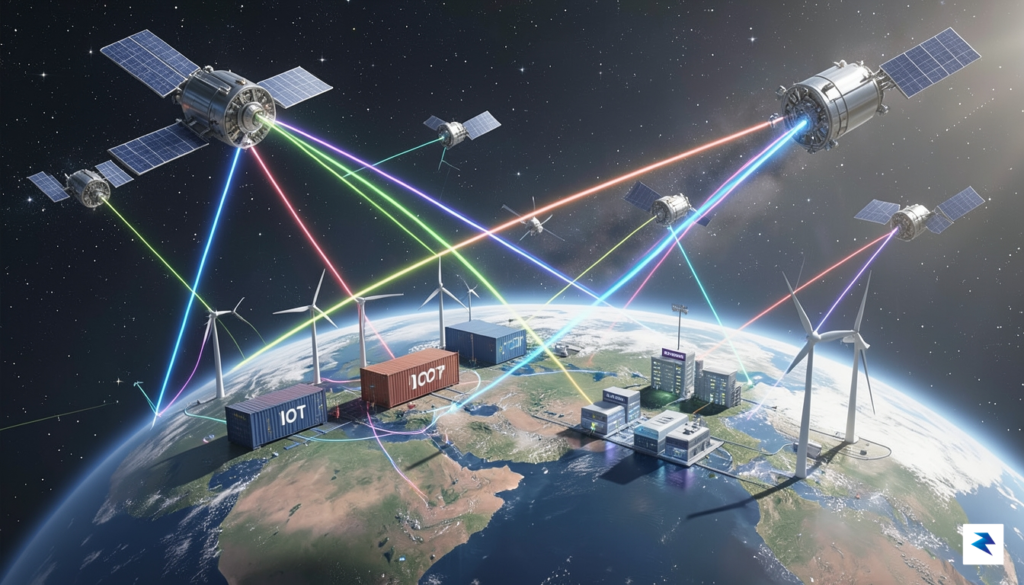
The implications for global supply chains and the Internet of Things (IoT) are particularly profound. As these industries continue to scale, the need for continuous, low-latency monitoring of assets becomes a competitive necessity rather than a luxury. With Kuiper, Amazon can provide a seamless, persistent link for IoT sensors, enabling logistics firms to track temperature-sensitive cargo, monitor engine performance on automated freighters, or manage smart grid infrastructure in developing regions with unprecedented precision. This level of connectivity reduces operational waste, prevents costly mechanical failures, and ensures that supply chains remain resilient even in the face of ground-based disasters or regional infrastructure instability.
The marriage of low-Earth orbit satellite technology and cloud computing will turn the entire planet into a unified, intelligent network, effectively eliminating the barriers of geographic isolation for modern business.
Ultimately, this technological arms race between satellite constellations will produce a significant net benefit for the end user. As Amazon competes directly with established players, the pressure to innovate will accelerate, leading to faster connection speeds, more compact and affordable hardware terminals, and more flexible service models. By pushing the boundaries of what is possible with orbital data relays, Amazon is not merely offering an internet service; it is lowering the barrier to entry for digital transformation on a global scale. As these systems mature, the competition will ensure that the benefits of this “space-based cloud” trickle down, resulting in more reliable service and reduced costs for both massive multinational corporations and remote residential consumers alike.