
The Great AI Measurement Paradox
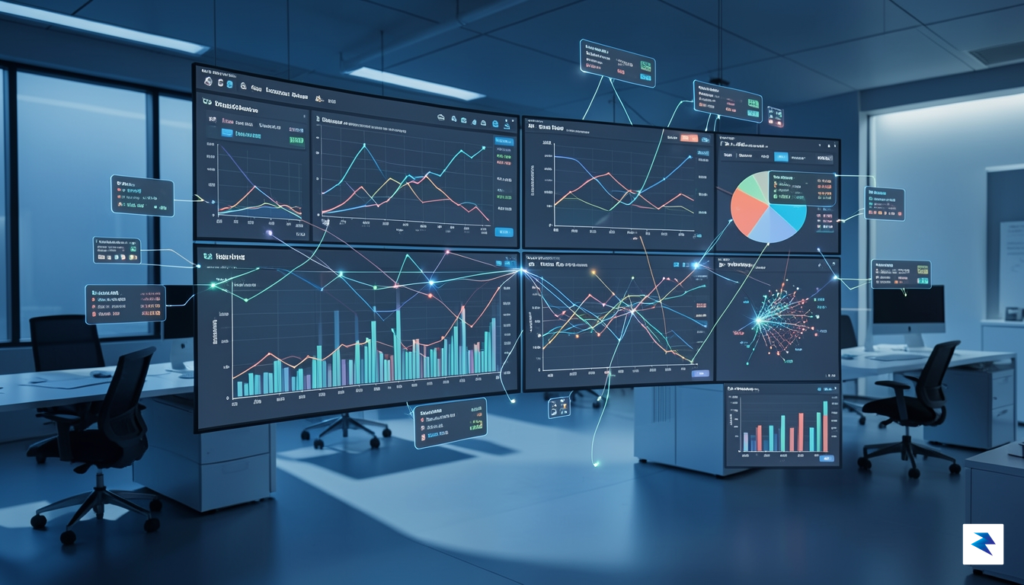
Across industries, from healthcare to finance, artificial intelligence is rapidly becoming an indispensable tool. Its presence is undeniable, woven into the fabric of daily commerce, global supply chains, and personal interaction, from sophisticated algorithms powering autonomous vehicles to the predictive analytics guiding investment decisions. Yet, despite this pervasive adoption and the revolutionary hype surrounding AI’s capabilities, economists and policymakers are grappling with a profound paradox: its actual macroeconomic footprint remains stubbornly elusive. While the anecdotal evidence and industry reports paint a picture of transformative change, the hard data often presents a conflicting, fragmented reality that defies traditional methods of measurement, creating a significant blind spot in our understanding of the modern economy.
This disconnect between rapid technological permeation and slow-moving economic indicators is a source of growing frustration. Businesses are investing heavily in AI solutions, touting gains in efficiency, automation, and innovation. We see AI-driven chatbots handling customer service, machine learning optimizing logistics, and sophisticated software aiding in drug discovery. However, when we look at aggregate statistics like Gross Domestic Product (GDP) growth or overall labor productivity, the anticipated revolutionary surge often fails to materialize. Economic figures continue to rise at a modest pace, prompting questions about whether AI’s benefits are truly materializing, or if our current economic lenses are simply ill-equipped to capture its true value and impact.
This conundrum isn’t entirely new; it echoes a historical challenge known as the “Solow Computer Paradox.” In the late 20th century, Nobel laureate Robert Solow famously quipped, “You can see the computer age everywhere but in the productivity statistics.” Despite the widespread adoption of personal computers and the internet, their initial impact on measured productivity growth was surprisingly muted. Decades later, as AI tools like machine learning, natural language processing, and deep learning permeate business operations, a strikingly similar paradox has emerged, baffling economists and policymakers alike. It seems we are once again in an era where a monumental technological shift is occurring, yet its quantifiable economic dividends remain hidden in plain sight, or perhaps, simply unmeasurable by our current metrics.
A significant part of the challenge lies in AI’s often intangible contributions and the limitations of existing statistical frameworks. Unlike a new factory that clearly adds to capital stock and measurable output, AI frequently enhances existing processes, leading to efficiencies, improved decision-making, or superior customer experiences that are notoriously difficult to quantify. How do you accurately measure the economic value of a slightly more accurate medical diagnosis, a personalized recommendation that prevents customer churn, or the increased leisure time afforded by automation? These improvements, while profoundly impactful on welfare and business outcomes, often don’t translate directly into traditional output metrics, leading to a potential undervaluation of AI’s true economic contribution and making it difficult to discern its full economic footprint.
Furthermore, our current statistical tools were largely designed for an industrial economy, focused on tangible goods and services. They struggle to account for the unique characteristics of digital technologies like AI. For instance, many AI-powered services are either free to the consumer (e.g., advanced search engines, personalized content feeds) or represent quality improvements rather than entirely new products, which are hard to factor into price indexes and GDP calculations. The value of data, a crucial input for AI, is also poorly accounted for in national statistics. Consequently, investment in AI, the re-allocation of existing resources due to AI, and the substantial consumer surplus generated by AI-driven services may be systematically undercounted or misclassified, leaving economists with an incomplete and potentially misleading picture of AI’s profound economic transformation.

Why Traditional Economic Metrics Fail AI

To understand why our current economic dashboard is failing, we must first recognize that our primary tools—GDP and the Consumer Price Index (CPI)—are relics of a tangible, industrial past. These metrics were meticulously engineered to track the movement of physical goods, from steel beams to consumer appliances, where output is easily quantified by units produced and hours logged. However, artificial intelligence operates in a realm of intangible cognitive automation that defies these traditional boundaries. When a software update suddenly allows a company to process data in seconds rather than days, the “output” hasn’t necessarily increased in volume, but its intrinsic value has skyrocketed. Our current models struggle to capture this “quality-adjusted” gain, often treating the resulting efficiency as a ghost in the machine rather than a tangible contribution to economic growth.

The challenge intensifies when we look at how statisticians attempt to track the impact of these tools on the workforce. Traditional survey-based data collection relies on binary classifications: either a worker is employed, or they are not; they are either producing a specific output, or they are idle. AI, however, introduces a nuanced layer of augmentation that completely blurs these lines. When a graphic designer uses a generative tool to iterate through fifty concepts in an hour, are they working faster, or are they working differently? Because workers are increasingly integrating AI as a co-pilot rather than a replacement, their labor hours remain stable while the complexity of their work shifts. Consequently, standard productivity metrics fail to account for the qualitative leap in output, leading to what economists often call a “measurement gap” that masks the true scale of the AI revolution.
The fundamental flaw in our current tracking systems is the attempt to measure the digital equivalent of a thinking process using the yardstick of manual assembly line production.
Furthermore, the deflationary nature of software complicates the CPI, which is designed to track a fixed basket of goods over time. As AI-powered features become embedded into existing software suites, the cost of these services often remains static even as their capabilities grow exponentially. Because the price tag doesn’t change, the data suggests that no “inflation” or “value addition” has occurred, even though the utility provided to the user has fundamentally altered. This discrepancy creates a persistent blind spot in our national accounts. Until we develop new frameworks capable of quantifying intellectual output and algorithmic efficiency, we will continue to look at the economy through a rear-view mirror, missing the profound structural transformation occurring right before our eyes.
The Labor Market Tug-of-War: Job Displacement vs. Augmentation

The contemporary discourse surrounding artificial intelligence often feels like a collision between two incompatible realities: the frantic, headline-grabbing reports of white-collar layoffs and the stubbornly persistent resilience of aggregate labor market data. On one side of the ledger, we see high-profile tech firms trimming headcount, citing AI-driven efficiency gains and the automation of routine cognitive tasks. Conversely, broad economic indicators continue to show historically low unemployment and steady job growth, creating a profound sense of cognitive dissonance for policymakers and workers alike. This divide persists because our current economic metrics were designed for an industrial age of tangible production, not a digital era defined by the rapid, invisible mutation of individual job descriptions.
To understand this tension, we must move beyond the binary fear of “job replacement” and embrace the more nuanced reality of “task-based” evolution. Most professional roles are not monolithic blocks of labor that can be swapped for a software license; rather, they are bundles of discrete tasks, some of which are easily automated while others require quintessentially human empathy, complex judgment, or physical dexterity. AI is currently excelling at the former—summarizing meetings, drafting boilerplate emails, and performing entry-level data analysis—but this often serves to augment the worker’s capacity rather than render them obsolete. When a worker uses an AI tool to complete a task in ten minutes that previously took two hours, they are not necessarily being displaced; they are being repositioned to focus on higher-level strategic work that the machine cannot yet grasp.
The challenge of the AI transition is not that the total number of jobs will disappear, but that the fundamental nature of what it means to be “productive” is undergoing a silent, tectonic shift that our traditional tracking methods are not yet calibrated to measure.

The primary reason for our inability to measure this shift lies in the inherent lag of official government reporting. Bureaucratic employment surveys are excellent at counting bodies in roles, but they are notoriously poor at capturing the “hollowing out” or “filling in” of specific skills within those roles. If a marketing associate spends 40% less time on copywriting because of an LLM and 40% more time on data strategy, the official labor statistics register this as “no change” in the employment status. We are currently navigating a massive, systemic reorganization of labor that is happening in real-time within the software layer of the economy, yet our statistical tools remain anchored to the physical reality of the 20th-century workforce. Until we develop new frameworks for measuring task-level productivity and skill utilization, the true economic impact of artificial intelligence will remain a subject of intense speculation rather than empirical certainty.
Productivity Gains: The Hidden Signal in the Noise

The advent of artificial intelligence undeniably promises a profound transformation across every sector of the global economy. From automating mundane tasks to powering groundbreaking scientific discoveries, AI’s potential to boost efficiency and create new value seems limitless. Yet, despite widespread adoption and significant investment in AI technologies, a curious paradox persists: these promised productivity gains have largely failed to materialize in aggregate economic statistics. This disconnect leaves many observers puzzled, but a deeper dive into the dynamics of technological adoption reveals that we might simply be in a familiar, albeit frustrating, waiting period.
Understanding this apparent discrepancy often requires looking through the lens of the “J-curve” theory of technological adoption. This economic model illustrates a typical pattern where the initial stages of implementing a revolutionary technology are characterized by substantial upfront costs and organizational disruption. Think of it as a temporary dip in performance or profitability – the bottom of the “J” – as businesses invest heavily in new infrastructure, retrain workforces, and fundamentally re-engineer processes. Only after this foundational work is complete, and the technology becomes deeply integrated and optimized, do the significant productivity dividends begin to accrue, leading to the upward, accelerating slope of the “J.”
For AI, we are very much entrenched in this initial, investment-heavy phase of the J-curve. Companies are pouring billions into developing sophisticated AI models, building the necessary computational infrastructure, and acquiring the specialized talent required to deploy these systems effectively. Furthermore, integrating AI isn’t merely about plugging in a new piece of software; it often demands a complete overhaul of existing workflows, data pipelines, and decision-making processes. These efforts are costly, time-consuming, and can initially be disruptive, explaining why the tangible, economy-wide benefits are not yet showing up in the national accounts. The benefits are often localized, experimental, or qualitative at this stage, making them difficult for traditional economic metrics to capture.
To truly grasp the long-term nature of this lag, it’s incredibly illuminating to consider historical parallels, particularly the widespread electrification of factories in the early 20th century. When electric motors first became available, manufacturers initially adopted them simply by replacing their large, central steam engines with a single, equally large electric motor. This “one-to-one” substitution yielded
Strategies for Navigating Economic Uncertainty

In an era where traditional economic indicators like GDP and productivity growth are struggling to capture the transformative influence of artificial intelligence, waiting for a clear, government-issued consensus is a recipe for stagnation. The gap between what we feel happening on the ground and what the data reports is widening, creating a “measurement fog” that paralyzes those who rely exclusively on lagging macro-metrics. To thrive, both business leaders and individual professionals must pivot away from waiting for external validation and instead build their own internal compasses. By shifting focus toward micro-level visibility, you can identify tangible opportunities long before they appear in an official quarterly report.
Building Internal Metrics for AI ROI
For organizations, the key to navigating this uncertainty lies in moving beyond vanity metrics and developing proprietary KPIs that measure actual AI-driven efficiency. Rather than tracking broad productivity, leaders should isolate specific workflows—such as software development cycles, customer support resolution times, or content generation speed—and measure the delta before and after AI integration. By establishing a baseline of “human-only” output, you can create a clear audit trail of value that isn’t dependent on aggregate industry data. These internal benchmarks serve as a localized early-warning system, allowing you to double down on tools that offer a competitive edge while quickly pivoting away from experiments that fail to move the needle on your specific bottom line.
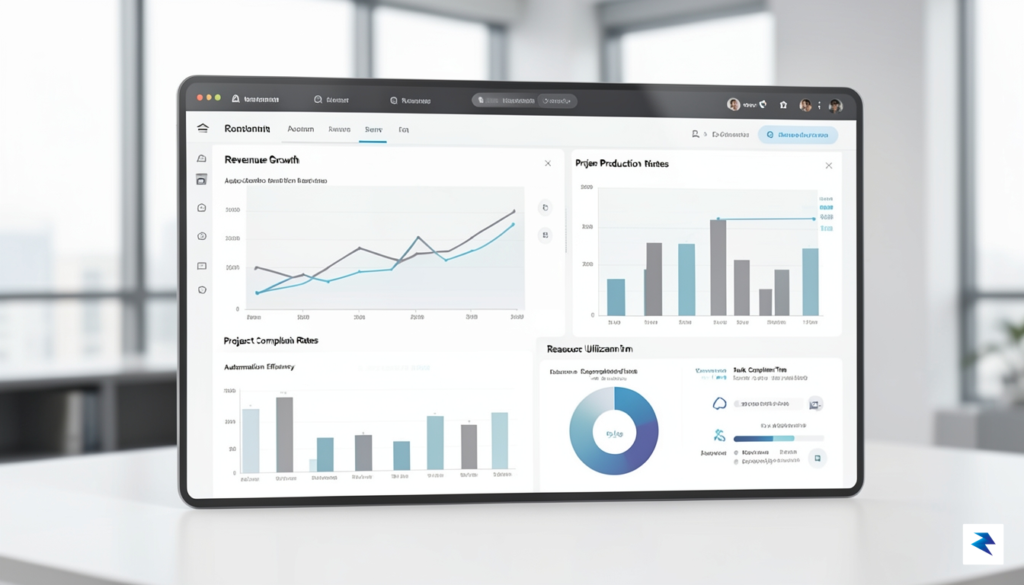
True economic agility in the age of intelligence isn’t found in the latest news cycle; it is found in the granular data you collect within your own walls.
Cultivating Adaptive Skillsets
For the individual worker, the uncertainty of the macro-economy demands a radical shift in how we perceive professional value. If aggregate data cannot reliably tell us which jobs are “safe” or which skills are “obsolete,” then the only logical strategy is to prioritize radical skill diversification and adaptive workflows. Instead of mastering a single, static tool, focus on cultivating “meta-skills”—such as prompt engineering, critical oversight of algorithmic output, and complex problem-solving—that remain valuable regardless of which specific AI platform becomes the industry standard. By remaining fluid and treating your career as an iterative experiment, you transform the ambiguity of the current market from a source of anxiety into a competitive advantage.
- Audit your daily tasks: Identify which parts of your routine are repetitive and seek out AI tools to automate those specific micro-processes.
- Develop “human-in-the-loop” expertise: Position yourself as the necessary editor, strategist, or quality controller for machine-generated work.
- Foster cross-functional literacy: Understand how AI is impacting departments outside your own to spot interdisciplinary opportunities for efficiency.
Ultimately, the goal is to stop looking for a map in a landscape that is being reshaped in real-time. By fostering a culture of internal measurement and personal adaptability, you stop being a passenger to shifting economic tides and start becoming the architect of your own stability. While the broader world struggles to quantify the impact of this technological revolution, those who focus on their own localized, high-resolution data will be the ones who define the new economy.