
Pulpie: The Open-Source Solution for Efficient Web Data Extraction
The Data Quality Crisis in LLM Training In the relentless pursuit of building ever more sophisticated and intelligent AI models, a…


For years, the public conversation surrounding artificial intelligence has been tethered to a singular, dystopian narrative: a future defined by mass displacement and the systematic obsolescence of the human worker. This “AI job killer” myth suggests that every advancement in machine learning is another nail in the coffin for traditional employment, painting a picture of corporate landscapes hollowed out by automated efficiency. However, a rigorous analysis of employment data from 21,000 firms suggests that this fear is not only misplaced but fundamentally misunderstands the economic mechanics of technological adoption. Far from triggering a wave of layoffs, heavy investment in generative AI is actually acting as a powerful engine for organizational growth and headcount expansion.
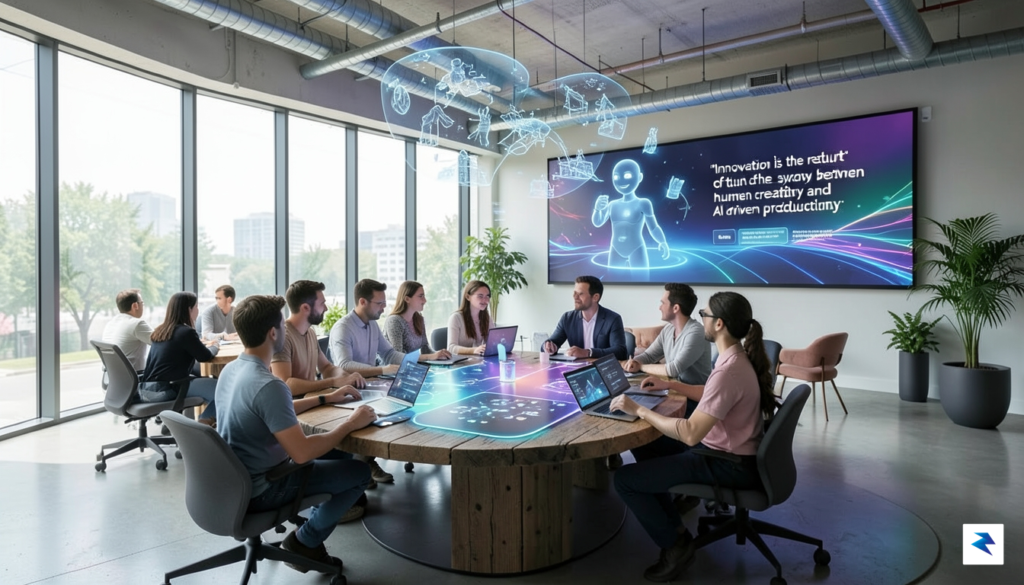
The empirical reality revealed by this data challenges the core assumption that productivity gains must inevitably lead to contraction. In traditional economic models, once a task becomes automated, the labor required to complete it drops, which often leads to concerns about job loss. Yet, in the current landscape, these firms are discovering that AI acts as a “force multiplier” rather than a replacement. By automating the most repetitive, low-value cognitive tasks, AI allows human employees to pivot toward high-level strategy, complex problem-solving, and creative innovation. When a business becomes significantly more efficient, it doesn’t just stop at its current output; it typically reinvests those gains into new products, services, and market expansions, which in turn necessitates the hiring of more talent to manage this increased volume of operations.
The data indicates that when companies aggressively integrate AI, they aren’t shrinking their rosters; they are transforming the nature of the work being performed and, consequently, expanding their human capital to meet new, higher-value demands.
This shift suggests that we are witnessing the evolution of the “employment paradox,” where the tools we feared would replace us are instead creating roles that did not exist even a few years ago. As these 21,000 firms illustrate, the organizations that lead in AI adoption are the ones best positioned to capture market share, which requires a robust, human-led team to oversee the broader strategic vision. Rather than viewing technology as a binary choice between human labor or machine efficiency, these businesses are treating AI as a vital component of a larger human-machine ecosystem. By fostering an environment where technology handles the heavy lifting of data processing, these companies are empowering their employees to focus on the nuanced, interpersonal, and critical-thinking tasks that remain uniquely human, ultimately driving a net increase in hiring across the board.

The prevailing narrative surrounding artificial intelligence often fixates on the specter of automation—the idea that machines will inevitably replace human workers to streamline operations. However, data from over 21,000 firms suggests a far more dynamic reality. Instead of merely shedding labor, successful companies are leveraging AI to fuel a productivity-expansion loop. By lowering the marginal cost of production, AI allows these businesses to provide higher-quality services at more competitive price points. As the barrier to entry for their offerings drops, consumer demand surges, forcing these companies to scale up their operations. This scaling process requires a significant influx of human capital to manage the expanded workload, handle complex client relationships, and oversee the sophisticated systems that now underpin the business.
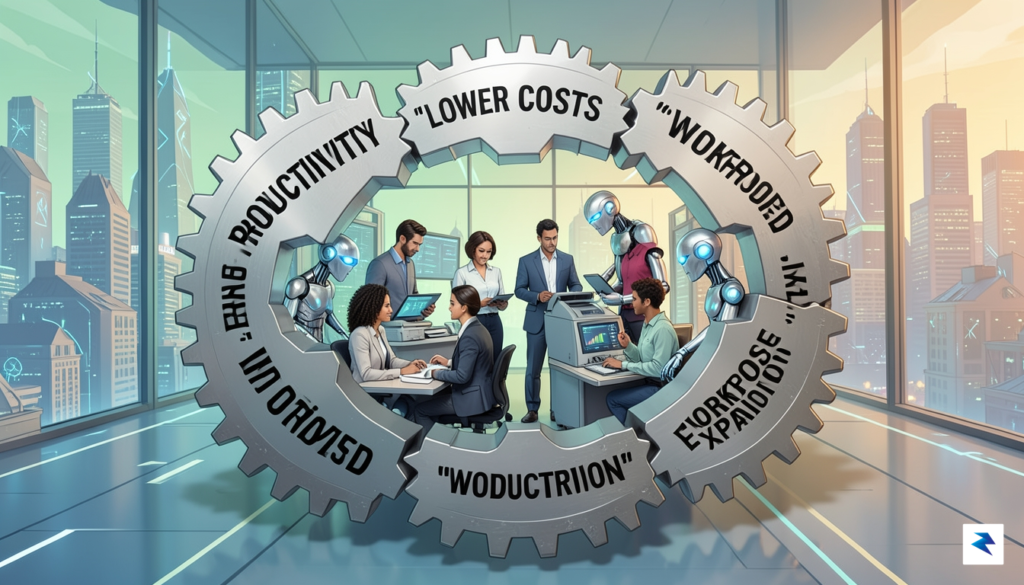
At the heart of this phenomenon is the reality that AI is rarely a direct substitute for human intelligence; rather, it acts as a catalyst for service augmentation. When a firm invests heavily in research and development to integrate machine learning, they are not just automating rote tasks—they are unlocking entirely new service tiers that were previously too expensive or too time-consuming to offer. For instance, a consultancy that uses AI to automate basic data processing does not lay off its analysts. Instead, it uses that newfound capacity to take on ten times the number of clients, necessitating a larger team of experts to synthesize those insights into actionable strategies. The increased R&D spend effectively lowers the cost of complexity, allowing the firm to capture a larger share of the market.
The most successful firms do not view AI as a replacement tool; they view it as a force multiplier that necessitates more, not fewer, skilled human hands to manage the resulting surge in growth.
Furthermore, the false dichotomy between automation and augmentation blinds us to the actual mechanics of modern growth. In practice, the two are inextricably linked. Automation handles the repetitive, low-value tasks, while augmentation provides the creative and empathetic framework that humans are uniquely suited to deliver. As firms spend more on AI, they create a heightened need for roles that didn’t exist a few years ago: AI ethics compliance officers, system integration specialists, and high-level strategy managers. Consequently, the demand for specialized human labor increases in direct proportion to the firm’s investment in technology. By shifting the focus from “doing the same with less” to “doing more with more,” AI becomes the primary driver of a virtuous cycle of job creation and economic expansion.

Contrary to the long-standing fear that artificial intelligence would hollow out the workforce by automating the repetitive tasks typically assigned to junior staff, the latest data suggests a profound shift in organizational strategy. Rather than eliminating entry-level positions, companies that have reached high levels of AI maturity are actually accelerating their recruitment of early-career talent. In these environments, AI acts as a powerful force multiplier, effectively acting as an onboard mentor that allows recent graduates to bypass years of “grunt work” and dive straight into high-value projects. By automating routine administrative or data-heavy tasks, firms are finding that they can hire junior employees with less experience but higher potential, trusting that the technology will provide the necessary scaffolding to bridge the initial skills gap.

This trend represents a fundamental pivot from “task-based” hiring—where a company looks for someone to perform specific, narrow functions—to “capability-based” hiring. When AI handles the mechanics of a workflow, the emphasis shifts toward a candidate’s critical thinking, adaptability, and emotional intelligence. Employers are no longer looking for a junior hire who can spend months learning a legacy software interface; they are seeking adaptable problem-solvers who can leverage AI tools to synthesize information and propose solutions at a much faster cadence. Consequently, the barrier to entry has evolved; it is less about having mastered a specific, archaic technical skill and more about the ability to direct AI agents to achieve complex outcomes.
The most successful firms are discovering that AI doesn’t replace the need for entry-level talent; it compresses the learning curve, turning a novice into a productive contributor in a fraction of the traditional time.
This dynamic has also forced a complete overhaul of internal training and mentorship programs. Because junior employees are now capable of producing high-level work much earlier in their tenure, mentorship is becoming more strategic and less focused on rote instruction. Senior leaders are spending less time reviewing basic data entry and more time guiding junior team members on high-level strategy and ethical decision-making. By integrating AI into the onboarding process, companies are effectively shortening the “time-to-value” for new hires, making it a sound financial investment to bring in more entry-level talent rather than relying solely on expensive, specialized senior experts. This democratization of productivity is not just helping firms scale; it is creating a vibrant, inclusive entry point for the next generation of the workforce, ensuring that the human element of business remains central even as technology accelerates.

The transition toward an AI-integrated enterprise is fundamentally a human capital challenge rather than a purely technological one. CIOs and IT leaders who view artificial intelligence as a mechanism for headcount reduction often find themselves stalled by plummeting morale and a loss of institutional knowledge. Instead, the most successful organizations treat AI spending as a catalyst for capacity expansion. By shifting the perspective from automation-as-replacement to automation-as-augmentation, leaders can empower their teams to tackle significantly more ambitious technical debt and innovation projects that were previously deemed too resource-intensive to pursue.

To successfully integrate these tools into existing workflows, IT leaders must prioritize a human-in-the-loop (HITL) strategy. This approach ensures that while AI handles the heavy lifting of data synthesis, coding boilerplate, or routine diagnostic monitoring, the final decision-making power and creative oversight remain firmly in human hands. This methodology does more than just mitigate risk; it actively boosts long-term employee retention. When staff members are liberated from repetitive, low-value tasks, they gain the bandwidth to engage in high-level problem-solving and architectural design, which are the very skills that keep top talent satisfied and challenged in a competitive labor market.
Aligning AI investments with workforce growth requires a proactive commitment to internal reskilling rather than a reliance on external hiring for every new requirement. IT leaders should map their current team’s competencies against the capabilities of their new AI stack, identifying gaps that can be bridged through targeted training programs. This internal mobility not only preserves the cultural DNA of the firm but also signals to the workforce that the organization views them as assets to be developed alongside their tools.
The most effective IT departments are not those that spend the most on AI, but those that allocate the most budget toward ensuring their people possess the expertise to harness these powerful new engines.
Ultimately, the goal is to create a symbiotic relationship where AI investment provides the leverage necessary for teams to scale their output without compromising quality. As IT leaders set expectations for their departments, they must emphasize that AI serves as a force multiplier for individual output. By fostering an environment where curiosity and technical adaptability are rewarded, organizations can move beyond the fear of displacement and toward a model of collaborative growth, ensuring that the integration of AI leads to a more robust, capable, and agile workforce.

While the data suggests that AI serves as a powerful engine for job creation, the transition to an AI-augmented workplace is not without significant friction. Organizations that treat artificial intelligence merely as a cost-cutting mechanism often face a decline in employee trust, which can derail productivity and stifle the very innovation they aim to foster. The most common pitfall for leadership is the “black box” implementation strategy—deploying new tools without clearly articulating how they interact with existing roles. When staff members view AI as an opaque threat to their livelihood rather than a tool for their empowerment, morale inevitably suffers, and the potential for collective growth is replaced by a climate of anxiety.

To navigate this transition successfully, transparency must be the cornerstone of your operational roadmap. Leaders should proactively communicate the specific objectives of AI adoption, explicitly clarifying that these technologies are designed to handle repetitive, high-volume tasks that distract from the creative and strategic work employees value most. By involving staff in the pilot phases of new tools, organizations can transform apprehension into curiosity. This participatory approach ensures that the human element remains at the center of the workflow, allowing workers to provide feedback on how tools can be refined to better serve their daily needs.
The most successful organizations do not simply install new software; they cultivate an ecosystem where human intuition and machine intelligence reinforce one another to solve complex problems.
Maintaining a stable company culture during rapid technological shifts requires a robust commitment to continuous learning and professional development. Rather than viewing job roles as static, forward-thinking firms are investing in “upskilling pathways” that prepare employees for the new responsibilities made possible by AI. This framework of lifelong learning helps to mitigate the fear of displacement by showing that the company is invested in the long-term career trajectory of its people. By treating AI as a collaborative partner—a digital colleague that handles the grunt work—companies can foster a symbiotic environment where morale is bolstered by the newfound capacity for higher-level work.
Ultimately, the future of work is not about humans versus machines, but rather the unique value created when both operate in tandem. As we look toward the future, the firms that will thrive are those that prioritize psychological safety alongside technological agility. By ensuring that employees feel empowered to guide and govern the AI systems they use, leadership can transform the technological transition from a period of uncertainty into an era of unprecedented productivity and professional fulfillment.
You must be logged in to post a comment.