
DHS Confirms Breach of Homeland Security Information Network: What You Need to Know
Understanding the Scope of the HSIN Breach The Homeland Security Information Network (HSIN) serves as a vital digital backbone for…

The landscape of elite technology and innovation indices has welcomed a new, groundbreaking member, marking a pivotal moment not just for the company itself, but for the entire private aerospace sector. SpaceX, a company synonymous with ambition and disruption, has officially joined the ranks of the Nasdaq 100, an index widely regarded as a barometer for the world’s most innovative and influential non-financial corporations listed on the Nasdaq Stock Market. This inclusion isn’t merely a procedural update; it’s a profound declaration of SpaceX’s maturation from a visionary startup into a foundational pillar of modern technological advancement, signifying an unprecedented level of institutional validation and market recognition for a company that has fundamentally reshaped space exploration.
The Nasdaq 100 comprises a curated selection of the largest and most actively traded companies, predominantly in the hardware, software, telecommunications, retail, and biotechnology industries. Its constituents are often at the forefront of innovation, driving economic growth and setting global trends. For SpaceX to earn its place among these titans—companies like Apple, Microsoft, Amazon, and Google—speaks volumes about its transformative impact and staggering valuation. Its journey from a seemingly audacious private venture, founded with the long-term goal of enabling human life on Mars, to a multi-faceted enterprise that routinely launches astronauts, deploys global satellite internet constellations, and revolutionizes rocket reusability, is nothing short of extraordinary. This inclusion acknowledges not just its current market capitalization, but also its strategic importance and future potential in an ever-evolving technological ecosystem.
SpaceX’s trajectory has been characterized by relentless innovation and a willingness to challenge established norms. From the Falcon 9 and Falcon Heavy rockets that have dramatically reduced launch costs and increased accessibility to space, to the Starship program aimed at deep-space missions and planetary colonization, the company has consistently pushed the boundaries of what was once thought possible. Furthermore, its Starlink satellite internet service is rapidly expanding global connectivity, demonstrating a commercial viability that extends far beyond traditional aerospace contracts. This diverse portfolio of groundbreaking endeavors has cemented its status as a market giant, attracting immense investor interest and ultimately paving its way into one of the most prestigious indices globally.
However, this monumental achievement is not without its complexities, presenting what many market observers describe as a double-edged sword. On one side, the prestige and visibility gained from Nasdaq 100 inclusion are immense. It guarantees a significant influx of capital from passive funds and exchange-traded funds (ETFs) that track the index, thereby increasing liquidity and broadening SpaceX’s investor base. This institutional embrace provides a robust endorsement, often leading to greater analyst coverage and a more stable market presence. It signifies that the company has met stringent criteria for market size, liquidity, and operational transparency, reinforcing investor confidence.
Conversely, joining such an elite index brings an inevitable period of intense scrutiny and potential market adjustment. While the initial surge from index-tracking funds can be beneficial, it also exposes the company to the often-impersonal mechanics of institutional rebalancing. SpaceX’s stock performance will now be more directly influenced by broader index movements and the programmatic buying and selling decisions of large funds, which are driven by index weightings rather than fundamental company performance alone. This increased price sensitivity means that while it gains significant validation, it also becomes more susceptible to market-wide volatility and the ebb and flow of passive investment strategies, demanding a new level of operational resilience and transparency under the public gaze.


When a company achieves the coveted distinction of being added to a prominent market index, such as the Nasdaq 100, it’s often perceived as a significant validation, a badge of honor signaling robust growth and market relevance. While this perception holds some truth, the mechanics behind such an inclusion trigger a profound, yet often misunderstood, market phenomenon known as the ‘inclusion effect.’ At its core, this effect is driven by the vast ecosystem of passive investment vehicles, primarily Exchange Traded Funds (ETFs) and index-tracking mutual funds, which are legally mandated to replicate the composition of their benchmark index.
These passive funds operate on a simple principle: they must mirror the index’s holdings precisely, in the exact proportions specified. Consequently, when an index committee announces a new addition, hundreds, if not thousands, of these funds are compelled to purchase shares of the newly included company. This isn’t discretionary buying based on fundamental analysis or a belief in future growth; it’s a non-negotiable directive. Imagine a giant financial machine that, upon receiving an update, automatically adjusts its gears, funneling billions of dollars into a specific stock regardless of its current valuation or the underlying company’s immediate prospects.
This forced buying creates a unique market dynamic, often leading to what is commonly termed the ‘buy the rumor, sell the news’ phenomenon. Astute investors and algorithmic traders, anticipating the massive inflow of passive capital, frequently bid up the stock’s price in the weeks or even months leading up to the official inclusion date. They are essentially front-running the institutional buying wave, capitalizing on the guaranteed demand. However, once the official inclusion occurs and the passive funds complete their mandated purchases, the artificial demand dissipates, often leading to a plateau or even a correction as early investors take profits.
The impact of this institutional forced buying on a stock’s price discovery mechanism can be substantial, albeit temporary. Unlike active fund managers who base their investment decisions on meticulous research, earnings forecasts, and competitive analysis, passive funds purchase shares simply because they have to. This influx of capital can temporarily inflate a stock’s valuation beyond what its underlying fundamentals might justify, creating a liquidity-driven rally rather than one fueled by genuine growth expectations. The market temporarily loses some of its efficiency in determining a fair price, as supply and demand are artificially skewed.
Ultimately, while index inclusion certainly boosts a company’s visibility and liquidity, the ‘inclusion effect’ is rarely the permanent bullish catalyst many investors hope for. Instead, it frequently marks a critical transition point for the stock. The initial surge, driven by the mechanical buying from passive funds, often gives way to a period where the stock’s performance is dictated less by its inherent growth narrative and more by its newfound exposure to broader market sentiment and liquidity flows. This shift from a valuation based on growth potential to one susceptible to liquidity-induced volatility serves as a powerful historical warning for investors to temper their expectations and tread carefully.
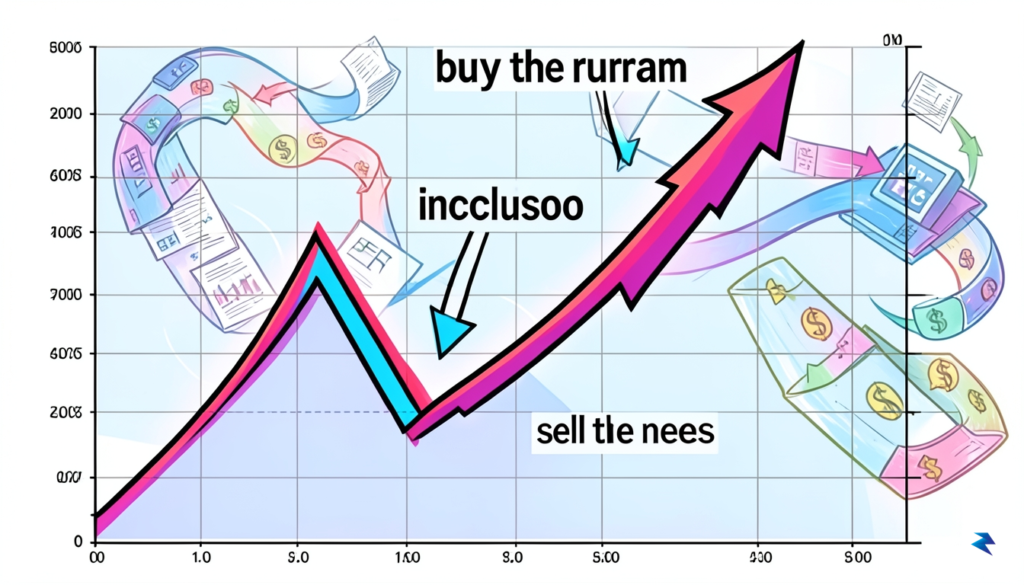
To truly grasp the potential trajectory for SpaceX after its anticipated inclusion in the Nasdaq 100, a critical examination of recent history becomes indispensable. The market has offered clear, cautionary tales in the not-so-distant past, with companies like Palantir Technologies and MicroStrategy experiencing significant turbulence and unexpected price action following their own highly anticipated debuts on this prestigious index. Far from ushering in an era of sustained rallies, index inclusion has, in several prominent cases, actually preceded a phase of intense profit-taking and increased volatility, offering a stark reminder that market mechanics often operate counter-intuitively to popular sentiment.
Palantir Technologies, the data analytics giant known for its work with government agencies and large enterprises, serves as a prime example of this phenomenon. Following its inclusion in the Nasdaq 100, many investors anticipated a fresh wave of institutional buying and a subsequent price surge. However, what transpired was a period marked by considerable fluctuation and a failure to sustain initial upward momentum. While the underlying business fundamentals remained robust, the market reacted with a “sell the news” mentality, as existing shareholders, who had perhaps bought in anticipation of the inclusion, opted to lock in profits once the event materialized. This dynamic demonstrates how even a compelling growth narrative can be temporarily overshadowed by short-term market forces.
Similarly, MicroStrategy, a company primarily known for its enterprise software but increasingly recognized for its substantial Bitcoin holdings, navigated a complex post-inclusion landscape. Its entry into the Nasdaq 100 brought a spotlight that, for a time, did not translate into an immediate or lasting upward trend purely based on the index addition. Instead, its stock continued to be heavily influenced by broader market sentiment towards its core business and, crucially, the volatile price movements of Bitcoin itself. The market’s reaction underscored that while index membership grants visibility and mandates institutional buying, it does not inherently guarantee sustained appreciation, particularly when other significant factors are at play.
The common thread woven through the post-inclusion experiences of both Palantir and MicroStrategy is a discernible pattern of profit-taking and rebalancing by various market participants. Institutional investors, including passive index funds, are indeed obligated to purchase shares of newly added companies, creating an initial surge in demand. However, this demand often meets an equally strong supply from early investors or those who strategically bought shares leading up to the inclusion announcement. These shrewd players often view the index entry as a prime opportunity to exit positions at favorable prices, leading to a temporary equilibrium or even downward pressure as supply absorbs the forced demand, preventing a straightforward, sustained rally
The moment a company like SpaceX transitions from a privately held titan to a publicly traded entity, and then further, becomes a constituent of a benchmark index like the Nasdaq 100, its market dynamics fundamentally transform. It ceases to be solely evaluated on its groundbreaking technological achievements or its long-term vision; it becomes a piece of a much larger, automated financial machine. This shift introduces a complex interplay between the enthusiasm of individual investors and the methodical, often predictable, requirements of institutional money, creating a fascinating but volatile environment for its stock price.
Prior to such a significant inclusion, a distinct phenomenon known as the “speculative overhang” often develops. This refers to the substantial build-up of retail and even some opportunistic institutional interest, as investors anticipate the impending index rebalance. Driven by the allure of a widely recognized brand and the expectation of guaranteed buying by passive funds, many individual investors flock to the stock, pushing its price upward in the weeks and months leading up to the official inclusion date. This pre-positioning is largely fueled by the “fear of missing out” (FOMO) and the belief that the stock is poised for an immediate, sustained surge once the index funds begin their mandated purchases.
The core of this anticipation lies in the understanding of institutional “forced buys.” When a stock enters a major index, passively managed funds—such as index ETFs and mutual funds that track the Nasdaq 100—are *obligated* to purchase shares to accurately reflect the index’s composition. These aren’t discretionary investment decisions based on new fundamental analysis; rather, they are systematic rebalancing requirements that can involve billions of dollars in capital flows. The sheer scale and non-discretionary nature of these buys create a predictable demand wave that many investors, particularly retail, aim to front-run.
However, the market’s efficiency means that sophisticated players, notably hedge funds and algorithmic trading firms, are acutely aware of these impending, predictable capital flows. They often engage in a strategic maneuver known as “front-running” the passive funds. These firms will meticulously accumulate shares of the incoming stock *before* the official rebalance date, knowing full well that the passive funds will eventually have to buy, regardless of the price. This strategic accumulation allows them to profit handsomely by selling their pre-acquired shares into the very institutional buying pressure that retail investors were hoping to ride, effectively capturing a significant portion of the immediate upside.
Consequently, this dynamic often mutes the immediate post-inclusion upside for long-term retail investors who bought into the speculative run-up. By the time the passive index funds execute their forced purchases, much of the anticipated price appreciation has already been absorbed by earlier, more sophisticated buyers. Once the bulk of this systematic buying is complete, the initial surge frequently dissipates, or even reverses, as those early institutional players take their profits. This can leave individual investors holding shares at prices that have already factored in, and perhaps even surpassed, the immediate impact of index inclusion, embodying the classic market adage: “buy the rumor, sell the news.”
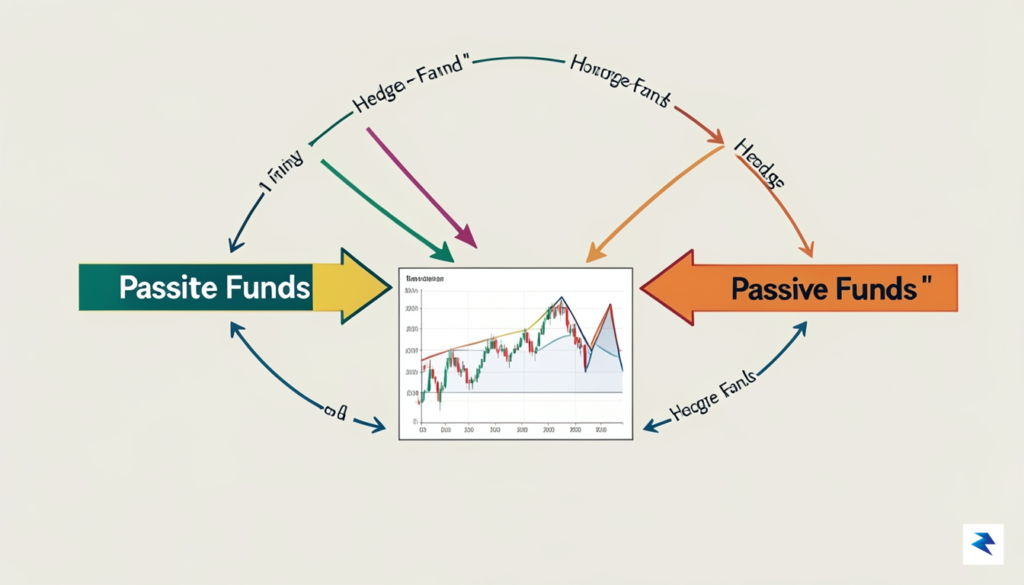

The prospect of SpaceX joining the prestigious Nasdaq 100 index naturally sparks considerable excitement, yet astute investors recognize that such milestones often precede periods of significant market turbulence. For those who harbor a profound belief in the company’s ambitious mission—to make humanity multi-planetary and revolutionize access to space—the immediate post-inclusion volatility should be viewed as transient noise rather than an indicator of fundamental health. History, particularly within the context of major index additions, offers crucial lessons that can help long-term holders navigate these waters by focusing on core value drivers instead of fleeting price movements.
Understanding the typical market dynamics surrounding major index inclusions is paramount for a resilient investment strategy. Firstly, there’s the potential for significant liquidity events. As a stock enters an index like the Nasdaq 100, numerous index-tracking funds and ETFs are compelled to purchase shares, often driving up demand and price in the short term. However, this forced buying can be followed by a rebalancing act, where other institutional investors might adjust their positions, or early speculative buyers might take profits, leading to downward pressure. Secondly, the increased visibility often attracts a surge of retail investor interest, which while beneficial initially, can also lead to periods of “retail exhaustion” once the initial hype fades. Many short-term traders might enter, pushing the price higher, only to exit quickly, contributing to a sharp correction. Finally, such events can trigger a valuation reset, where the market re-evaluates the company’s fundamentals against its newly elevated public profile and potentially inflated price, sometimes leading to a more sober, and often lower, appraisal.
For investors committed to SpaceX’s long-term vision, the key lies in adopting a steadfast framework that prioritizes fundamental progress over market gyrations. Rather than reacting to daily price swings, focus should remain on the tangible advancements that define SpaceX’s unique value proposition. This means holding through periods where the stock might appear overvalued or undervalued relative to its index peers, trusting in the company’s ability to execute on its groundbreaking projects. Such a perspective demands patience and a deep understanding of the underlying business, recognizing that true value creation in pioneering industries often unfolds over decades, not quarters.
Long-term success in visionary companies like SpaceX hinges not on index mechanics, but on the relentless pursuit and achievement of audacious engineering and operational milestones.
Ultimately, the enduring value of SpaceX will be forged not by its inclusion in any market index, but by its ability to consistently achieve its audacious aerospace milestones. These are the true catalysts for long-term appreciation: the successful deployment of Starlink satellites, the expansion of its global broadband service, critical advancements in Starship development and its ambitious test flight campaigns, and significant progress towards sustainable lunar and Martian missions. These are the fundamental drivers that will define SpaceX’s legacy and its financial success, far outweighing the transient impact of index-driven trading. By anchoring investment decisions to these tangible achievements, rather than the ebb and flow of index-related sentiment, investors can better position themselves to ride out the inevitable volatility and participate in the profound long-term growth story that SpaceX aims to write.

You must be logged in to post a comment.