
The Hidden Economics of Distributed Load Balancing

At its core, the implementation of a load-balanced architecture is often sold as a silver bullet for scalability, promising the ability to handle infinite traffic by simply appending more compute nodes to the cluster. However, beneath the surface of this architectural pattern lies a complex web of economic trade-offs that rarely appear on initial infrastructure estimates. While the objective is to distribute work efficiently, the actual cost of maintaining such a system involves a delicate balance between increased throughput and the silent accumulation of latency. Every additional layer of abstraction, every health check, and every routing decision introduces a micro-tax on your system’s performance, creating a scenario where the cost per request does not necessarily decrease as you expand your footprint.
The fallacy of linear scaling is perhaps the most significant economic trap in distributed systems. Many organizations operate under the assumption that doubling the number of nodes will yield a 100% increase in capacity, but the reality is dictated by the law of diminishing returns. As you add nodes to a distributed pool, the overhead required to manage those nodes—specifically the synchronization of state, cross-node communication, and the logic required to route traffic—grows disproportionately. Eventually, the system reaches a point of congestion where the resources consumed by the load balancer itself and the inter-process communication overhead begin to cannibalize the performance gains intended for the end-user. Consequently, the economic efficiency of your infrastructure often peaks well before your peak traffic capacity is reached.
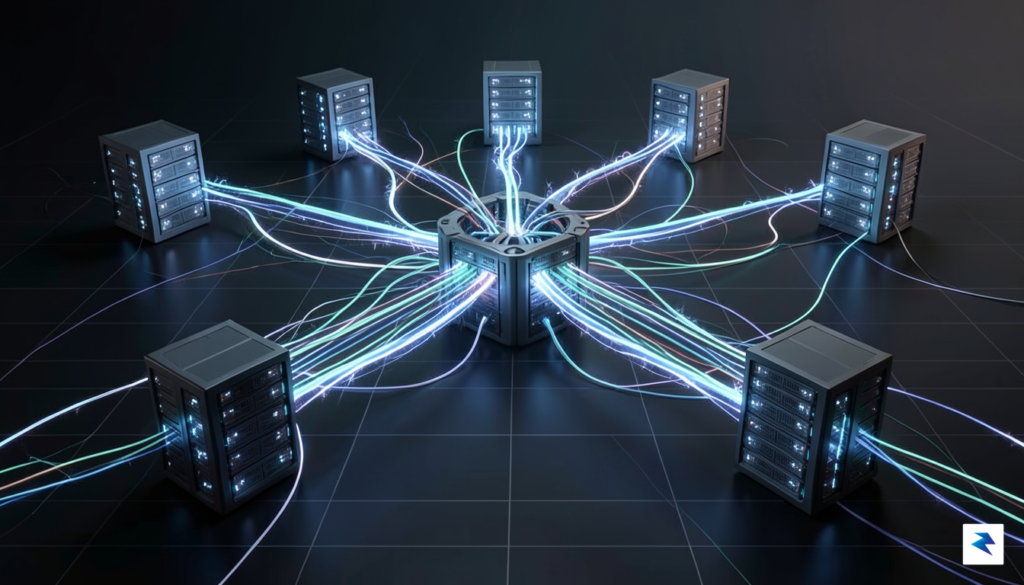
The true economic cost of a distributed system is not found in the price of the server hardware, but in the complexity of the coordination required to keep those servers working in harmony.
Furthermore, the challenge of state management serves as a profound economic hurdle. In a stateless system, load balancing is trivial; however, the moment an application requires session persistence, caching, or distributed database consistency, the complexity—and therefore the maintenance cost—skyrockets. Managing state across multiple geographic regions or even across different racks in a data center requires sophisticated synchronization protocols that consume significant bandwidth and compute cycles. This “state tax” represents a permanent drag on your operational budget, forcing engineering teams to choose between the high cost of maintaining perfect consistency and the reputational cost of potential data discrepancies. Ultimately, what is theoretically a scalable architecture often becomes an economically inefficient beast, requiring constant human intervention and specialized engineering talent to keep it from buckling under its own weight.
How Erlang Architecture Changes the Cost Equation

To truly understand the economic efficiency of modern load-balanced systems, one must look beyond pure hardware throughput and examine the underlying runtime architecture. Traditional enterprise systems built on C++ or Java rely heavily on shared-memory concurrency, where multiple threads access the same memory pool. This approach necessitates complex locking mechanisms, mutexes, and semaphores to prevent data corruption. From a financial perspective, this introduces a hidden tax: as traffic scales, CPU cycles are increasingly wasted on thread synchronization and lock contention rather than processing actual user requests. In contrast, the Erlang virtual machine (BEAM) employs the actor model, where every concurrent task runs inside an isolated, lightweight process with its own private heap. Because these processes never share state and communicate strictly via asynchronous message passing, the system eliminates lock contention entirely, allowing hardware utilization to scale linearly with traffic without requiring expensive, over-provisioned multi-core processors.
This architectural isolation does more than just optimize CPU cycles; it radically slashes the long-term operational costs associated with software maintenance and system downtime. In a typical multi-threaded application, an unhandled exception or a memory leak in a single thread can easily corrupt shared memory, destabilizing the entire application server and triggering cascading failures across the load balancer. Resolving these non-deterministic concurrency bugs often requires hundreds of engineering hours, specialized debugging tools, and emergency patches, all while the business suffers costly service outages. Erlang’s “let it crash” philosophy turns this paradigm on its head by confining failures to individual, low-overhead processes. If a process encounters an error, it terminates immediately, and its supervisor tree automatically spawns a fresh replacement in microseconds, ensuring that a single localized failure never escalates into a system-wide outage.
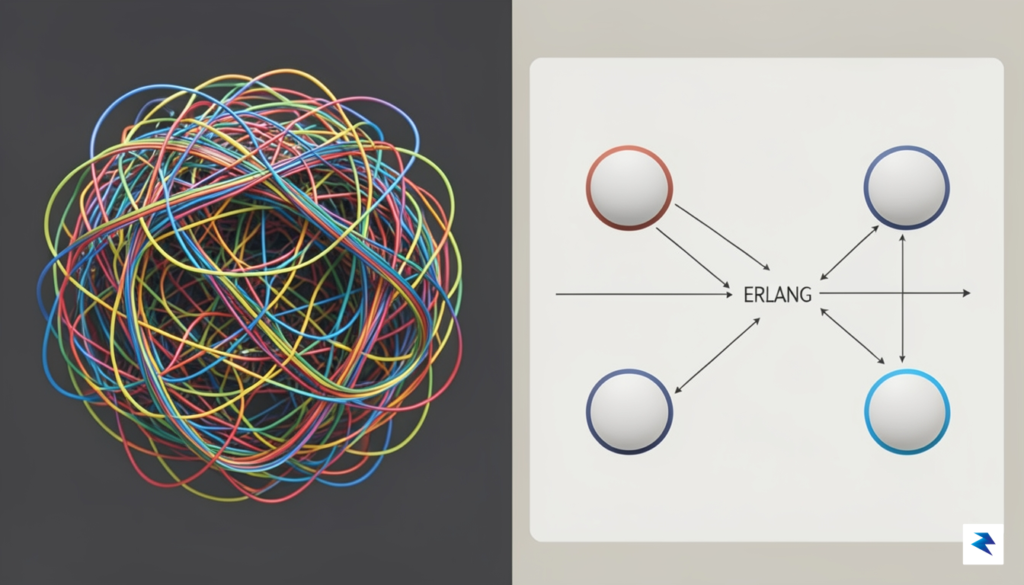
When translated to high-concurrency applications like real-time messaging, IoT gateways, or financial transaction routers, the financial viability of the BEAM model becomes undeniable. Because an Erlang process requires only a fraction of the memory footprint of an operating system thread—typically just a few kilobytes compared to the megabytes required by Java or C++ threads—a single virtual machine can comfortably host millions of concurrent connections. This extreme resource efficiency directly translates to lower cloud infrastructure bills, as organizations can consolidate their workloads onto fewer, smaller server instances while maintaining superior fault tolerance. Ultimately, by decoupling processes and eliminating the operational friction of shared-state concurrency, the BEAM model shifts the economic equation from a constant cycle of hardware over-provisioning and emergency fire-fighting to a predictable, highly optimized
Beyond Throughput: The True Value of Fault Tolerance

In the relentless pursuit of speed and efficiency, it’s easy to fixate on raw throughput – how many requests a system can handle per second, or how quickly data can be processed. However, for modern distributed systems, particularly those underpinning critical business operations, a far more valuable metric often overshadows sheer velocity: availability. In our interconnected digital economy, system uptime isn’t merely a technical achievement; it’s a fundamental business asset, a currency that directly translates into revenue, customer trust, and brand reputation. When systems falter, the costs can be catastrophic, extending far beyond immediate lost sales to encompass damaged customer loyalty, hefty service level agreement (SLA) penalties, and even regulatory fines.
The financial ramifications of downtime are staggering. A major outage can halt e-commerce transactions, disrupt supply chains, or cripple essential communication platforms, leading to millions of dollars in losses per hour for large enterprises. Consider, for instance, a global online retailer experiencing a service interruption during a peak shopping season; the revenue drain is immediate and measurable. Beyond direct financial hits, there’s the insidious erosion of user confidence. Customers expect seamless, always-on service, and repeated failures can drive them to competitors, a long-term cost that’s much harder to quantify but equally damaging. This stark reality forces a shift in perspective: instead of solely optimizing for how fast a system can run, we must prioritize how resilient it is when things inevitably go wrong.
Embracing the ‘Let It Crash’ Philosophy
This critical need for resilience has paved the way for innovative architectural philosophies, perhaps none more counter-intuitive yet effective than the “let it crash” paradigm, famously championed by the Erlang programming language and its OTP (Open Telecom Platform) framework. Traditional software development often strives to prevent every conceivable error at compile time or through exhaustive runtime checks. While admirable, this approach can lead to overly complex, brittle systems that struggle to recover from unforeseen circumstances. The ‘let it crash’ philosophy, in contrast, acknowledges that failures are an unavoidable fact of life in complex distributed environments. Instead of futilely attempting to prevent every bug or hardware fault, it focuses on building systems that can gracefully detect, isolate, and recover from failures almost instantly, without manual intervention.
This isn’t an endorsement of sloppy coding; rather, it’s a pragmatic approach to fault tolerance. When a component crashes, the system doesn’t grind to a halt. Instead, the faulty part is allowed to fail, and a higher-level supervisor automatically restarts it in a clean state, potentially isolating the problem and preventing it from cascading throughout the entire system. This rapid, automated recovery mechanism drastically reduces the mean time to recovery (MTTR), which is a critical factor in minimizing the economic impact of outages. It transforms potential system-wide catastrophes into localized, transient hiccups that are often imperceptible to the end-user.
Automated Resilience vs. Manual Intervention
The economic benefits of this automated recovery model are profound when compared to the operational expense of manual incident response. Imagine the traditional scenario: an alert fires, an on-call engineer is paged, they scramble to diagnose the issue, connect to servers, analyze logs, and manually attempt a fix or restart. This process is not only stressful and prone to human error but also incredibly time-consuming and expensive. Every minute an engineer spends firefighting is a minute not spent on innovation, feature development, or proactive system improvements. Moreover, the longer the outage, the higher the revenue loss.
Fault-tolerant designs, particularly those employing “supervision trees” like in Erlang/OTP, flip this script. These hierarchical structures define how processes should be managed and restarted upon failure. If a worker process fails, its parent supervisor automatically detects it and takes corrective action – typically restarting the process. If the supervisor itself fails, its own parent supervisor can restart it, and so on, up to the root of the application. This self-healing capability means that many common failures are resolved automatically within milliseconds or seconds, without human involvement. This dramatically reduces operational overhead, minimizes downtime costs, and allows engineering teams to focus on strategic initiatives rather than reactive maintenance, thus providing a clear return on investment (ROI) in terms of both cost savings and increased productivity.
Ultimately, investing in high-availability architectures and fault-tolerant design patterns serves as an indispensable insurance policy for modern businesses. The upfront effort and expertise required to architect systems that can ‘let it crash’ and self-heal are quickly amortized by the prevention of catastrophic revenue losses, the preservation of customer trust, and the optimization of engineering resources. In an era where even a few minutes of downtime can translate into millions, the true economic value of a system isn’t just in its ability to handle immense traffic, but in its unwavering ability to remain available and reliable, come what may.
Strategic Implementation of Load Balancing in Modern Systems
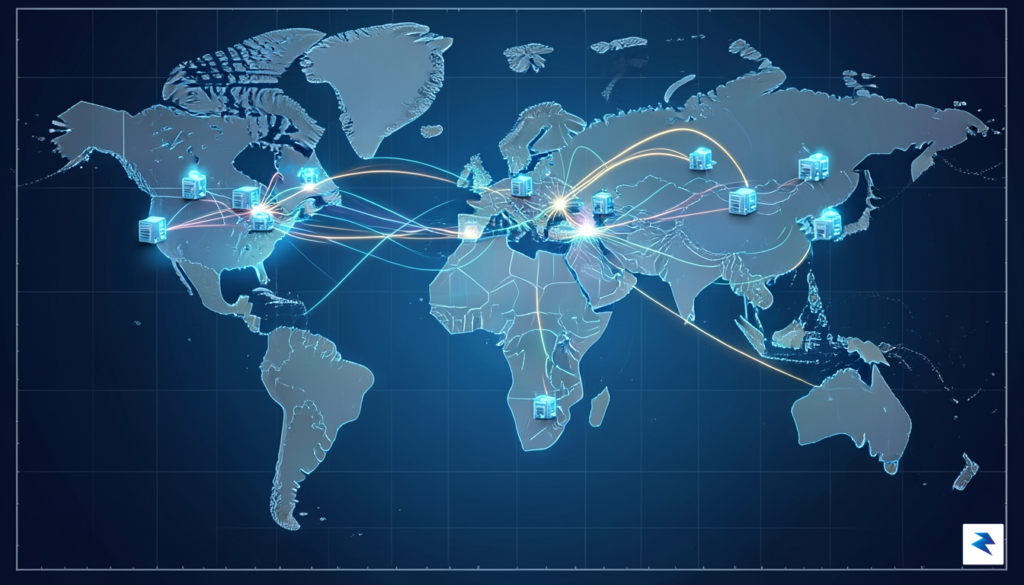
The decision between vertical and horizontal scaling is often framed as a technical choice, but it is fundamentally a fiscal one. Vertical scaling—upgrading the capacity of a single machine—offers simplicity and lower operational overhead, making it an ideal starting point for early-stage products where developer velocity is the primary currency. However, as systems mature, the diminishing returns of hardware upgrades often collide with the rigid constraints of a single point of failure. Horizontal scaling, while more complex to orchestrate, democratizes resource allocation by spreading the load across a fleet of smaller, interchangeable units. By choosing a distributed approach, organizations can align their infrastructure costs more granularly with actual traffic patterns, effectively paying for capacity only when it serves a paying user.

When the architectural complexity of horizontal scaling becomes necessary, engineering teams must evaluate whether standard runtimes are sufficient or if specialized environments, such as the BEAM (Erlang VM), are warranted. Standard runtimes often struggle with the “noisy neighbor” effect or unpredictable garbage collection pauses that can devastate user experience under heavy load. In contrast, runtimes designed for massive concurrency treat isolation as a first-class citizen, allowing developers to build fault-tolerant systems that recover gracefully without manual intervention. The business value here is clear: choosing the right runtime reduces the long-term cost of incident response and prevents the catastrophic downtime that erodes customer trust.
True architectural efficiency is found at the intersection of developer productivity and infrastructure utilization; over-engineering for performance that the business does not yet need is a tax on innovation.
Ultimately, the metrics used to judge a load-balanced system must move beyond vanity stats like CPU utilization or raw request throughput. While these numbers are useful for capacity planning, they rarely tell the full story of the user journey or the health of the business. Instead, teams should focus on value-based telemetry, such as the relationship between latency and conversion rates or the correlation between error spikes and customer support ticket volume. By prioritizing metrics that reflect how infrastructure impacts the bottom line, engineers can transform load balancing from a technical utility into a strategic tool that maximizes the return on every dollar spent on cloud resources.
- Analyze Cost-to-Complexity Ratios: Evaluate if the maintenance burden of a distributed system outweighs the immediate revenue gains.
- Prioritize Fault Tolerance: Ensure that the chosen architecture prioritizes system uptime over absolute raw speed.
- Align Monitoring with Business KPIs: Shift focus from technical performance metrics to user-centric outcomes.
Balancing Performance Against Operational Complexity

The pursuit of hyper-optimized load balancing often leads engineering teams into a subtle but dangerous “complexity trap.” When we obsess over squeezing the final percentage of throughput from a distributed system, we frequently introduce layers of abstraction, sophisticated service meshes, and intricate routing logic that look brilliant on a whiteboard. However, these architectural choices carry a hidden tax: they demand constant vigilance, specialized knowledge, and a ballooning amount of cognitive load for the engineers tasked with keeping them operational. A system that is mathematically balanced but operationally brittle is not an asset; it is a liability that eventually consumes the very resources it was designed to optimize.
We must recognize that every technical decision has an inevitable operational tail. When an architecture becomes so convoluted that only a handful of senior engineers understand its nuances, we create a single point of failure that is human, rather than technical. This reality introduces significant hidden economic costs, such as extended mean-time-to-recovery (MTTR) during outages, the high expense of onboarding new developers to a labyrinthine codebase, and the inevitable burnout that arises when a team is perpetually tethered to an overly fragile system. True economic efficiency in engineering is found not just in server utilization, but in the sustainable velocity of the people managing the infrastructure.

The most scalable component in any distributed system is not the software itself, but the human capacity to understand, maintain, and evolve it over the long term.
Moving forward, we must pivot toward a philosophy of intentional design that prioritizes simplicity as a first-class metric. This does not mean sacrificing performance; rather, it means choosing the simplest possible mechanism that meets the business requirement, recognizing that simplicity is the most effective hedge against operational entropy. By intentionally limiting the complexity of our load-balanced architectures, we ensure that the technology serves the business goals instead of becoming a permanent, high-maintenance burden. Ultimately, the most successful engineering organizations are those that treat simplicity as a strategic advantage, ensuring their systems are not only high-performing but also manageable, predictable, and resilient in the hands of the people who build them every day.