Understanding the July 1 Federal Student Loan Interest Rate Adjustment

Each year, the federal government conducts a precise, systematic reset of interest rates for new student loans, a process tied directly to the broader performance of the national economy. These rates are not arbitrary; rather, they are determined by the high-yield auctions of 10-year Treasury notes held each May. Because the economic landscape has been defined by persistent inflation and shifts in monetary policy, the government’s formula results in a predictable upward trend for the upcoming academic cycle. When the clock strikes midnight on July 1, the new rates take effect, meaning that any federal student loan disbursed on or after that date will carry a higher interest rate than those issued during the previous academic year.
It is important for students and their families to recognize that this reset applies exclusively to new federal loans originated for the upcoming school year. If you are currently repaying federal student loans with fixed interest rates, or if you have already secured loans for past semesters, these changes will not impact your existing debt obligations. Furthermore, this annual adjustment is specific to the federal student loan program and does not apply to private student loans, which operate under their own independent terms and variable market conditions. However, the ripple effect of these higher federal rates often sets a new baseline for the cost of borrowing across the entire higher education sector, signaling that education financing is becoming more expensive for new entrants.
The financial implications of this adjustment can be substantial when calculated over the standard ten-year repayment term of a federal loan. Even a seemingly minor percentage increase in the interest rate can lead to hundreds, if not thousands, of dollars in additional interest paid over the life of a loan. This shift serves as a stark reminder that the price of college is influenced by far more than just tuition, room, and board; it is inextricably linked to the macroeconomic environment. As borrowing costs climb, students must be increasingly strategic in their financial planning, carefully evaluating the necessity of each dollar borrowed and exploring all available grant and scholarship opportunities to mitigate the impact of these rising rates.
Key Takeaway: The July 1 interest rate reset is a structural update linked to Treasury yields. While it does not change the terms of existing debt, it necessitates a more cautious approach for incoming students who must now account for higher long-term borrowing costs in their educational budget.
Ultimately, navigating these changes requires a proactive mindset. By understanding that these rates are a byproduct of national economic indicators, students can better prepare for their financial future rather than being caught off guard by their initial loan disclosure statements. Whether you are an undergraduate dependent or a graduate student pursuing an advanced degree, staying informed about these annual shifts is a critical component of responsible college planning in an era of fluctuating interest rates.
Why Rates Are Rising: The Link to 10-Year Treasury Notes
Many borrowers often assume that federal student loan interest rates are set arbitrarily by government officials, but the reality is tied to a precise, data-driven legislative mechanism. Since 2013, Congress has utilized a formula that anchors student loan interest rates to the financial markets, specifically the high yield of the 10-year U.S. Treasury note. This connection ensures that federal lending costs remain somewhat aligned with the broader economic environment. By tethering education debt to the performance of government bonds, the federal government creates a predictable—albeit fluctuating—standard that dictates how much interest families will pay on their loans for the upcoming academic year.
The specific benchmark used for these calculations is the high yield of the 10-year Treasury note established at the final auction held each May. This auction serves as a critical snapshot of investor sentiment and inflation expectations within the national economy. When investors demand higher yields to hold government debt, it signals that the market views interest rates as likely to remain elevated or rise further. Because the government views these treasury yields as a proxy for the cost of borrowing money, the formula dictates that student loan rates must move in tandem with these market shifts. Consequently, when the May auction results in a higher yield compared to the previous year, the statutory formula automatically triggers a rate hike for new federal student loans effective July 1.
For families planning their educational finances, this link between the Treasury market and student debt can feel abstract until it hits their bottom line. When general economic conditions drive up bond yields, the cost of financing a college degree becomes more expensive, which effectively increases the total cost of attendance. This is not merely a technical adjustment; it represents a direct transfer of macroeconomic trends into the personal balance sheets of students and their parents. As Treasury yields climb, the interest rates applied to Subsidized and Unsubsidized Direct Loans rise accordingly, creating a compounding effect on the total repayment amount over the life of the loan.
The reliance on the 10-year Treasury note serves as a benchmark for the federal government to ensure that student loan interest rates reflect the prevailing cost of government borrowing, linking the classroom to the capital markets.
Understanding this relationship is essential for anyone navigating the complexities of higher education funding. While borrowers cannot control the performance of Treasury notes or the outcomes of the May auction, being aware of these economic drivers allows families to better anticipate potential changes in their monthly obligations. By keeping a close watch on these financial indicators, students can make more informed decisions about how much to borrow and how to structure their repayment strategies in an evolving economic landscape.
Impact Analysis: What This Means for Your Monthly Repayment
While a fractional increase in interest rates might appear negligible when viewed in isolation, the mathematical reality of long-term borrowing reveals a much more taxing narrative. When you consider a standard federal student loan balance of $30,000—a common figure for many undergraduate borrowers—even a slight bump in the interest rate can alter the trajectory of your personal finances for an entire decade. Because interest compounds on the remaining principal balance every month, these small percentage shifts do not merely add a few dollars to your bill; they fundamentally change the ratio of your payment that goes toward debt reduction versus the portion that simply covers the cost of borrowing.
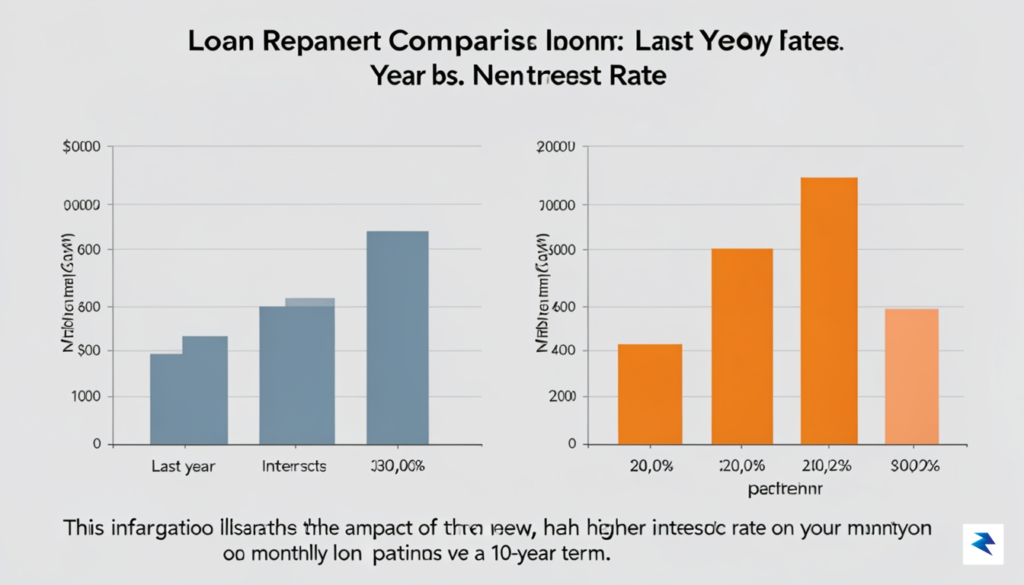
To put this into concrete terms, consider the difference between a loan issued at last year’s rate compared to the incoming July 1 rate. If the interest rate rises by even half a percentage point, a borrower with a $30,000 balance could see their total interest costs balloon by hundreds, or in some cases over a thousand dollars, by the time the loan is fully retired. Over a 10-year repayment window, this equates to thousands of dollars that could have otherwise been directed toward high-yield savings, retirement contributions, or down payments on housing. The compounding effect ensures that the earlier payments in your 10-year cycle are heavily weighted toward interest, meaning you are essentially paying a premium for the privilege of holding that debt for a longer duration.
The true cost of a loan is never just the principal; it is the total sum of the interest paid over the life of the agreement, which expands significantly with every minor upward tick in federal rates.
Beyond the raw math, the psychological and financial burden of increased monthly debt servicing can be profound. For a recent graduate just entering the workforce, an extra $20 or $30 per month may seem manageable, but it often represents the difference between hitting a monthly savings goal and falling short. This “hidden” tax on your education effectively lowers your take-home pay, forcing you to adjust your lifestyle or delay major milestones. By understanding the long-term impact of these rate adjustments now, you can better prepare your budget, perhaps by exploring alternative repayment plans or aggressively paying down the principal early to mitigate the compounding interest that makes these loans so expensive over time.
Strategic Financial Planning for Prospective Students

Navigating the landscape of higher education financing requires a proactive mindset, especially as interest rates climb. When borrowing costs rise, the total amount you repay over the life of a loan can increase significantly, making it essential to minimize the principal amount you borrow from the outset. Before you commit to any federal loan agreement, your first priority should always be to exhaust all sources of “free money.” This means aggressively applying for institutional scholarships, private grants, and local community awards that do not require repayment. By treating scholarship applications as a part-time job during your senior year of high school or throughout your undergraduate career, you can drastically reduce your reliance on debt, effectively insulating yourself from the volatility of rising interest rates.

Prioritize Subsidized Over Unsubsidized Options
Understanding the nuances of federal loan types is your most effective defense against increasing interest charges. If you are eligible for Direct Subsidized Loans, these should be your absolute first choice. The federal government pays the interest on these loans while you are enrolled in school at least half-time, during your grace period, and during periods of authorized deferment. In contrast, unsubsidized loans begin accruing interest the moment the funds are disbursed, meaning that interest will capitalize and be added to your principal balance over time. By maximizing your subsidized loan eligibility before turning to unsubsidized options, you prevent interest from snowballing during your academic years, ultimately saving thousands of dollars in long-term costs.
Key Takeaway: Always exhaust your subsidized loan eligibility before accepting unsubsidized loans to prevent interest from compounding while you are still in school.
Build a Realistic and Strict Budget
Beyond securing financial aid, creating a rigorous college budget is a critical step in limiting your total borrowing needs. Many students make the mistake of borrowing the maximum amount offered by their financial aid package without first calculating their actual living and academic expenses. Instead, sit down to determine your true baseline costs for tuition, books, housing, and essential living expenses. By distinguishing between “needs” and “wants,” you can often identify areas where you can trim your spending, allowing you to decline a portion of the offered loan money. Remember that every dollar you choose not to borrow today is a dollar you will not have to pay back with interest tomorrow, making a disciplined budget one of the most effective tools in your financial toolkit.
Ultimately, taking control of your financial future means being intentional about every step of the borrowing process. While rising interest rates are an external factor beyond your control, your response to them is entirely within your jurisdiction. By combining scholarship hunting, strategic loan selection, and disciplined spending, you can achieve your educational ambitions without becoming overwhelmed by the burden of long-term debt.
Navigating Repayment Options and Federal Protections
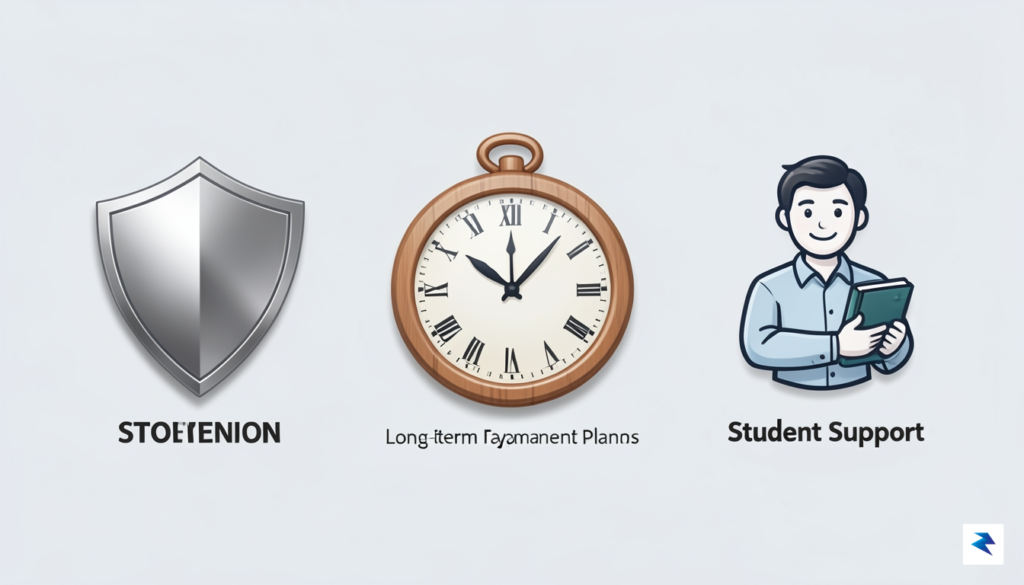
While the prospect of higher interest rates on new federal loans can feel daunting, it is essential to remember that federal student loans remain fundamentally different—and often more advantageous—than private bank loans. Unlike private lenders, which typically require high credit scores, co-signers, and rigid repayment schedules, federal loans are designed with the volatility of a young graduate’s early career in mind. Federal loans provide a comprehensive suite of safety nets that act as a buffer against economic instability, allowing borrowers to adjust their payments based on their actual income rather than a fixed, mandatory amount.

One of the most powerful tools at your disposal is the suite of Income-Driven Repayment (IDR) plans. These programs, such as the SAVE plan, allow borrowers to cap their monthly payments based on a percentage of their discretionary income. If your income is low enough, your monthly payment could potentially be reduced to zero dollars while still maintaining your status as a borrower in good standing. Furthermore, federal loans offer unique protections such as deferment and forbearance, which allow for temporary pauses in payment during times of unemployment, medical emergencies, or military service. These options are rarely available with private loans, which often demand payment regardless of your life circumstances.
Federal loans are not just debt instruments; they are financial contracts that include built-in flexibility to ensure you can manage your obligations even when your professional life takes an unexpected turn.
Beyond daily repayment flexibility, federal loans grant access to long-term forgiveness programs that private lenders do not provide. For example, those who pursue careers in public service, education, or non-profit sectors may be eligible for Public Service Loan Forgiveness (PSLF) after 120 qualifying payments. Understanding the nuances of these terms before you graduate is critical to your long-term financial health. You should take the time to review your loan portal at StudentAid.gov, where you can explore various calculators to estimate your future payments and identify which repayment plan aligns best with your projected career path.
If you find the complexity of these options overwhelming, you do not have to navigate the landscape alone. Utilizing resources like your university’s financial aid office or reputable non-profit financial counseling services can provide the clarity you need to make informed decisions. By proactively engaging with your loan terms and staying informed about updates to federal policies, you can transform a potential source of anxiety into a manageable component of your broader financial strategy. Remember that knowledge is your most effective tool for maintaining control over your financial future, regardless of how interest rates fluctuate year over year.