
The Shift: AWS Moves Beyond Internal Infrastructure

For years, Amazon Web Services (AWS) meticulously cultivated its reputation not just as a leading cloud provider, but as an innovator in custom silicon. From the foundational Nitro system, which offloads virtualization overhead, to the high-performance Graviton CPUs, AWS has consistently invested in proprietary chip design. This strategy extended powerfully into the realm of artificial intelligence with the introduction of its Inferentia chips for inference workloads and Trainium chips for AI model training. These custom accelerators were initially a closely guarded competitive advantage, designed exclusively to power AWS’s vast internal infrastructure and offered to its cloud customers as a premium, optimized service, creating a powerful ecosystem within its cloud boundaries.
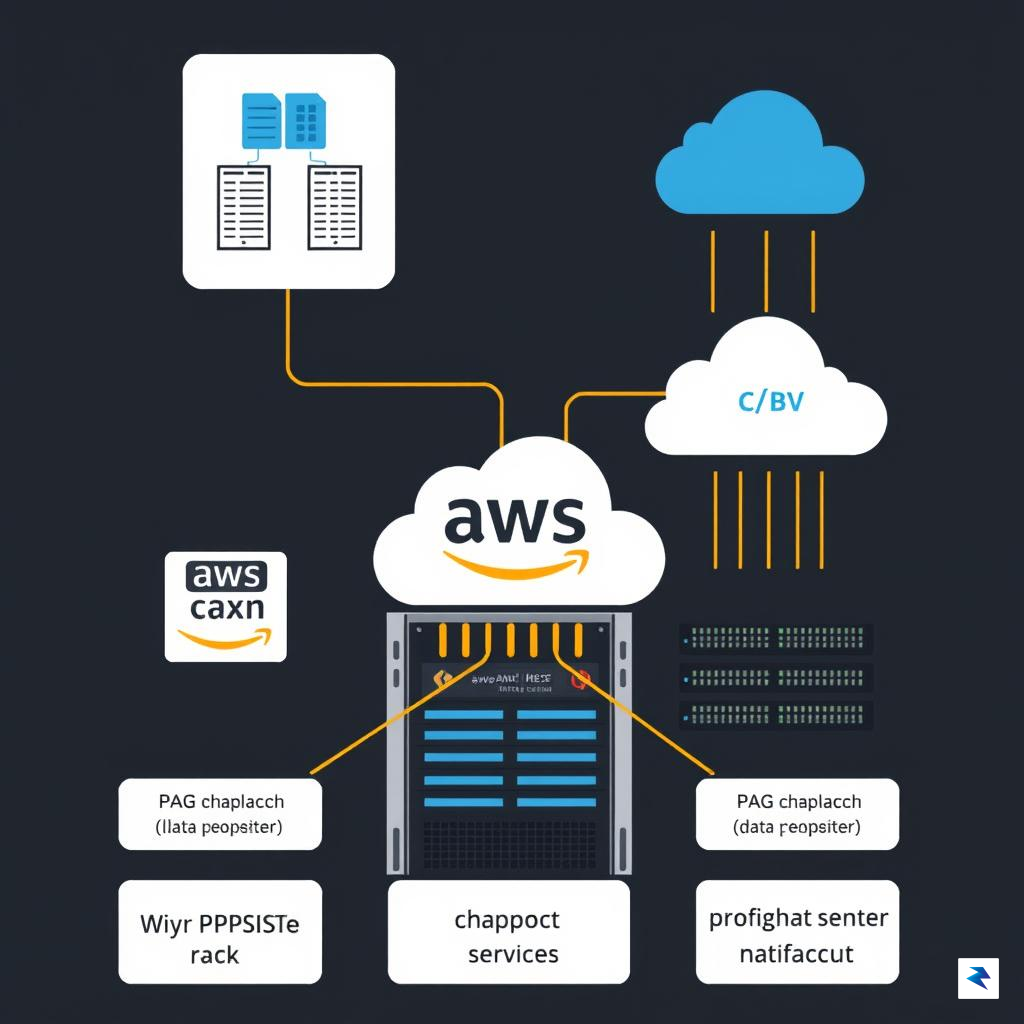
However, a significant pivot is now underway as AWS begins to offer these advanced AI chips, once exclusive to its cloud, directly to third-party data centers. This strategic shift is driven by several compelling factors, moving beyond a purely “cloud-first” ideology to embrace a “hardware-as-a-product” model. The explosion in demand for AI compute, particularly for large language models and complex machine learning tasks, has revealed a market segment that extends beyond the cloud hyperscalers. Many enterprises and data centers still operate significant on-premise infrastructure, or require specialized edge deployments, where direct access to cutting-edge AI silicon becomes essential for performance, cost-efficiency, and data locality. By selling these chips externally, AWS aims to tap into this broader market, diversifying its revenue streams and extending its influence far beyond its traditional cloud footprint.
Crucially, this move positions AWS as a direct contender in the burgeoning AI hardware market, challenging established players like Nvidia more directly than ever before. For years, Nvidia’s GPUs have been the de facto standard for AI acceleration, dominating both cloud and on-premise deployments. By offering its own battle-tested Trainium and Inferentia chips directly, AWS provides a viable, high-performance alternative, potentially disrupting Nvidia’s near-monopoly and fostering greater competition. This not only gives customers more choice but could also drive down costs and encourage further innovation in AI chip design, pushing the entire industry forward. The ability to purchase AWS-designed hardware outright gives customers unprecedented flexibility in how and where they deploy their AI workloads.
The ripple effects of this decision extend further, impacting AWS’s broader competitive strategy against fellow cloud giants Microsoft Azure and Google Cloud. While both Azure with its Maia chips and Google Cloud with its Tensor Processing Units (TPUs) have also invested heavily in proprietary AI silicon, they have largely kept these innovations confined within their respective cloud ecosystems. AWS’s willingness to “open up” its hardware creates a unique proposition. It allows customers who might not be ready for a full cloud migration, or who operate hybrid environments, to still leverage AWS’s optimized AI technology. This could pressure competitors to reconsider their own hardware strategies, potentially leading to a similar external offering from them, or it could simply grant AWS a distinctive edge by offering a more comprehensive and flexible solution for AI infrastructure across various deployment models.
Understanding the Silicon Strategy: Inferentia and Trainium
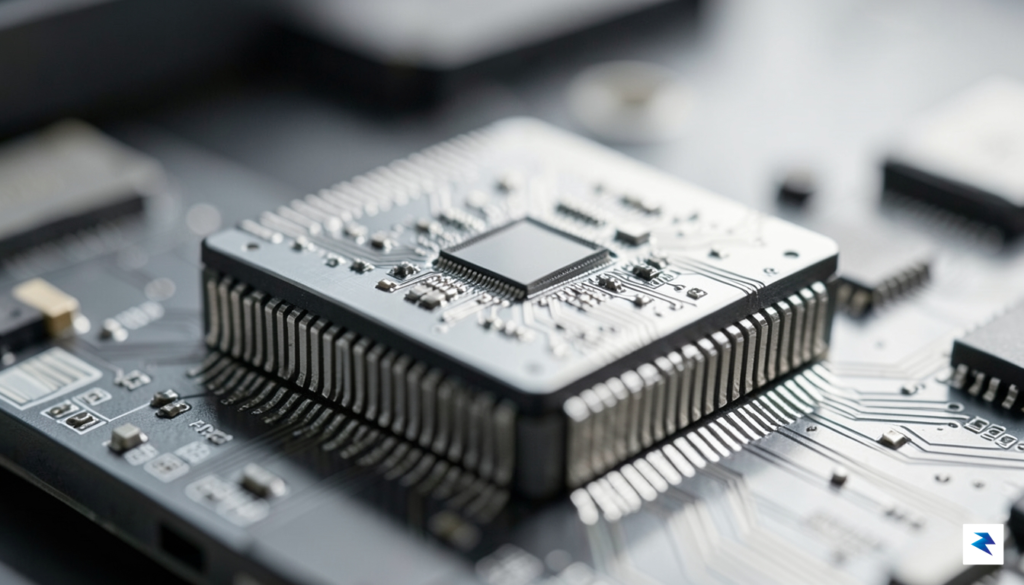
At the heart of Amazon’s ambitious push into AI hardware are its custom-designed silicon solutions: the Trainium and Inferentia chips. These purpose-built accelerators represent years of intensive internal research and development, engineered specifically to handle the heavy lifting of large language model (LLM) training and inference with unparalleled efficiency. By tailoring silicon directly to the unique demands of AI workloads, Amazon Web Services (AWS) aims to provide its customers with optimized performance per watt, ultimately driving down the cost and increasing the accessibility of cutting-edge AI. This strategic investment underscores a broader industry shift towards specialized hardware as the computational demands of artificial intelligence continue to skyrocket.
Trainium: Powering Massive-Scale AI Training
The Trainium processor series is meticulously engineered from the ground up to tackle the colossal computational demands of training massive deep learning models, particularly the large language models (LLMs) that define today’s AI landscape. These chips boast an architecture optimized for high-bandwidth memory, aggressive parallelism, and efficient inter-chip communication, all critical for the iterative, data-intensive processes involved in teaching AI systems. Trainium is designed to accelerate the forward and backward passes of neural networks, minimizing bottlenecks and maximizing the utilization of processing cores during complex training runs. This specialization allows for faster model convergence and the ability to train larger, more sophisticated models within practical timeframes and budgets.
Furthermore, Trainium’s design incorporates features that facilitate distributed training, enabling multiple chips to work in concert to handle models too large for a single accelerator. Its high-speed interconnects and integrated networking capabilities ensure that data can flow seamlessly between processors, crucial for synchronizing parameters and gradients across a vast array of compute nodes. This capability is paramount for companies developing next-generation AI, as it directly translates into the ability to experiment more rapidly, iterate on model architectures, and ultimately bring more powerful AI applications to market faster. AWS’s commitment to Trainium highlights a vision where the infrastructure itself is a key differentiator in the race for AI supremacy.
Inferentia: Efficient AI Model Deployment
Complementing Trainium, the Inferentia series is designed for the equally crucial task of inference – taking a trained AI model and using it to make predictions or generate content in real-time. Where training demands raw power over extended periods, inference prioritizes efficiency, speed, and cost-effectiveness at scale, as models are often deployed to serve millions of user requests. Inferentia chips are optimized to deliver high throughput with low latency, making them ideal for deploying AI applications like natural language processing, computer vision, and recommendation engines in production environments where instantaneous responses are critical.
The core philosophy behind Inferentia is to provide exceptional performance-per-watt, significantly reducing the operational costs associated with running AI applications at scale. By precisely tailoring the silicon to the specific mathematical operations common in neural network inference, Inferentia can execute these tasks with fewer transistors and less energy than more general-purpose processors. This focus on efficiency not only lowers electricity bills for cloud users but also contributes to a smaller carbon footprint for AI workloads, aligning with broader sustainability goals. Deploying models on Inferentia allows businesses to serve more users with the same hardware footprint or achieve substantial cost savings for existing workloads, making advanced AI more economically viable.
The Edge of Specialization: Why Custom Silicon Matters
While general-purpose GPUs have long been the workhorse of AI, providing immense parallel processing capabilities for a wide array of computational tasks, specialized silicon like AWS’s custom chips offer a distinct advantage for targeted AI workloads. GPUs, by their very nature, need to be versatile, supporting graphics rendering, scientific simulations, and various AI models. This versatility comes with a trade-off in terms of absolute efficiency for a singular task. Custom Application-Specific Integrated Circuits (ASICs) like Trainium and Inferentia, however, are designed from the ground up with specific AI algorithms and data types in mind, allowing for architectural optimizations that general-purpose hardware cannot achieve.
This strategic move towards specialized silicon is not unique to AWS but reflects a broader industry trend driven by the astronomical computational requirements of modern AI, especially with the proliferation of foundation models. Training cutting-edge LLMs can cost hundreds of millions of dollars and consume vast amounts of energy, making every percentage point of efficiency gain in silicon critically important. By developing their own chips, cloud providers like AWS can achieve tighter integration between hardware and software, optimize their entire stack, and ultimately offer compelling performance and cost advantages to their customers. This vertical integration not only enhances their service offerings but also provides a degree of independence from third-party chip manufacturers, securing a vital component of the future of cloud computing.
The Economic Implications of the $50 Billion Opportunity

When CEO Andy Jassy pointed toward a $50 billion opportunity within the artificial intelligence hardware landscape, he wasn’t merely projecting a revenue figure; he was signaling a fundamental shift in Amazon’s long-term business strategy. For years, Amazon Web Services (AWS) functioned primarily as a rental service for computing power, essentially acting as a landlord for digital infrastructure. By pivoting to design and manufacture its own AI-specialized silicon, the company is attempting to capture value at every layer of the technology stack. This $50 billion valuation reflects the explosive Total Addressable Market (TAM) for the specialized processors required to train large language models and run complex inferencing tasks, a market that has historically been dominated almost exclusively by Nvidia.
The transition from selling cloud compute time to selling high-performance silicon represents a sophisticated economic evolution for Amazon. Traditionally, AWS margins were tied to the efficiency of the data centers they operated and the overhead associated with maintaining massive server farms. By creating chips like Trainium and Inferentia, Amazon can optimize these systems specifically for their own software ecosystem, theoretically lowering costs for customers while simultaneously insulating the company from the volatility of external chip prices. Selling hardware directly allows Amazon to monetize the very foundation of the AI boom, transforming from a service provider that relies on expensive third-party hardware into a vertically integrated technology powerhouse that controls its own supply chain.
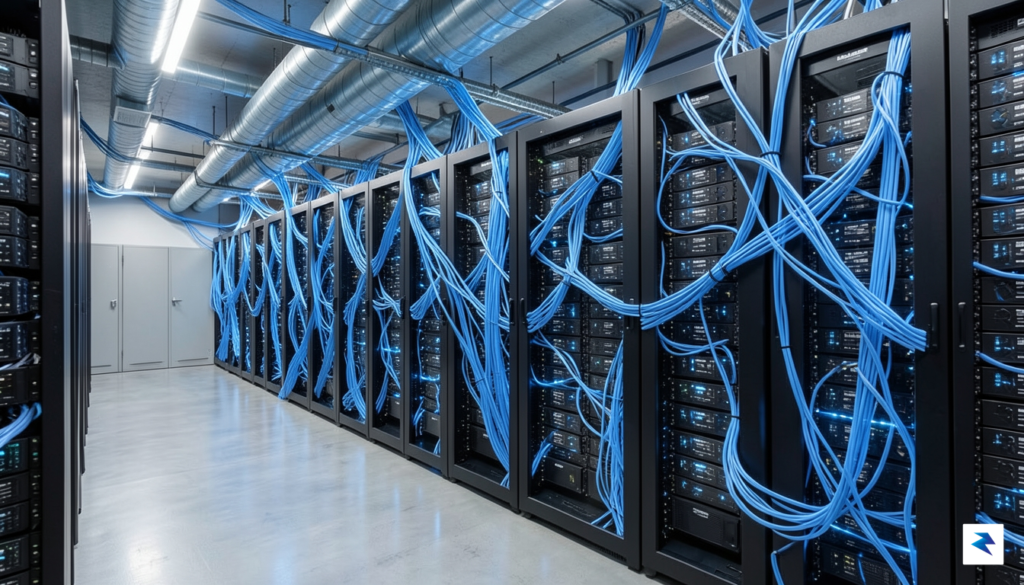
Beyond the immediate financial gains, this move serves as a critical hedge against the overwhelming dominance of Nvidia in the AI space. Relying on a single vendor for critical hardware creates a significant bottleneck and price sensitivity, which can threaten the long-term profitability of cloud services. By diversifying their portfolio to include internal silicon solutions, Amazon protects its bottom line against the rising costs of enterprise-grade GPUs. This diversification is essential for a company that must maintain competitive pricing in the cloud sector while navigating a market that is expanding at an unprecedented rate, fueled by a global corporate race to integrate generative AI.
The shift toward proprietary hardware is not just about keeping costs down; it is a calculated effort to redefine Amazon as a foundational architect of the future AI economy, rather than just a platform where that economy is hosted.
Ultimately, the $50 billion projection highlights the sheer scale of the appetite for AI infrastructure among global enterprises. As companies across every industry move from experimental AI projects to full-scale production deployments, the demand for high-performance, cost-effective, and energy-efficient chips is outstripping supply. Amazon is positioning itself to be the primary destination for these businesses, offering a seamless experience where the hardware, software, and cloud service are engineered to work in perfect synchronization. By capturing this massive slice of the market, Amazon is setting the stage to become a dominant force in the hardware industry, effectively challenging the current titans of the silicon world while securing its own future in the era of intelligence.
Challenging the Nvidia Hegemony: Can AWS Compete?

For over a decade, Nvidia has functioned as the undisputed architect of the artificial intelligence revolution, largely due to its sophisticated hardware and the unrivaled moat provided by its CUDA software platform. CUDA has become the industry standard for parallel computing, creating a deep-rooted dependency among developers who rely on Nvidia’s GPUs to train massive language models. This dominance, however, has led to skyrocketing costs and notorious supply chain bottlenecks that leave even the largest technology firms scrambling for inventory. As demand for compute power continues to outpace production, companies are increasingly desperate for viable alternatives that can provide consistent performance without the premium price tag or the wait times associated with traditional GPU procurement.

Amazon Web Services (AWS) is strategically positioning its proprietary silicon, specifically the Trainium and Inferentia chips, as the primary answer to this market imbalance. By integrating these custom-built processors directly into their cloud infrastructure, Amazon is offering customers a streamlined path to bypass the “Nvidia tax” while simultaneously solving availability issues. For many enterprises, the ability to deploy AI workloads on hardware that is deeply integrated into the existing AWS ecosystem is a significant operational advantage. Rather than struggling to source expensive H100s on the open market, developers can simply provision AWS compute instances, effectively turning an infrastructure headache into a seamless service feature.
The true battleground is not merely silicon performance, but the friction involved in moving existing workloads away from the established software ecosystem.
The core of the challenge lies in whether Amazon can overcome the software compatibility barrier that has historically kept developers tethered to Nvidia. While AWS has made immense strides in developing compilers and software stacks that allow developers to port their models to Trainium with minimal friction, the inertia of the CUDA ecosystem remains a formidable hurdle. Developers are often reluctant to rewrite code or adjust their pipelines for new hardware, regardless of the potential cost savings. Consequently, Amazon’s success will likely hinge on its ability to lower the barrier to entry—making its silicon so easy to use that the economic incentives eventually outweigh the convenience of sticking with the status quo. If AWS can prove that their hardware is not just a cheaper substitute, but a high-performance, plug-and-play evolution, they will undoubtedly disrupt Nvidia’s long-standing grip on the AI infrastructure market.
Strategic Hurdles: Adoption, Compatibility, and Ecosystem Lock-in

The primary obstacle facing Amazon’s foray into the proprietary AI chip market is not the silicon itself, but the formidable “software moat” that Nvidia has cultivated over the past decade. For years, developers have relied on CUDA, Nvidia’s parallel computing platform and programming model, which has become the de facto language of modern artificial intelligence. Transitioning from this standard is not merely a matter of swapping out hardware; it requires engineering teams to retool their workflows and potentially rewrite foundational code. To bridge this gap, AWS has invested heavily in the Neuron SDK, a software development kit designed to integrate seamlessly with frameworks like PyTorch and TensorFlow. However, even with these tools, Amazon must prove that its custom silicon can match the reliability and performance efficiency that developers have come to expect from the Nvidia ecosystem.
Beyond the technical barrier of programming frameworks, AWS faces the significant psychological and operational hurdle of vendor lock-in. When a data center commits to a specific hardware architecture, it often ties its future scalability and infrastructure management to that provider’s proprietary roadmap. For many enterprises, moving away from Nvidia hardware feels like a risky departure from the industry gold standard. There is a tangible fear that by adopting Amazon’s custom chips, companies might lose the flexibility to move their workloads across different cloud providers or on-premises environments. Consequently, Amazon must demonstrate that its chips offer more than just cost savings; they must provide a level of performance and long-term stability that justifies the complexity of migrating away from a universal, hardware-agnostic software stack.
The true test for Amazon is not producing the fastest processor, but building a developer experience so frictionless that the underlying hardware becomes an invisible, yet powerful, utility.
Furthermore, the learning curve for engineering teams remains a critical consideration. Moving from standard GPU infrastructure to custom AWS silicon requires developers to navigate new optimization techniques and hardware-specific nuances. While AWS offers comprehensive documentation and support, the time investment required to retrain staff and debug potential compatibility issues can be a deterrent for organizations that prioritize rapid deployment cycles. To succeed, Amazon needs to foster a community around its hardware, encouraging open-source contributions and third-party integrations that make their chips feel less like a closed-off proprietary silo and more like a standard, accessible component of the modern cloud infrastructure. Ultimately, AWS must convince the market that the trade-off of learning a new system is outweighed by the superior value, power efficiency, and strategic independence afforded by their custom-designed silicon.
The Future of AI Infrastructure: A More Open Market

The decision by Amazon to offer its proprietary AI silicon to third-party developers marks a fundamental turning point in the trajectory of global cloud infrastructure. For years, the industry has been largely beholden to a single dominant supplier, creating a bottleneck that has kept compute costs high and supply chains precarious. By pivoting toward an open, hardware-agnostic model, Amazon is effectively betting that the demand for AI processing power has finally reached a scale where specialized, diverse hardware solutions are not just viable, but necessary. This transition signals the end of the “one-size-fits-all” era, moving instead toward a modular landscape where data centers are engineered with custom silicon tailored to specific workloads rather than relying on generalized graphical processing units.

As this shift gains momentum, we are likely to witness a profound “custom silicon arms race” among the major cloud hyperscalers. When industry giants like Amazon, Microsoft, and Google begin designing and commoditizing their own chips, the competitive pressure will force a rapid cycle of innovation that trickles down to the end user. This environment incentivizes cloud providers to optimize their infrastructure for energy efficiency, latency, and specific neural network architectures, rather than simply paying premiums for off-the-shelf components. Consequently, data centers will evolve into highly specialized hubs of compute power, where the underlying hardware is constantly iterated upon to maintain a performance edge over rival platforms.
The democratization of high-performance compute is the single greatest catalyst for the next generation of AI development, as it lowers the financial barrier to entry for researchers, startups, and enterprises alike.
Ultimately, this diversification of the hardware ecosystem is poised to accelerate the pace of AI development on a global scale. As compute costs decline and availability increases, the friction currently preventing smaller organizations from deploying large-scale models will begin to evaporate. This newfound accessibility will likely lead to an explosion in domain-specific AI applications, as developers are no longer forced to compete for limited, expensive resources from a centralized bottleneck. By breaking the reliance on a single hardware ecosystem, the industry is paving the way for a more resilient, scalable, and creative future, ensuring that the next breakthroughs in artificial intelligence are driven by software innovation rather than hardware scarcity.