
How AI is Revolutionizing Crypto Security and Redefining Due Diligence
The Paradigm Shift in Crypto Security For years, the gold standard of decentralized finance (DeFi) security has been the manual audit—a…

When most people think of decentralized social media, their minds immediately jump to the “instance” model popularized by Mastodon and the broader ActivityPub ecosystem. In that traditional framework, your digital identity is tethered to a specific server—a digital neighborhood managed by an administrator. If that server shuts down, faces technical difficulties, or decides to de-federate from others, your ability to communicate and maintain your social graph is fundamentally compromised. However, the Authenticated Transfer Protocol (ATProto) represents a radical departure from this paradigm. It does not rely on instances in the conventional sense, choosing instead to decouple your identity from the infrastructure hosting your data.
The core innovation of ATProto lies in moving away from the “server-as-identity” model toward a model of “data-as-identity.” In the legacy federated world, moving your account from one server to another is often a difficult, manual process that requires starting over or relying on complex migration tools that rarely capture the full nuance of your history. ATProto solves this by treating your identity as a portable, cryptographic asset. Your handle is not tied to a specific database; instead, it is cryptographically linked to your personal data repository, which you can move between different providers—or “Personal Data Servers” (PDS)—without losing your followers, your history, or your established reputation.

This architectural shift is critical because it fundamentally rebalances the power dynamics of the internet. By ensuring that user data remains portable and under the user’s control, ATProto effectively turns the server into a utility rather than a landlord. You are no longer a “citizen” of a specific instance subject to the whims of a single moderator’s policies or the financial stability of a local host. Instead, you are the proprietor of your own data, using a service provider to broadcast that data to the world. This distinction isn’t just a minor technical detail; it is the foundation for a more resilient, censorship-resistant, and user-centric social web.
The true power of a decentralized protocol isn’t just in the ability to host your own content, but in the ability to carry your entire digital existence with you, unencumbered by the infrastructure you happen to be using at that moment.
Ultimately, by discarding the instance-centric model, ATProto allows developers to focus on building diverse, competitive user experiences rather than proprietary, walled-off gardens. When we stop viewing social media through the lens of individual servers, we begin to see the internet as a unified, cohesive network where the user, not the provider, holds the keys to the kingdom. This shift is the necessary precursor to a future where switching social platforms is as simple and painless as switching email providers, effectively ending the era of platform lock-in for good.
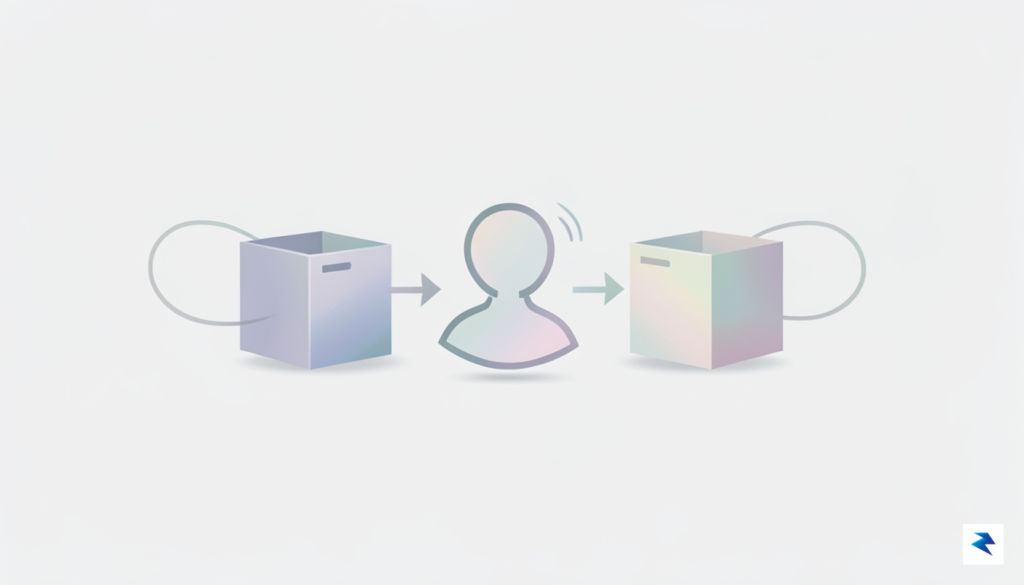
When users first transition to the AT Protocol—the backbone of networks like Bluesky—they often carry over mental models from the federated platforms they are accustomed to, such as Mastodon. In those legacy systems, your identity is inextricably linked to a specific server, or "instance." If you want to move to a different community or escape a poorly moderated host, you are forced to perform a cumbersome account migration, often resulting in lost followers, broken threads, and the permanent abandonment of your original handle. ATProto fundamentally dismantles this paradigm by introducing the concept of the Personal Data Store (PDS), which functions as a neutral vault for your information rather than a gated community that owns your digital presence.
In the ATProto architecture, your identity is anchored to a Decentralized Identifier (DID) rather than a domain name controlled by a server administrator. Because your DID is a persistent, cryptographically verified pointer to your data, your account is not "owned" by the PDS you happen to be using at any given moment. Think of your PDS as a secure storage locker; if you decide that you are unhappy with the service, security, or policies of that particular provider, you can simply point your DID to a different PDS. This process is effectively invisible to your followers and the wider network, as your identity remains constant throughout the transition. You are not "migrating" in the traditional sense; you are simply changing your service provider while keeping your digital passport fully intact.

The fundamental shift in ATProto is the transition from platform-owned identities to user-owned data, where the hosting provider is merely a utility rather than a landlord.
This decoupling of identity from storage effectively kills the concept of the "instance" as a social boundary. On older federated networks, your reach is often gated by the server you are on; if your server is blocked by another, your voice is silenced regardless of your personal actions. Conversely, in ATProto, the PDS is strictly a tool for data availability and hosting. Because your profile, posts, and follows are cryptographically signed by your DID, the social graph you build persists independently of your storage host. You are free to move your data across providers without ever losing the continuity of your conversations or the connection to your community, turning the "instance" from a defining social wall into a replaceable commodity.

At the heart of the AT Protocol lies the Personal Data Store (PDS), a specialized server that acts as the primary custodian of your digital life. Unlike traditional social media platforms where your profile, posts, and connections are locked within a proprietary database owned by a single corporation, the PDS is designed to be a lightweight, modular service. Its technical role is to provide a standardized interface for your data while ensuring that the data itself remains portable and independently verifiable. By decoupling the storage of your content from the identity of the network, the PDS transforms from a “walled garden” into a commodity service, similar to how an email provider stores your messages without claiming ownership of the underlying communication protocols.
The technical architecture that makes this possible is known as a repository. Every PDS maintains these repositories as a collection of records, each structured and signed to ensure integrity. To manage these collections efficiently, ATProto utilizes a sophisticated data structure called a Merkle Search Tree (MST). An MST is essentially a specialized form of a Merkle tree that allows the system to organize data while maintaining a cryptographic fingerprint of the entire state. Because of this structure, the PDS can prove exactly what data exists within your repository without requiring a centralized authority to vouch for its authenticity. If you were to migrate your data to a new provider, you could present this cryptographic proof to demonstrate that your new home has an identical, untampered copy of your digital footprint.
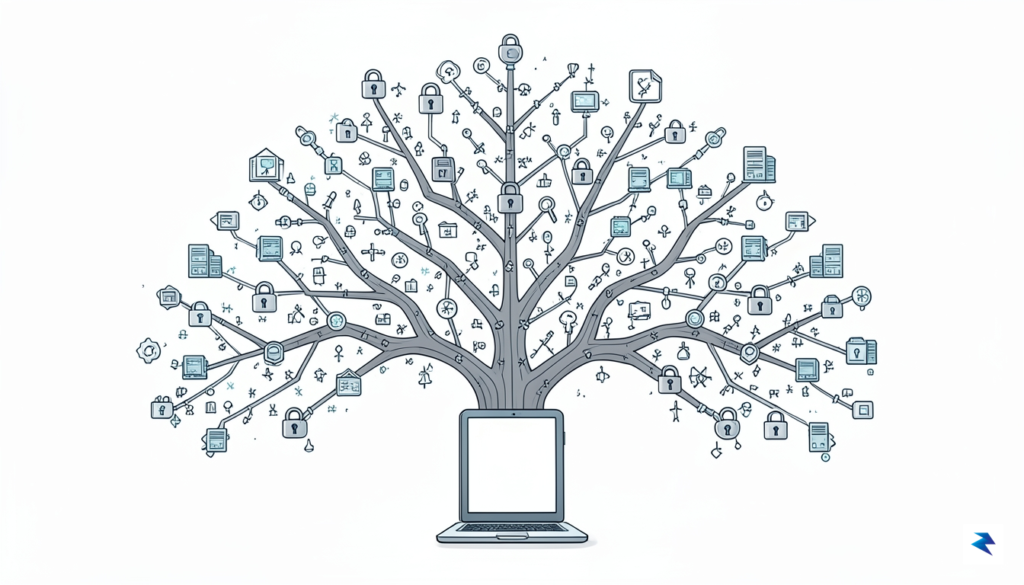
Ownership in this ecosystem is enforced through cryptographic signatures rather than database permissions. When you generate content, your private key signs that data, creating an immutable link between your identity and your post. Because these signatures are independent of the PDS server, the data remains valid even if the server hosting it goes offline or decides to delete your account. This is the paradigm shift that renders the concept of an “instance” obsolete; you are not a guest on a platform, but rather a sovereign user of the protocol itself. The PDS is simply the server you choose to host your data, much like how you might choose a specific cloud storage provider for your personal files.
The true power of ATProto lies in the fact that the protocol governs the data, not the server. By shifting the source of truth from a company’s database to the cryptographic proof of the individual, we finally achieve a social web that is resilient, portable, and inherently user-centric.
By treating the PDS as a commodity, the protocol invites a competitive market of service providers. Since a user can move their repository between providers without losing their social graph or historical content, providers are incentivized to compete based on quality of service, uptime, and user experience rather than by holding data hostage. This structural separation effectively prevents the “lock-in” effect that has defined the social media era for the past two decades. In this environment, your data is truly yours, verified by mathematics rather than the terms of service of a centralized corporation.

In the traditional architecture of federated social networks, discovery often relies on a “broadcast” model where every server must actively negotiate with its peers to fetch updates. This creates a messy web of interconnected traffic that scales poorly as the network grows. ATProto fundamentally redefines this relationship by decoupling data storage from data discovery. Instead of relying on individual instances to gossip amongst themselves, the protocol utilizes a specialized infrastructure component known as the Relay. Relays act as high-performance, persistent event streams that ingest the firehose of data generated by users across the network, effectively creating a global, indexed map of the social graph without forcing every server to maintain a direct connection to every other server.
The primary mechanism for this indexing is the atproto event stream, which allows Relays to subscribe to data repositories and maintain a real-time, searchable record of all public posts, follows, and interactions. This separation of concerns means that when a user creates content on their Personal Data Server (PDS), that data is signed and published, and the Relay simply observes and indexes that event. Because the Relay does not hold the “authority” over the user’s identity or content—it merely observes it—the network gains immense resiliency. If one Relay were to fail, others can easily reconstruct the global state from the source of truth residing on the PDS, ensuring that discovery remains fluid and decentralized rather than tethered to a single, fragile point of failure.
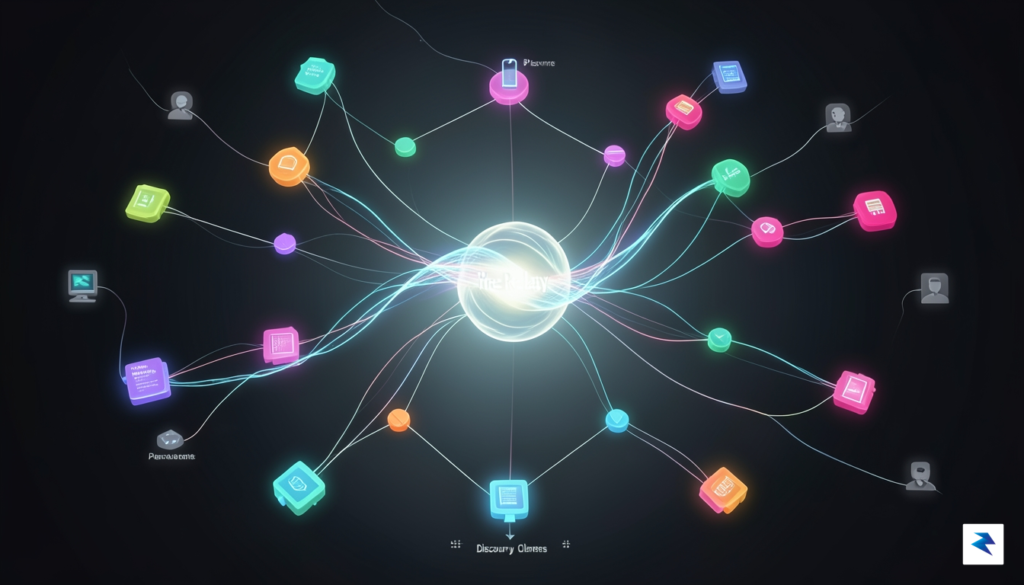
To bridge the gap between this raw firehose of data and the end-user experience, the protocol introduces the AppView. While the Relay handles the heavy lifting of indexing the entire network’s activity, the AppView acts as a specialized query engine that filters and curates that data for specific applications. By delegating the compute-heavy task of discovery to these dedicated layers, the network achieves a level of performance that was previously thought impossible for decentralized systems. This architecture prevents the “server-to-server” bottleneck common in older protocols, where a sluggish or overloaded instance could delay the propagation of information across the wider network.
The power of ATProto lies in the fact that your identity is not tied to the server you use, and your ability to be discovered is not dependent on your server’s popularity or its ability to “talk” to others.
Ultimately, this model transforms the way we think about the social graph. By treating data as portable repositories and discovery as a specialized, decoupled service, the protocol eliminates the need for “instances” as gatekeepers of connectivity. Users enjoy the security of owning their own data, while developers gain the ability to build massive, real-time social applications that tap into a global network without having to manage the complex, overhead-heavy infrastructure of traditional federation. It is a cleaner, faster, and more robust way to build the internet, shifting the focus from managing servers to empowering users.

The elimination of the traditional “instance” model is perhaps the most profound shift in the architecture of social networking, as it fundamentally redefines who owns your digital presence. In legacy federated systems, your identity is often tethered to the specific server where you registered; if that server administrator decides to shut down, change their rules, or ban your account, you lose your social graph and your history. By decoupling your identity from a single administrative entity, ATProto moves us toward a paradigm where you are the sole steward of your data. Whether you choose to host your own Personal Data Server (PDS) or rely on a managed provider, your handle remains yours, moving with you effortlessly across the network without the need for complex data migrations or the grief of losing your followers.

This architectural choice effectively renders the concept of “de-platforming” obsolete at the identity level. Because your identity exists as a cryptographic record rather than a row in a specific company’s database, you are no longer at the mercy of a single platform’s terms of service or the whims of a server moderator. If a particular service provider no longer aligns with your values or technical needs, you can simply point your identity to a different PDS. This portability acts as a permanent insurance policy for your digital life, ensuring that you are a citizen of the network at large rather than a subject of a private kingdom. The power dynamic shifts entirely, placing the user in a position of sovereignty that was previously impossible in the age of monolithic social media.
True autonomy is not found in the ability to choose between different walled gardens, but in the ability to carry your entire social history with you regardless of which infrastructure you use.
Beyond individual freedom, this structure fosters a significantly healthier and more competitive ecosystem for social media infrastructure. When users can leave a platform without losing their connections, providers are forced to compete on the quality of their service, their moderation tools, and their innovation rather than relying on the “network effect” to lock users into a stagnant experience. This creates a marketplace of infrastructure providers who must earn your loyalty daily. By removing the technical barriers that keep users trapped, we open the door to a more diverse, resilient, and experimental internet where the infrastructure serves the user, rather than the user being the product of the infrastructure.
You must be logged in to post a comment.