The Philosophy of Sound: Beyond Traditional Synthesizers

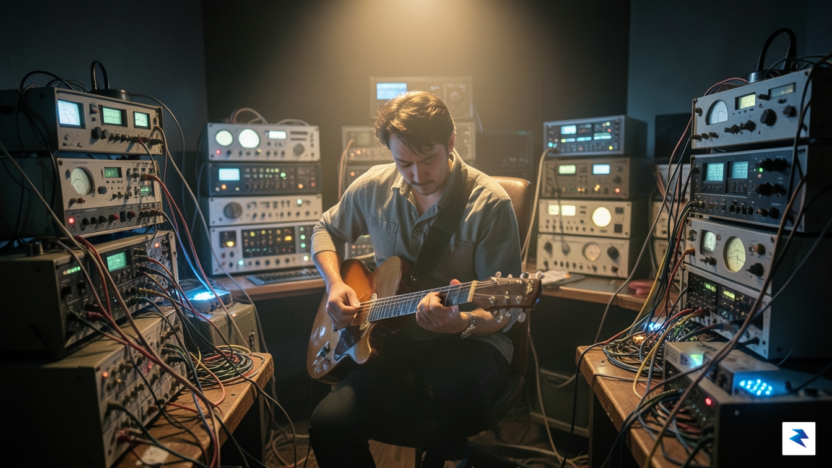
For most musicians, the creative process begins with the familiar glow of a digital audio workstation, where endless plugins simulate the sounds of grand pianos or vintage synthesizers. Stefan Paul Goetsch, known to his global audience as Hainbach, has spent his career dismantling this conventional reliance on software in favor of a far more tactile, unpredictable methodology. His journey began in the realm of experimental composition, where he quickly realized that the pristine, clinical nature of digital production often lacked the soul and instability he craved. By pivoting away from standard virtual instruments, he transitioned into a world of physical laboratory hardware—rescuing discarded oscillators, signal generators, and testing devices from the scrap heap to serve as the beating heart of his sonic architecture.
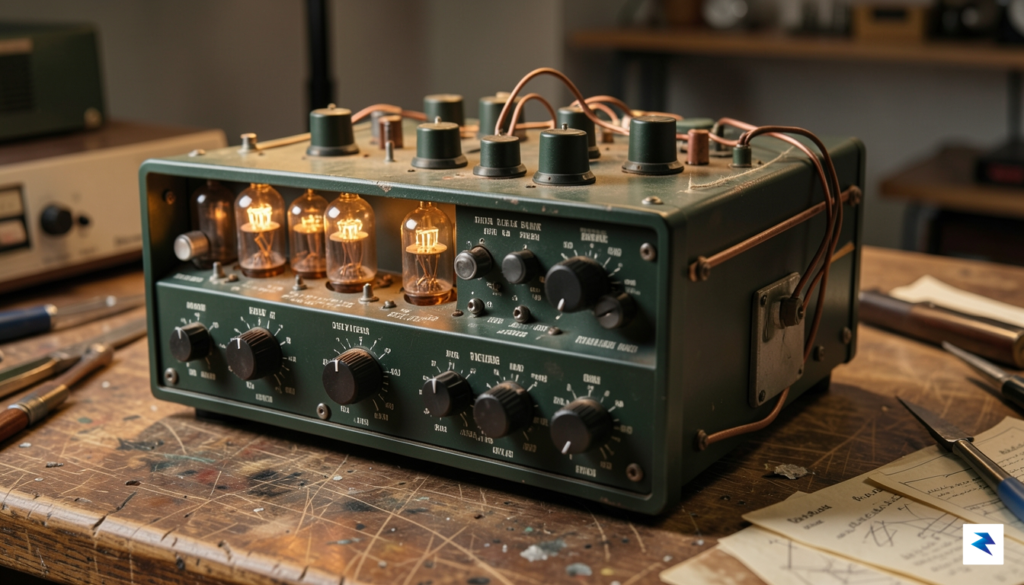
There is a profound, almost alchemical philosophy at play when Hainbach recontextualizes equipment originally engineered for telephone lines, radar testing, or telecommunications diagnostics. These machines were never intended to create music; they were built to measure the limits of physics and the integrity of signals. Yet, in his hands, the erratic hum of a radiation monitor or the jagged pulse of a decommissioned weather-satellite transceiver becomes a source of high-fidelity inspiration. By forcing these industrial tools to operate outside their original parameters, he uncovers a sound palette that is impossible to replicate with modern software—a landscape defined by genuine electrical fluctuation and the organic decay of aging capacitors.
The beauty of these instruments lies not in their precision, but in their capacity to surprise. When you manipulate a circuit meant for a radar array, you are engaging with the raw, unstable ghost of industrial history.
This approach emphasizes the inherent beauty of imperfection, which serves as a stark contrast to the perfectly quantized, noise-free world of modern pop production. Each piece of laboratory gear brings its own unique noise floor, a subtle layer of grit and warmth that grounds the music in physical reality. Because these devices are analog and often temperamental, the act of composing becomes a delicate dance of calibration and luck. Hainbach’s work reminds us that sound is not merely a collection of data points on a screen, but a vibrant, living phenomenon influenced by voltage, temperature, and the physical constraints of the machinery itself. By embracing the “broken” or the obsolete, he transforms the cold, clinical output of scientific testing into something profoundly human and deeply resonant.
The Aesthetic of Obsolescence: Using Test Equipment as Instruments
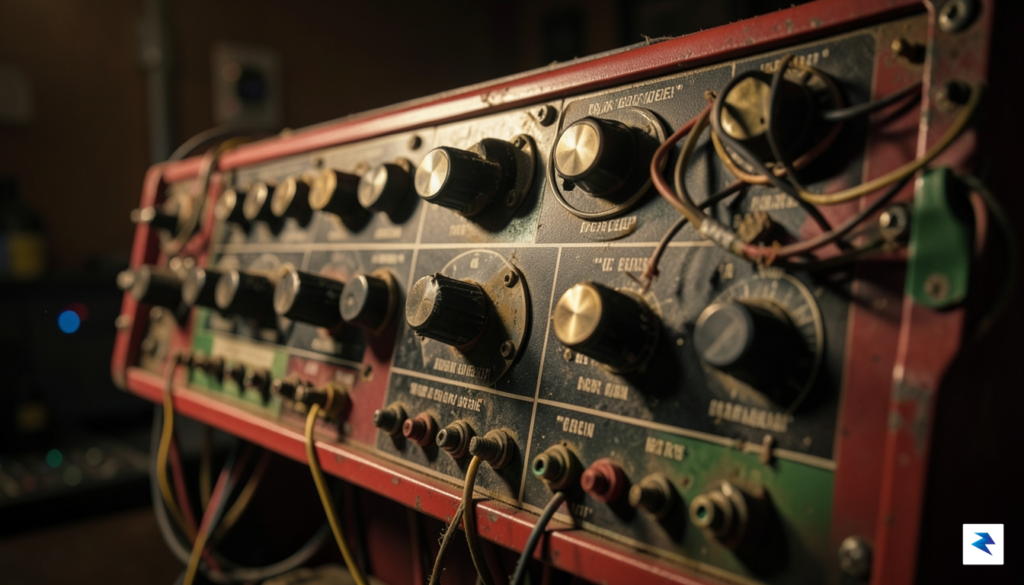
The integration of laboratory-grade test equipment into a contemporary musical workflow is an exercise in both engineering and subversion. Unlike synthesizers designed with musical scales and harmonic envelopes in mind, scientific instruments—such as oscillators, signal generators, and spectrum analyzers—were originally built to produce clean, clinical, and often punishingly sterile test tones. To coax music from this hardware, one must navigate the complex hurdle of signal impedance and voltage levels, which often do not align with standard studio interfaces. This requires a delicate process of re-amplification and attenuation, effectively teaching a machine designed to calibrate radar equipment how to sing through a modern digital audio workstation.
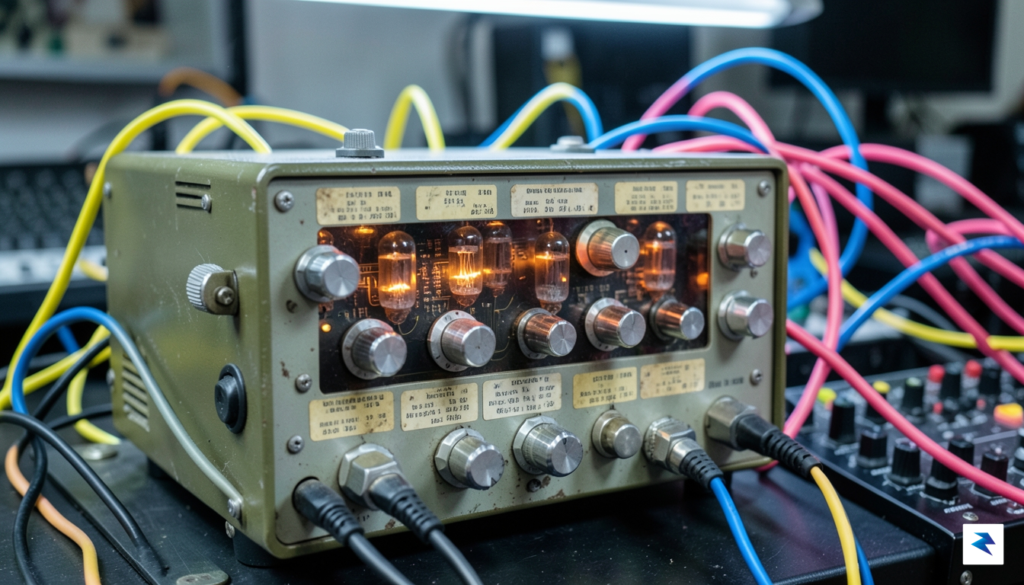
There is a profound, almost accidental musicality embedded within these frequency sweeps and calibration pulses. When an oscillator intended for measuring radio interference is pushed beyond its intended operational range, it begins to exhibit non-linear behaviors, introducing harmonic distortion and unstable pitch modulation that feel organic rather than synthesized. These artifacts—often dismissed as “noise” by engineers—become the primary textures of the composition. By harnessing the raw, unfiltered output of these devices, one discovers a sonic depth that is inherently elusive in the world of pristine, algorithm-perfect digital plugins. Where software mimics the idea of vintage circuitry, these machines offer the physical reality of decaying capacitors and drifting voltage, creating a soundscape that feels simultaneously tethered to the mid-century past and untethered from modern conventions.
The true power of using obsolete scientific gear lies not in its ability to sound like a traditional instrument, but in its capacity to force the artist into a dialogue with limitation.
These physical constraints serve as a powerful catalyst for creativity, acting as a rigorous framework that prevents the paralysis of infinite choice. Because these instruments lack the user-friendly interfaces of modern hardware, the musician is forced to engage with the signal path in a non-negotiable, tactile way. You cannot simply save a preset or automate a complex parameter with a mouse click; instead, you must physically manipulate the gear, responding to the hardware’s inherent idiosyncrasies in real-time. This dynamic forces a deeper level of listening and a more deliberate approach to composition. By working within the rigid, often stubborn confines of these “obsolete” machines, the musician strips away the luxury of perfection, leaving behind a raw, evocative sonic fingerprint that is impossible to replicate through software alone.
The 'Dark Souls' of Synthesis: Embracing Technical Friction
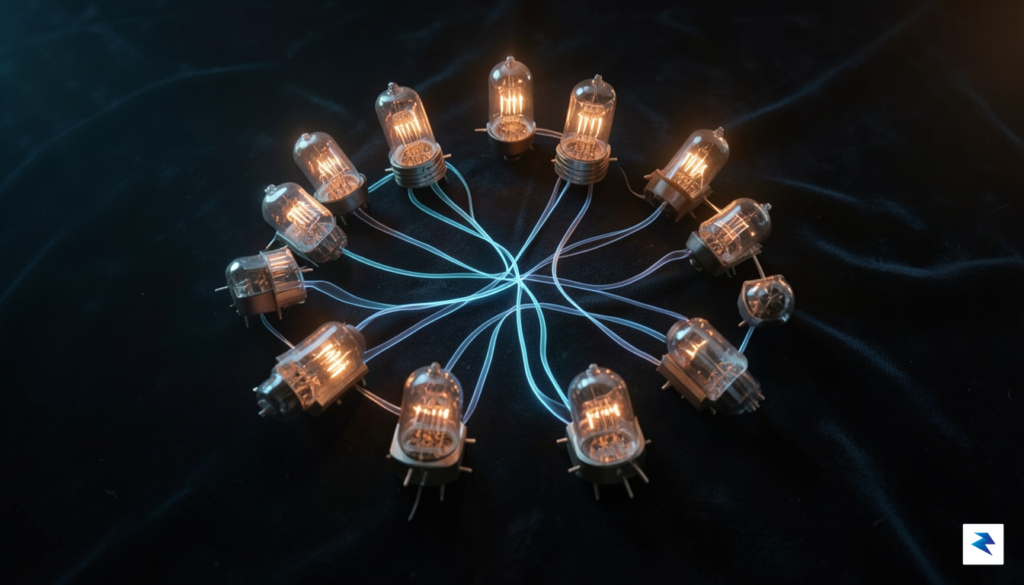
For most contemporary music producers, the modern studio is designed around the philosophy of frictionless workflow. Software updates promise to remove latency, automate complex mixing tasks, and provide infinite “undo” buttons that safeguard against creative mistakes. Hainbach, however, intentionally steers his practice in the opposite direction. By utilizing temperamental, decaying scientific equipment and obsolete test gear, he cultivates what he calls the “Dark Souls of synthesis.” This is not a pursuit of inefficiency for its own sake, but rather an embrace of technical friction—a deliberate injection of unpredictability that forces the artist to engage with the machine as an equal partner rather than a passive tool.
When an instrument is inherently difficult to operate, it effectively disables the “autopilot” mode that often plagues digital production. In a standard DAW environment, it is incredibly easy to fall into muscle memory, relying on pre-set drum patterns and familiar signal chains that lead to predictable, homogenized results. Conversely, when working with a piece of 1950s vacuum-tube oscillators or magnetic tape loops that might snap at any moment, the producer must remain hyper-vigilant. This technical friction acts as a creative gatekeeper; it prevents the composer from sleepwalking through the process and demands a level of focus that is rarely required when using modern, stable software.

Treating a studio session as a high-stakes experiment requires a fundamental mental shift. Instead of viewing the recording process as a linear path toward a final, polished product, Hainbach treats each session like a live performance where the primary outcome is discovery rather than completion. The potential for catastrophic failure—a machine overheating, a signal path collapsing, or a tape reel tangling—becomes a core element of the composition. By removing the safety net of the “undo” button, he transforms the studio into a laboratory where the beauty lies not in the perfection of the sound, but in the unique, unrepeatable narrative of the struggle to capture it.
The struggle with the machine is where the character is born; if you can control everything perfectly, you have left no room for the music to surprise you.
Ultimately, this “hard mode” of synthesis produces a sonic texture that is physically tangible, carrying the weight of its own history and the vulnerability of its hardware. When a listener hears a note that wavers because a motor is struggling or a hum emerges because an old capacitor is failing, they are hearing the physical manifestation of an artist wrestling with the past. This approach proves that when we invite friction back into the creative process, we stop fighting against the limitations of our gear and instead start composing with the very imperfections that make sound human.
Breath of the Wild and the Geometry of Soundscapes

For the experimental composer and sound artist known as Hainbach, the sprawling, windswept plains of The Legend of Zelda: Breath of the Wild serve as more than just a digital playground; they function as a masterclass in the intentional use of negative space. In many traditional compositions, the urge to fill every frequency with melody or rhythm is overwhelming, yet the game’s philosophy prioritizes the environment itself as the primary performer. By treating silence not as an absence of sound, but as a structural component, Hainbach mirrors this approach in his own work. He understands that for a soundscape to feel truly immersive, it must allow the listener the room to breathe, effectively mapping the “geometry” of a physical space through audio cues that mimic the natural world.
This translation of landscape into sonics involves a careful curation of textures—the distant rustle of grass, the subtle resonance of wind against stone, and the unpredictable decay of electronic signals. Just as the game uses minimalism to emphasize the scale of its world, Hainbach utilizes the limitations of his vintage scientific test equipment to create textures that feel weathered and organic. By stripping away unnecessary harmonic clutter, he allows the listener to perceive the architecture of the composition in the same way a player perceives the horizon in an open-world game. The result is a soundscape that feels less like a linear piece of music and more like a geography that one can inhabit, explore, and eventually get lost in.
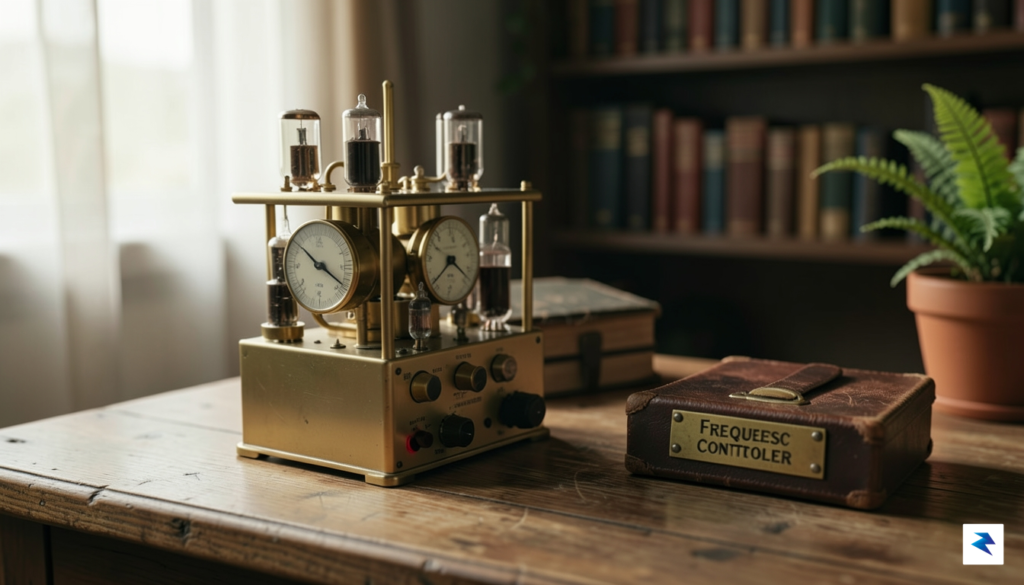
“Sound, like an open world, gains its meaning from the space surrounding it. When you stop forcing a narrative through constant noise, you start to hear the architecture of the environment itself.”
Hainbach’s methodology is deeply rooted in the idea that a composition should function like a physical place rather than a sequence of notes. By utilizing techniques that mimic the unpredictability of nature—such as the gradual degradation of magnetic tape or the chaotic oscillations of repurposed lab gear—he constructs soundscapes that possess their own internal logic. This approach demands a high level of patience from the listener, mirroring the deliberate pace of exploration found in Breath of the Wild. In both domains, the beauty lies in the discovery; it is a process of navigating a sonic terrain where the most profound moments often occur in the quietest, most understated intersections of tone and silence.
The Role of Constraints in Creative Expression
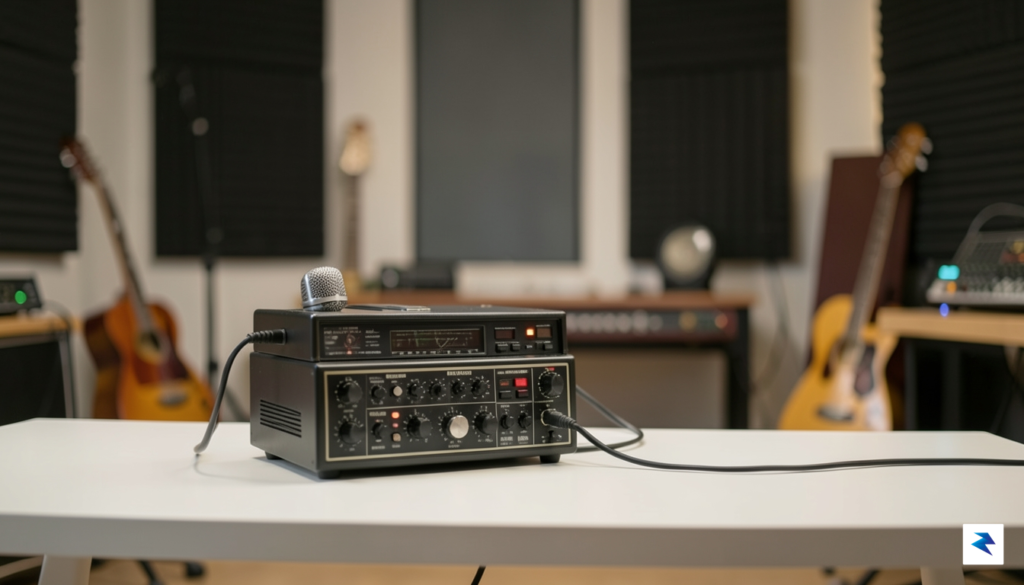
In an era defined by the paradox of choice, where modern digital audio workstations offer an infinite palette of pristine, perfect sounds, many creators find themselves paralyzed by the sheer scope of possibility. The work of artists like Hainbach serves as a necessary antidote to this abundance, proving that the most profound expressions of art often emerge not from unlimited resources, but from the deliberate imposition of boundaries. By choosing to work with temperamental, aging scientific equipment or the idiosyncratic constraints of a limited game engine, one is forced to engage in a deeper dialogue with the medium. These limitations transform the creative process from a simple act of selection into a rigorous exercise in problem-solving, where the imperfections of a machine become the very textures that define a composition’s soul.
For those currently mired in a creative rut, the “Hainbach method” offers a compelling roadmap for reinvention. The strategy is deceptively simple: intentionally restrict your toolkit to force a shift in perspective. Whether it involves limiting your output to a single piece of hardware, purposefully using “broken” or obsolete software, or finding tactile ways to interact with sound that bypass the mouse and keyboard, these constraints act as a catalyst for genuine innovation. When you can no longer rely on the automated polish of modern plugins, you are compelled to listen closer and work harder to coax beauty from the machine. This shift in focus moves the creator away from the sterile environment of endless presets and back toward the organic, unpredictable nature of human-machine collaboration.
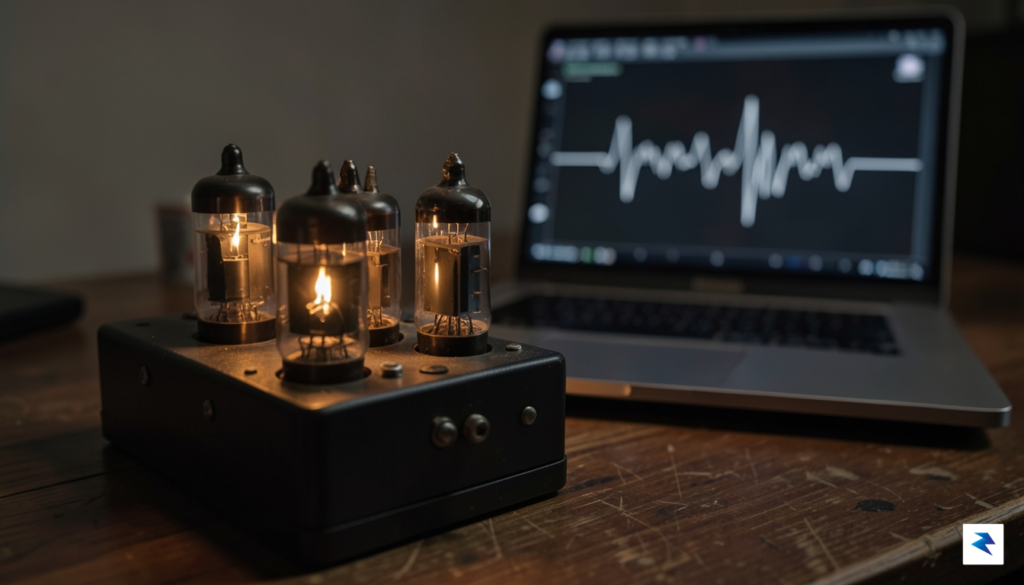
True creativity does not flourish in a vacuum of total freedom; it thrives in the tension between an artist’s intent and the stubborn, unpredictable nature of their tools.
Looking toward the future of experimental music, it is clear that the enduring value of this approach lies in its humanity. As artificial intelligence and automation continue to streamline the production process, the “human touch”—the glitches, the manual recalibrations, and the deliberate quirks found in physical gear—will only become more precious. Embracing the limitations of our tools is not about romanticizing the past, but about finding a way to maintain agency in an increasingly automated world. By treating our equipment as a collaborator rather than a passive servant, we ensure that our music retains a sense of discovery and surprise. Ultimately, when we stop chasing the illusion of perfection, we open the door to the kind of authentic, messy, and deeply resonant work that defines the cutting edge of sound design.