
Is a Home Battery Worth It? A Complete Guide to Cost, Installation, and Benefits
Understanding the Role of Home Energy Storage For many homeowners, the initial interest in residential energy storage begins with the desire…
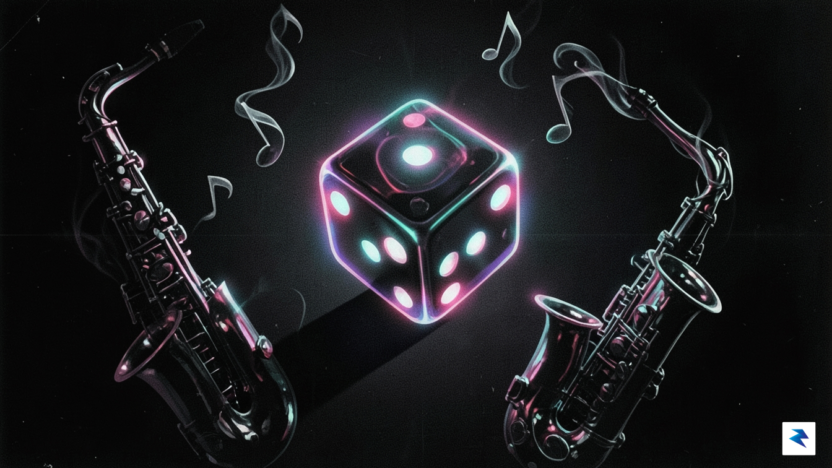
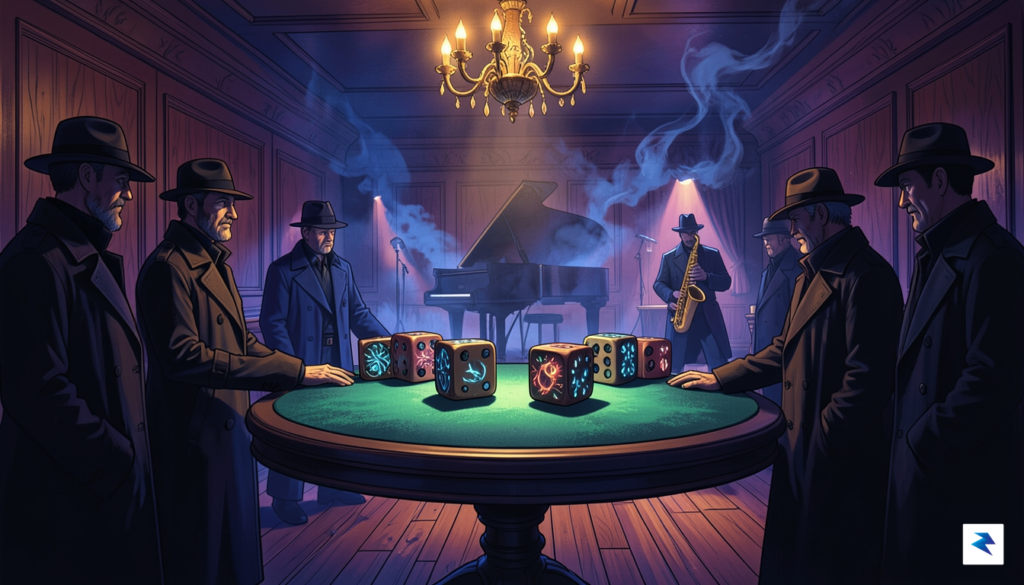
Forget everything you thought you knew about role-playing games. Moves of the Diamond Hand isn’t just a departure from the norm; it’s an outright defenestration of it, throwing conventional design tropes out the window with gleeful abandon. This isn’t a sprawling open-world epic, nor is it a meticulously balanced dungeon crawler with intricate combat mechanics. Instead, what we have is an unfinished, irresistibly weird dice-based experience that operates on an entirely different wavelength, captivating players not with polished systems but with its sheer, unadulterated narrative atmosphere. It promises to be a game unlike any other, demanding a willingness to embrace the strange and the unconventional.
From the moment you encounter its esoteric rulebook, it becomes clear that Moves of the Diamond Hand actively resists categorization. There are no character sheets overflowing with stats, no clear-cut victory conditions, and certainly no predefined quests to embark upon in the traditional sense. Traditional progression systems are sidelined in favor of an emergent narrative, where the journey itself, steeped in surrealism and unsettling ambiguity, is the sole reward. This deliberate rejection of established RPG frameworks crafts an experience that feels less like a game and more like a collective dream, where the rules serve to facilitate shared imagination rather than dictate specific outcomes or guide players along a predetermined path.
At its heart, the game boils down to a deceptively simple core loop: rolling dice and then interpreting the results through collaborative conversation. A single die roll might present a cryptic prompt, an unexpected turn of events, or a strange detail, which players then collaboratively weave into the ongoing narrative tapestry. This isn’t about min-maxing or optimizing builds; it’s about listening, improvising, and contributing to a story that often feels like it’s unfolding in a dimly lit, forgotten corner of reality. The dice act as a catalyst, sparking discussion and guiding the story into unforeseen and often profoundly bizarre territories, making every session uniquely unpredictable and deeply personal.
Perhaps the most striking testament to its unique appeal is the fervent community it has cultivated, despite being an explicitly unfinished project. In an era where players often demand endless content and perfectly balanced mechanics, Moves of the Diamond Hand thrives on its incompleteness, its rough edges, and its boundless potential for player-driven interpretation. Its creators have seemingly tapped into a primal urge for storytelling that transcends traditional game structures, offering a framework so compellingly strange that players are eager to fill in the blanks themselves. It’s a testament to the power of atmosphere and narrative intrigue, proving that sometimes, the most profoundly engaging experiences are those that dare to be truly, unsettlingly different and invite players to be active co-creators.

At the core of Moves of the Diamond Hand lies a dice-rolling system that functions less like a traditional arbiter of success and more like a chaotic narrator. In most tabletop or digital role-playing games, a die roll is a binary checkpoint: you either overcome an obstacle or you stumble, usually resulting in a simple “retry” or a penalty. Here, however, the dice act as a catalyst for narrative branching, forcing players to reckon with the surreal consequences of their actions regardless of the numeric output. When you roll, you aren’t just checking if you are “good enough” to succeed; you are inviting the game’s strange, unpredictable world to impose its own logic onto your character’s journey.
This mechanical reliance on randomness creates a unique psychological tension, as the player must surrender their desire for total agency to the whims of the game. Because the system treats failure not as a dead end, but as a pivot point for a different kind of story, players often find themselves in situations where a “bad” roll leads to a far more interesting scenario than a “good” one. This design choice effectively removes the frustration of the fail-state. Instead of feeling like you have lost, you feel like you have simply been redirected into an uncharted, bizarre corner of the world that you might not have discovered had your character been perfect in their execution.
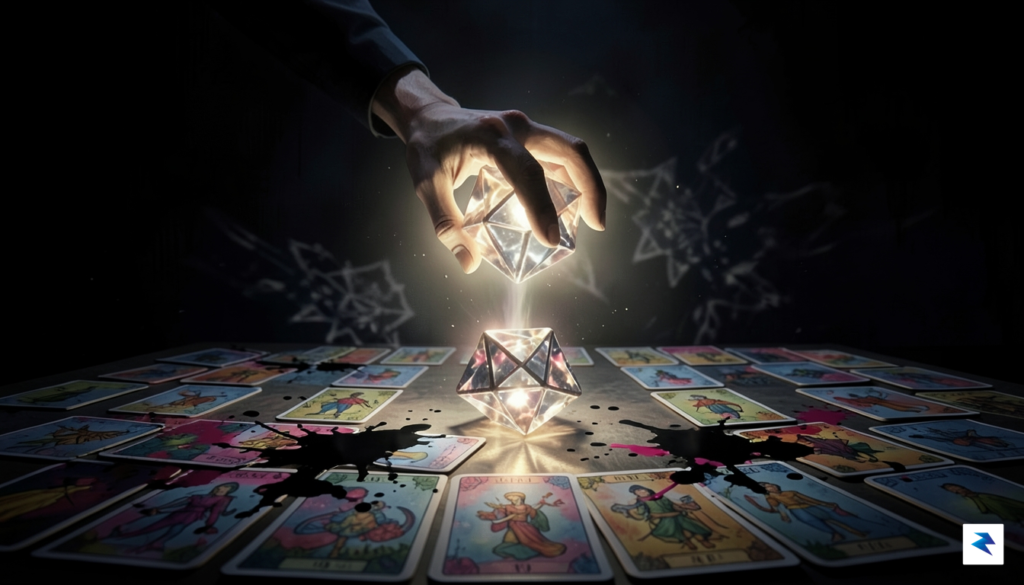
The beauty of the system is that it turns randomness into a deliberate storytelling tool; the dice do not decide if you win, they decide how your story changes shape.
Furthermore, the game’s reliance on these rolls during conversation ensures that no dialogue interaction is ever truly safe or predictable. By weaving the dice into the very fabric of social negotiation, the game forces players to roleplay through the awkwardness of being misunderstood or the chaos of saying something entirely unintended. It turns every encounter into a high-stakes improvisation session where you must adapt to the “luck” of the draw. This creates a deeply immersive experience where the player’s narrative control is constantly negotiated with the game’s unpredictable engine, resulting in a journey that feels authentically lived-in, flawed, and undeniably weird.
Ultimately, this approach shifts the player’s mindset from seeking optimal outcomes to embracing the absurdity of the narrative arc. By de-emphasizing the “pass-fail” mentality, the game encourages a deeper investment in the consequences of every action. You stop worrying about the statistical probability of a high roll and start wondering what strange, beautiful disaster might occur if the numbers don’t go your way. It is a masterful subversion of RPG tropes that proves chance can be the most effective writer in the room.

At its core, the setting of this game operates less like a traditional fantasy map and more like a fever dream caught in the needle-scratch of a vintage vinyl record. The world is draped in a distinct “Jazz Noir” aesthetic, where the smoke-filled rooms and dimly lit alleyways feel heavy with the weight of unspoken secrets. It is a place where the rain never seems to stop, yet it never quite washes away the grime or the lingering sense of existential dread. By blending the cynical, hard-boiled tropes of mid-century detective fiction with an abstract, almost hallucinogenic layer of reality, the game constructs a stage where every conversation feels like a high-stakes performance.
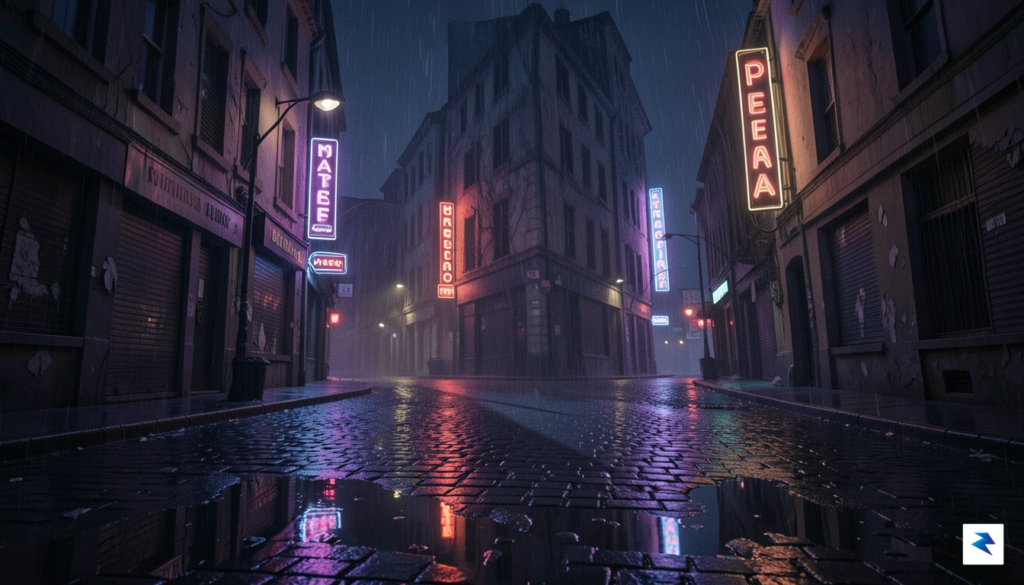
The writing style serves as the primary vessel for this strangeness, opting for a conversational cadence that is both jarring and deeply immersive. Rather than delivering dry exposition, the narrative pulls players into a dance of surreal metaphors and cryptic observations. Characters speak in rhythmic, disjointed prose that mirrors the improvisational nature of jazz, forcing the player to read between the lines to discern truth from obfuscation. This dialogue-heavy approach transforms the simple act of questioning a witness into a puzzle of its own, where the tone of a sentence often holds more weight than the literal information provided.
The world does not merely exist to be explored; it exists to be deciphered, one rhythmic, haunting exchange at a time.
This commitment to an esoteric atmosphere ensures that the mystery remains front and center, even when the player is not actively engaged in a dice-based conflict. Every location feels like a relic of a forgotten ritual, and every encounter feels like a brush with something fundamentally unknowable. By eschewing standard world-building tropes in favor of this dreamlike inconsistency, the game creates a unique sense of vulnerability. You are not a hero conquering a land; you are an intruder navigating a labyrinthine psyche, where the rules of logic are as fluid as the shadows stretching across the walls. It is this pervasive, lingering uncertainty that cements the game as a standout experience, proving that the most compelling mysteries are those that refuse to be neatly explained.

In a gaming landscape dominated by iterative sequels and hyper-polished live-service titles, we have become conditioned to expect a certain level of sterile, predictable perfection. We often equate “finished” with “good,” assuming that every jagged edge, experimental mechanic, or lingering bug is a failure of development. However, Moves of the Diamond Hand arrives as a stark, refreshing reminder that raw creativity is often stifled by the drive for total completion. By existing in an unfinished state, the game preserves a sense of spontaneity that feels untamed and genuinely alive, offering an experience that isn’t just a product to be consumed, but an artistic process to be witnessed.

There is a specific, tactile magic found in playing something that feels like it is still being whispered into existence by its creator. While triple-A studios often smooth over their game’s rougher impulses to ensure maximum mass-market appeal, indie projects like this embrace their own idiosyncrasies. The lack of traditional polish here doesn’t act as a barrier to enjoyment; rather, it functions as a lens, focusing the player’s attention on the bizarre, dice-driven mechanics and the fever-dream narrative that might have been lost in a more conventional design process. When a game refuses to hide its seams, it invites the player to participate in the construction of its world, fostering a deeper connection between the user and the author’s original, unadulterated vision.
The beauty of an unfinished work lies in its potential; it is a canvas where the player’s imagination fills in the gaps that the developer has yet to touch.
Embracing an unfinished game requires a shift in mindset: moving away from the desire for a curated, seamless product and toward an appreciation for the journey of discovery. When we play something that is still evolving, we aren’t just consumers; we are archeologists unearthing a strange, shifting artifact. This raw, experimental nature allows for mechanics that feel risky and ideas that defy genre conventions, precisely because they haven’t been sanded down by focus groups or performance metrics. By choosing to engage with Moves of the Diamond Hand now, you aren’t settling for less—you are gaining front-row access to a singular, unfiltered creative act that is far more memorable than the safest, most polished release on the market.

In an era where the role-playing genre is frequently dominated by predictable progression systems, open-world checklists, and cinematic polish, Moves of the Diamond Hand arrives as a refreshing act of defiance. This project stands as a testament to the untamed potential of independent development, where the primary objective is not to satisfy a focus group or maximize engagement metrics, but to manifest a singular, uncompromising vision. While mainstream titles often refine existing mechanics to the point of homogenization, this game actively works to dismantle the player’s expectations. By prioritizing a surreal, dice-based tactile experience over traditional narrative delivery, it challenges the industry standard that views accessibility as the ultimate metric of success.
This willingness to embrace the bizarre places the game in a lineage of avant-garde RPGs—titles like Disco Elysium or the surrealist experiments of the early 90s PC scene—that refuse to play by the established rules of engagement. Where many developers are incentivized to sand down the edges of their mechanics to ensure a smooth, frictionless user experience, the creators of this project have chosen to keep the edges sharp and jagged. It is an approach that treats the game not merely as a product to be consumed, but as an artifact to be deciphered. By forcing players to engage with its idiosyncratic dice-based logic, the game demands a level of intellectual and creative participation that is increasingly rare in the contemporary landscape.
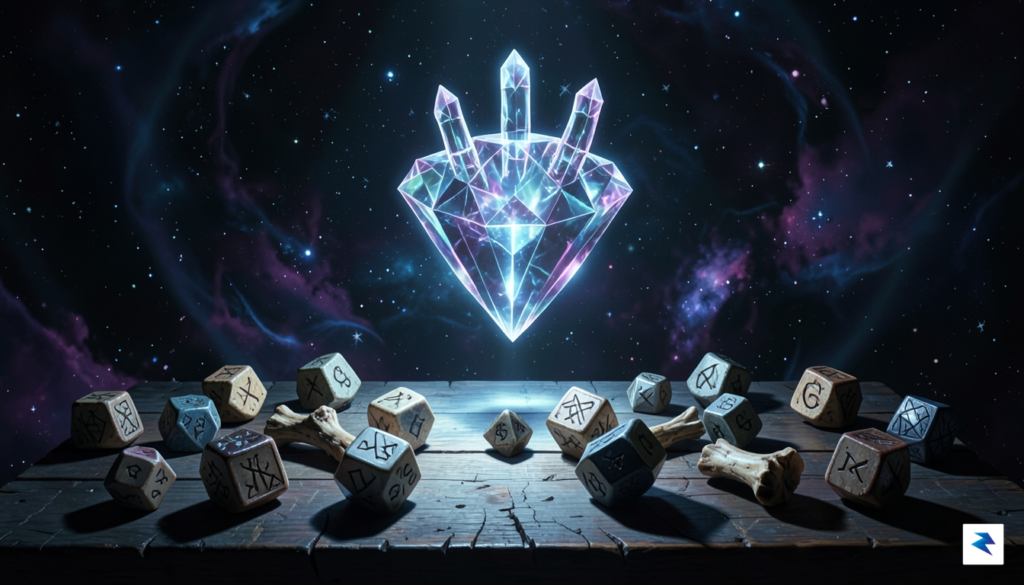
Ultimately, the value of the independent games movement lies in its refusal to conform. When creators prioritize “weirdness” over marketability, they expand the boundaries of what the medium is capable of communicating.
The gaming community benefits immensely from these bold, “unpolished” experiments because they act as essential catalysts for evolution within the medium. If every developer focused exclusively on refining the standard RPG loop, the genre would eventually stagnate, trapped in a cycle of iterative updates. Instead, projects like this one serve as a reminder that games are at their best when they act as vehicles for personal expression rather than commercial assets. By inviting players to grapple with the unknown and the intentionally strange, the game fosters a deeper, more meaningful connection between the creator’s intent and the player’s interpretation. In a market crowded with sequels and predictable formulas, the decision to produce something intentionally weird is perhaps the most radical act an indie developer can perform.
You must be logged in to post a comment.