
Why BlackRock’s $15B Crypto Inflow Couldn’t Stop a 39% Value Drop
The BlackRock Paradox: Massive Inflows vs. Market Volatility The recent performance of BlackRock’s crypto-focused investment vehicles presents…


For over a decade, the Ethereum Foundation (EF) has functioned as the steady hand guiding the world’s most influential smart contract platform. As a non-profit organization dedicated to the stewardship of the Ethereum protocol, its influence extends far beyond mere code updates; it serves as a cultural and technical compass for the entire decentralized ecosystem. Recently, however, the organization has entered a period of profound internal restructuring. While some observers have characterized these shifts as a sign of institutional turbulence, a closer examination suggests that the Ethereum Foundation is undergoing a calculated strategic evolution designed to ensure the network’s long-term resilience and adaptability in an increasingly complex digital landscape.

This organizational pivot is far from a crisis. Instead, it represents a necessary maturation phase for an entity that has grown alongside a global, multi-billion-dollar economy. As Ethereum transitions from its experimental beginnings toward a robust, scalable foundation for global finance, the administrative and operational requirements have shifted accordingly. By reallocating resources, redefining leadership roles, and sharpening its focus on specific development pillars, the Foundation is positioning itself to better support the thousands of developers, decentralized application builders, and investors who rely on the network every day. This recalibration is about streamlining bureaucracy to ensure that the core mission—maintaining the integrity and decentralization of the blockchain—remains the top priority.
The strength of a decentralized network is often tested not by its code, but by the transparency and clarity of the organizations that curate its development roadmap.
For the broader crypto community, these internal changes carry significant weight. When the EF adjusts its trajectory, the ripples are felt across the entire industry, influencing everything from layer-two scaling solutions to the future of decentralized finance (DeFi). Transparency is the bedrock of this transition; the community requires a clear understanding of how these structural adjustments impact decision-making processes and resource allocation. By communicating these changes openly, the Foundation is reinforcing the principle that, even within a centralized organizational structure, the goal remains the advancement of a permissionless, neutral protocol. As we look toward the future, these strategic refinements will likely be viewed as the vital steps that enabled Ethereum to scale from a niche experiment into the world’s primary settlement layer for the digital age.
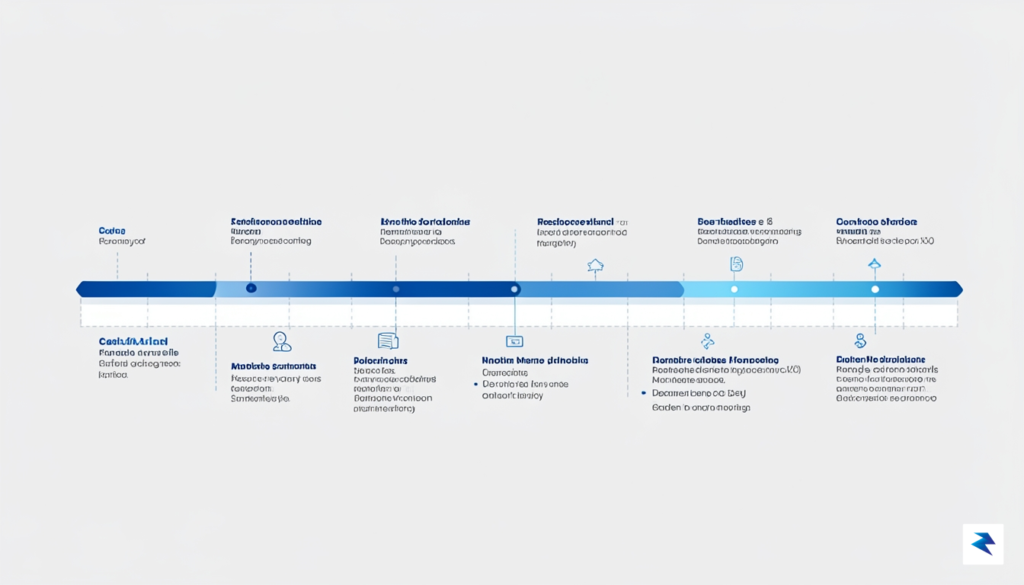
The first half of 2026 has functioned as a definitive period of recalibration for the Ethereum Foundation, marked by a series of deliberate moves toward a leaner, more agile operational framework. As the ecosystem matured, the internal pressures to optimize resources led to a staggered sequence of structural adjustments beginning in late January. The initial phase focused heavily on personnel, with the departure of several long-standing research leads and the consolidation of fragmented development teams into three primary “Core Focus” units. This move was widely interpreted by industry observers not as a sign of instability, but as a calculated effort to reduce administrative overhead and streamline the decision-making process for the upcoming network upgrades.

By the conclusion of the first quarter, the Foundation’s leadership had formalized a new budgetary policy that shifted funding priorities away from experimental, long-shot incubation projects and toward robust, sustainable infrastructure maintenance. This policy shift was accompanied by the announcement of a new internal governance audit, which sought to address the historical ambiguity surrounding how grant capital was allocated across global research hubs. As these audits progressed into April, the Foundation executed a significant role reassignment strategy, moving dozens of staff members from general administrative support into specialized roles dedicated exclusively to Layer 2 interoperability and client diversity initiatives. These transitions were carefully managed to ensure that institutional knowledge remained within the organization even as individual reporting lines were fundamentally redrawn.
The core of this restructuring is not about contraction, but about focus; by trimming the periphery, we ensure that the primary engine of Ethereum development remains fast, secure, and resilient against the complexities of the next decade.
Entering the second quarter, the impact of these changes became more visible through the Foundation’s updated development roadmap. By May, the previously diffuse organizational structure had been replaced by a tiered accountability system, forcing tighter alignment between software engineering milestones and the Foundation’s high-level strategic objectives. This evolution has resulted in a noticeably faster cadence for technical releases, proving that the move toward a more centralized project management style—while controversial among some purists—has succeeded in removing the bottlenecks that characterized previous years. As the Foundation moves into the second half of 2026, the pattern is clear: the era of sprawling, decentralized experimentation is being replaced by a disciplined, mission-oriented approach designed to secure Ethereum’s long-term dominance in the global financial stack.

The recent structural evolution within the Ethereum Foundation represents far more than a simple reshuffling of personnel; it marks a fundamental pivot from the scrappy, high-velocity agility of a startup toward the disciplined, institutional resilience required for a global public utility. For years, the Foundation operated with a degree of informality that allowed for rapid iteration, but as Ethereum has cemented its position as the bedrock of decentralized finance and internet infrastructure, that model has become increasingly untenable. The shift now underway is rooted in the realization that the original, highly centralized decision-making conduits were becoming systemic bottlenecks. By delegating authority and diversifying the internal management hierarchy, the Foundation is attempting to insulate the network’s core development from the risks of single-point-of-failure leadership.

A primary driver of this reorganization is the critical need to streamline the Ethereum Improvement Proposal (EIP) process, which has historically been hampered by administrative friction and informal gatekeeping. As the network matures, the complexity of technical upgrades has grown exponentially, necessitating a more rigorous, transparent, and modular approach to governance. By departmentalizing responsibilities and reducing the dependency on a small cohort of long-standing core contributors, the Foundation is aiming to broaden the contributor base. This move is designed to ensure that the EIP process is governed by meritocratic technical consensus rather than internal institutional momentum, thereby fostering a more inclusive environment for global researchers and developers.
The goal of this transition is not to consolidate power, but to deliberately dilute it, ensuring that the infrastructure remains robust enough to outlive any single organization or set of individuals.
Furthermore, the shift in resource allocation reflects a strategic move toward long-term sustainability. The Foundation is increasingly pivoting away from direct, top-down project management toward a more decentralized ecosystem-grant model. By empowering external teams and smaller, independent research groups, the leadership is effectively outsourcing innovation to those closest to the specific challenges of scaling and security. This transition of management styles—moving from a command-and-control structure toward a facilitator-based ecosystem—is essential for sustaining multi-generational innovation. It acknowledges that Ethereum’s strength lies in its permissionless nature, and that the Foundation’s role must evolve to be a steward of the ecosystem’s health rather than the primary architect of its day-to-day operations.

For the average developer operating within the Ethereum ecosystem, the recent structural recalibration at the Ethereum Foundation (EF) raises immediate questions regarding the pace of technical delivery. While the foundation has historically served as the primary engine for protocol upgrades like Pectra and long-term scalability roadmaps, shifts in internal personnel and operational cadence naturally create a sense of uncertainty. Developers who rely on the stability of the core protocol, as well as those building DApps that depend on specific EIPs, are primarily concerned with whether these organizational changes will lead to bottlenecks in the development pipeline. If the EF’s internal restructuring results in a more streamlined, albeit leaner, decision-making process, the ecosystem might eventually benefit from more focused and intentional upgrades. However, the transitional period requires careful monitoring to ensure that the rigorous testing and review processes that have defined Ethereum’s security posture remain uncompromised.

The stability of developer tooling remains a critical focal point during this period of transition. Many DApp builders rely on EF-supported libraries, testing frameworks, and documentation standards that have long been considered the industry gold standard. Any disruption in the support or maintenance of these tools could ripple outward, slowing down the deployment of decentralized applications or forcing teams to seek alternative, potentially less reliable, third-party solutions. As the Foundation adjusts its operational priorities, developers are watching closely to see if the allocation of resources for public goods and open-source tooling remains a top-tier mandate. A shift away from direct maintenance could force the community to take a more active role in sustaining the essential infrastructure that underpins the entire network.
The true test of these organizational changes will not be the speed of the next hard fork, but the sustained health of the decentralized community that builds upon it.
Furthermore, the evolution of grant funding and technical support programs presents a complex landscape for the ecosystem. Many projects have historically looked to the EF not just for financial backing, but for technical validation and mentorship that helps bridge the gap between experimental research and production-ready software. With the Foundation refining its focus, there is a growing expectation that the community must cultivate a more decentralized approach to funding and ecosystem stewardship. This transition might lead to a more fragmented, yet potentially more resilient, landscape where diverse organizations and DAOs take greater ownership of specific development verticals. While the immediate outlook suggests a period of adjustment, the long-term goal of a self-sustaining ecosystem remains the ultimate objective for all stakeholders involved.

The current organizational restructuring within the Ethereum Foundation should not be viewed as a sign of retreat, but rather as a strategic evolution designed to match the maturity of the ecosystem it serves. By trimming its internal scope, the Foundation is effectively transitioning from a central architect into a leaner, more focused coordinator. As we look toward late 2026 and beyond, this shift suggests that the heavy lifting of core development will increasingly be distributed across a wider array of independent teams, research collectives, and Layer 2 (L2) contributors. This diffusion of responsibility is a critical step toward ensuring that Ethereum remains a truly decentralized public good, rather than a project overly dependent on a single entity for its technical direction.
The technical roadmap for 2026 and beyond emphasizes a rigorous focus on scalability and security, particularly through the lens of finalizing roll-up-centric upgrades and optimizing data availability layers. As the Foundation steps back from direct oversight of certain implementation layers, it creates a vacuum that is already being filled by high-performing L2 teams like Optimism, Arbitrum, and ZK-sync providers. These organizations have a vested interest in the underlying security of the mainnet, and their increased involvement in protocol-level research acts as a natural safeguard against stagnation. Consequently, stakeholders should expect a more competitive landscape where technical improvements are proposed and vetted by a broader coalition, leading to faster iteration cycles and more robust network resilience.

A more decentralized Foundation does not imply a loss of direction; rather, it signifies the maturation of Ethereum into a self-sustaining protocol that thrives on multi-party collaboration.
For long-term holders and network participants, this shift signals a move toward a more “institutional-grade” infrastructure. While the transition may introduce short-term uncertainty regarding governance, the long-term goal is to harden the protocol against single points of failure. By 2027, the success of the Ethereum ecosystem will likely be measured by the diversity of its client implementations and the breadth of the organizations contributing to its core research. This decentralized model is ultimately what will allow Ethereum to compete against high-throughput, centralized alternatives, ensuring that it remains the primary settlement layer for global finance. In this new chapter, the strength of the network will stem not from the authority of one organization, but from the collective ingenuity of a global, decentralized workforce.
You must be logged in to post a comment.