
Microsoft’s AI-Driven Security Surge: Addressing a Record 570 Vulnerabilities
Understanding the Record-Breaking Patch Tuesday Microsoft's latest security update cycle, colloquially known as Patch Tuesday, has undeniably…
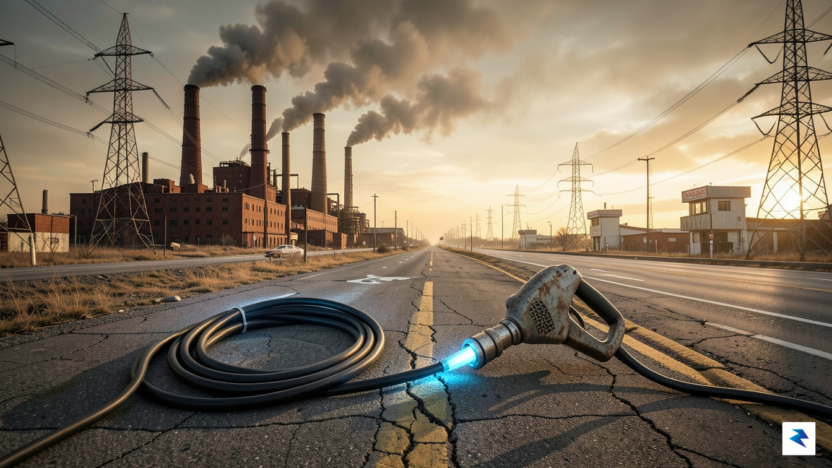
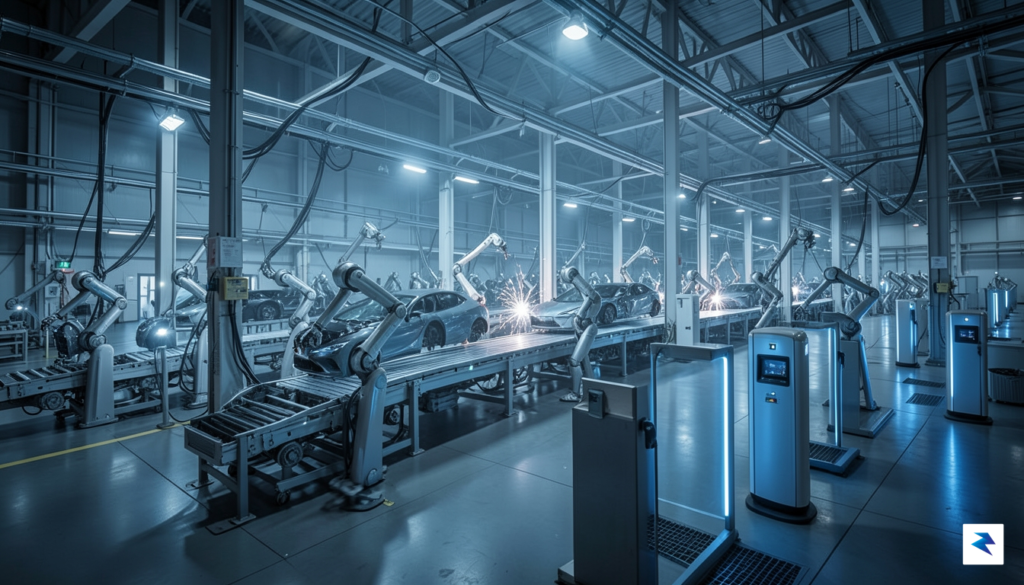
The electric vehicle revolution, which seemed like an inevitable, unstoppable wave just a few years ago, has encountered a formidable obstacle in the boardrooms of Detroit. Initially, major American manufacturers committed billions of dollars to a full-scale transition, driven by aggressive government targets and optimistic projections of rapid consumer adoption. However, that fervor has cooled significantly as the harsh realities of the current economic landscape have set in. High interest rates have made financing new, expensive vehicles difficult for the average buyer, while the persistent burden of high production costs—coupled with the complexities of scaling battery supply chains—has squeezed profit margins to unsustainable levels. Consequently, the industry is recalibrating its ambitions, signaling a departure from the “EV-or-bust” mentality that characterized the early 2020s.
This strategic retreat is not merely a pause; it is a fundamental shift toward the familiar, as automakers pivot back to hybrid technology as a safer, more profitable middle ground. Manufacturers have realized that the current infrastructure for pure electric vehicles, particularly regarding public charging accessibility and range anxiety, remains a significant deterrent for many prospective owners. By leaning into hybrids and plug-in hybrids, companies can offer consumers a bridge technology that provides the efficiency of electrification without the perceived drawbacks of a strictly battery-powered lifestyle. This approach allows carmakers to satisfy tightening emissions regulations while simultaneously protecting their bottom lines from the volatility of the nascent EV market.
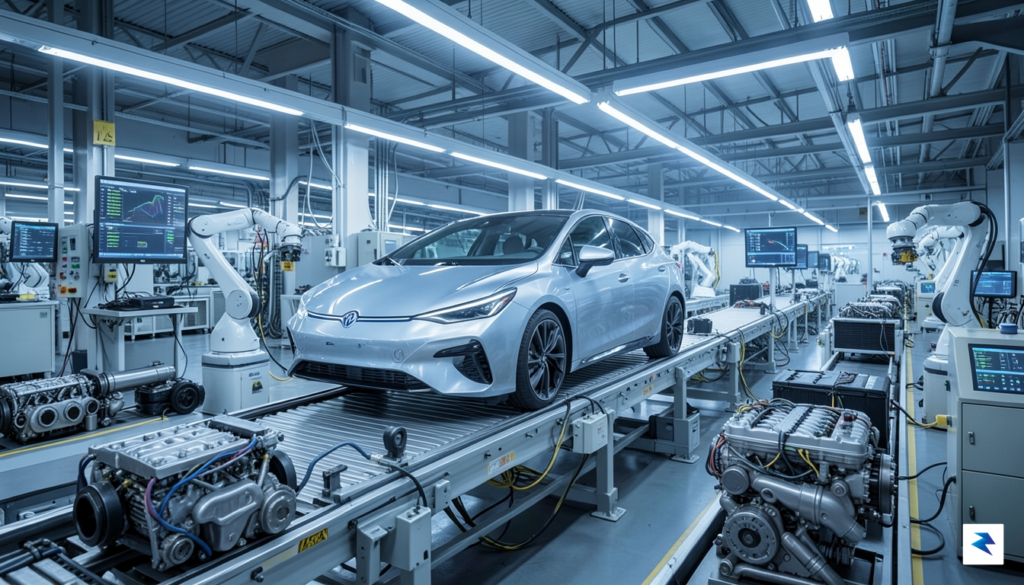
“The pivot to hybrids is less about abandoning the future and more about managing the present. By leveraging existing internal combustion platforms, automakers are effectively hedging their bets against a consumer base that is not yet ready for a total technological overhaul.”
However, this tactical reversal carries substantial long-term risks that could jeopardize the competitive standing of the U.S. auto industry. While domestic manufacturers focus on the immediate financial relief provided by hybrids, global competitors—particularly those in China and Europe—continue to pour resources into streamlining pure EV production and battery innovation. If American companies become too comfortable in the hybrid space, they risk falling behind the global technological curve, leaving them vulnerable to a future where the demand for fully electric transport eventually accelerates beyond the capacity of traditional hybrid platforms. By attempting to appease the current market’s hesitation, Detroit may inadvertently be trading long-term leadership for short-term stability, setting the stage for a difficult catch-up game in the decades to come.

While the internal combustion engine remains the heartbeat of American roads, the rest of the world has already begun its transition to a post-gasoline reality. In China, the global leader in electrification, electric vehicles (EVs) now account for nearly 40% of all new car sales, driven by a sophisticated ecosystem of battery manufacturing and aggressive government subsidies. Similarly, Europe is navigating a rigorous regulatory landscape, with mandates effectively phasing out the sale of new fossil-fuel vehicles by 2035. This global momentum is not merely a trend; it is a fundamental reconfiguration of the automotive supply chain that prioritizes software-defined vehicles and sustainable energy integration.

Conversely, the U.S. market is trapped in a state of hesitation that borders on paralysis. While domestic legacy automakers initially committed billions to electrification, recent quarterly reports reveal a widespread cooling of these ambitions. Faced with high interest rates, concerns over charging infrastructure, and a shifting political climate, manufacturers are pivoting back to hybrids and traditional internal combustion engines to maintain short-term profitability. This tactical retreat, while perhaps sensible for immediate shareholder returns, threatens to leave American companies structurally uncompetitive on the world stage. By slowing their pace, U.S. firms are essentially handing a decade-long technological advantage to international rivals who are already scaling production to levels that domestic manufacturers cannot currently match.
The divergence between international policy and domestic strategy creates a competitive vacuum; while global manufacturers gain efficiency through scale, American automakers risk tethering their future to a dying technology.
The gap is widening because electrification is not just about changing the powertrain; it is about mastering the entire value chain, from raw lithium processing to advanced software architecture. Global competitors have spent the last five years vertically integrating these processes, effectively lowering the cost-per-kilowatt-hour of their batteries. Meanwhile, American legacy manufacturers are still struggling to navigate the complexities of massive fleet electrification, often hindered by union negotiations and the high cost of retooling existing manufacturing plants. Unless the U.S. auto industry reconciles its domestic stagnation with the rapid acceleration of the global market, it faces the real prospect of becoming a regional player in an industry that is being defined, designed, and dominated abroad.
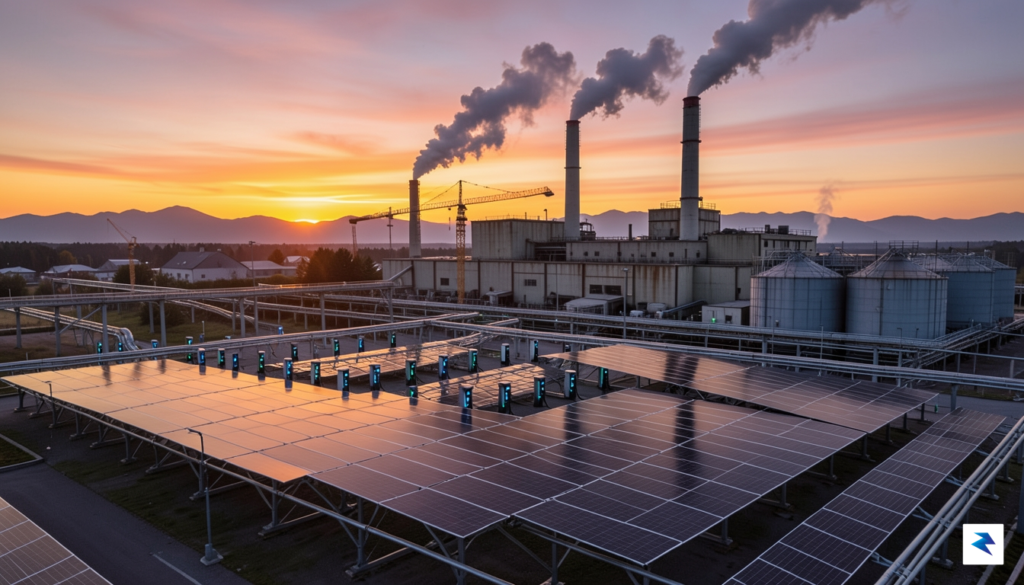
The sudden deceleration in electric vehicle production is creating a profound economic ripple effect that extends far beyond the boardroom. When automotive giants hit the brakes on EV investments, the most immediate victims are the thousands of workers whose livelihoods were tied to the promise of a “green” industrial revolution. From battery cell manufacturing plants in the Rust Belt to specialized tech development hubs, thousands of jobs are now in a state of suspended animation. This shift creates a volatile landscape for the labor force, as workers trained for high-tech assembly find their skills suddenly sidelined by a return to legacy internal combustion engine (ICE) production, potentially leaving a generation of automotive talent displaced or underutilized.
Beyond the factory floor, the retreat is actively starving the nascent national charging infrastructure of its necessary momentum. Private companies and utility providers that committed billions of dollars based on projected EV adoption rates are now reassessing their timelines, leading to a “chicken-and-egg” deadlock. Without a robust, reliable network of fast chargers, consumer anxiety remains high, further justifying the industry’s decision to scale back production. This creates a feedback loop that threatens to stall the transition indefinitely, effectively freezing capital in half-finished projects and preventing the emergence of a truly electrified national transportation grid.

The supply chain disruption caused by these delays is equally damaging, as the intricate web of suppliers—ranging from lithium processors to semiconductor manufacturers—faces immense financial instability. Many small and medium-sized enterprises pivoted their entire business models to support EV-specific components, such as electric powertrains and thermal management systems. When projects are canceled or indefinitely delayed, these suppliers are left holding expensive, specialized inventory with no buyer in sight. This instability ripples through the broader economy, potentially causing a cascade of contract defaults and bankruptcies among Tier 2 and Tier 3 suppliers who lack the deep cash reserves of the major automakers.
The retreat from EV investment is not just a tactical adjustment; it is a systemic shock that risks eroding the competitive advantage the U.S. worked years to cultivate in the global green energy market.
Ultimately, the economic toll of this retreat is a matter of lost time and strategic inertia. By delaying the scale-up of EV manufacturing, the domestic industry risks falling further behind international competitors who are doubling down on electrification despite global market fluctuations. This hesitation does not merely save costs in the short term; it cedes the future of automotive innovation to overseas rivals, potentially turning American manufacturing hubs into relics of a bygone era rather than the engines of the next century’s economy.

For decades, Detroit’s automotive giants have operated under a business model defined by incremental improvement, massive scale, and the steady, predictable revenue streams of internal combustion engines. However, the industry is now colliding head-on with what economists call the “Innovator’s Dilemma.” This classic trap occurs when successful companies focus so intently on satisfying their existing customers and protecting their current profit margins that they inadvertently ignore the disruptive technologies destined to replace them. By choosing to throttle back on their electric vehicle commitments in favor of short-term dividends and legacy sales, U.S. carmakers are essentially betting that the internal combustion engine has a longer shelf life than the global market—and the climate—will actually allow.
The danger of this “wait and see” approach is that it cedes the competitive high ground to EV-native companies that were never burdened by the weight of old-world manufacturing infrastructure. While legacy firms struggle to pivot their massive supply chains and unionized workforces toward battery-electric platforms, agile competitors are already iterating through their second and third generations of software-defined vehicles. These upstarts are not merely selling cars; they are selling tech-integrated mobility ecosystems that younger, data-conscious consumers increasingly expect. If Detroit continues to view electrification as a peripheral project rather than a core survival strategy, they risk becoming the next generation’s equivalent of the typewriter industry in the age of the personal computer.
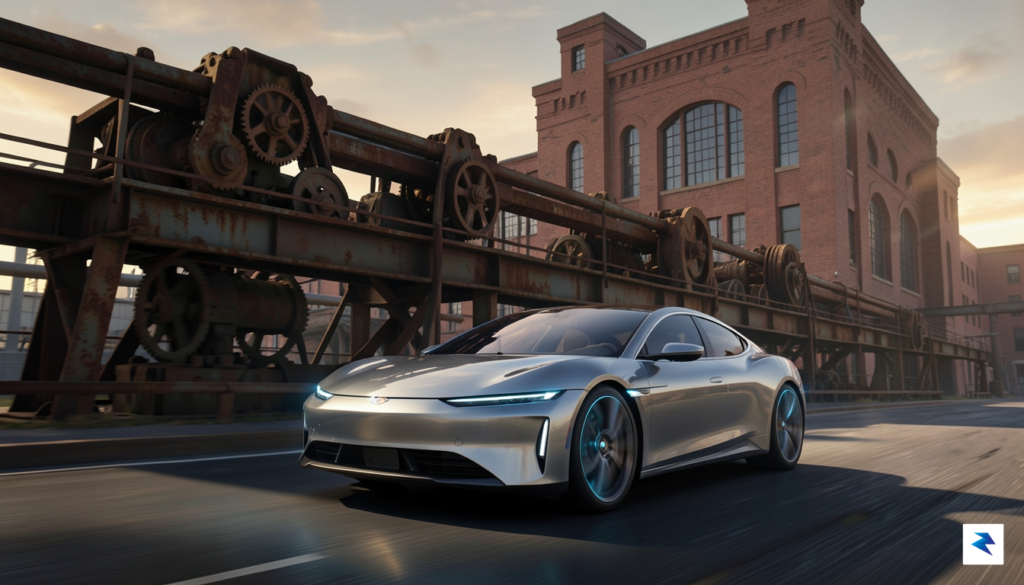
The true risk of the current EV retreat is not that carmakers will fail to sell enough cars today, but that they are systematically starving the R&D pipelines required to survive tomorrow.
Under-investing in battery technology and electric drivetrain research during this critical transition period is a recipe for permanent irrelevance. The global automotive landscape is rapidly polarizing between those who are mastering the complexities of the lithium-ion supply chain and those who are relying on outdated, carbon-reliant architectures. Should the U.S. industry fail to achieve economies of scale in the EV sector, they will inevitably find themselves dependent on foreign-owned intellectual property and battery cell production. This strategic reliance would strip American manufacturers of their autonomy, turning them into mere assembly houses for technologies developed by more forward-thinking international rivals.
Furthermore, the shift toward electrification is not merely a trend—it is a fundamental restructuring of what a vehicle actually is. By delaying the transition, legacy manufacturers are missing the opportunity to capture the massive value hidden in vehicle-to-grid integration, autonomous software subscriptions, and over-the-air updates. When a company chooses to double down on the past, they lose the ability to attract the top-tier engineering talent necessary to build the future. Ultimately, the cost of “playing it safe” today may well be the total loss of market dominance tomorrow, as the inertia of legacy manufacturing becomes an anchor that pulls them under in a sea of high-efficiency, battery-powered change.
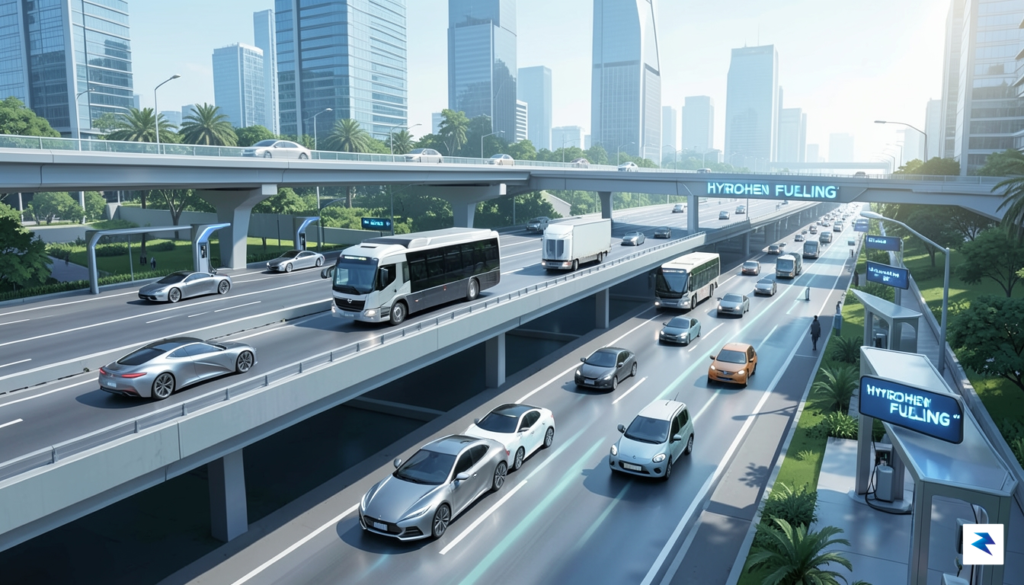
The narrative that the American automotive landscape must choose between a binary future of gasoline or electricity is increasingly viewed as a false dichotomy. As the initial surge of pure-electric enthusiasm settles into a more pragmatic market reality, industry analysts and manufacturers are pivoting toward a multi-modal energy strategy. This transition recognizes that charging infrastructure, geographic diversity, and varying consumer needs cannot be solved by a one-size-fits-all approach. Instead, the next decade will likely be defined by a sophisticated blend of powertrain technologies, where hybrids, plug-in hybrids, and high-efficiency internal combustion engines work in tandem with long-range electric vehicles to ensure mobility remains accessible and reliable for every American driver.
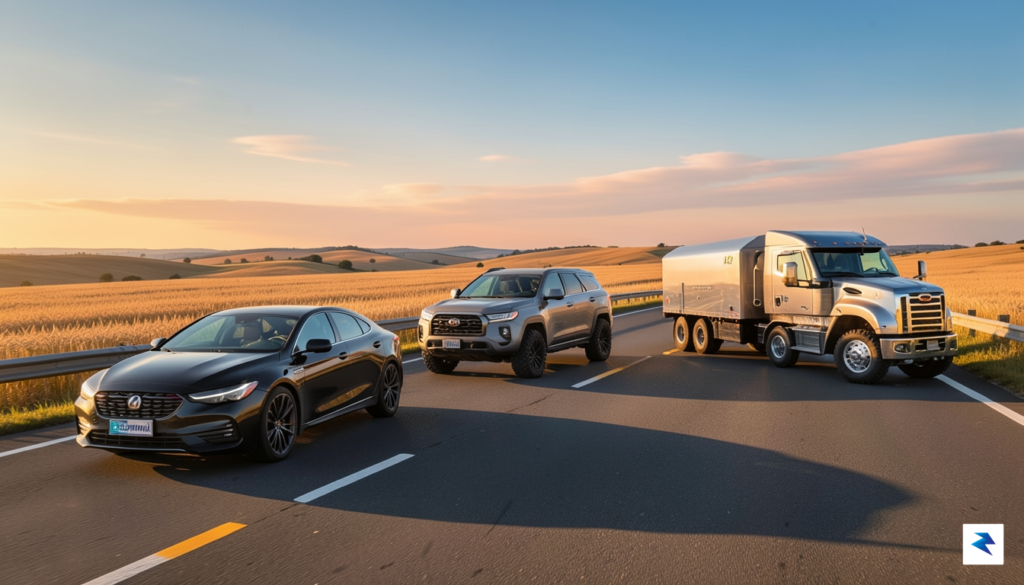
For the U.S. auto industry, this cooling period in EV adoption should not be mistaken for a permanent retreat or a sign of terminal decline. Rather, it serves as a necessary “market correction” that allows legacy automakers to recalibrate their supply chains and investment strategies. By shifting resources toward hybrid platforms—which currently offer a more palatable middle ground for price-sensitive consumers—manufacturers can maintain profitability while simultaneously refining battery technology and reducing manufacturing costs. This measured pace of electrification ensures that the domestic auto industry does not overextend itself, allowing for a more sustainable transition that aligns with the realities of the national power grid and raw material availability.
The future of transportation isn’t about picking a winner between competing technologies; it is about building an ecosystem resilient enough to thrive on a mix of energy sources.
Looking ahead, consumers should anticipate a marketplace characterized by choice rather than mandate. For those who prioritize fuel efficiency without the anxiety of charging infrastructure, the resurgence of hybrid technology—particularly “self-charging” models—offers a seamless bridge to a lower-carbon future. Simultaneously, hydrogen fuel cell technology is gaining renewed attention for long-haul trucking and heavy-duty logistics, potentially solving the weight and range limitations that currently hinder battery-electric solutions in commercial sectors. Ultimately, your next vehicle purchase will likely be dictated less by government policy and more by your specific driving habits, whether that means a plug-in hybrid for the suburban commute or a hydrogen-capable rig for cross-country logistics. The path forward is complex, but it is far from stagnant; it is a pragmatic evolution designed to keep America moving in an era of shifting energy priorities.
You must be logged in to post a comment.