Motorola Edge 70 Max Review: Power and Qi2 Charging Lead the Way
Introduction: The New Era of Motorola Flagships For years, Motorola has occupied a unique space in the smartphone market, often oscillating…


For decades, the standard for customer service automation was defined by the rigid, frustrating architecture of Interactive Voice Response (IVR) systems. These legacy frameworks, characterized by the mechanical “press one for sales, press two for support” experience, forced customers into a narrow decision tree that often failed to capture the nuances of their actual problem. While these systems successfully offloaded simple tasks, they functioned as barriers rather than bridges, frequently leading to high abandonment rates and deep customer dissatisfaction. In an era where efficiency is the primary metric for enterprise success, these outdated tools have become a liability, signaling to the consumer that their time is less valuable than the company’s operational convenience.
The modern landscape, however, is undergoing a profound shift toward natural language understanding (NLU), moving away from rigid inputs toward conversational fluidity. By leveraging sophisticated large language models and real-time processing, enterprises are finally able to deploy AI agents that can interpret intent, sentiment, and context in a way that feels human. This transition is not merely a technological upgrade; it represents a fundamental change in how businesses perceive the customer journey. Instead of forcing a caller to conform to the limitations of a machine, the machine is now learning to adapt to the idiosyncratic patterns of human speech.

Despite the rapid proliferation of chatbots and text-based messaging platforms, voice remains the gold standard for high-stakes customer support. When a customer picks up the phone to resolve a complex billing dispute, a technical outage, or a sensitive account issue, they are looking for more than just data—they are seeking empathy and immediate resolution. Voice is inherently the most emotionally complex medium because it carries the weight of tone, cadence, and urgency, variables that text-based interfaces often fail to capture.
Voice interaction serves as the ultimate litmus test for customer service; it is the moment where abstract brand promises are tested against real-world problem-solving capabilities.
Because of this emotional intensity, organizations are increasingly prioritizing voice-first AI strategies that can handle the nuance of human interaction while maintaining the scalability of a digital system. As enterprises look to bridge the gap between automated efficiency and personalized care, the ability to field calls with near-human comprehension has become a critical competitive advantage. This evolution is enabling companies to reclaim the intimacy of direct conversation, ensuring that even in an automated world, the customer feels heard, understood, and ultimately supported.
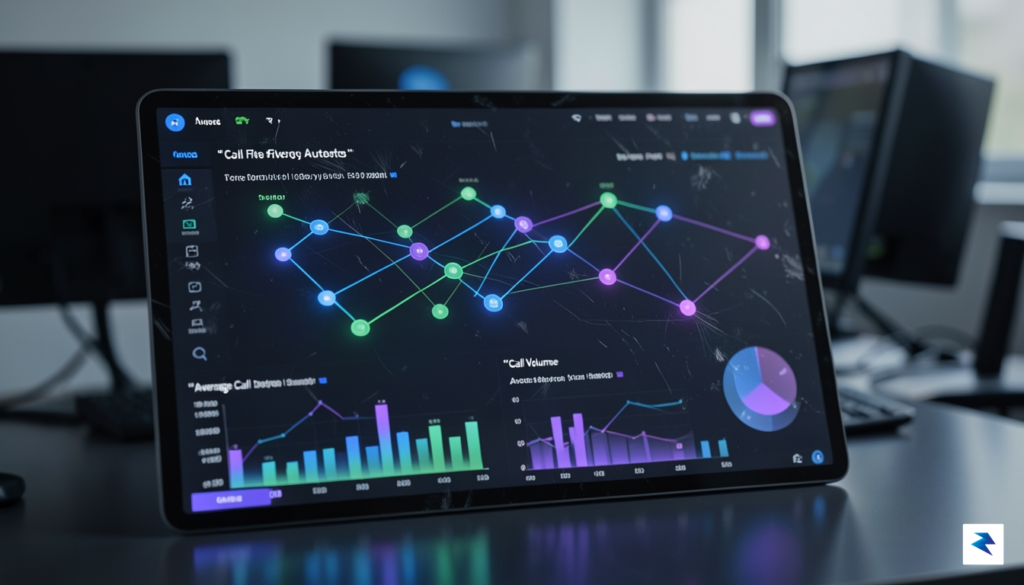
At the heart of Rime’s operational success lies a sophisticated architecture designed to move beyond the limitations of legacy voice processing. By leveraging a proprietary, high-throughput engine, the company has successfully architected a system capable of managing 100 million monthly calls with remarkable precision. This scale is not merely a numbers game; it represents a fundamental shift in how artificial intelligence interprets intent, tone, and context in real-time. By utilizing advanced neural network models that are optimized for voice latency, Rime ensures that every interaction feels conversational rather than mechanical, effectively bridging the gap between automated systems and human-like responsiveness.
The technical backbone of this performance is a low-latency pipeline that minimizes the time between a customer’s spoken word and the system’s analytical response. In high-volume enterprise environments, even a delay of a few hundred milliseconds can degrade the user experience, leading to frustration and abandoned calls. Rime mitigates this by distributing computational loads across a cloud-native infrastructure that prioritizes pathfinding and inference speed. Consequently, the engine can parse complex queries and retrieve information from massive datasets in a fraction of the time required by traditional interactive voice response (IVR) platforms, ensuring that customers receive answers before they ever feel the urge to press “zero” for a human representative.

Beyond raw speed, the true power of the platform is realized through its seamless integration into existing enterprise CRM ecosystems. Rather than forcing companies to overhaul their entire tech stack, Rime acts as an intelligent layer that sits atop current databases and customer management tools. This interoperability allows the AI to pull context-rich data—such as purchase history, previous support tickets, or account statuses—to provide highly personalized assistance during live calls. This synchronization ensures that the transition from an automated voice assistant to a human agent, when necessary, is frictionless, as the agent receives a comprehensive summary of the interaction immediately upon taking over.
The integration of Rime’s engine into daily operations results in a dual win: businesses achieve drastic reductions in average handle time, while customers benefit from significantly shorter wait times and immediate resolution of common inquiries.
Ultimately, the impact of this high-volume processing is felt most acutely in the reduction of operational bottlenecks. By offloading routine queries to an AI that operates with the speed and accuracy of a seasoned support veteran, enterprises can redistribute their human talent to handle complex, high-value problem-solving tasks. This strategic allocation of resources, driven by Rime’s ability to process millions of concurrent interactions, allows organizations to scale their support capabilities without linearly increasing their headcount, marking a definitive evolution in the efficiency of modern customer service infrastructure.

Managing the sheer volume of 100 million voice interactions per month requires more than just raw processing power; it demands a sophisticated, cloud-native architecture capable of near-zero latency and absolute reliability. When enterprises rely on voice AI to manage customer service, even a millisecond of lag or a minor system hiccup can result in a degraded user experience. To mitigate these risks, the underlying infrastructure must leverage distributed computing models that ensure constant uptime through extensive redundancy. By spreading workloads across geographically diverse server clusters, the system can automatically reroute traffic during localized outages, ensuring that enterprise clients never experience a service interruption, regardless of the scale of incoming demand.

Beyond simple uptime, the technical challenge lies in the nuance of human speech. Maintaining consistent quality across a global customer base means the platform must be inherently adaptive to a wide array of acoustic variables. This includes the ability to process diverse accents, varying dialects, and the common, unpredictable background noise of a bustling household or a busy street. The engineering team achieves this by employing advanced noise-cancellation algorithms and continuous model training, which allows the AI to filter out environmental interference while focusing on the intent of the caller. This granular level of optimization is essential for maintaining high resolution in voice recognition, ensuring that the technology remains effective even under sub-optimal conditions.
The true test of enterprise voice AI isn’t just handling volume; it is maintaining a high-fidelity, human-like interaction standard that remains consistent across millions of unique, unpredictable environments.
Finally, as these systems scale, the intersection of performance and security becomes a critical focal point. Handling millions of calls involves processing massive amounts of sensitive data, necessitating a robust framework of compliance protocols and end-to-end encryption. Security is not an afterthought but a foundational element of the system architecture, integrated into every layer of the voice-processing pipeline. By adhering to rigorous data privacy standards and implementing proactive threat detection, the platform ensures that client information remains protected against evolving cyber threats. Balancing this high-level security with the need for low-latency performance is a complex engineering balancing act, yet it is precisely this stability that allows large-scale enterprises to trust their customer-facing operations to an automated voice platform.

The infusion of $24 million into Rime marks a pivotal transition from an emerging contender to a serious player in the enterprise infrastructure space. This Series A capital serves as more than just a financial buffer; it acts as a strategic mandate to accelerate the development of high-fidelity, low-latency voice models that can withstand the rigors of mission-critical corporate environments. By securing this level of backing, the company is signaling to the market that it has moved beyond the “proof of concept” phase and is now ready to build the robust, scalable architecture necessary to displace traditional, clunky IVR systems and human-heavy call centers.
For the broader voice AI landscape, this funding round underscores an intensifying arms race. Competitors are no longer just fighting over accuracy metrics; they are competing to prove who can offer the most seamless, human-like integration into existing enterprise workflows. Rime’s roadmap is likely to prioritize deeper contextual awareness, allowing their AI agents to handle complex, non-scripted customer interactions that were previously thought to be the exclusive domain of human representatives. Consequently, we should expect to see the company aggressively pursue talent acquisition in the fields of conversational design and large language model optimization, ensuring their product remains at the cutting edge of linguistic nuance and emotional intelligence.

The capital infusion signals that the market is ready for a fundamental shift in how enterprises engage with customers, moving away from rigid automation toward dynamic, real-time conversational intelligence.
Looking ahead, the allocation of these funds will likely be split across three core domains: R&D, market expansion, and infrastructure hardening. First, we anticipate a rapid iteration of their feature set, specifically targeting multi-lingual support and real-time sentiment analysis, which are critical for global enterprises operating across diverse markets. Second, the investment will facilitate a wider go-to-market strategy, allowing Rime to scale its sales and engineering teams to support enterprise-grade deployments that require stringent security, compliance, and custom integration capabilities. Finally, the company will likely focus on reducing the latency gap, aiming to make AI-led phone interactions indistinguishable from speaking with a live expert.
Ultimately, this funding round places Rime in a strong position to redefine customer experience standards. As the voice AI space matures, the companies that succeed will be those that can successfully bridge the gap between complex technical capability and intuitive, user-friendly deployment. With $24 million in their arsenal, Rime is now equipped to not only build these advanced tools but to ensure they are adopted at scale by the world’s largest companies, effectively setting the new gold standard for the future of digital communication.

The prevailing narrative surrounding voice technology often focuses on the displacement of human labor, yet the true evolution of enterprise customer service points toward a more nuanced, collaborative future. Rather than functioning as a wholesale replacement for support staff, Generative AI is rapidly maturing into a sophisticated co-pilot that works in tandem with human agents. By surfacing real-time insights, suggesting context-aware responses, and automating post-call documentation, these systems allow representatives to focus on the nuance of human empathy and complex problem-solving. This shift transforms the agent from a data-entry clerk into a high-level manager of the customer relationship, supported by an intelligence layer that never tires and never forgets a policy detail.

Central to this transition is the emergence of “human-in-the-loop” workflows, where the AI handles the heavy lifting of information retrieval while the agent acts as the final decision-maker. This hybrid model ensures that when a customer is dealing with high-stakes issues—such as complex billing disputes or technical troubleshooting—the machine provides the necessary data, but the human provides the necessary judgment and tone. By streamlining these interactions, organizations can significantly reduce the cognitive load placed on employees, leading to lower burnout rates and higher job satisfaction. Ultimately, this synergy creates a feedback loop where the AI learns from the human’s successful interventions, constantly refining its own accuracy and helpfulness over time.
The future of enterprise voice isn’t about choosing between machine efficiency and human warmth; it is about leveraging AI to amplify the capabilities of the human worker, creating a seamless experience where the technology disappears into the background of a perfect conversation.
Looking ahead, the long-term impact on enterprise operations will likely be measured by a significant stabilization of operational costs alongside a measurable surge in customer satisfaction scores (CSAT). As voice AI becomes more personalized, it will no longer sound like a scripted bot but rather a tailored assistant that understands the customer’s history, sentiment, and unique preferences before the agent even picks up the phone. This level of hyper-personalization, combined with the irreplaceable soft skills of a well-supported human agent, will redefine the standard for customer service excellence. Companies that successfully implement this hybrid model will find that they are not just resolving tickets faster, but building deeper, more enduring brand loyalty in an increasingly automated marketplace.
You must be logged in to post a comment.