
Rime Secures $24M to Redefine Enterprise Voice AI
The Evolution of Enterprise Voice AI For decades, the standard for customer service automation was defined by the rigid, frustrating…


For the past two years, the global conversation surrounding artificial intelligence has been dominated by a singular, obsessive focus: the “parameter race.” Tech giants and startups alike have poured billions into building increasingly massive, capable large language models, treating benchmarks like standardized tests for machine intelligence. However, we have officially reached a point of diminishing returns where raw computational horsepower is no longer the ultimate differentiator. Enterprises are experiencing a collective sense of “model fatigue,” realizing that possessing the most advanced algorithm is fundamentally different from possessing a tool that actually improves a company’s bottom line.
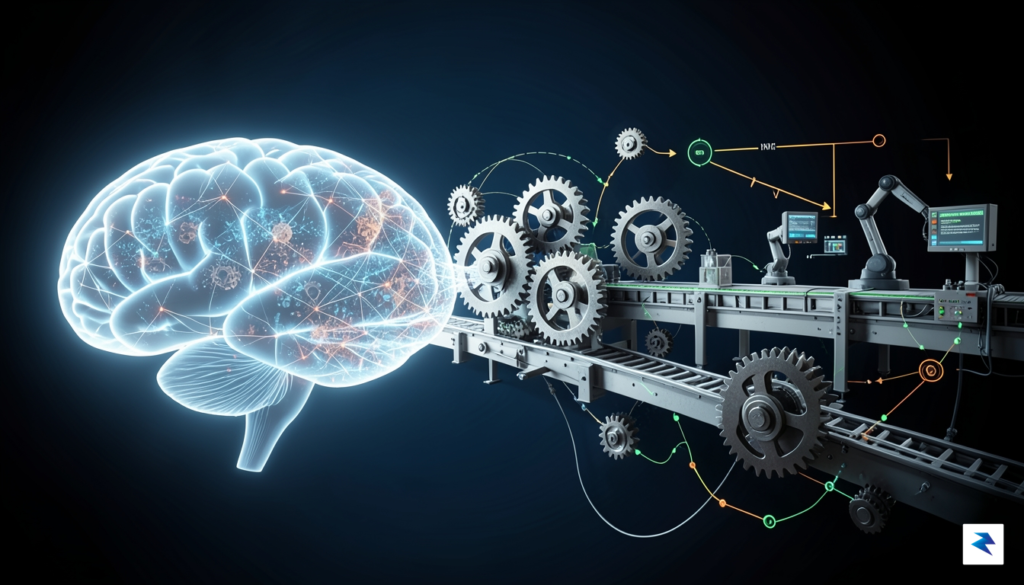
The primary friction point for businesses today is the “black box” nature of foundational models. While these systems are undeniably impressive at generating creative content or summarizing text, they often lack the reliability, security, and domain-specific context required for mission-critical operations. Leaders are no longer satisfied with vague promises of “transformative AI”; they are demanding tangible integration that accounts for legacy tech stacks, strict regulatory compliance, and unique company data. The focus is shifting away from what a model can do in a vacuum, and toward how it can be woven into the messy, complex reality of daily business operations.
The true measure of AI success is no longer found in a benchmark leaderboard, but in the efficiency, cost reduction, and new value creation captured within an enterprise’s existing workflow.
This transition marks a departure from the “AI gold rush” era of speculative hype toward an era of disciplined, ROI-focused engineering. Companies are now asking harder questions: How does this model integrate with our customer relationship management software? Is the output verifiable and auditable? Can this system reliably perform a specific task without hallucinating during a high-stakes transaction? These are the questions of implementation, and they are significantly harder to answer than simply training a larger model.
Ultimately, the next trillion-dollar opportunity lies in the “connective tissue” of the AI stack. It is about building the middleware, the data pipelines, and the specialized interfaces that allow general-purpose models to become functional business tools. By prioritizing practical deployment over theoretical potential, organizations are finally moving toward a future where AI is not just a fascinating experiment, but an invisible, indispensable layer of the global economy. The winners of this next chapter will not necessarily be those who own the largest model, but those who best solve the challenge of making AI actually work for the people who need it most.

The gulf between a successful proof-of-concept and a fully operationalized enterprise AI system is often referred to as the last mile problem. While generic large language models (LLMs) demonstrate impressive capabilities in chat interfaces, they frequently falter when thrust into the messy reality of corporate infrastructure. The core issue lies in the fact that these models are trained on the vast, generalized knowledge of the public internet, whereas businesses operate on proprietary workflows, idiosyncratic data structures, and highly specific regulatory requirements. When a model lacks the context of how a particular firm processes contracts, manages supply chains, or interprets internal compliance policies, it produces outputs that are often technically sound but functionally useless.
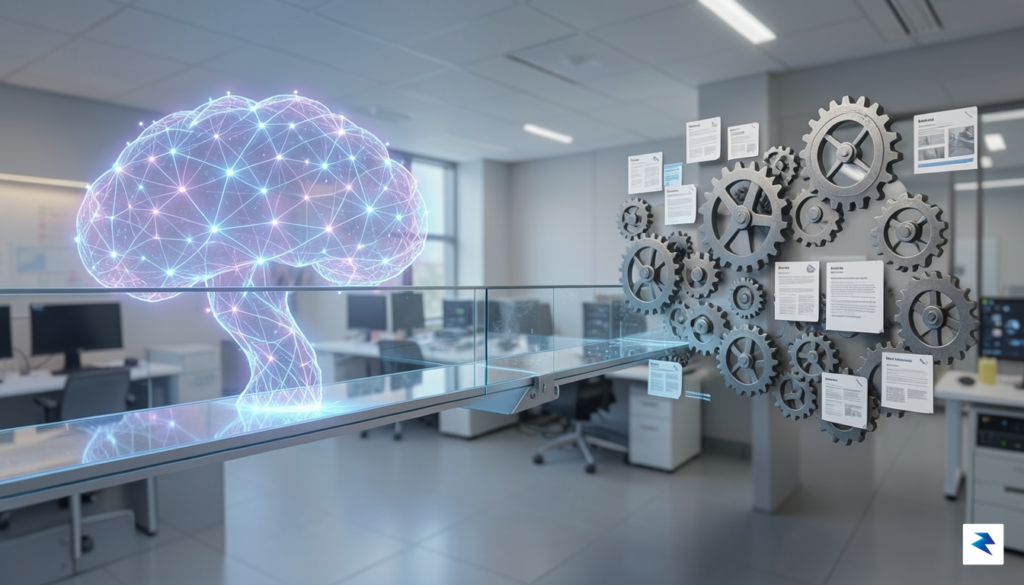
Furthermore, organizations are heavily burdened by legacy technical debt that acts as a friction point against rapid AI integration. Most enterprises rely on fragile, decades-old software systems that were never designed to interact with modern APIs, let alone the stochastic nature of probabilistic AI. Bridging these systems requires more than just code; it requires a deep architectural overhaul to ensure that sensitive enterprise data remains secure and private while being accessed by an LLM. Security teams are understandably hesitant to feed proprietary intelligence into external models, creating a deadlock where the desire for AI-driven efficiency clashes with the absolute necessity of data governance.
Compounding these technical hurdles is the severe shortage of specialized talent capable of operationalizing these systems. Deploying AI at scale is not merely a task for software engineers; it requires a new breed of AI practitioners who understand the nuance of fine-tuning models, implementing Retrieval-Augmented Generation (RAG) pipelines, and establishing rigorous evaluation frameworks. Many firms lack the internal expertise to bridge the gap between a model’s raw output and the high-reliability standard required for business-critical applications.
The true challenge for the next generation of enterprise AI is not building a smarter model, but building the plumbing that allows existing, siloed corporate data to interact with those models safely and accurately.
Ultimately, the transition from experimentation to production necessitates a shift in perspective. Businesses must stop viewing AI as a “plug-and-play” utility and start treating it as a complex, custom-engineered component that requires ongoing maintenance. Until companies can successfully navigate the complexities of fine-tuning for their specific domains and integrate these systems into their rigid security frameworks, the transformative potential of AI will remain largely trapped in the pilot phase, unable to achieve the enterprise-grade reliability required for real-world impact.

The true bottleneck in the current artificial intelligence revolution is no longer the raw intelligence of the models themselves, but rather the friction inherent in deploying them into complex, legacy environments. Enter Ode, a new startup venture backed by industry titans like Anthropic and Blackstone that seeks to solve this problem through a radical return to high-touch consulting. Unlike the prevailing industry trend of delivering software via remote APIs and self-service documentation, Ode is built around the concept of forward-deployed engineering. This strategy involves embedding expert software engineers directly into a client’s office, effectively placing the builders in the same room as the business problems they are tasked to solve.

Forward-deployed engineering is a philosophy popularized by firms like Palantir, where the objective is to move beyond the traditional “consultant” role and become an extension of the client’s internal team. In the context of AI, this model functions as a critical bridge between the raw power of Anthropic’s large language models and the messy, specific realities of a client’s proprietary tech stack. Rather than merely providing a tool and hoping for the best, Ode’s engineers act as tactical architects who navigate the unique cultural nuances, security constraints, and data silos that often prevent companies from successfully operationalizing advanced machine learning. By working on-site, these engineers can rapidly iterate, gather immediate feedback, and troubleshoot integration issues in real-time, drastically reducing the time-to-value for complex AI implementations.
The value of AI is not found in the latent potential of a model, but in the precision with which that model is mapped to a company’s specific operational needs.
There is a distinct advantage to this physical presence that remote support simply cannot replicate. When an engineer sits alongside the stakeholders who manage a company’s infrastructure, they gain a holistic understanding of the technical debt, regulatory hurdles, and workflow inefficiencies that are rarely captured in a Jira ticket or a Zoom call. This immersive approach allows Ode to customize the deployment of AI in ways that align with the client’s existing architecture rather than forcing the client to adapt to the model. By fostering this level of deep integration, Ode ensures that the AI isn’t just an experimental plugin, but a core component of the business’s infrastructure, capable of delivering sustainable and measurable ROI. Ultimately, this approach signals a shift in the tech landscape: the most valuable companies of the next decade may not be those that build the most powerful models, but those that provide the expertise to make them work in the real world.

The recent alignment between Anthropic, a leader in frontier AI safety and intelligence, and Blackstone, the world’s largest alternative asset manager, signals a profound shift in the artificial intelligence landscape. For years, the industry narrative centered almost exclusively on the “arms race” of model development—who could build the largest, most capable neural network with the lowest latency. However, by funneling significant interest and capital into implementation-focused platforms like Ode, these titans are effectively declaring that the “model era” is maturing into an “application era.” This transition acknowledges that a sophisticated model is merely a raw material; its true economic potential remains latent until it is surgically integrated into the complex, messy workflows of global enterprise.
For Blackstone, this move is a strategic imperative designed to future-proof its sprawling portfolio of companies. By prioritizing implementation, the firm is not just chasing a trend; it is seeking a scalable methodology to extract tangible ROI from AI across diverse sectors ranging from real estate to logistics. The bottleneck for most corporations is no longer the availability of high-end API access, but rather the internal expertise required to deploy these tools without disrupting core operations. By fostering an ecosystem that prioritizes the “how” over the “what,” Blackstone is positioning itself to lead a wave of operational efficiency that transcends the initial hype cycle of generative AI.
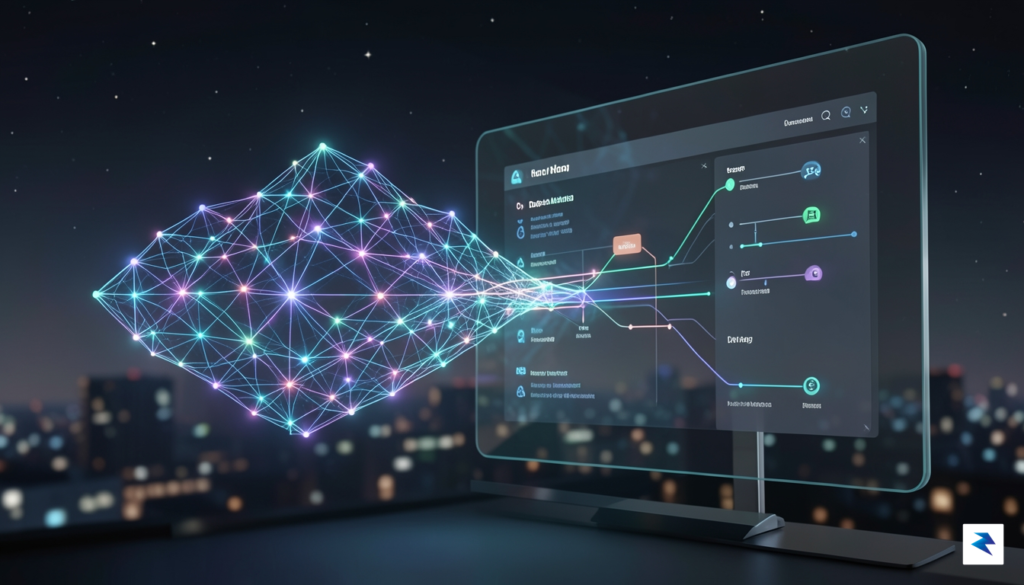
The value of an AI model is not measured by its parameter count, but by the friction it removes from the daily operations of a Fortune 500 company.
This pivot toward service-heavy models represents a departure from the traditional “product-only” SaaS mindset that has dominated tech for the last two decades. While pure software solutions once offered infinite scalability, the current AI market demands a hybrid approach where technical implementation acts as a force multiplier for human labor. Firms that can bridge the gap between abstract machine intelligence and concrete business outcomes are rapidly becoming more valuable than the model providers themselves. As Anthropic continues to push the boundaries of what is possible, their participation in this implementation layer ensures that their technology is not just powerful, but practically indispensable to the architects of the modern economy.
Ultimately, this partnership illustrates a maturing market sentiment that favors utility over novelty. Investors and executives are increasingly skeptical of “AI-enabled” features that lack a clear path to profitability or process improvement. By betting on implementation, Anthropic and Blackstone are banking on the reality that the next trillion-dollar opportunities will belong to those who can operationalize intelligence. In this new paradigm, the real competitive advantage is found in the architectural design of the deployment—the invisible infrastructure that ensures AI works not just in a controlled laboratory setting, but in the chaotic, high-stakes environment of global industry.

The maturation of the enterprise AI market signals a definitive end to the “model-first” gold rush, shifting the competitive landscape toward deep, operational integration. As organizations move past the novelty of generative chat interfaces, the measure of a successful AI firm will no longer be the parameter count of their models or the sophistication of their underlying architecture. Instead, success will be defined by the ability to engineer bespoke, high-stakes workflows that actually function within the rigid, security-heavy environments of the Fortune 500. This transition marks the emergence of the consulting-engineering hybrid—a model that marries the deep technical expertise of a software company with the nuanced, high-touch strategy typically reserved for elite management consultancies.

Traditional consulting giants will face an existential pivot as this hybrid model becomes the standard. For decades, these firms have sold strategy and digital transformation roadmaps, often relying on third-party vendors for the actual technical execution. However, in the era of AI-native implementation, the gap between strategy and execution is shrinking to near zero. If a firm cannot build, deploy, and maintain the AI systems they propose, they risk becoming obsolete. We should expect to see aggressive consolidation, where legacy consulting firms move to acquire boutique AI engineering shops, not just to buy talent, but to secure the operational blueprints required to bridge the gap between model potential and enterprise reality.
The true “moat” in the next decade of AI will not be the proprietary algorithm, but the proprietary integration—the invisible, complex layer of middleware and human-in-the-loop oversight that allows an AI to perform reliably in a mission-critical business context.
This shift toward “Ode-style” implementation—where the provider takes direct responsibility for outcomes rather than just selling access to an API—is inherently sustainable because it solves the biggest pain point in the industry: the “last mile” problem. Most AI projects currently fail not because the models are weak, but because they lack the contextual scaffolding to manage edge cases, handle sensitive data governance, and integrate with legacy enterprise software. By embedding engineering teams directly into the client’s operational flow, companies ensure that AI adoption is iterative and measurable. Ultimately, the next trillion-dollar opportunity lies in human-in-the-loop engineering. As AI systems become more capable, the demand for sophisticated human oversight, rigorous validation protocols, and iterative tuning will only increase, making these hybrid service providers the essential architects of the modern industrial economy.
You must be logged in to post a comment.