
Misa77: The New Codec Shattering Decompression Speed Records
Introduction to Misa77: A New Frontier in Compression In an era defined by massive datasets and the relentless demand for real-time data…


The once-cohesive culture at OpenAI is facing an unprecedented litmus test, as a palpable rift deepens between the organization’s top brass and the workforce tasked with building the future of artificial intelligence. This internal friction reached a boiling point with the revelation that a group of OpenAI staffers collectively funneled $215,000 into the Guardrails Alliance, a super PAC specifically designed to counter the political influence and lobbying efforts of their own leadership. By effectively funding an opposition movement against the company’s executive strategy, these employees have signaled that their commitment to safety and ethical alignment outweighs their loyalty to the current corporate agenda. It is a rare and bold act of defiance that highlights a fundamental disagreement over how AI should be governed and who should hold the reins of power in Washington.

This shift reflects a broader, uncomfortable transition for OpenAI, which began its life as a non-profit entity dedicated to the democratized, safe development of AGI. As the company has pivoted toward a high-stakes, capital-intensive corporate environment, many employees feel that the original mission has been eclipsed by the pressures of market dominance and political maneuvering. The decision to back the Guardrails Alliance is not merely a financial contribution; it is a symbolic reclamation of the values that initially attracted top-tier researchers to the project. They are increasingly concerned that the company’s aggressive lobbying is compromising the very safeguards they were hired to implement, leading to a clash between the “safety-first” culture of the engineers and the “growth-at-all-costs” mentality of the corporate suite.
The emergence of employee-funded PACs within the tech industry signals a new era of worker activism where the stakes are no longer just wages or benefits, but the fundamental ethical direction of the world’s most powerful technologies.
Ultimately, this movement serves as a barometer for the changing landscape of the tech sector at large. In an era where AI development has become a matter of national security and economic hegemony, employees are no longer content to act as silent contributors to corporate strategies they fundamentally oppose. By organizing and mobilizing their own resources, these staffers are challenging the traditional power dynamics of Silicon Valley. They are essentially demanding a seat at the table, forcing a public conversation about whether the entities creating the most transformative tools in human history should be allowed to operate with unchecked political influence. This internal war suggests that the future of OpenAI—and perhaps the future of AI regulation itself—will be shaped as much by internal dissent as by external policy.
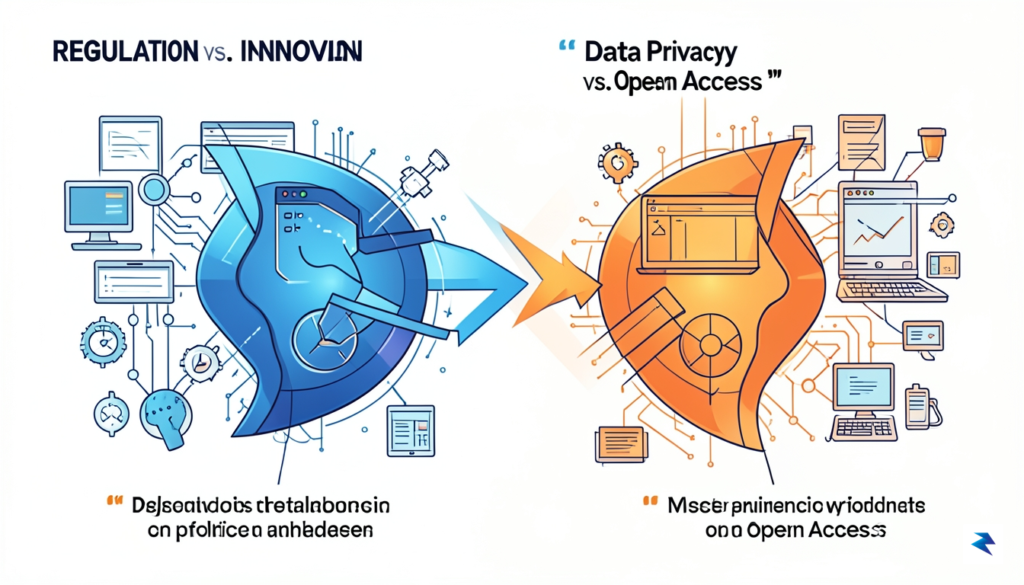
At the center of this burgeoning internal conflict lie two distinct political organizations that represent diametrically opposed philosophies regarding the future of artificial intelligence. On one side, Leading the Future, a Super PAC supported by high-profile OpenAI figures like Greg Brockman, advocates for a regulatory environment that prioritizes rapid innovation and American technological dominance. Their mission is rooted in the belief that keeping AI development agile and unencumbered by overly restrictive legislation is the only way to ensure the United States maintains its competitive edge against global rivals. They argue that excessive bureaucracy could stifle the very breakthroughs necessary to solve complex societal problems, effectively lobbying for policies that align with the company’s current trajectory and executive vision.
Conversely, the Guardrails Alliance has emerged as a grassroots movement funded by concerned OpenAI staffers who fear that the current pace of development is outstripping the necessary safety protocols. Their agenda focuses on implementing stringent oversight, mandatory transparency standards, and robust ethical testing frameworks before powerful new models are released to the public. By pooling their own financial resources, these employees are attempting to tip the scales toward a model of “responsible innovation” that prioritizes risk mitigation over sheer speed. They contend that without external, legally mandated guardrails, the temptation to rush product launches in a competitive market will inevitably lead to systemic failures that could have profound consequences for society.

The clash between these two groups represents a fundamental tension in the tech industry: whether the stewardship of transformative technology should be left to the companies creating it, or if it requires a robust, proactive regulatory framework imposed from the outside.
The emergence of this employee-funded opposition raises significant legal and ethical questions regarding the relationship between a workforce and its leadership. Historically, employees rarely engage in direct political funding to counter the explicit interests of their own executives, creating a complex power dynamic within the office. From a corporate governance perspective, this move signals a profound breakdown in internal alignment, as staff members feel compelled to use their personal capital to influence the legislative landscape in a direction their own management opposes. While such activism is technically a matter of personal choice, it introduces friction into the workplace culture, forcing a debate over whether political advocacy against one’s employer constitutes a conflict of interest or a necessary exercise of civic duty in an era where AI development carries such high stakes.
Ultimately, this standoff highlights the reality that AI is no longer just a technical challenge; it has become a political battleground. As these two PACs continue to lobby lawmakers, their efforts will likely shape the legislative environment for years to come. Whether the outcome results in a federal mandate for safety or a streamlined path for commercial deployment remains to be seen, but the internal rift at one of the world’s leading AI laboratories confirms that even those closest to the technology are deeply divided on how it should be governed.

At the heart of this internal schism lies a profound, existential disagreement regarding the definition of “safe” AI development. While leadership often prioritizes rapid deployment to maintain a competitive edge and capture market share, a growing contingent of researchers and staff argues that the current trajectory lacks the necessary friction to prevent potential catastrophe. This isn’t merely an office disagreement over product roadmaps; it is a fundamental clash of philosophies concerning the speed of innovation versus the stability of society. By forming political action committees, these employees are essentially moving their internal dissent into the public sphere, seeking to codify specific safety standards into federal law rather than relying on the self-regulation of tech giants.
The rise of these rival political entities highlights a growing recognition that lobbying will play a decisive role in shaping the future of global AI policy. For years, the tech industry has enjoyed a relatively light-touch regulatory environment, but as the capabilities of large language models reach critical thresholds, federal oversight has become inevitable. Those funding these new PACs are advocating for binding, enforceable guardrails—such as mandatory risk assessments, transparency requirements for training data, and strict accountability for catastrophic failure modes—that go far beyond the voluntary pledges currently favored by corporate executives. They argue that without legislative intervention, the economic incentives of the market will consistently outweigh the long-term societal risks, leading to a “race to the bottom” where safety is sacrificed in the name of speed.

Conversely, the debate over “responsible innovation” remains highly polarized, with each side interpreting the concept through different lenses. Proponents of the current rapid-deployment model often contend that aggressive development is the only way to ensure that democratic nations retain an advantage over global rivals, framing safety as an impediment to progress. In contrast, the dissenting staffers argue that true responsibility involves acknowledging the high-stakes nature of the technology and building comprehensive systemic redundancies before releasing powerful models into the wild. Their goal is to influence lawmakers to prioritize long-term safety research over short-term commercial expansion, effectively institutionalizing a precautionary approach that forces developers to prove their systems are secure before they are granted widespread access.
The core of the conflict is a shift in power: by moving the debate from internal Slack channels to the halls of Congress, staff are signaling that they no longer trust corporate hierarchies to prioritize public safety over the bottom line.
Ultimately, the emergence of these PACs represents a turning point in how tech workers engage with the political apparatus. By leveraging their specialized knowledge to influence federal policy, these employees are attempting to bridge the gap between technical complexity and legislative action. They are betting that if they can successfully lobby for robust guardrails now, they can mitigate the risks of autonomous systems while still allowing for the benefits of AI to flourish. Whether these groups succeed in shifting the legislative needle will likely determine whether the future of artificial intelligence is guided by a focus on human-centric safety or defined by the unchecked pace of corporate competition.
The emergence of a staff-funded Super PAC at OpenAI represents a seismic shift in the historical arc of Silicon Valley’s engagement with Washington. For decades, the tech sector operated under a “move fast and break things” ethos that largely sidelined traditional lobbying in favor of disruption, assuming that policy would naturally catch up to innovation. When companies like Google and Amazon eventually built out massive government affairs teams, they followed the traditional corporate playbook: donating to establishment candidates and hiring seasoned K Street veterans to protect their bottom lines. Today, however, we are witnessing the rise of a new, decentralized model of influence where the power dynamics have inverted, moving from the boardroom down to the individual contributor.
This internal activism is a direct evolution of the worker-led movements that previously roiled the tech industry. In years past, employee dissent at companies like Google—such as the massive 2018 walkouts over handling of sexual harassment or internal protests regarding Project Maven—focused largely on internal ethics and corporate culture. While those movements were instrumental in shaping how companies viewed their social responsibilities, they were primarily reactive. By contrast, the current move by OpenAI staffers to fund an external political entity marks an aggressive, proactive pivot. These employees are no longer just asking for internal policy changes; they are actively attempting to steer the external regulatory environment, effectively creating an alternative power center that challenges the strategic priorities of their own executive leadership.

Whether this trend signifies the birth of a new, permanent political force remains to be seen, but the implications for legislative debates are profound. As artificial intelligence becomes the primary focus of global regulatory scrutiny, the traditional lobbying strategy—where a CEO speaks for the entire company—is increasingly viewed as insufficient or biased by the very engineers building the technology. This creates a fascinating, and perhaps unprecedented, dynamic in political history:
The transition from internal petitioning to external political fundraising suggests that Silicon Valley’s workforce has realized that the most effective way to hold a company accountable is to influence the laws that govern the company itself.
Ultimately, this shift suggests that the era of the monolithic tech company speaking with one voice is rapidly fading. As these professionals transition from being passive employees to active political participants, they are effectively turning their workplaces into laboratories for political strategy. By funding their own Super PACs, they are signaling to both their employers and to Congress that they have a distinct vision for the future of technology—one that is not necessarily synonymous with the interests of their corporate bosses. As these dynamics play out, we are likely to see a more complex, friction-filled, and arguably more democratic approach to how the next generation of technology is regulated in the public interest.

The emergence of employee-funded political action committees (PACs) within the AI sector marks a fundamental shift in how the industry interacts with the halls of power. For years, the narrative surrounding artificial intelligence development was dominated by a handful of corporate boardrooms and executive suites, where strategic decisions were shielded from public scrutiny. By organizing to influence policy independently of their employers, tech workers are effectively democratizing the oversight process, signaling that the future of AI regulation will no longer be determined solely by top-down corporate lobbying. This movement suggests that lawmakers will increasingly be forced to navigate a fragmented landscape where the experts building the technology are actively pushing for different, often more stringent, guardrails than those advocated by their executive leadership.

Looking ahead, this internal friction is likely to force a paradigm shift in how AI labs manage human capital and internal dissent. Future companies will need to grapple with the reality that their workforce is no longer a passive engine for product development, but a politically active collective with its own set of moral mandates. To survive this transition, tech firms may be forced to adopt more radical transparency measures, such as establishing internal ethics boards with genuine veto power or fostering genuine open forums for debate before critical policy positions are taken. If companies fail to integrate these voices into their official strategy, they risk alienating their most valuable talent, which could lead to a “brain drain” of engineers and researchers fleeing to organizations that prioritize public interest over purely profit-driven lobbying efforts.
The true test of AI’s future lies not in the code itself, but in the institutional culture that decides how, when, and why that code is deployed into the broader societal fabric.
Ultimately, the rise of employee advocacy serves as a critical check and balance in an industry that operates with unprecedented speed and scale. Public transparency is no longer a “nice-to-have” feature of corporate social responsibility; it has become an essential component of the technological lifecycle. When employees step forward to challenge their own leadership, they provide the public and regulators with invaluable insights into the risks and potential harms that might otherwise remain buried under proprietary trade secrets. By championing this culture of accountability, these workers are not just influencing specific pieces of legislation, but are helping to build a more resilient framework for the responsible development of transformative technologies that will define the coming century.
You must be logged in to post a comment.