
Beyond APIs: How Computer-Use Agents Are Automating Legacy Software
The End of the API Bottleneck: Introducing Coasty For decades, the promise of automation has been stalled by a persistent, invisible barrier:…


In an era defined by massive datasets and the relentless demand for real-time data processing, the efficiency of our compression algorithms has become a critical bottleneck. As applications move toward cloud-native architectures and high-velocity streaming, the traditional trade-off between compression ratio and decompression speed has long been accepted as a necessary evil. Developers have historically been forced to choose: either sacrifice precious storage density for the sake of low-latency access or endure sluggish performance to keep file sizes manageable. This precarious balance is now being challenged by Misa77, an innovative codec engineered to fundamentally redefine the limits of how we handle data throughput.

Misa77 emerges as a high-performance contender specifically designed to shatter existing benchmarks for decompression speed. By prioritizing raw throughput, this project seeks to solve the persistent latency issues that plague modern software infrastructure, particularly in scenarios where data must be unpacked on-the-fly. What distinguishes Misa77 from its predecessors is its refusal to compromise on space efficiency; it achieves this by leveraging sophisticated engineering techniques that allow it to outperform established industry standards like LZ4. This isn’t merely an iterative improvement but a shift in how we approach the relationship between computational cycles and data density.
Misa77 demonstrates that extreme speed and effective storage density are no longer mutually exclusive, marking a significant advancement for high-concurrency environments.
The core philosophy driving Misa77 is a deep, architectural alignment with modern hardware. Rather than relying on generic compression heuristics, the codec is meticulously optimized for contemporary CPU designs, taking full advantage of instruction-level parallelism and modern memory hierarchies. By streamlining the decompression pipeline to minimize cache misses and branch mispredictions, the developers have created a tool that feels native to the hardware it runs on. As developers continue to push the boundaries of what is possible in distributed systems, databases, and memory-mapped storage, Misa77 stands out as a vital tool for those who refuse to settle for the traditional limitations of data compression software. It is a bold step forward for performance-critical applications that demand both speed and precision in an increasingly data-intensive world.

In the modern data landscape, decompression is rarely a background task; it is a critical gatekeeper that dictates the responsiveness of everything from high-frequency databases to real-time asset loading in gaming. When a CPU attempts to decompress data, it isn’t just shuffling bytes; it is navigating a complex logic tree. Traditional codecs often rely on intricate conditional checks to determine how to parse the next sequence of bits. While these checks are necessary to handle varied data patterns, they present a significant architectural challenge: the branch prediction bottleneck.
Modern processors are designed to be speed demons, utilizing complex pipelines that execute instructions ahead of time by guessing the outcome of upcoming conditional branches. When the CPU guesses correctly, the pipeline remains full and throughput stays high. However, decompression algorithms are notoriously unpredictable. If a codec’s logic requires the CPU to frequently guess whether a data sequence represents a literal byte or a match offset, it is prone to mispredictions. Every time a misprediction occurs, the processor must flush its entire execution pipeline, discard the incorrectly processed instructions, and restart from the branch point. This wasted work creates a catastrophic stall in throughput that no amount of raw clock speed can overcome.

To move past this wall, we must transition toward “CPU-friendly” codec designs that minimize these stalls. An efficient codec avoids complex, data-dependent branches wherever possible, opting instead for branchless or branch-reduced logic paths. By structuring the compressed stream in a way that allows the hardware to stream data more linearly, developers can keep the CPU’s execution units fed and active. This approach shifts the burden away from the processor’s guess-work and toward a more predictable, rhythmic flow of data.
The most performant algorithms of the next generation aren’t necessarily those that compress data the tightest, but those that allow the CPU to maintain its momentum without constantly stopping to rethink its path.
Ultimately, the quest for superior decompression speed is an exercise in engineering harmony. By aligning the mathematical structure of the compression algorithm with the physical realities of out-of-order execution engines, we can unlock massive gains in performance. When we reduce the number of decision points in the decoding loop, we aren’t just saving a few clock cycles; we are fundamentally changing how the hardware perceives the data stream. This shift toward branch-aware architecture is the secret to achieving the blistering speeds required by modern, high-bandwidth applications.
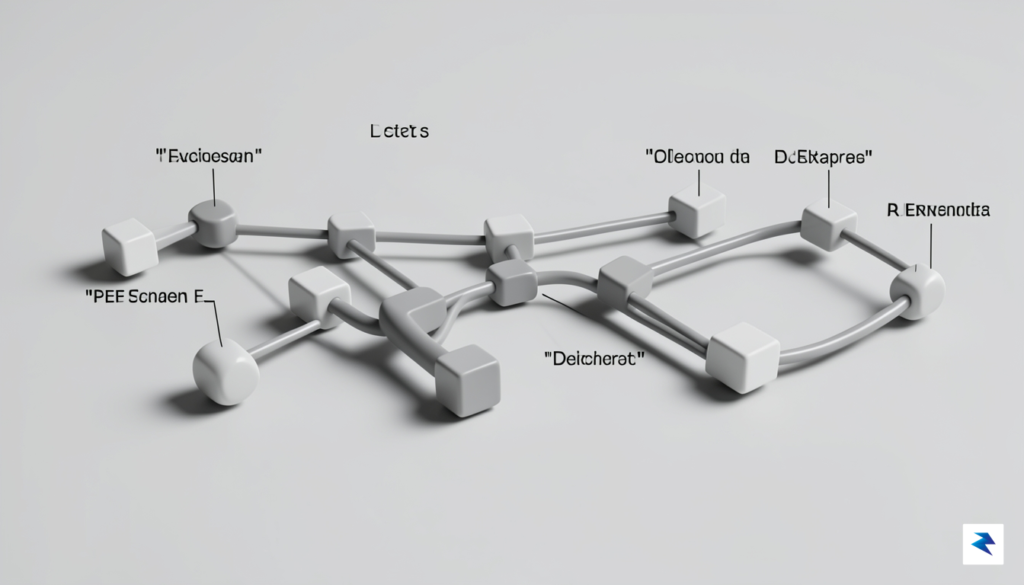
At the heart of this new codec’s performance lies a fundamental shift in how decompression logic interacts with modern silicon. Traditional algorithms often rely on deeply nested conditional branching, which forces the CPU to predict future data states. When those predictions fail, the processor’s pipeline stalls, leading to significant latency. Misa77 circumvents this by utilizing a branch-minimized architecture that treats the data stream more like a deterministic state machine than a complex decision tree. By flattening the decompression logic, the codec allows the CPU to maintain a steady, high-throughput flow of instructions, ensuring that the execution units are rarely left waiting for a mispredicted jump to resolve.

Beyond reducing branch dependency, the codec is meticulously engineered to align with the out-of-order execution capabilities inherent in contemporary CPU designs. Modern processors excel at executing multiple operations simultaneously, provided those operations do not create artificial bottlenecks. Misa77 structures its metadata and bitstream in a way that provides the CPU with independent instruction blocks, allowing the hardware’s scheduler to extract maximum parallelism. This design philosophy ensures that the codec does not merely run faster through raw clock cycles, but rather through a more efficient utilization of the silicon already present in high-performance computing environments.
The true secret of high-speed decompression isn’t just about doing less work; it is about organizing that work so that the CPU can perform it without ever having to stop and think.
Memory access patterns further distinguish this implementation from its predecessors. Many codecs suffer from “cache thrashing,” where the algorithm frequently jumps to non-contiguous memory addresses, forcing the processor to stall while waiting for data to arrive from slower system RAM. Misa77 employs a strictly sequential access strategy, ensuring that data is prefetched into the L1 and L2 caches before it is actually required by the decoder. By minimizing the distance between the data and the execution core, the codec maintains a high data-to-cycle ratio that significantly outperforms the standard LZ4 approach. This level of optimization requires a delicate balance; the compression format must remain complex enough to extract meaningful patterns while being simple enough to decode without massive computational overhead. The result is a codec that effectively bridges the gap between massive compression ratios and the sheer, raw speed required by modern real-time systems.
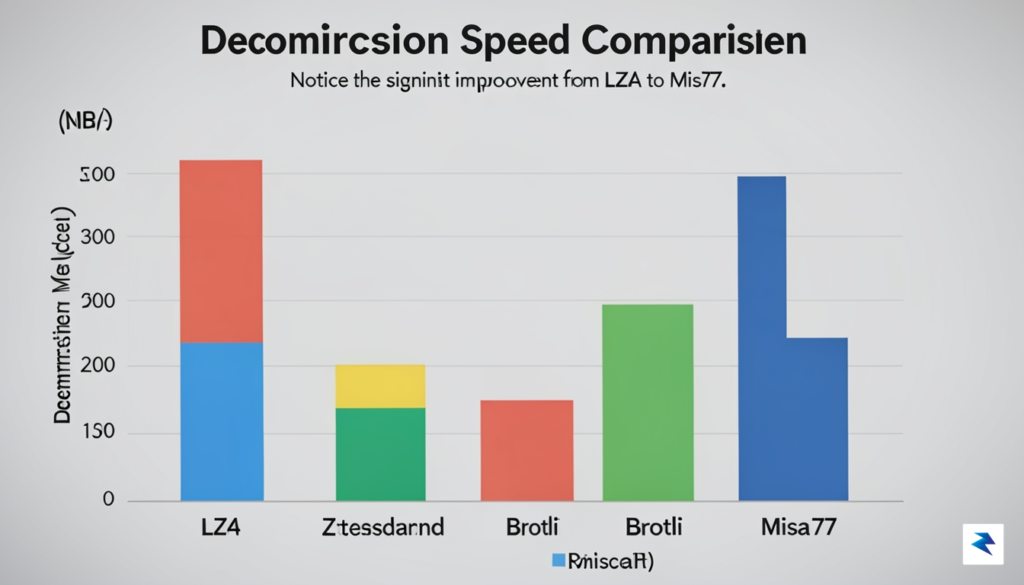
When putting a new compression algorithm to the test, the industry-standard LZ4 serves as the ultimate litmus test. LZ4 has long been the gold standard for high-speed data processing, prized for its near-instantaneous decompression. However, the emergence of Misa77 shifts the goalposts significantly. By analyzing performance metrics across the standard Silesia corpus—a benchmark suite specifically designed to stress-test compression efficiency—we can observe a distinct evolution in data handling. Misa77 at its entry-level configuration (Level 0) consistently demonstrates decompression throughput that effectively doubles the speed of traditional LZ4, a feat that once seemed mathematically improbable given the already optimized nature of the latter.
The performance profile becomes even more compelling when we contrast Misa77 Level 1 against LZ4HC. While LZ4HC is intentionally tuned for higher compression ratios at the expense of speed, Misa77 manages to bridge the gap between agility and density. In practical terms, this means that data engineers no longer need to choose between a compact storage footprint and rapid retrieval times. Misa77 maintains a superior compression ratio compared to the standard LZ4, yet it achieves this while simultaneously delivering decompression speeds that leave the older standard trailing in its wake. This is not merely a marginal improvement; it represents a fundamental change in how we manage bandwidth-constrained environments.
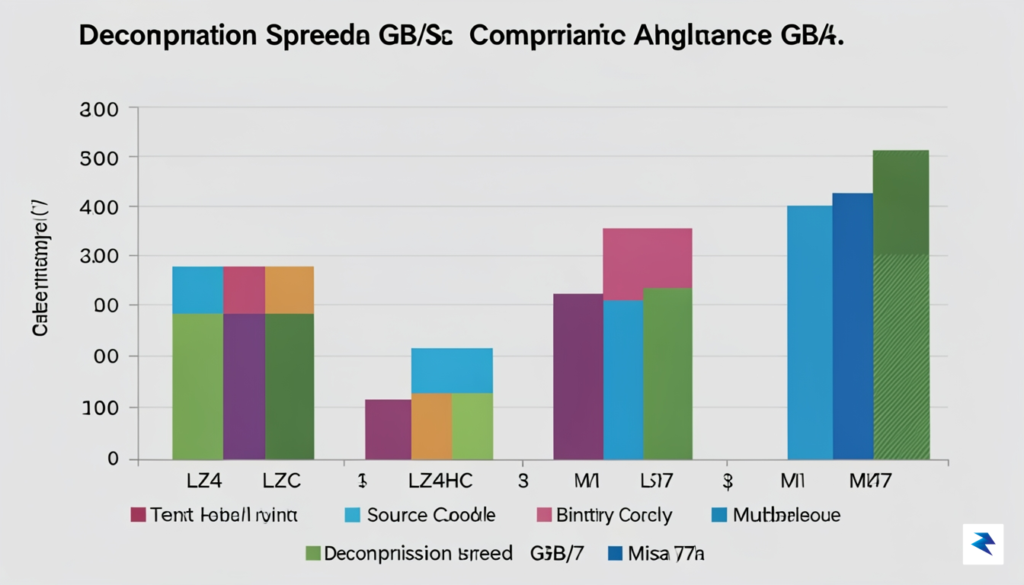
To understand what a “2x faster” decompression rate means for real-world applications, consider the requirements of modern high-frequency trading platforms or massive-scale distributed databases. In these environments, every microsecond spent decompressing data from a disk or network socket is a microsecond of latency added to the end-user experience. By cutting decompression time in half, Misa77 allows systems to process twice the volume of incoming traffic without requiring additional hardware overhead. This efficiency effectively lowers the total cost of ownership for server infrastructure, as fewer CPU cycles are spent waiting on data blocks to be reconstructed.
The true value of Misa77 lies in its ability to break the traditional inverse relationship between compression density and decompression speed, proving that smarter algorithmic design can outperform brute-force optimization.
Ultimately, the transition to such a codec is about optimizing the pipeline of modern software architectures. Whether you are dealing with real-time log ingestion or the rapid loading of game assets, the throughput benefits provided by Misa77 are transformative. By shifting the bottleneck away from the CPU’s ability to unpack data, developers are granted more headroom to perform complex application-level logic. This technological leap ensures that as data volumes continue to explode, our ability to access and utilize that information can scale at an equal, if not faster, pace.

While Misa77 achieves remarkable decompression throughput, it is essential to recognize that no compression algorithm is a universal solution for every engineering challenge. The core design philosophy behind this codec prioritizes the speed of data retrieval over the speed of data ingestion. Consequently, developers must accept a significant trade-off: Misa77 is notably slower than LZ4 when it comes to the initial compression phase. This makes it unsuitable for real-time, latency-sensitive pipelines where data must be packed and transmitted in mere microseconds, such as high-frequency trading logs or real-time sensor telemetry where the overhead of compression would become a system bottleneck.
However, the true power of this codec is unlocked in read-heavy environments where the ratio of decompression to compression is heavily skewed toward the former. Ideal use cases include massive, static datasets that are processed once—or infrequently—but queried millions of times by end-users or internal services. By investing extra time during the initial compression phase, you effectively “pre-pay” for the computational efficiency of every subsequent read, resulting in a substantial net gain in system performance and reduced CPU utilization across your infrastructure.
There are several specific architectural patterns where Misa77 can drastically improve system responsiveness. For instance, in large-scale caching systems where data expiration is slow, the penalty of a slower write is completely eclipsed by the benefit of near-instantaneous cache hits. Similarly, for content delivery networks (CDNs) or software distribution platforms, assets are typically compressed only once upon upload. When those assets are then served to millions of global users, the superior decompression speed of Misa77 minimizes latency and reduces the energy footprint of the edge servers handling the requests.
The ideal candidate for Misa77 is any system where data is written once and read until it becomes obsolete, effectively turning compression time into a strategic investment for future throughput.
Beyond static assets, read-only databases and lookup tables represent another prime territory for this technology. When your application relies on large, immutable datasets—such as geolocation databases, product catalogs, or historical records—Misa77 allows you to keep these files in a highly compressed state without sacrificing the rapid access times required for smooth application performance. By carefully evaluating your read-to-write ratio, you can determine if the architectural shift to this codec will provide the necessary performance headroom to scale your operations more efficiently.

The emergence of Misa77 marks a pivotal moment in the ongoing evolution of data compression, signaling a departure from legacy standards that have long dominated the industry. As modern hardware continues to push the boundaries of clock speeds and memory bandwidth, software design must pivot toward a hardware-aware philosophy to fully unlock the potential of the silicon beneath. By achieving decompression speeds that significantly outpace established benchmarks like LZ4 while simultaneously improving compression ratios, Misa77 demonstrates that we have not yet reached the theoretical limits of algorithmic efficiency. This shift suggests that future systems, particularly those handling massive datasets in real-time environments, will move away from general-purpose codecs toward highly optimized, architecture-specific solutions that treat cache locality and instruction pipelining as first-class citizens.

Central to this transformation is the project’s open-source nature, which acts as a catalyst for rapid iteration and widespread adoption across diverse tech stacks. By making the underlying logic accessible to the global developer community, the creators of Misa77 invite a collective refinement process that will inevitably lead to further breakthroughs in both stability and performance. This collaborative environment ensures that the codec is not merely a static tool, but a living project that can adapt to the unique bottlenecks found in cloud infrastructure, high-frequency trading platforms, and large-scale distributed databases. When developers from various backgrounds inspect the codebase, they contribute to a shared repository of knowledge that elevates the standard for what is expected of data-processing software.
The true power of high-performance engineering lies not just in the speed of the output, but in the community-driven refinement of the methodology that allows such speeds to be sustained at scale.
For engineers and systems architects, now is the ideal time to move beyond the status quo and experiment with integrating this codec into existing workflows. Whether you are managing vast archival storage systems or building lightning-fast microservices, the ability to reclaim CPU cycles through more efficient decompression is a significant competitive advantage. We encourage developers to clone the repository, run custom benchmarks against their specific data workloads, and participate in the ongoing discussions surrounding its implementation. By actively contributing to this evolution, the engineering community can help shape the next generation of data-handling standards, ensuring that our software infrastructure remains as agile and performant as the hardware upon which it relies.
You must be logged in to post a comment.