Wall Street’s Digital Leap: DTCC Begins Live Trading of Tokenized Securities
The Shift Toward Tokenized Finance For decades, the Depository Trust & Clearing Corporation (DTCC) has served as the silent, indispensable…


For decades, China’s technological ascent was built upon a foundation of globalized supply chains, where the nation functioned primarily as a manufacturing hub for international semiconductor giants. However, as geopolitical tensions have tightened and access to cutting-edge Western hardware has become increasingly restricted, Beijing has executed a radical pivot toward complete semiconductor self-reliance. This strategic shift is no longer merely about economic efficiency; it is an existential imperative driven by the realization that AI supremacy is fundamentally tethered to the physical silicon that powers modern computing. At the heart of this high-stakes industrial strategy is ChangXin Memory Technologies (CXMT), a state-backed entity currently tasked with neutralizing one of China’s most significant vulnerabilities: the reliance on foreign-made DRAM.
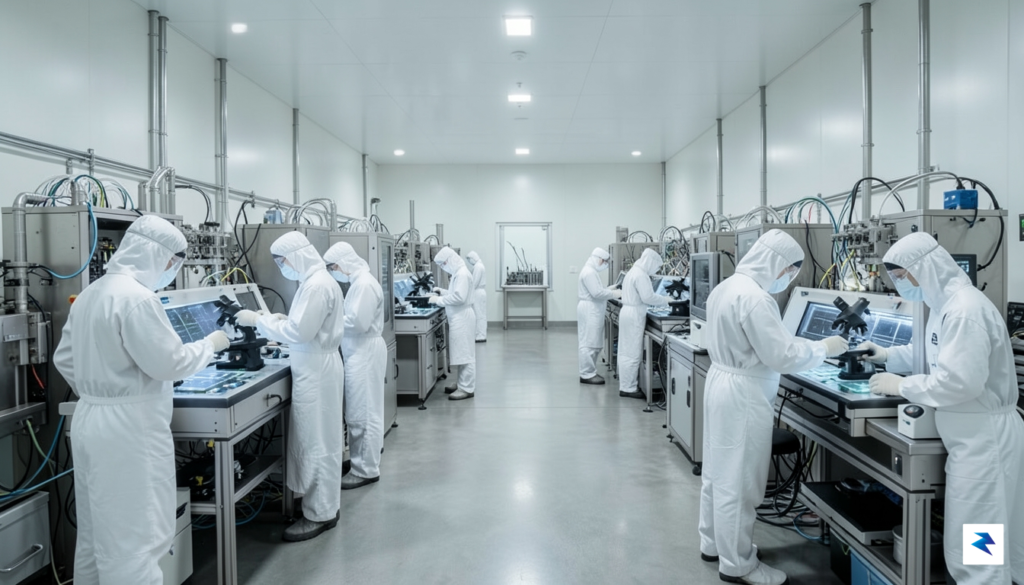
Dynamic Random Access Memory (DRAM) serves as the high-speed workspace for virtually every electronic device, but its role in the era of artificial intelligence is particularly vital. As AI models grow in complexity, they require massive amounts of memory bandwidth to process vast datasets in real-time. Without a robust domestic supply of these chips, China’s burgeoning AI ecosystem faces a potential bottleneck that could stifle its progress on the global stage. By positioning CXMT as the cornerstone of its domestic memory roadmap, Beijing is effectively attempting to replicate the success of its internal infrastructure projects, but this time within the microscopic, ultra-precise world of semiconductor fabrication. The goal is to move beyond mere assembly and into the realm of proprietary architecture, allowing China to insulate its AI initiatives from external supply chain shocks.
The transition from an importer of memory to a domestic producer is not just a commercial goal for CXMT; it is the linchpin of China’s broader effort to decouple its technological infrastructure from Western silicon dominance.
The transformation from dependency to domestic fabrication has been both rapid and capital-intensive. CXMT has evolved from a nascent entrant into a formidable player that is now attracting billions of dollars in fresh investment to accelerate its research and development. By scaling up its manufacturing capacity, the company is signaling that China is no longer content to wait for the easing of trade restrictions or the benevolence of foreign suppliers. Instead, it is betting on its ability to bridge the technological gap through sheer scale and state-coordinated focus. As CXMT ramps up production, it isn’t just manufacturing chips; it is building a defensive perimeter around China’s digital future, ensuring that the country’s AI ambition is supported by a stable, sovereign supply chain that can withstand the pressures of an increasingly fractured global technology market.

The proposed $10 billion public offering in Shanghai represents far more than a standard capital-raising exercise; it is a profound declaration of China’s industrial ambition in the high-stakes arena of artificial intelligence. By pursuing such a massive infusion of liquidity, the company is effectively signaling to both domestic stakeholders and international observers that it intends to bypass traditional growth timelines. This capital is not merely intended to stabilize the balance sheet, but rather to function as a strategic war chest designed to fuel an aggressive expansion of research and development pipelines. In an industry where technological superiority is measured in nanometers and clock speeds, this influx of cash will be prioritized to accelerate the design of next-generation memory chips essential for running complex AI models.

Beyond the laboratory, a significant portion of these funds is earmarked for the rapid scaling of production capacity. To compete effectively with global titans like Micron, Samsung, and SK Hynix, this Chinese chip champion must overcome the inherent limitations of current domestic output. By investing heavily in state-of-the-art fabrication plants, or “fabs,” the firm aims to achieve the economies of scale necessary to drive down unit costs while simultaneously increasing the volume of high-bandwidth memory (HBM) products. This massive capital deployment is intended to insulate the domestic supply chain from external pressures, effectively creating a self-sustaining ecosystem that can withstand global market volatility and geopolitical trade restrictions.
The $10 billion IPO serves as a litmus test for the Shanghai Stock Exchange, proving its capacity to host mega-cap listings that can challenge the dominance of Western financial hubs in the tech sector.
For investors, this move suggests a high-conviction bet on the long-term viability of China’s semiconductor sector. However, the ripple effects will be felt far beyond the domestic market. For entrenched global rivals like Samsung and SK Hynix, this surge in funding signals that a well-capitalized competitor is about to enter the race with newfound intensity. As the firm ramps up its production, the global market may see a shift in pricing power and supply dynamics, particularly within the memory chip segment. Ultimately, this IPO is a calculated maneuver to secure a dominant position in the AI hardware race, ensuring that the company remains at the forefront of the technological infrastructure that will define the coming decade.

In the high-stakes theater of artificial intelligence, the headlines often focus on the raw processing power of GPUs, yet the true silent partner in every computation is Dynamic Random Access Memory (DRAM). DRAM serves as the high-speed waiting room for AI models, feeding vast amounts of data to processors at lightning speeds. Without reliable, high-bandwidth memory, even the most powerful AI chip would sit idle, waiting for information to load. For China, achieving technological sovereignty means more than just building better processors; it requires breaking the dependence on a global memory market dominated by an entrenched oligarchy of Western and South Korean firms. This is the daunting mountain that ChangXin Memory Technologies (CXMT) is currently attempting to climb.

The barriers to entry in the DRAM industry are among the highest in the entire semiconductor ecosystem. Unlike logic chips that prioritize raw clock speeds, DRAM production is defined by extreme precision in material science and lithography. Manufacturers must layer microscopic capacitors and transistors with near-perfect yields; a single speck of dust or a minor deviation in chemical etching can render an entire wafer useless. Furthermore, the industry is protected by decades of cumulative intellectual property and specialized fabrication techniques that established leaders have refined since the 1980s. For a newcomer like CXMT, “closing the gap” is not merely about buying the right machinery—it is about mastering the complex physics of electron management at the nanometer scale while navigating a landscape where the most advanced lithography equipment is subject to strict export controls.
To compete with the global elite, CXMT must prove that its memory modules can achieve the same data integrity and power efficiency as industry-standard LPDDR5 and HBM components, which are essential for training large-scale language models.
CXMT’s strategy for overcoming these hurdles relies heavily on aggressive vertical integration and a massive infusion of capital to accelerate R&D cycles. By controlling more of the supply chain—from the design of the memory cells to the final packaging—the company aims to create a closed-loop ecosystem that is resilient to geopolitical supply chain shocks. Currently, CXMT’s product maturity is steadily increasing; they have successfully transitioned into mass-producing DDR4 and LPDDR4x chips, moving closer to the performance tiers occupied by their international rivals. However, the true test lies in their ability to scale to high-bandwidth memory (HBM), the specialized format that powers modern AI infrastructure. Success will depend on whether they can achieve the “reliability threshold”—the point at which enterprise customers and AI developers feel confident enough to swap established brands for domestic alternatives without risking system instability or performance degradation.
Ultimately, the race is a marathon of refinement. While Western and South Korean leaders continue to push the boundaries of extreme ultraviolet (EUV) lithography to shrink their transistors further, CXMT is focusing on optimizing its existing deep ultraviolet (DUV) processes to squeeze every ounce of performance out of legacy equipment. This pragmatic approach acknowledges that they cannot immediately out-innovate the global incumbents in sheer speed, so they are instead focusing on availability, cost-efficiency, and strategic alignment with domestic AI hardware manufacturers. If CXMT can successfully bridge this technological divide, they will not only secure a vital component of China’s digital infrastructure but also fundamentally alter the competitive dynamics of the global memory market.

Operating within the current semiconductor landscape is akin to navigating a high-stakes minefield, where every move is scrutinized by global superpowers. For ChangXin Memory Technologies (CXMT), the primary challenge lies in the tightening web of Western export controls that aim to restrict China’s access to advanced lithography equipment and high-end manufacturing tools. As the United States and its allies tighten regulations on the sale of extreme ultraviolet (EUV) and deep ultraviolet (DUV) lithography systems, CXMT faces a critical bottleneck in its ability to scale production of next-generation memory chips. This technological embargo is not merely a logistical hurdle; it is a fundamental shift in the global order that forces CXMT to accelerate its transition toward a fully localized, “de-Westernized” supply chain.
To mitigate the risks of these international trade sanctions, the company is aggressively pursuing domestic alternatives for its manufacturing ecosystem. This shift entails a massive pivot toward sourcing materials, chemicals, and specialized machinery from within China, effectively attempting to build an independent silicon island in an otherwise interconnected world. While this strategy is essential for survival, it introduces significant questions regarding long-term cost efficiency and technical parity. Relying exclusively on indigenous suppliers often means dealing with shorter lifespans for specialized equipment and lower yields compared to the industry-leading standards set by global giants like ASML or Applied Materials. Consequently, the company’s sustainability hinges on its ability to rapidly iterate on these domestic tools to narrow the quality gap before existing imported machinery reaches its end-of-life cycle.

The role of state subsidies in this endeavor cannot be overstated, yet it remains a point of intense international friction. While government capital provides the massive financial runway required to fund research and development during a trade war, it also invites further scrutiny from Western regulators who view such state-driven growth as an unfair market advantage. Unlike competitors in South Korea or the United States that operate under more traditional, market-driven capital structures, CXMT’s reliance on state-backed funding creates a binary risk: either it succeeds in achieving technological sovereignty, or it risks being permanently sidelined by the very sanctions that were designed to stifle its growth. Ultimately, the company is caught in a race against time, attempting to build a world-class memory infrastructure while the global market it seeks to serve becomes increasingly fractured by protectionist policies.
The long-term viability of China’s memory ambitions depends less on capital and more on the mastery of the silent, invisible supply chains that underpin the modern digital economy.
Investors and industry observers should monitor the company’s ability to maintain high manufacturing yields as it integrates these domestic-origin components. If CXMT can demonstrate that it can produce high-bandwidth memory (HBM) and advanced DDR5 chips without relying on restricted Western hardware, it will prove that the “de-Westernization” of the semiconductor supply chain is not just a theoretical ambition, but a functional reality. However, if the technological delta between Chinese-made chips and global standards continues to widen, the company may find itself relegated to the lower-margin, legacy segments of the memory market, fundamentally altering its path toward dominating the AI hardware ecosystem.

The success of the proposed multi-billion dollar capital infusion into ChangXin Memory Technologies (CXMT) represents far more than a simple corporate expansion; it is a critical litmus test for China’s overarching strategy to achieve technological sovereignty in the artificial intelligence sector. By securing substantial liquidity, CXMT aims to accelerate the development of advanced high-bandwidth memory (HBM) and DRAM, components that are currently the primary bottleneck for China’s domestic AI hardware ecosystem. If these funds successfully catalyze a breakthrough in manufacturing yields and architectural refinement, the company could provide the stable, indigenous hardware foundation that Chinese software developers desperately require to train massive language models without the looming threat of restrictive export controls or sudden supply chain ruptures.

Looking toward a five-to-ten-year horizon, the trajectory of this IPO will likely determine whether China can effectively “de-couple” its AI infrastructure from Western-designed semiconductors. While the capital injection provides the necessary runway for R&D, bridging the hardware gap is not merely a matter of funding; it requires overcoming significant barriers in advanced lithography and intellectual property. If CXMT manages to scale its production capacity to meet the voracious demands of China’s internal AI giants, we could see a bifurcation of the global AI market. In this scenario, Chinese firms would rely on an increasingly mature domestic stack, insulating them from external trade pressures and allowing for the continued, unhindered scaling of sovereign AI models.
The core of the global AI arms race has shifted from software algorithms to the physical silicon that powers them; whoever controls the memory bandwidth controls the speed of innovation.
Ultimately, the broader implications of this financial maneuver extend well beyond the company’s balance sheet, signaling an intensification of the global AI arms race. Should the IPO meet or exceed expectations, it would provide a blueprint for other state-backed Chinese semiconductor players to follow, effectively creating a “fortress” model of innovation. However, there remains a precarious balance between state-backed ambition and the cold realities of market performance. Even with massive financial backing, CXMT must contend with the rapid pace of international competitors who are not standing still. Whether this bet translates into a genuine competitive advantage or simply sustains a perpetual “catch-up” cycle remains the most significant question in the ongoing struggle for AI dominance.
You must be logged in to post a comment.