
China’s $10 Billion Chip Bet: Can CXMT Dominate the AI Hardware Race?
The Rise of CXMT: China’s Strategic Pivot in Semiconductor Independence For decades, China’s technological ascent was built upon a foundation…


The departure of 7,800 staff members from the Social Security Administration marked a pivotal moment, ushering in a period of unprecedented structural instability for an agency critical to millions of Americans. This significant workforce reduction, implemented through various initiatives including early retirements and attrition management, created an immediate and substantial vacuum across its national operations. Suddenly, thousands of positions responsible for processing claims, answering vital questions, and guiding beneficiaries through complex procedures were left vacant, fundamentally altering the agency’s capacity to deliver on its core mission. The scale of this reduction was not merely a number on a spreadsheet; it represented a massive loss of human capital and institutional memory that would soon ripple through every facet of public service.
One of the most immediate and tangible impacts of these staffing cuts was the dramatic increase in wait times for the public. Across the country, individuals seeking assistance with retirement benefits, disability claims, or survivor benefits faced longer queues at local offices, extended hold times on phone lines, and significant delays in processing critical applications. This wasn’t merely an inconvenience; for many, Social Security represents their primary, if not sole, source of income, and delays directly translated into financial hardship and immense stress. The agency’s ability to provide timely responses and efficient service, a cornerstone of its public trust, was severely hampered, leading to widespread frustration and a perception of declining responsiveness.
Beyond the visible slowdowns, the sudden loss of thousands of experienced personnel created immense strain on the remaining workforce. Crucial institutional knowledge, built over years and even decades of service, walked out the door with departing employees. This meant that fewer, often newer, staff members were left to shoulder an exponentially increased workload, frequently lacking the deep expertise required to navigate complex cases or mentor new hires effectively. The remaining employees faced mounting pressure, burnout, and a struggle to maintain morale amidst an environment of overwhelming demand and diminished resources. The intricate network of specialized skills and collective experience that underpins the SSA’s operations was severely compromised, making it exceedingly difficult to uphold consistent standards of quality and accuracy.
Consequently, maintaining national service standards became an enormous challenge during this period of significant attrition. The promise of equitable and efficient service, regardless of where an individual lives, began to falter as local offices grappled with varying levels of staff shortages and expertise gaps. This led to inconsistencies in service quality and processing times across different regions, undermining the uniform delivery of benefits and assistance that the SSA is designed to provide. The agency found itself in a precarious position, attempting to stabilize its foundational services while simultaneously grappling with the long-term implications of such a massive and rapid reduction in its human infrastructure. The subsequent year has been defined by a concerted, yet arduous, effort to rebuild capacity and restore the essential services that millions rely upon daily.
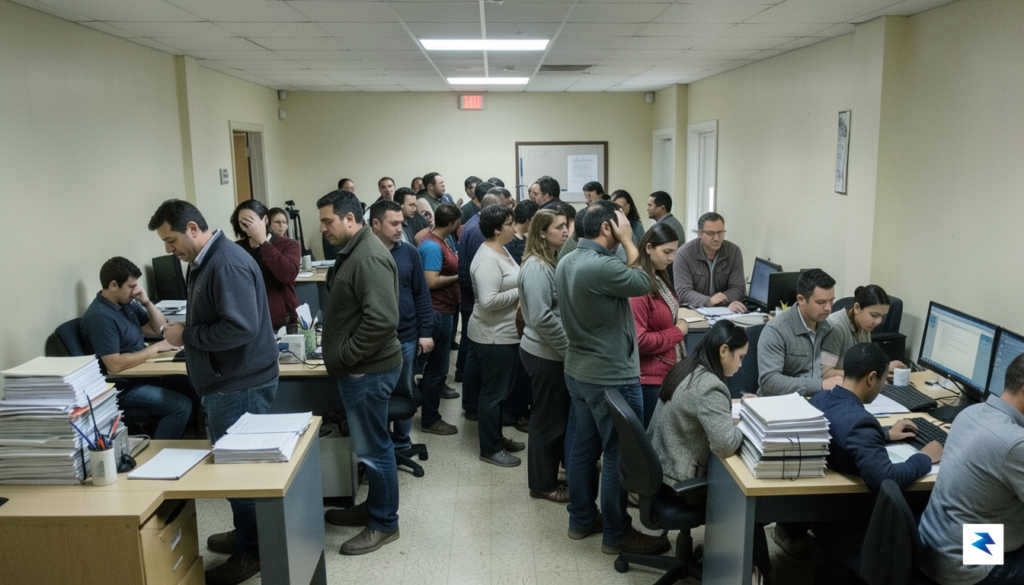

The exodus of 7,800 experienced employees created a vacuum that went far beyond mere headcount; it stripped the Social Security Administration (SSA) of decades of nuanced expertise in navigating the labyrinthine rules of federal benefits. Rebuilding this workforce has evolved into a monumental strategic pivot, shifting from a period of austerity to an aggressive, large-scale recruitment drive. However, the agency quickly discovered that replacing bodies is significantly easier than replacing the collective wisdom that once guided complex disability determinations and retirement processing. Bringing thousands of new hires into the fold is only the first step, as these recruits must now be rapidly trained to handle intricate legal statutes and sensitive claimant interactions that were previously managed by veterans who had spent lifetimes mastering the agency’s bureaucratic software and policies.

Training this new generation of civil servants presents a unique set of institutional challenges. The sheer complexity of Social Security claims means that technical proficiency is not enough; new staff must also develop the soft skills required to navigate the emotional weight of helping individuals through some of the most vulnerable moments of their lives. Because the training cycle for a claims specialist is intensive and time-consuming, the pace of current hiring is constantly racing against a growing backlog of pending applications. While the administration has streamlined its onboarding modules to prioritize high-impact tasks, the “knowledge gap”—the delta between the departed experts and the incoming novices—remains a persistent bottleneck that slows down the processing of claims that require delicate human judgment rather than automated verification.
The true challenge of the current recovery effort lies not just in the volume of new hires, but in the speed at which they can achieve competency without sacrificing the accuracy required to protect the integrity of the Social Security trust fund.
Beyond the logistical hurdles of hiring and training, the agency is also contending with a significant challenge regarding morale. The long-term staff who remained through the period of drastic cuts are now tasked with the dual burden of managing their own heavy caseloads while simultaneously acting as mentors to the new recruits. This “double-duty” dynamic can lead to burnout, potentially threatening the retention of the very people who hold the remaining threads of institutional history. Consequently, the SSA’s leadership has had to prioritize morale-boosting initiatives and mentorship incentives to ensure that the culture remains stable during this transitional phase. Success in this rebuilding effort will ultimately depend on whether the agency can bridge the gap between its new workforce’s enthusiasm and the seasoned precision of its past, ensuring that beneficiaries receive the timely support they are legally entitled to.

In the wake of significant staffing reductions, the Social Security Administration (SSA) has been forced to rethink its operational backbone, shifting its reliance from human-intensive manual processing toward a more robust digital infrastructure. This pivot toward modernization is not merely a convenience upgrade; it is a critical survival strategy designed to compensate for the loss of experienced caseworkers who previously managed complex manual caseloads. By integrating advanced automation, artificial intelligence, and cloud-based data management, the agency aims to streamline the intake process, reduce the time required to verify eligibility, and minimize the backlogs that have plagued the system for years.

The core of this technological transition involves the implementation of updated claims-processing software that can automatically identify missing information or discrepancies in applications before they even reach a human desk. By automating these repetitive administrative tasks, the agency effectively lowers the barrier to entry for applicants while simultaneously easing the burden on front-line employees who were previously bogged down by data entry. This shift allows caseworkers to dedicate their limited hours to high-touch, complex cases that require nuanced human judgment, rather than spending their time on the clerical drudgery that digital systems handle with higher speed and accuracy.
Despite the efficiency gains, the push for total digital transformation creates a palpable tension between the desire for automated speed and the necessity of human empathy. Many beneficiaries rely on the SSA during times of profound personal crisis—such as the loss of a spouse or the onset of a disability—where a robotic response or a purely algorithmic decision may feel cold and insufficient. Agency leadership acknowledges this challenge, noting that technology must function as a tool to support, not replace, the caseworker. The goal is to create a hybrid environment where software handles the “how” of data processing, while human agents handle the “why” of policy application and compassionate service.
The true success of the SSA’s digital modernization will be measured not by how many human tasks are replaced, but by how much time is returned to caseworkers to address the unique needs of the most vulnerable populations.
Furthermore, the acceleration of digital adoption brings inherent risks regarding cybersecurity and data privacy that cannot be overlooked. As the agency shifts to cloud-based portals and inter-departmental data sharing to expedite processing, it creates a larger surface area for potential cyber threats. Protecting the highly sensitive personal and financial information of millions of Americans remains a paramount concern during this upgrade. Consequently, the modernization project includes a significant investment in encryption, multi-factor authentication, and continuous monitoring systems designed to ensure that while the agency becomes more agile and accessible, it also remains a fortress against the increasingly sophisticated landscape of digital fraud.

As the Social Security Administration (SSA) moves past the turbulent period of significant staffing reductions, the agency is pivoting toward a long-term stabilization strategy centered on technological integration and operational efficiency. The current trajectory suggests a move away from reliance on massive, in-person workforce numbers toward a more agile, hybrid framework. By automating routine administrative tasks and streamlining the digital portal experience, the agency aims to reduce the burden on field offices, thereby allowing human agents to focus on complex disability claims and nuanced eligibility issues. This shift is not merely a reaction to past budget constraints but a fundamental evolution in how the government intends to provide public services in an increasingly digitized era.
For current beneficiaries and those approaching retirement, navigating this hybrid ecosystem requires a proactive approach. The most effective strategy for ensuring service reliability is to master the my Social Security online portal, which has become the primary conduit for checking application status, updating personal information, and requesting benefit verifications. While digital tools are now the first line of support, beneficiaries should not hesitate to utilize the agency’s dedicated phone lines or schedule in-person appointments for matters that involve high-stakes decision-making or complex documentation. Utilizing these digital tools for routine inquiries can significantly decrease your wait times, ensuring that when you truly need human intervention, the system is less congested and better prepared to assist you.

The success of the Social Security Administration’s recovery hinges on its ability to balance high-tech efficiency with the high-touch empathy required for sensitive benefit claims.
The broader implications of these operational changes represent a significant bellwether for the future of government service delivery across the United States. If the SSA can successfully stabilize its service delivery through this hybrid model, it may serve as a blueprint for other federal agencies currently grappling with the tension between limited resources and increasing public demand. However, this transition relies heavily on the agency’s ability to maintain cybersecurity and ensure that no demographic—particularly those with limited digital literacy—is left behind. The outlook for the next fiscal year is cautiously optimistic; as the agency continues to refine its remote-service capabilities and stabilize staffing levels, the focus will likely shift from crisis management toward proactive service improvement. Ultimately, the stability of these benefits depends on the agency’s capacity to remain responsive to the evolving needs of the American public while maintaining the fiscal and operational integrity of the system as a whole.
You must be logged in to post a comment.