
Rebuilding the SSA: How Social Security is Adapting a Year After Major Staffing Cuts
The Aftermath of the DOGE Staffing Cuts The departure of 7,800 staff members from the Social Security Administration marked a pivotal moment,…
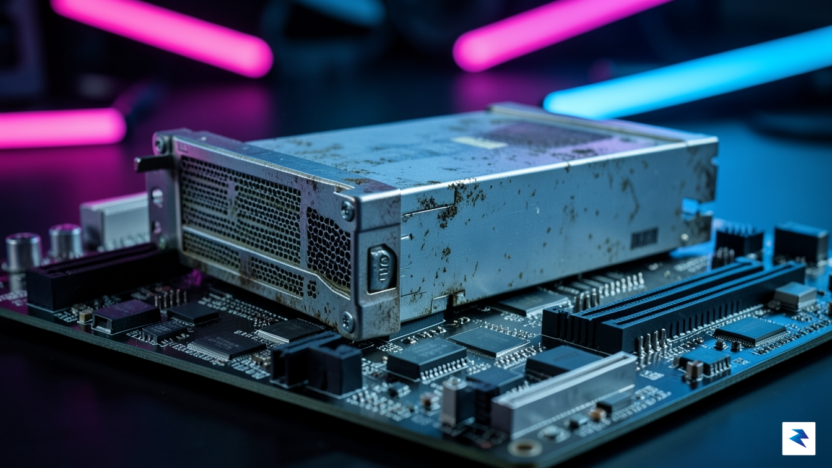

For years, the AI community has been held captive by a narrative of hardware exclusivity: the belief that participating in the generative revolution requires a multi-thousand-dollar investment in high-end consumer GPUs. This gatekeeping mentality suggests that unless you possess the latest silicon from major chip manufacturers, your access to sophisticated large language models (LLMs) is effectively barred. Consequently, many enthusiasts have been discouraged from experimenting with local inference, assuming that the massive computational demands of models like Gemma 4 26B are strictly reserved for data centers or top-tier gaming rigs. This perceived barrier to entry has created an artificial divide, casting AI as a luxury hobby rather than a democratized tool for innovation.
However, the reality of modern inference tells a much different story, one where software ingenuity is rapidly outpacing the need for brute-force hardware upgrades. Recent breakthroughs in quantization techniques—which compress model weights without sacrificing significant intelligence—have fundamentally altered the requirements for running complex systems. By optimizing how data flows through memory and utilizing highly efficient inference engines, we are seeing models that were previously thought to be “GPU-only” running comfortably on aging server-grade infrastructure. The reliance on raw, power-hungry graphical processing units is increasingly becoming a matter of convenience rather than a technological necessity.
The true bottleneck in modern AI is rarely the age of your processor; it is the efficiency of the software stack managing the mathematical load.
When we look at a 13-year-old Xeon processor, it is easy to dismiss it as obsolete, yet these chips were designed for massive parallel workloads and robust memory management. While they lack the specific tensor cores found in modern GPUs, they possess architectures that, when paired with the right instruction sets and optimized software, can handle the serial nature of token generation with surprising grace. The shift toward CPU-based inference highlights a critical evolution: architecture and software optimization are now significantly more important than sheer raw power. By leveraging these older, highly stable server platforms, we prove that the barrier to entry is not hardware, but our willingness to rethink how we distribute computational weight.
Ultimately, this transition represents a broader shift toward sustainable, accessible AI. If a model as capable as Gemma 4 26B can achieve a functional speed of five tokens per second on hardware from over a decade ago, it challenges the industry standard of planned obsolescence. This approach invites a new generation of hobbyists and developers to explore AI without the financial burden of high-end upgrades. By dismantling the myth that only the most expensive hardware can run modern intelligence, we unlock a future where private, local, and powerful AI tools are available to anyone with a spare machine and a bit of curiosity.

To understand how a 26-billion parameter model like Gemma 4 can exist on a machine built in 2011, we must first confront the reality of memory footprint. In its native form, a model of this scale is stored using 16-bit or 32-bit floating-point numbers, which would demand over 50 gigabytes of system RAM—far exceeding what most legacy workstations can provide. Quantization acts as a sophisticated form of data compression, effectively shrinking these individual weights from high-precision decimals down to 4-bit or even 3-bit integers. By mapping the vast range of the model’s original values onto a smaller, discretized grid, we dramatically reduce the memory requirement without stripping away the model’s fundamental ability to reason or follow complex instructions.

The transition to formats like GGUF (GPT-Generated Unified Format) has been a game-changer for CPU-based inference. Unlike traditional deployment methods that rely heavily on GPU-specific acceleration, GGUF is specifically engineered for efficient memory access and CPU-bound execution. When we quantize a model, we are essentially trading a marginal amount of mathematical precision for a massive gain in portability. While purists might worry about the “loss” of information, modern quantization techniques are remarkably resilient; the semantic depth of the model remains largely intact because the neural network is naturally robust to small, localized errors in its weight calculations.
Quantization is not merely about shrinking file size; it is about reorganizing the mathematical architecture of a model so that it can be processed efficiently within the narrow constraints of legacy hardware.
However, the primary bottleneck for a 13-year-old Xeon processor is not the raw clock speed or the number of cores, but the memory bandwidth. When the processor runs inference, it must constantly pull weight data from the system RAM to perform matrix multiplications. In a GPU, this is handled by ultra-fast HBM or GDDR memory, but on an older server board, we are limited by the speed of DDR3 RAM. Because quantization significantly reduces the amount of data that must be fetched for every single token generated, it effectively widens the “pipe” between the RAM and the CPU. This is the secret to achieving a functional 5 tokens per second: by making the model smaller, we ensure the aging CPU is never left waiting for data, allowing it to spend more time calculating and less time idling.
The core of this experiment centers on a battle-tested workstation from roughly 2011, powered by an Intel Xeon E5-series processor. While these chips belong to the Sandy Bridge-EP architecture—a generation long considered obsolete by modern gaming standards—they possess distinct advantages for artificial intelligence. Unlike consumer-grade processors of the same era, these enterprise CPUs support multi-channel memory architectures, allowing the system to interface with large swaths of ECC RAM simultaneously. By filling all available memory slots, we effectively widen the data pipeline, which is essential because Large Language Model (LLM) inference is primarily a memory-bandwidth-bound task rather than a raw compute-bound one.
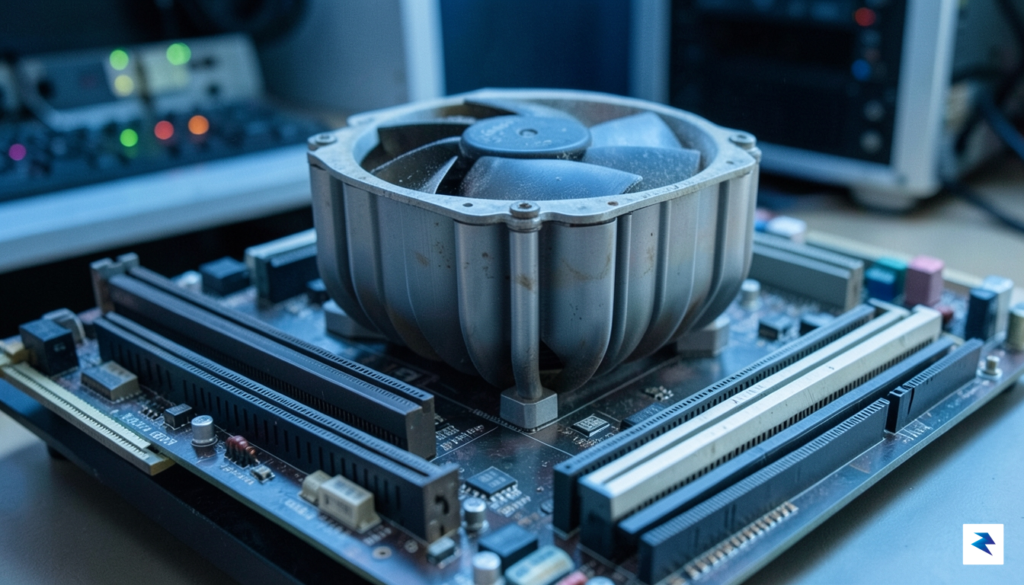
When running a model like Gemma 4, the CPU must constantly fetch billions of parameters from the system memory to perform matrix multiplications. On a modern machine, this happens in the blink of an eye, but on 13-year-old hardware, the bottleneck is the speed of the DDR3 memory itself. Because the processor lacks the massive parallel processing power of a modern NVIDIA GPU, it relies heavily on its ability to move data across those memory channels efficiently. By utilizing optimized software backends, such as llama.cpp, the system can bypass traditional overhead and map model weights directly into the available RAM, turning a relic of the data center era into a surprisingly capable inference engine.
A frequent point of concern for enthusiasts is the lack of modern instruction sets like AVX-512 or AMX, which are standard in contemporary data center silicon. While these newer sets significantly accelerate AI workloads, the older Xeon chips still support AVX and SSE instructions, which serve as the backbone for mathematical operations in quantized models. Because we are using 4-bit or 8-bit quantization to shrink the model footprint, the computational load per token is minimized enough that these legacy instruction sets can keep pace. The software implementation effectively “translates” the model’s requirements into a language the older Xeon understands, proving that hardware age is not an absolute barrier to entry.
The secret to running modern AI on ancient silicon lies in quantization; by reducing the precision of the model, we lower the memory bandwidth requirements to a point where even DDR3 memory can sustain a usable generation speed.
Ultimately, this setup demonstrates that AI does not have to be an exclusive playground for those with expensive, cutting-edge hardware. By leveraging the inherent durability of enterprise-grade components, these systems demonstrate that performance is often a result of software optimization rather than just raw clock speed. As long as the memory capacity is sufficient to hold the model, and the CPU can manage the necessary instruction set translation, even a machine from over a decade ago can contribute to the rapidly evolving landscape of local, private artificial intelligence.

Hitting a consistent throughput of 5 tokens per second on a Xeon processor from the early 2010s is a feat that defies traditional expectations of computational physics. Under normal circumstances, large language models demand high-bandwidth memory (HBM) and massive parallelization provided by modern GPUs to function effectively. On a 13-year-old architecture, however, the primary hurdle is not just raw floating-point operations, but the agonizing latency inherent in the processor’s memory controller and the outdated bus speeds of the era. The “5 tokens/sec” benchmark effectively represents the edge of what is possible before the system collapses under the weight of memory access overhead, making every millisecond of CPU cycle time precious.

Latency is the silent killer of CPU-based AI inference, often far more detrimental than the raw clock speed of the cores themselves. In older systems, the time it takes for the processor to fetch data from the RAM—a process known as memory stall—often consumes the majority of the inference cycle. To overcome this, software backends like llama.cpp utilize sophisticated quantization techniques, such as 4-bit or even 3-bit weight compression, which drastically shrink the model size to fit within the limited cache hierarchies of older CPUs. By reducing the volume of data that must be pulled from the slow system RAM, these optimizations ensure that the CPU spends more time performing meaningful mathematical calculations and less time waiting for data to arrive from the memory bus.
Beyond simple data reduction, the achievement relies heavily on granular thread management and low-level kernel optimizations. Modern inference engines map the model’s tensors to specific CPU cores, bypassing the overhead of standard operating system scheduling to ensure that the work is distributed evenly across all available threads. This requires a delicate balance; if the workload is spread too thin, cache contention between cores can actually degrade performance. By pinning tasks to specific cores and utilizing SIMD (Single Instruction, Multiple Data) instructions like AVX, the system can perform multiple calculations in a single clock cycle.
The true engineering triumph here is not found in the brute force of the processor, but in the intelligent orchestration of data movement that allows an aging machine to perform tasks it was never architecturally designed to handle.
Ultimately, the stability of this 5 tokens/sec speed is a testament to how far software-level hardware abstraction has come. By treating the CPU not as a general-purpose processor but as a highly specialized math engine, developers have managed to squeeze modern AI capabilities out of hardware that was relegated to the scrap heap years ago. It serves as a powerful reminder that when we optimize for the limitations of the hardware—rather than ignoring them—we can unlock computational potential that remains relevant long after the original design specifications have been forgotten.

The ability to run a sophisticated model like Gemma 27B on hardware that predates the modern AI boom fundamentally alters the power dynamic of technological innovation. For years, the narrative surrounding artificial intelligence has been dominated by a “pay-to-play” mentality, where access to state-of-the-art capability was gated by exorbitant investments in enterprise-grade GPU clusters. By proving that legacy CPUs can serve as viable inference engines, we are witnessing a grassroots shift toward the true democratization of AI. This transition empowers independent researchers, hobbyists in developing regions, and developers working with limited infrastructure to participate in the frontier of machine learning without needing a massive capital expenditure. When high-level intelligence no longer requires a data center, it moves into the hands of the individuals who are most likely to find creative, real-world applications for it.
Efficiency-focused software development acts as the primary catalyst for this sustainable revolution. Rather than relying on a “brute force” approach of throwing more silicon and electricity at a problem, the current wave of optimization—exemplified by quantization techniques and clever memory management—teaches us that software is often the bottleneck, not the hardware itself. By prioritizing lean execution, developers are effectively extending the lifecycle of millions of existing computers, curbing electronic waste, and reducing the carbon footprint associated with model deployment. This shift toward “frugal AI” creates a more equitable landscape where innovation is measured by algorithmic ingenuity rather than the raw throughput of the latest, most expensive hardware on the market.

The future of AI accessibility lies not in the constant acquisition of newer, faster hardware, but in the relentless pursuit of software efficiency that bridges the gap between legacy systems and modern intelligence.
Looking ahead, the potential for further performance gains remains staggering. As techniques such as speculative decoding, bit-level quantization, and architectural pruning continue to mature, the performance gap between a decade-old Xeon and a modern workstation will likely narrow even further. We are approaching an era where locally hosted, privacy-preserving AI could become the standard for consumer devices, from mobile phones to home servers, regardless of their age. By stripping away the requirement for specialized proprietary hardware, we are fostering a more resilient and decentralized ecosystem. Ultimately, the success of running large-scale models on modest hardware is a testament to the fact that when we optimize for accessibility, we unlock the collective ingenuity of a global community, ensuring that the future of AI is built by everyone, for everyone.
You must be logged in to post a comment.