
DEA Temporarily Schedules 7-OH: What Consumers and Businesses Need to Know
Understanding the DEA's New Temporary Scheduling Action The Drug Enforcement Administration (DEA) derives its authority to place…


In a landscape dominated by global tech giants, the meteoric rise of the Indian startup Emergent stands as a testament to the transformative power of hyper-focused artificial intelligence. Founded just over a year ago, the company has officially reached unicorn status following a $130 million Series C funding round, a feat that is virtually unprecedented in the current venture capital climate. While many AI coding assistants have emerged to help developers write boilerplate code, Emergent has carved out a unique niche by prioritizing architectural reasoning over simple autocomplete functionality. By moving beyond the reactive patterns of traditional coding tools, the firm has captured the attention of enterprise software teams looking to fundamentally shorten their development lifecycles.

The current market for AI coding assistants is crowded with well-funded incumbents like GitHub Copilot and Cursor, both of which have set high standards for productivity. However, Emergent differentiates itself by acting less like a predictive text engine and more like a senior systems architect. While incumbents often rely on pattern matching to suggest the next few lines of code, Emergent utilizes a proprietary engine designed to understand the deep, structural dependencies inherent in massive, multi-layered codebases. This capability allows developers to provide high-level intent rather than granular instructions, enabling the AI to refactor entire modules and anticipate integration issues before they occur.
The true measure of an AI coding tool is not how many lines it writes per minute, but how much technical debt it prevents from being introduced in the first place.
Achieving a $1 billion valuation in such a compressed timeframe highlights a significant shift in how investors view the next phase of the generative AI boom. It is no longer enough to simply have a wrapper around large language models; the market is now demanding deep, vertical integration that solves specific, high-value engineering pain points. Emergent’s success underscores a broader narrative in the Indian startup ecosystem, which is rapidly pivoting from service-oriented models to high-stakes, deep-tech product development. By proving that a lean, highly specialized team can outperform legacy platforms in accuracy and contextual understanding, Emergent has not only secured its financial future but has also set a new benchmark for what is possible in the field of automated software engineering.

Emergent’s ascent to unicorn status is not merely a product of the current generative AI fervor; it is a clinical demonstration of hyper-growth financial discipline. By securing $130 million in its Series C funding round, the company has effectively fortified its balance sheet, allowing it to transition from a venture-backed startup to a dominant market player. This capital injection, led by a consortium of global investors, validates a business model that has already achieved an extraordinary $120 million annualized revenue run rate. Unlike many startups that burn cash to acquire market share, Emergent has successfully paired its aggressive expansion with a sustainable path to profitability, proving that its AI-driven coding solutions carry genuine, scalable economic value for the software engineering sector.
The operational backbone of this growth lies in a sophisticated go-to-market strategy that prioritizes accessibility without sacrificing enterprise-grade utility. By offering a tiered pricing structure that appeals to individual developers while simultaneously providing robust deployment options for large-scale corporations, Emergent has successfully captured a vast segment of the market. This dual-pronged approach has enabled them to amass a staggering base of 200,000 paying customers. Such a high volume of users necessitates a relentless focus on infrastructure reliability and latency reduction. To support this massive influx, the company engineered a proprietary AI inference engine capable of handling high-concurrency requests, ensuring that the software development lifecycle remains uninterrupted as the platform scales.

The core of Emergent’s success lies in its ability to translate complex AI models into a seamless, high-velocity coding experience that feels native to the developer’s workflow.
Scaling to accommodate over 200,000 active, paying users in such a compressed timeframe is a feat that few companies achieve, yet Emergent managed this by automating its own internal developer operations. By integrating AI-assisted troubleshooting into their cloud architecture, they minimized the need for manual intervention, allowing a relatively lean engineering team to maintain 99.99% system uptime. Furthermore, their customer acquisition strategy has relied heavily on product-led growth; by lowering the barrier to entry, they allowed engineers to experience the efficiency gains firsthand before upgrading to enterprise plans. This organic loop, combined with the $130 million war chest, ensures that Emergent is well-positioned to continue its aggressive expansion while maintaining the technical stability required to support its growing global footprint.

What truly separates Emergent from the crowded field of generative AI tools is its profound integration into the existing developer ecosystem rather than acting as a mere chat-based overlay. By weaving itself directly into the integrated development environment (IDE), the platform offers a deeply context-aware code completion engine that understands the nuances of a project’s internal architecture. Instead of offering generic snippets that require manual refactoring, the model parses existing file structures, naming conventions, and imported libraries to suggest code that feels native to the existing codebase. This technical precision reduces the cognitive load on engineers, allowing them to focus on high-level architectural decisions while the AI handles the repetitive, boilerplate-heavy segments of software creation.
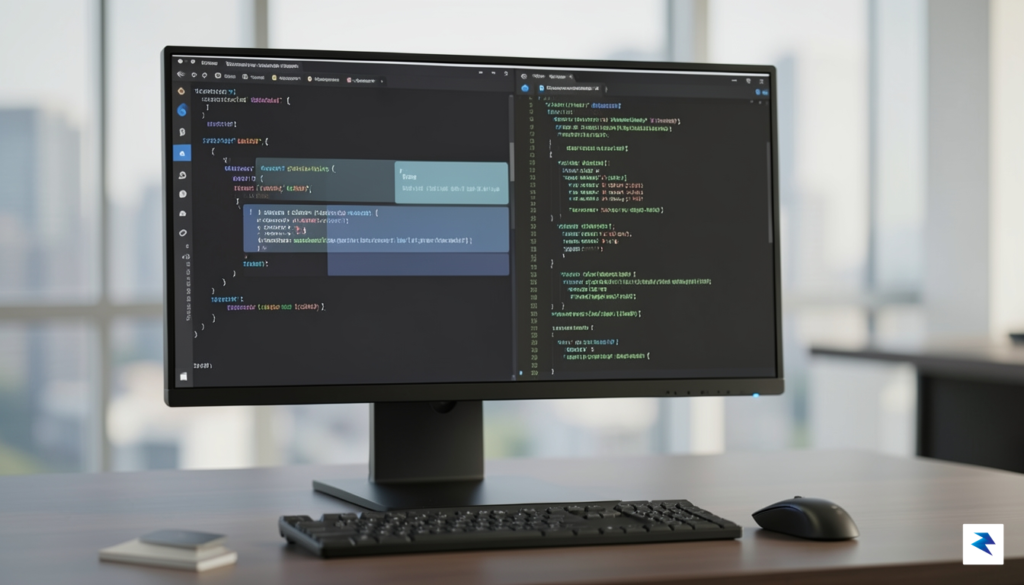
Beyond simple completion, Emergent has revolutionized the debugging lifecycle through its automated diagnostic capabilities. Traditionally, identifying the root cause of a runtime error requires developers to context-switch between logs, stack traces, and external documentation. Emergent streamlines this by proactively monitoring code execution and providing real-time, actionable insights directly within the editor. By analyzing historical commit patterns and common anti-patterns, the system can predict potential points of failure before they even manifest, effectively turning reactive firefighting into proactive maintenance. This sophisticated level of automated debugging is matched by robust multi-language support, ensuring that whether a team is managing a legacy Java monolith or a modern microservices architecture built on Rust or Go, the AI remains equally effective and accurate.
The true magic of Emergent lies in its ability to eliminate the friction between thought and execution, allowing engineers to remain in a deep state of flow throughout the entire development lifecycle.
At the heart of the user experience is a design philosophy centered on preserving the developer’s “flow state.” Many AI tools inadvertently break productivity by forcing users to constantly prompt or validate AI inputs in separate windows. Emergent, however, operates with a subtle, non-intrusive interface that anticipates needs without demanding unnecessary attention. It learns from developer habits over time, adapting its suggestions to match individual coding styles and team-specific best practices. By minimizing the time spent fighting with the tool and maximizing the time spent solving complex logic, Emergent has become an indispensable partner for professional engineering teams. This seamless blend of high-utility performance and intuitive, low-friction design is precisely why so many organizations are pivoting toward the platform to accelerate their delivery pipelines.

The meteoric rise of Emergent to unicorn status is far more than a financial milestone; it serves as a definitive signal that the paradigm of software engineering is undergoing a seismic shift. For decades, the industry relied on a labor-intensive model where the sheer volume of code written was often equated with productivity. Today, platforms like Emergent are dismantling this legacy approach by automating the rote tasks of syntax generation, boilerplate creation, and routine debugging. As a result, the global software market is pivoting toward a reality where artificial intelligence acts as the primary architect, fundamentally altering how applications are conceived, tested, and deployed at scale.
This technological transition is forcing a painful but necessary recalibration of the developer workforce. We are witnessing a clear divergence in demand: while the traditional role of the entry-level programmer—often tasked with repetitive coding chores—is facing significant disruption, the premium on high-level system architects and AI-literate engineers has never been higher. Companies are no longer looking for mere “code monkeys”; they are hunting for strategic thinkers who can orchestrate AI agents to build complex, secure, and performant ecosystems. Consequently, the industry is moving toward a “senior-heavy” model, where a small team of seasoned experts can leverage AI to achieve the output that previously required an entire department of junior developers.

The true value of AI in software development is not found in replacing the developer, but in liberating them from the tyranny of trivial syntax, allowing human ingenuity to focus on solving systemic complexity.
From an economic perspective, Emergent’s success underscores India’s evolving role in the global tech hierarchy. No longer just a hub for cost-efficient outsourcing, the Indian tech ecosystem is rapidly transforming into a powerhouse of high-value AI innovation. Corporate clients leveraging these tools report staggering productivity gains, with some development cycles shrinking by as much as 40 percent. These efficiency improvements are not just padding bottom lines; they are enabling organizations to innovate faster, push updates continuously, and respond to market demands with unprecedented agility. As Emergent continues to scale, it acts as a catalyst for a broader national transformation, proving that the next generation of global software infrastructure will likely be built on top of frameworks engineered in Bengaluru and Hyderabad, rather than just maintained by them.
Ultimately, this shift represents a move toward the “democratization of development.” By lowering the technical barrier to entry for building robust software, platforms like Emergent are empowering a new class of creators who can translate vision into reality with minimal friction. While this poses challenges for traditional education and training pipelines, it promises a future where the limitation on software innovation is not the number of available developers, but the scope of human imagination. As the industry matures, the integration of these AI-driven tools will likely become as essential as the compiler or the integrated development environment itself, marking a permanent departure from the manual era of programming.

Achieving unicorn status is an undeniable validation of Emergent’s current trajectory, yet the transition from a high-growth startup to a dominant market player brings a new set of complex hurdles. As the company scales its operations and headcount, the primary challenge lies in maintaining the high-quality output and agility that defined its early success. Rapid organizational growth often threatens to dilute internal culture and engineering standards, necessitating a robust framework that balances velocity with precision. Furthermore, the firm must contend with the accelerating commoditization of AI-driven coding assistants. With tech giants and nimble competitors alike flooding the market with similar tools, Emergent must continuously innovate to provide unique value, ensuring its platform evolves from a simple productivity aid into an indispensable component of the enterprise development lifecycle.

Beyond the competitive landscape, the company faces mounting pressure regarding data privacy and security. As enterprises entrust these AI models with increasingly sensitive proprietary codebases, Emergent must go above and beyond industry standards to ensure robust data isolation and compliance. Trust is the most valuable currency in the developer tool ecosystem; even a minor lapse in security could derail years of brand building. Consequently, the roadmap ahead will likely focus heavily on fortifying its enterprise-grade security features. This includes implementing sophisticated, on-premise deployment options for highly regulated industries like finance and healthcare, where cloud-based data transit remains a significant compliance barrier.
The future of AI-assisted development is not merely about writing faster code, but about creating secure, autonomous environments where human creativity and machine precision operate in perfect, protected harmony.
Looking toward future product directions, the integration with cloud environments is slated to become a cornerstone of the platform’s evolution. By deepening its synergy with major cloud providers, Emergent aims to offer a seamless “code-to-cloud” experience, where the AI doesn’t just suggest functions, but also proactively manages infrastructure configuration, debugging, and deployment workflows. This holistic approach could transform the startup from a specialized coding assistant into a comprehensive software operations ecosystem. As they navigate the path forward, the company’s ability to anticipate these shifting technical requirements—while simultaneously safeguarding the integrity of their users’ intellectual property—will ultimately determine whether they can sustain their current momentum in an increasingly crowded and skeptical market.
You must be logged in to post a comment.